
Cat Scratcher Posts: Sisal vs Cardboard and How to Choose
Pick sisal for a tall, upright stretch and cardboard for a low, lightweight surface. Then match height, stability and placement to how your cat scratches.

Dana Whitfield
October 13, 2026 · 7 min read
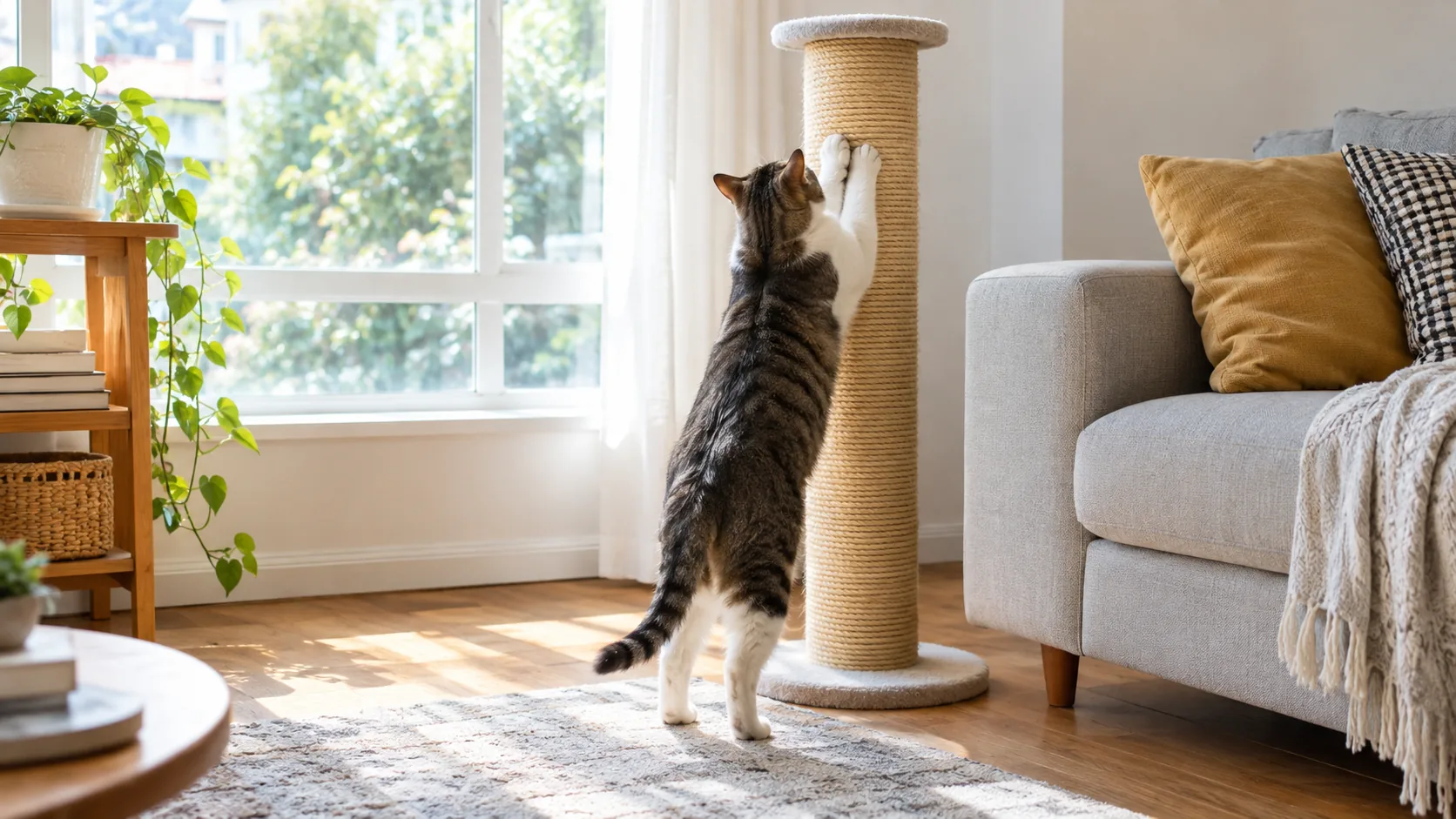
The right choice among cat scratcher posts depends on how your cat scratches. Sisal suits cats that stretch tall and pull down on a vertical surface, while cardboard suits cats that rake low or like a ridged, lightweight surface they can push against. Whatever the material, the post needs to be stable, tall enough for a full stretch, and placed where your cat already scratches.
This guide gives you a decision table, a placement checklist, a short routine for getting your cat to use the post, and notes on building a DIY version.
Sisal vs cardboard: how to pick for your cat
Neither wins for every cat. Both give claws something to grip and drag through, and both let your cat leave scent markers from the glands in its paws. The difference is in shape, texture and how you use them in a room.
| Factor | Sisal (rope or fabric) | Cardboard (corrugated) |
|---|---|---|
| Typical shape | Upright post, wrapped pole, flat mat | Flat pad, ramp, lounger, corner piece |
| Scratch style it suits | Vertical stretch and pull | Horizontal or angled raking |
| Texture | Coarse, woven, tight grip | Ridged, papery, easy to shred |
| Weight | Heavier with a base | Lightweight, simple to move |
| Mess | Loose fibers over time | Paper bits to sweep up |
| Replacement | Re-wrap or swap the post | Swap the whole piece when worn |
If you are unsure, offer one of each for a while and watch which one your cat returns to. Cats often have a clear preference for angle and texture.
Watch how your cat scratches first
A cat that reaches up the arm of the sofa wants something vertical and tall. A cat that rakes the rug or the floor by the door wants a flat or angled surface. Match the scratcher to the habit you already see instead of asking the cat to change.
How to choose cat scratcher posts: a decision table
Use this table to narrow your options before you buy. Start with the cat's behavior, then check the product against each row.
| Decision | What to look for | Why it matters |
|---|---|---|
| Material | Sisal for vertical pulling; corrugated paper for raking | Matches the scratching motion your cat already uses |
| Height | Tall enough for your cat to extend its body fully | A short post cuts the stretch off and tends to get ignored |
| Stability | Wide, heavy base, or a piece that sits against a wall | A post that wobbles or tips teaches a cat to avoid it |
| Surface | Covers the full scratching area, with no gaps | Claws should catch the material, not hit bare board |
| Placement | Near where your cat sleeps, or at the current scratching spot | Cats scratch after waking and in busy areas |
| Size of cat | Larger cats need a bigger base and a sturdy build | Body weight pushes on the post as the cat pulls |
Height and stability
Hold the post upright and press on the top. If it rocks, your cat will notice. For upright posts, a broad base matters more than decoration. For flat or corner pieces, the floor and walls sit beside the piece as your cat pushes and pulls, so check that it rests flat before you leave it.
Replacement and heavy use
If you share your home with a large or very active scratcher, look for a post with a replaceable covering or plan to swap the piece when it wears down. A shredded surface stops giving claws anything to catch.
Where a cardboard corner scratcher fits
A cardboard cat scratcher post, or a low corner piece, works well for cats that already scratch the lower part of a wall or the corner of a room. The corrugated ridges give claws a texture to drag across, and the material is light enough to move when you want to try a new spot.
The ClawHaven is an L-shaped scratcher made of corrugated paper, shaped to fit into a room corner. A bell ball sits in a built-in cavity, so your cat can paw at it and set it chiming. It comes in burgundy with a catnip sachet, and it uses no anchors or adhesive.
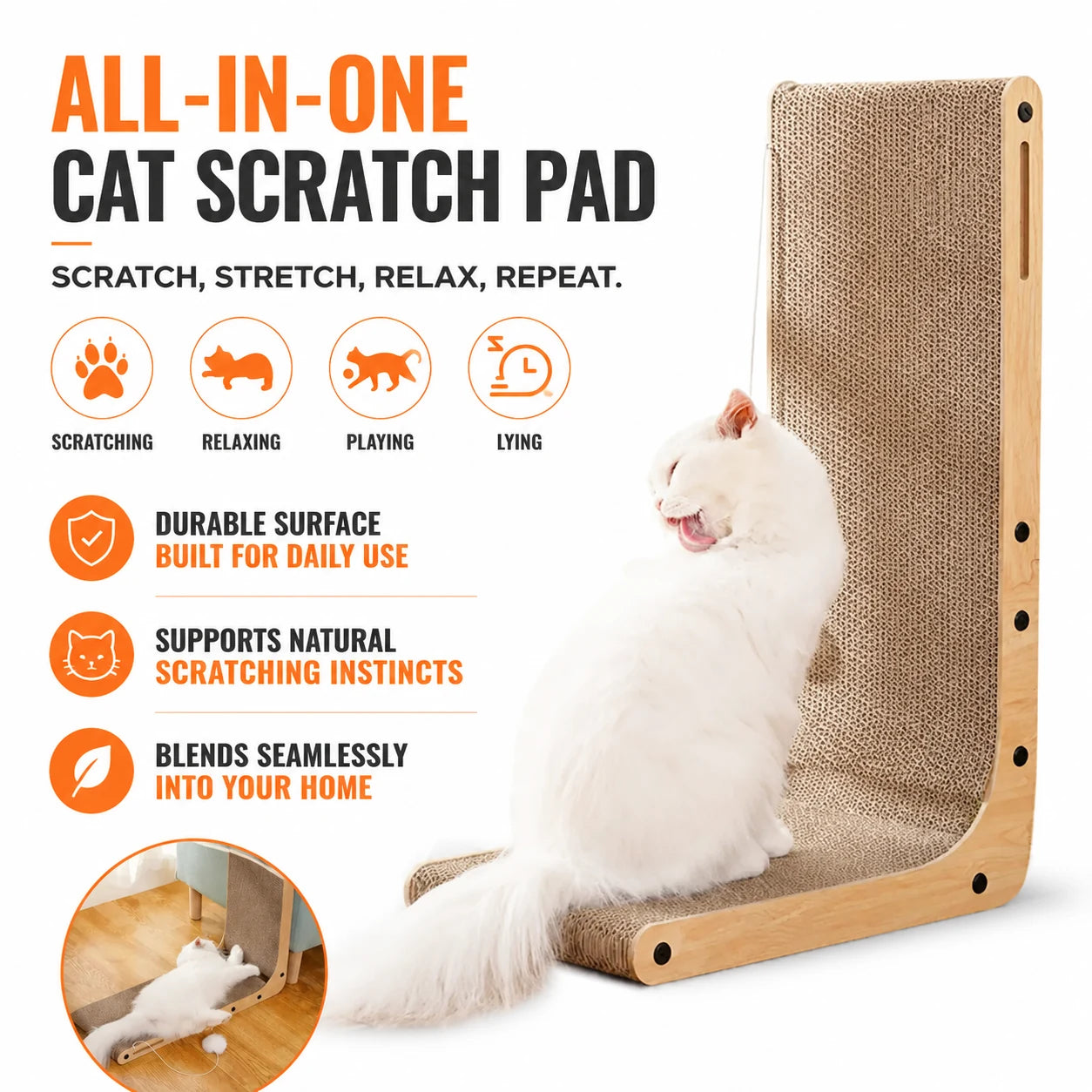 In this guideClawHaven$139.99View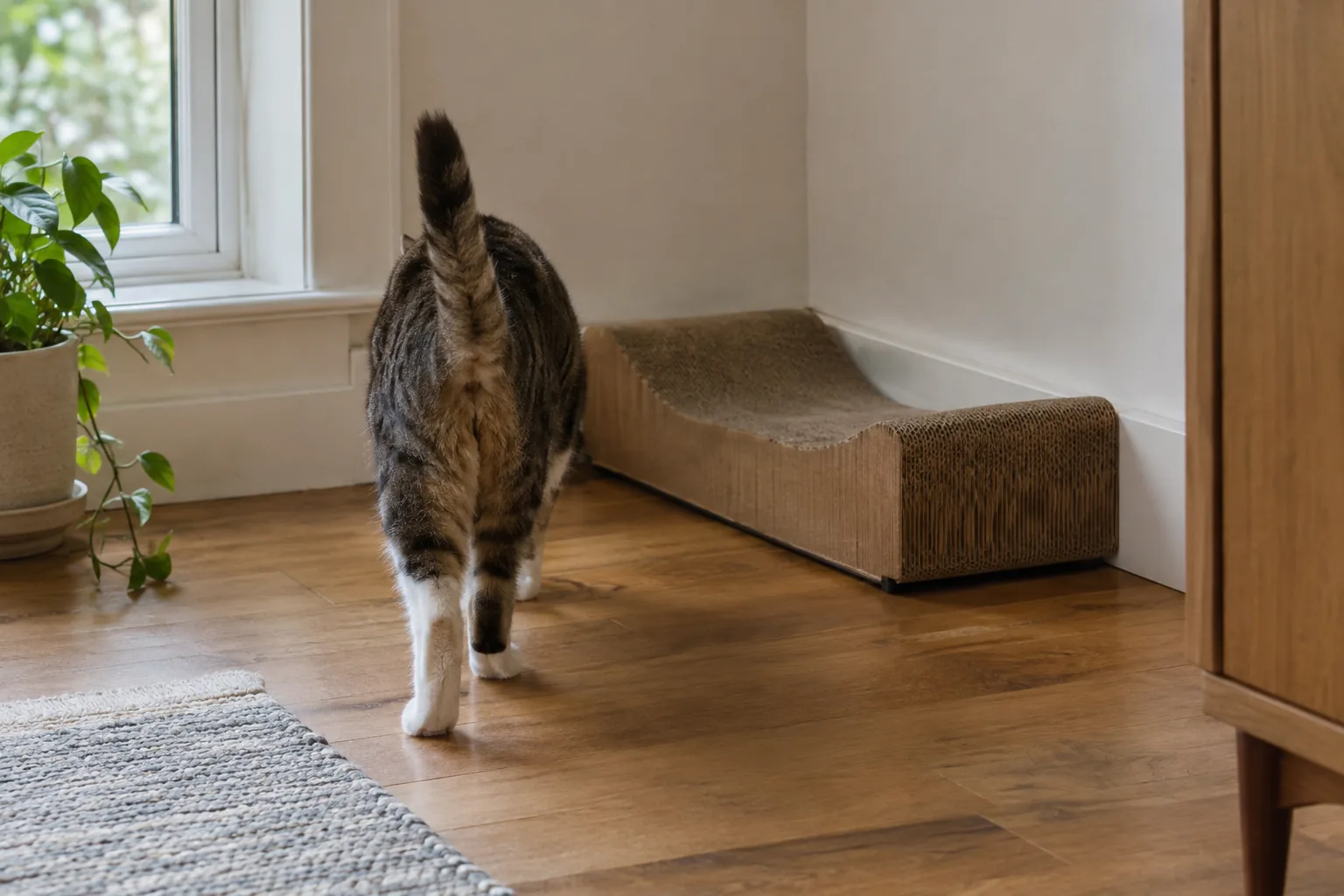
Placement: where cat scratcher posts get used
Placement often decides whether a post gets used. Cats scratch to stretch and to leave scent along the places they pass, so the ideal spot is somewhere they already visit.
- Next to the current target. Put the new scratcher beside the sofa arm, chair leg or door frame your cat already scratches.
- Near the sleeping spot. Many cats stretch and scratch right after waking.
- In a shared room. A scratcher hidden in a spare room is easy to ignore. Cats like to scratch where the household is.
- Against a wall or in a corner. Flat and corner pieces sit against the wall or in the corner.
- Clear of the litter box and food bowls. Keep the scratcher in its own area.
If your cat uses the furniture, you can move the scratcher closer to it first, then shift it gradually to a spot you prefer.
Field note
Watch where your cat stretches after a nap for a few days, then place the scratcher on that exact route. Move it a little at a time rather than in one big jump across the room.
A short routine to get your cat using the post
Most cats need a gentle introduction, not a lecture. Follow these steps and let your cat set the pace.
- Set it up in the right place. Put the scratcher next to the surface your cat already scratches, and make sure it does not move when pushed.
- Add a scent cue. Sprinkle a little catnip on the surface, or use the sachet if your product includes one. Some cats do not react to catnip, so if yours shrugs it off, use a wand toy or a treat as the cue instead.
- Let your cat explore. Do not pick the cat up and drag its paws across the post. That can create a bad association.
- Add play. Drag a wand toy up the post or across the pad so your cat reaches with its claws.
- Reward scratching. Offer a treat or calm praise when your cat uses it.
- Redirect gently. When your cat scratches furniture, calmly move it to the scratcher. Avoid scolding.
- Move the scratcher gradually. Once your cat uses it regularly, shift it a little at a time toward the spot you want it to stay.
Repeat the routine daily at times when your cat is awake and playful. If your cat still ignores the post, change one thing at a time: the angle, the material or the location.
DIY cat scratcher post: what to know before you build
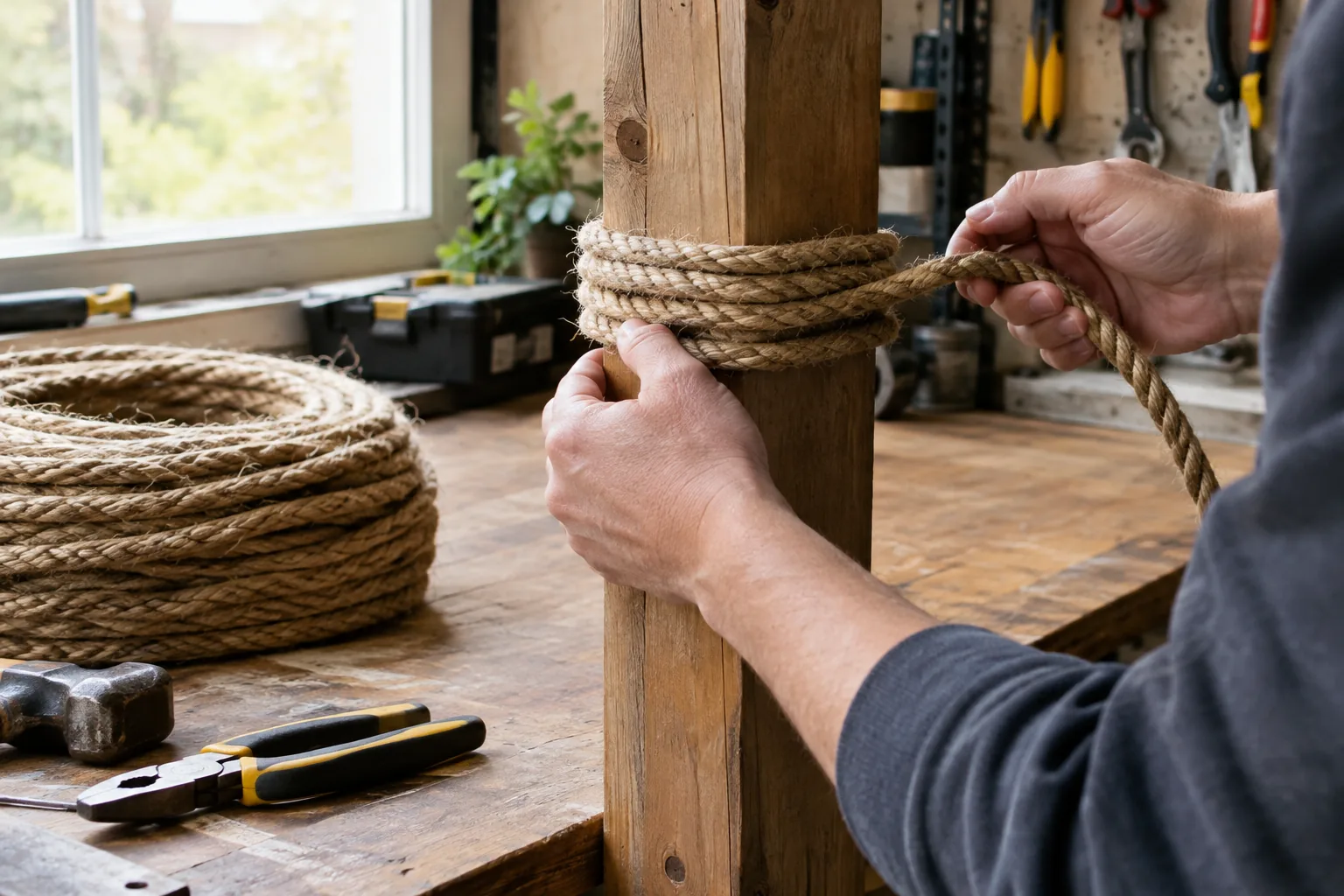
A DIY cat scratcher post can work if it follows the same rules as a store-bought one: tall enough, stable, and covered in a texture your cat likes. Common builds use a sturdy cardboard tube or a wooden post wrapped in sisal rope, mounted on a wide, heavy base.
- Choose a base wide enough that the post cannot tip when your cat pulls on it.
- Wrap rope tightly and secure the ends so nothing unravels into loops that catch claws.
- Keep staples, screws and glue out of the scratching area. Read adhesive labels and let everything dry fully before offering it.
- Check the piece regularly for loose parts, and replace it if it starts to wobble or come apart.
If your cat chews or swallows fibers, remove the scratcher and ask a veterinarian what to do.
Common mistakes with scratching posts
- Buying a short post. If your cat cannot stretch fully, the post will not match the habit.
- Choosing by looks. A good-looking piece that wobbles will not get used.
- Hiding it. A scratcher in a back room is easy to ignore.
- Replacing the old target too soon. Remove or cover the furniture only after your cat accepts the new scratcher.
- Giving only one option. Many homes do well with one vertical and one flat or corner scratcher.
Care and replacement
Sweep up paper bits or loose fibers regularly. Check bases and joints, and replace a scratcher that is shredded to the backing, loose or unsteady. Browse the Beds, Houses & Scratching Posts collection when you want to add a second style.