Dog Potty Training Tips: A Day-by-Day Plan for Puppies and Adults
Use a fixed schedule, one potty spot, a reward right after your dog goes, and calm cleanup. This guide gives you the day-by-day plan, a balcony option and an accident table.
The Millbrook Team
October 23, 2026 · 7 min read
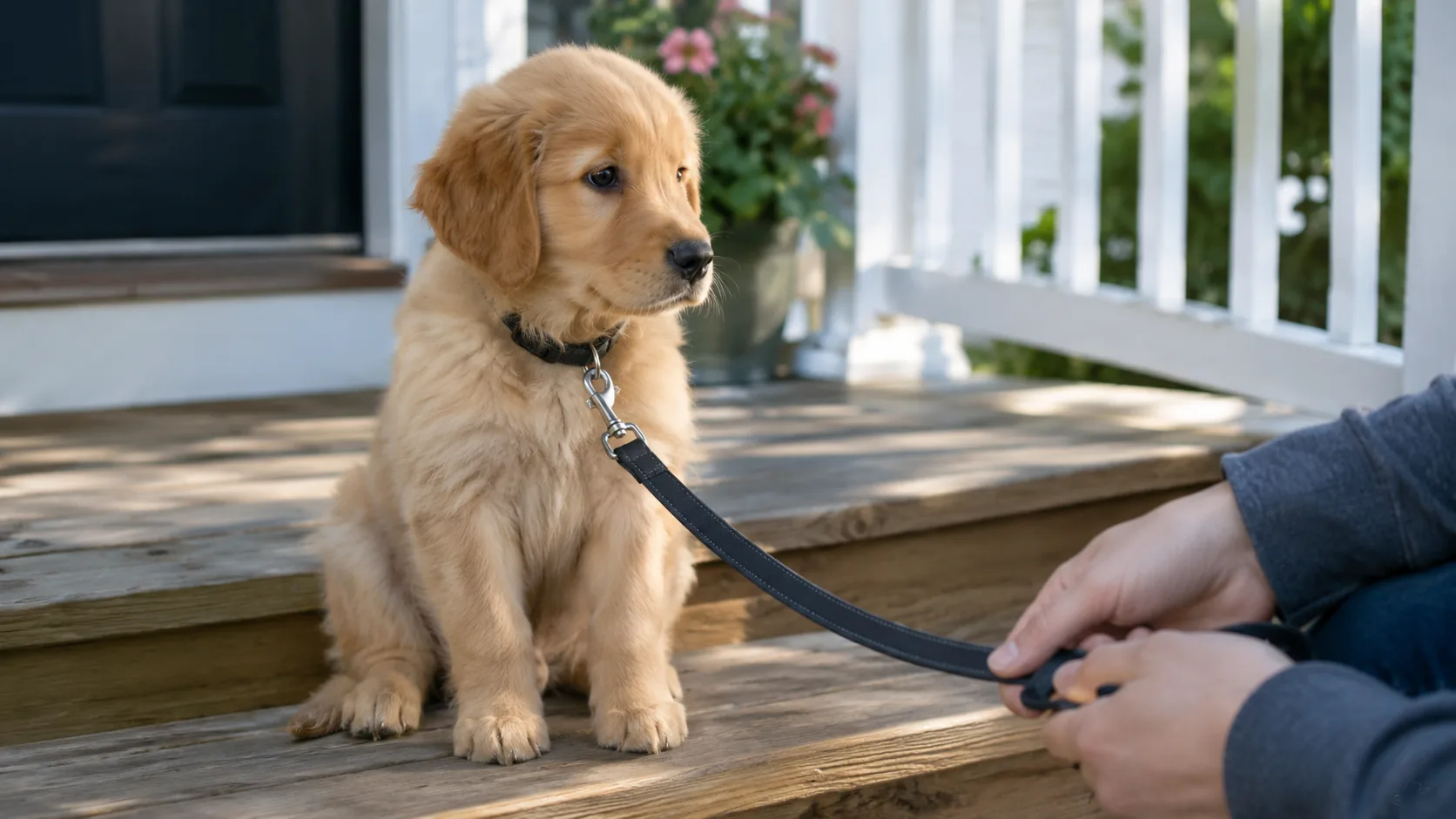
The core dog potty training tips are simple: take your dog to one chosen spot on a fixed schedule, reward right after they go, supervise or crate between breaks, and clean accidents without scolding. Puppies need more frequent trips than adult dogs, but the method is the same for both.
This guide turns those rules into a daily schedule, a day-by-day plan, an apartment and balcony option, and a table for fixing accidents. Print the schedule and tape it near the door.
Set up before day one
A few things in place before you start make every trip repeatable. Gather them first so you are not hunting for supplies mid-accident.
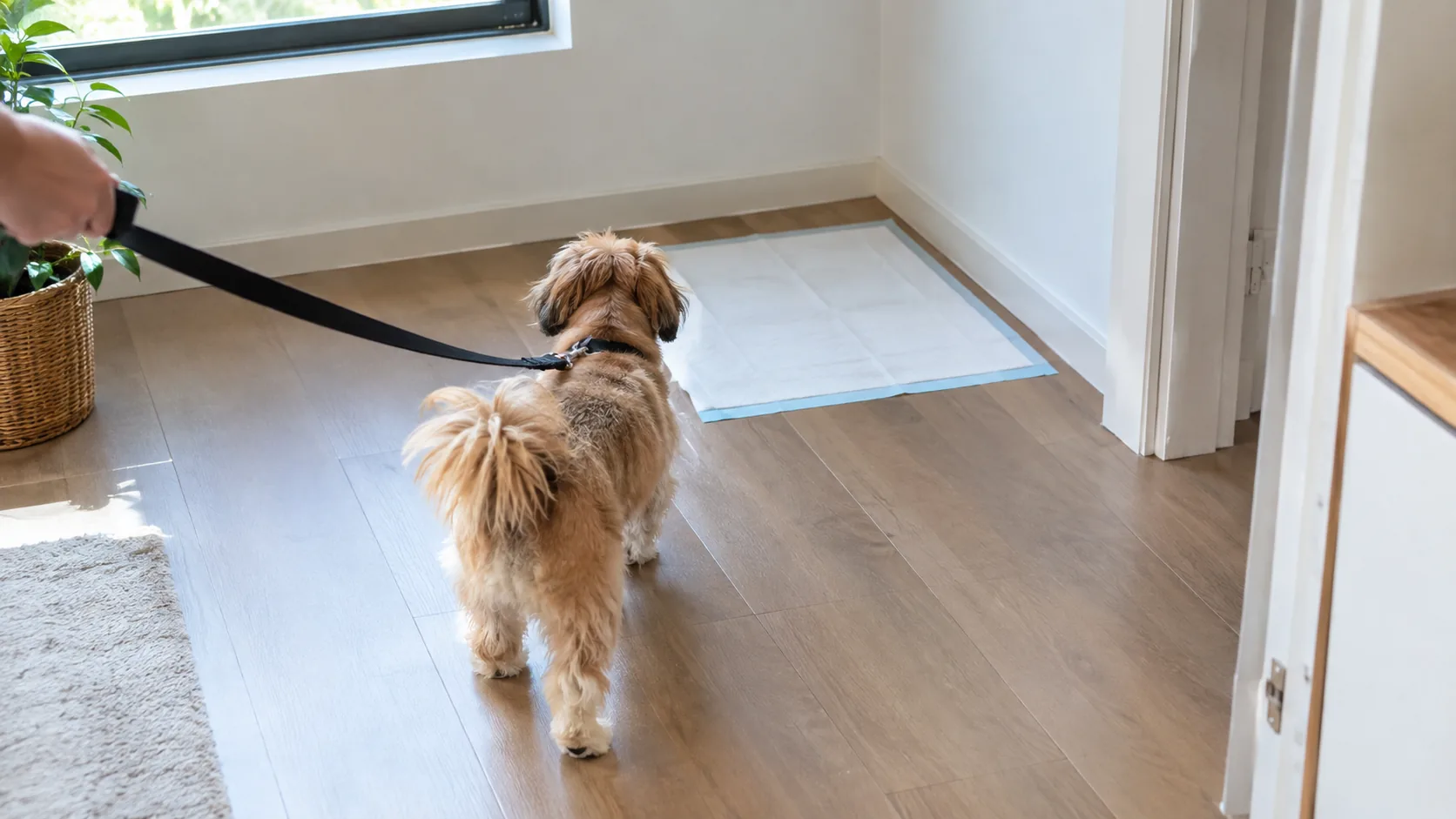
- Choose one potty spot, outdoors or on a pad, and always lead your dog to it.
- Pick one verbal cue, such as "go potty," and use only that phrase.
- Keep small food rewards by the door so you can give one the moment your dog finishes.
- Buy an enzymatic cleaner for indoor accidents.
- Set up a crate or a gated area sized so your dog can stand and turn around.
- Write down meal times, because what goes in on a schedule comes out on a schedule.
Dog potty training tips: the daily schedule
Use this as a template and adjust it to your dog's age and your workday. Young puppies need a break often, so plan trips every couple of hours while they are awake, and ask your veterinarian how long your dog can reasonably wait at their age.
| Time block | What happens | Where |
|---|---|---|
| Wake-up | Straight to the potty spot, cue, reward | Potty spot |
| After breakfast | Potty trip, then short play | Potty spot |
| Mid-morning | Potty trip, then supervised time | Potty spot, then gated area |
| After a nap | Take out as soon as your dog wakes | Potty spot |
| Midday meal | Potty trip before and after | Potty spot |
| Afternoon | Potty trip, play, crate rest | Potty spot, then crate |
| Evening meal | Potty trip after eating | Potty spot |
| Before bed | Last trip, calm and boring | Potty spot |
Always add a trip after play, after drinking, and after any waking nap. Those are the moments when a dog is most likely to need to go.
The day-by-day plan
Day 1: build the pattern
Take your dog to the spot at every time block in the table. Stand still, say the cue once, and wait. When your dog goes, give a reward right away and a bit of praise. If nothing happens, go back inside, keep your dog in the crate or on a leash beside you, and try again soon.
Days 2 and 3: learn the signs
Keep the same schedule and start to watch for signs such as sniffing, circling, wandering off, or heading to a door. When you see one, calmly take your dog to the spot. Some puppies do not signal at all, so the schedule matters more than waiting for a sign.
Days 4 to 7: keep the rhythm
Stay consistent. Reward every success at the spot, and keep indoor time supervised. Use a leash indoors or a gated area so you can see your dog at all times. A dog you cannot see is a dog who may have an accident.
Week 2 and beyond: widen the freedom
Add room access one space at a time, only after a stretch of accident-free days. If accidents return, go back one step. Dogs learn at different speeds, so use the days above as a plan to follow, not a deadline.
Puppies vs. adult dogs
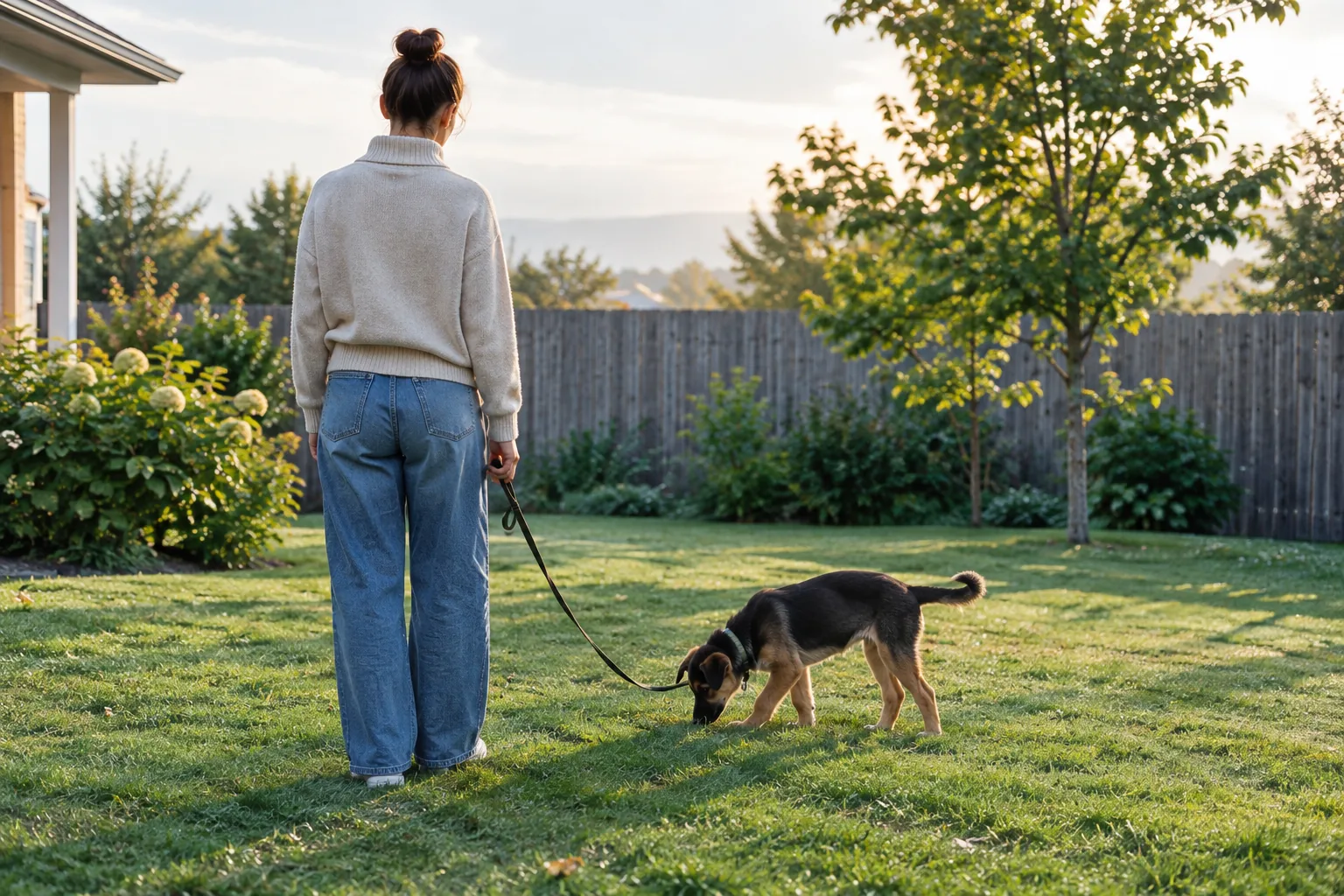
Compared with puppies, adult dogs can wait longer between breaks, but a new home resets the routine. Start an adult dog on the same schedule as a puppy for the first few days, then stretch the gaps as they show reliable habits.
For an adult who already had a habit of going indoors, a thorough cleanup matters more. Scent draws a dog back to the same place, so use an enzymatic cleaner and block access to the spot while the new habit forms. If an adult dog suddenly starts having accidents after being reliable, check with your veterinarian.
Crate and potty training together
A crate works because some dogs avoid soiling the space where they rest. Keep it just large enough to stand and turn around, take your dog straight from the crate to the potty spot, and do not use it as punishment. Between trips, use the crate for naps and the gated area for supervised play.
Apartment and balcony option: a grass pad
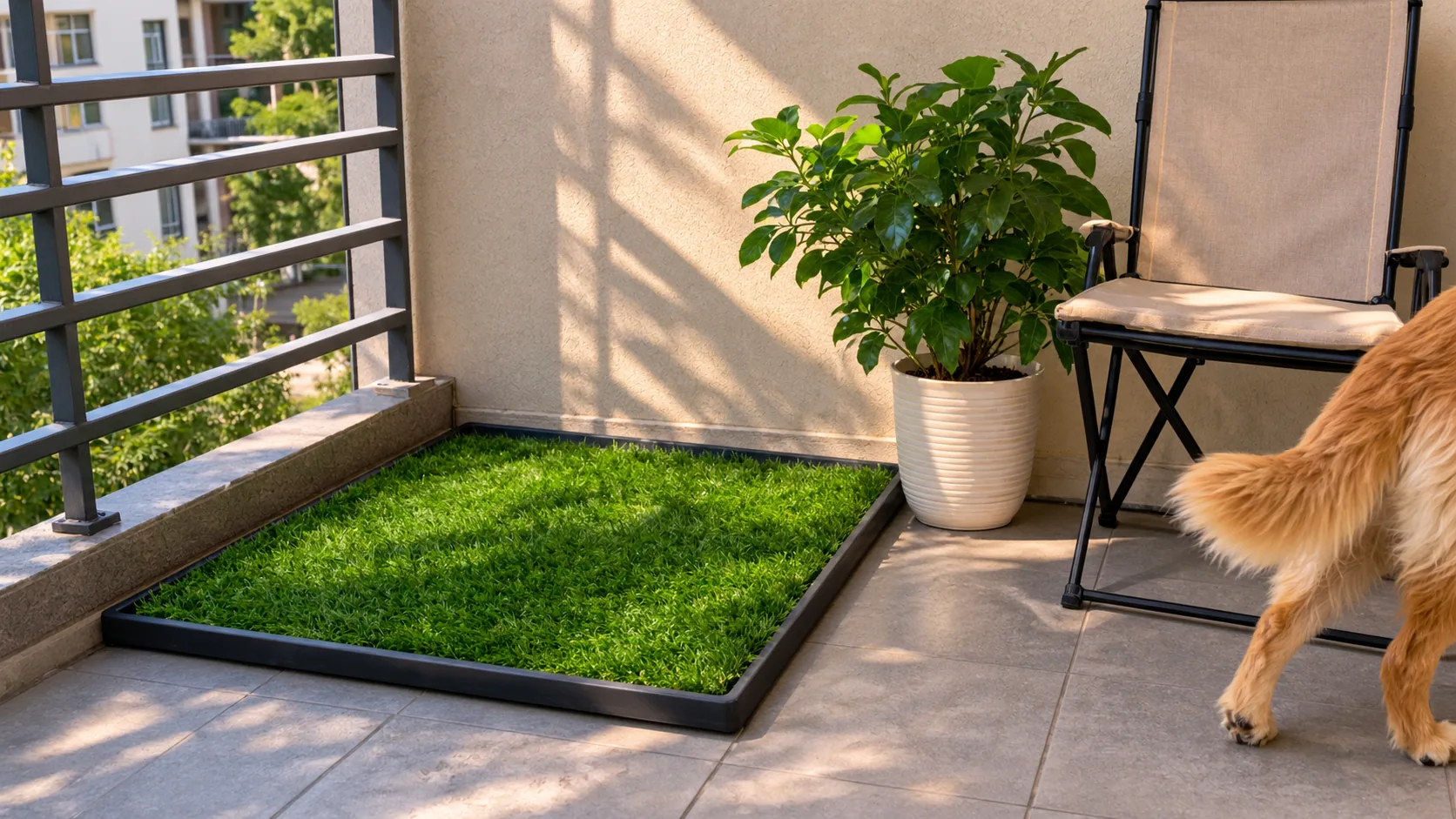
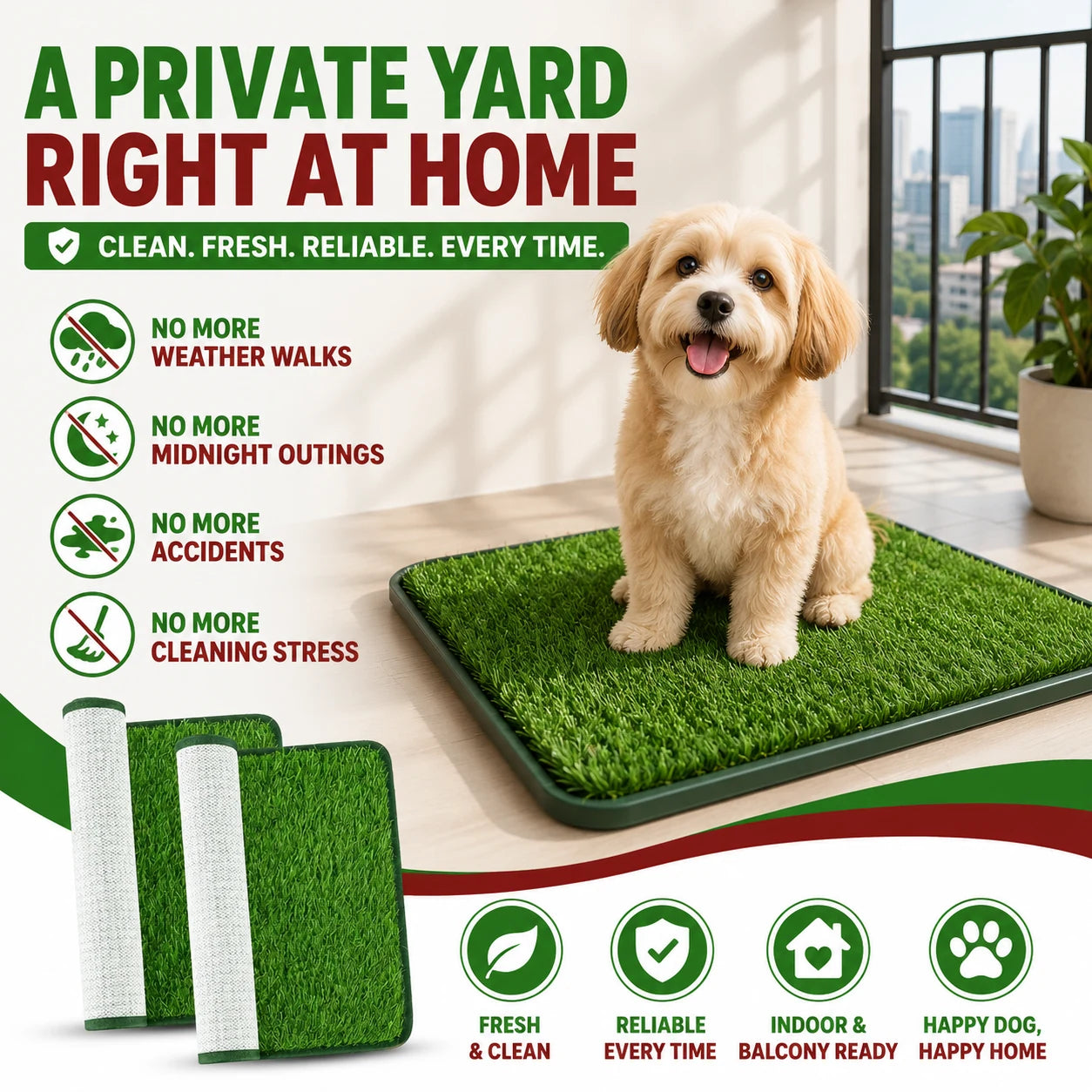
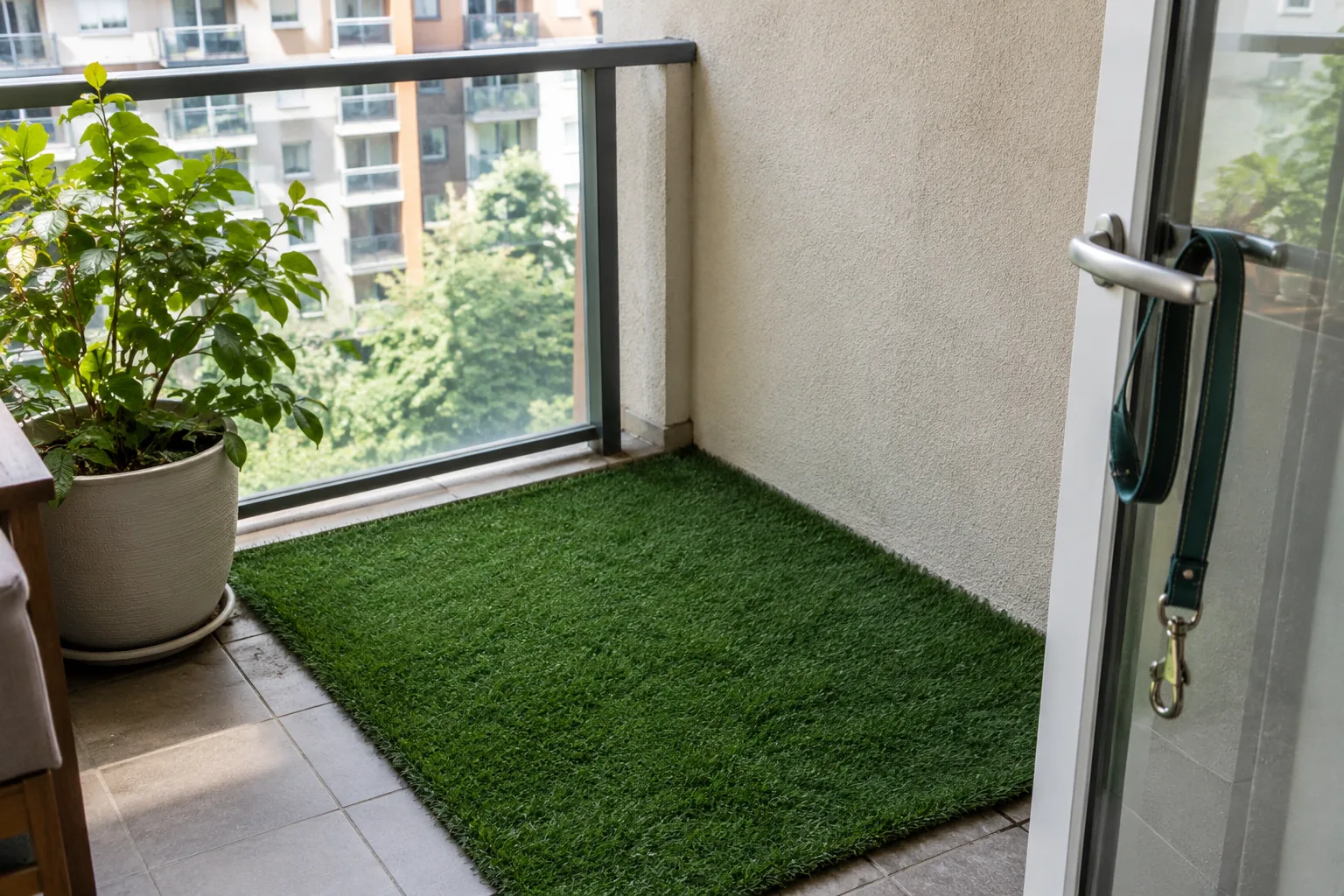
If you live in an apartment, a high floor can make every trip a long walk. A dog grass pad for a balcony gives your dog a consistent surface to use between outings, and you can use the same schedule above with the pad as the potty spot.
PawTerrace is an artificial grass pad for balconies, patios and indoor floors. The surface has a PE blade texture shaped to resemble natural grass, with multi-layer perforations that let liquid pass through and a stitched border around the edges. Pick the size that matches your space.
 In this guidePawTerrace$59.99View
Pad setup checklist
- Choose a flat spot, such as a corner of the balcony against a wall, a railing or a door frame.
- Indoors, lay the pad over an easy-to-clean floor or a standard tray you already own, since liquid passes down through the perforations.
- Let your dog sniff the pad and step onto the blades when you set it down.
- If your dog hesitates, you can add an attractant spray on the first day. It is sold separately and is not included.
- Use your cue, wait, and reward on the pad exactly as you would outdoors.
- Rinse the pad with running water as part of your routine.
Keep the pad in the same place. Moving it around teaches your dog that the spot is not fixed. For other cleaning and floor supplies, see our Home Comfort & Cleanup collection.
Troubleshooting accidents
Accidents are information. Note when and where they happened, then adjust the schedule instead of scolding your dog. Punishing a dog can create fear and teach them to hide when they go.
| Problem | Likely cause | What to do |
|---|---|---|
| Accident shortly after a trip outside | Distraction, so your dog did not finish | Stay at the spot longer, keep the trip calm, then supervise indoors |
| Keeps using the same wrong spot | Leftover scent | Clean with an enzymatic cleaner and block access |
| Goes when you are not looking | Too much freedom too soon | Use a leash indoors or a gated area |
| Will not signal at the door | Not yet learned a signal | Rely on the schedule and take your dog out on a regular basis |
| Hesitates on the pad | Unfamiliar surface | Let your dog sniff it, and add attractant spray on day one if you choose |
| Ignores the cue | Reward comes too late | Give the reward the moment they finish, at the spot |
How to clean up
Blot the area, then use an enzymatic cleaner and follow the label. Avoid cleaners that leave a scent your dog may read as a toilet marker. Keep the dog away while you clean, and do not rub their nose in it.
Overnight potty training
Keep the last trip of the evening calm and boring, with no play. Put your dog in the crate near your bed so you can hear them if they wake and fuss.
Young puppies may need a night trip. Take them out quietly, use the cue, reward lightly, and go straight back to bed. Do not turn it into playtime.
Field note
Keep a simple log for the first week: time, meal, and whether your dog went. Patterns tend to show up, and you can move your schedule to match them.
Common mistakes to avoid
- Changing the potty spot or the cue from day to day.
- Waiting until you get inside to reward.
- Giving full run of the house too early.
- Scolding after the fact, which your dog cannot connect to the accident.
- Skipping the trip after a nap, meal or play session.
Stay consistent and keep rewards immediate. If progress stalls over several weeks, ask your veterinarian to check for a health cause and a trainer for hands-on help.