How to Train a Dog to Use a Pee Pad, Week by Week
Put the pad in one fixed spot, walk your dog to it on a schedule, use one cue word and reward on the pad. This week-by-week plan also covers the move to a grass pad.
The Millbrook Team
November 1, 2026 · 7 min read
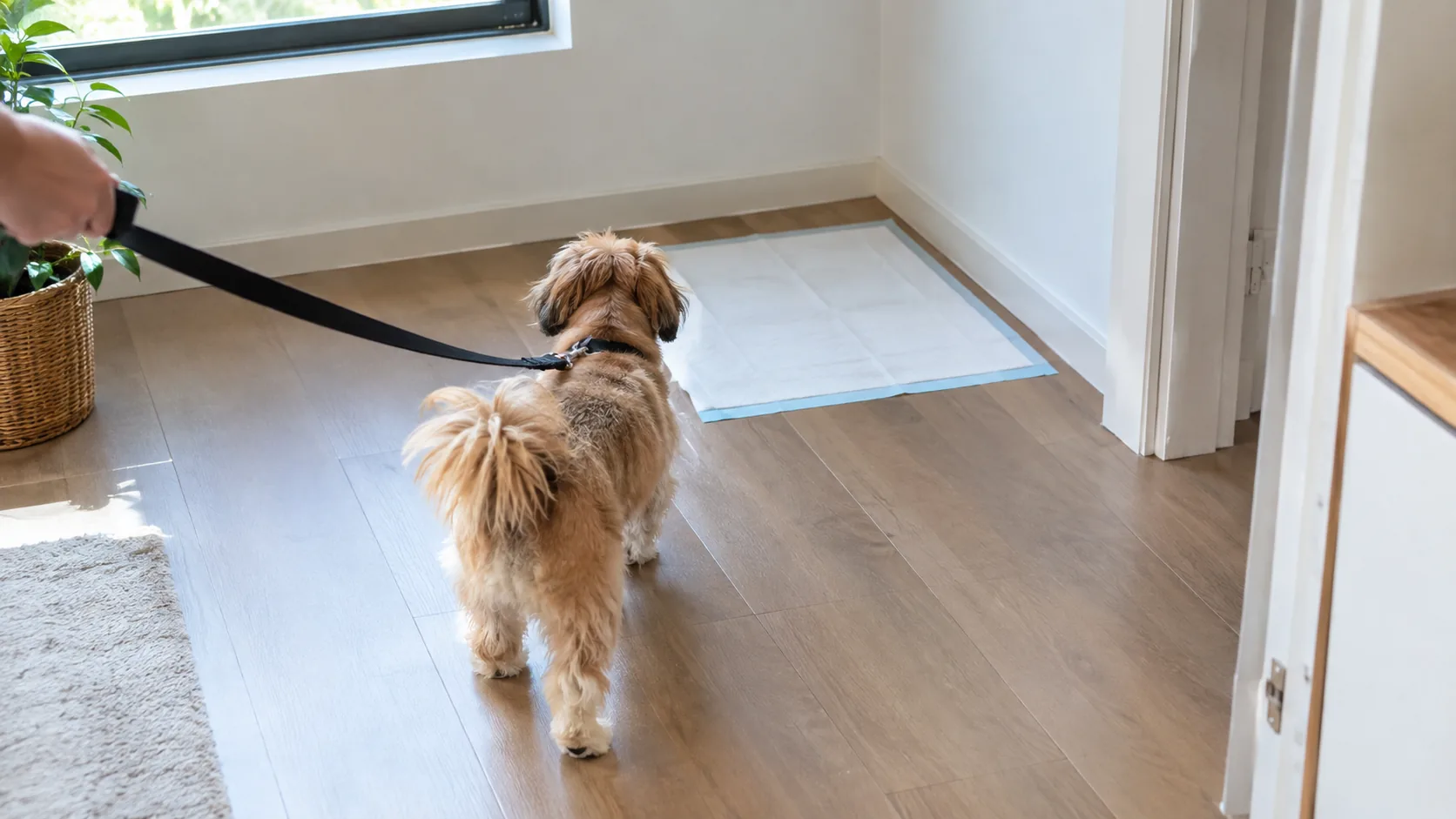
To learn how to train a dog to use a pee pad, put one pad in a single fixed spot, walk your dog to it after meals, naps and play, say the same cue word, and reward the moment the paws are on the pad. Clean accidents without scolding and keep the routine the same every day. The plan below runs in four weekly stages.
It covers pad placement, cue words, nights, poop on the pad, the switch to a balcony grass pad, and fixes for setbacks. It suits puppies and adult dogs that need an indoor or balcony spot.
What you need before day one
- Several pads, so the spot stays covered while one is being changed
- Small treats your dog gets only for potty success
- An enzyme cleaner for accidents
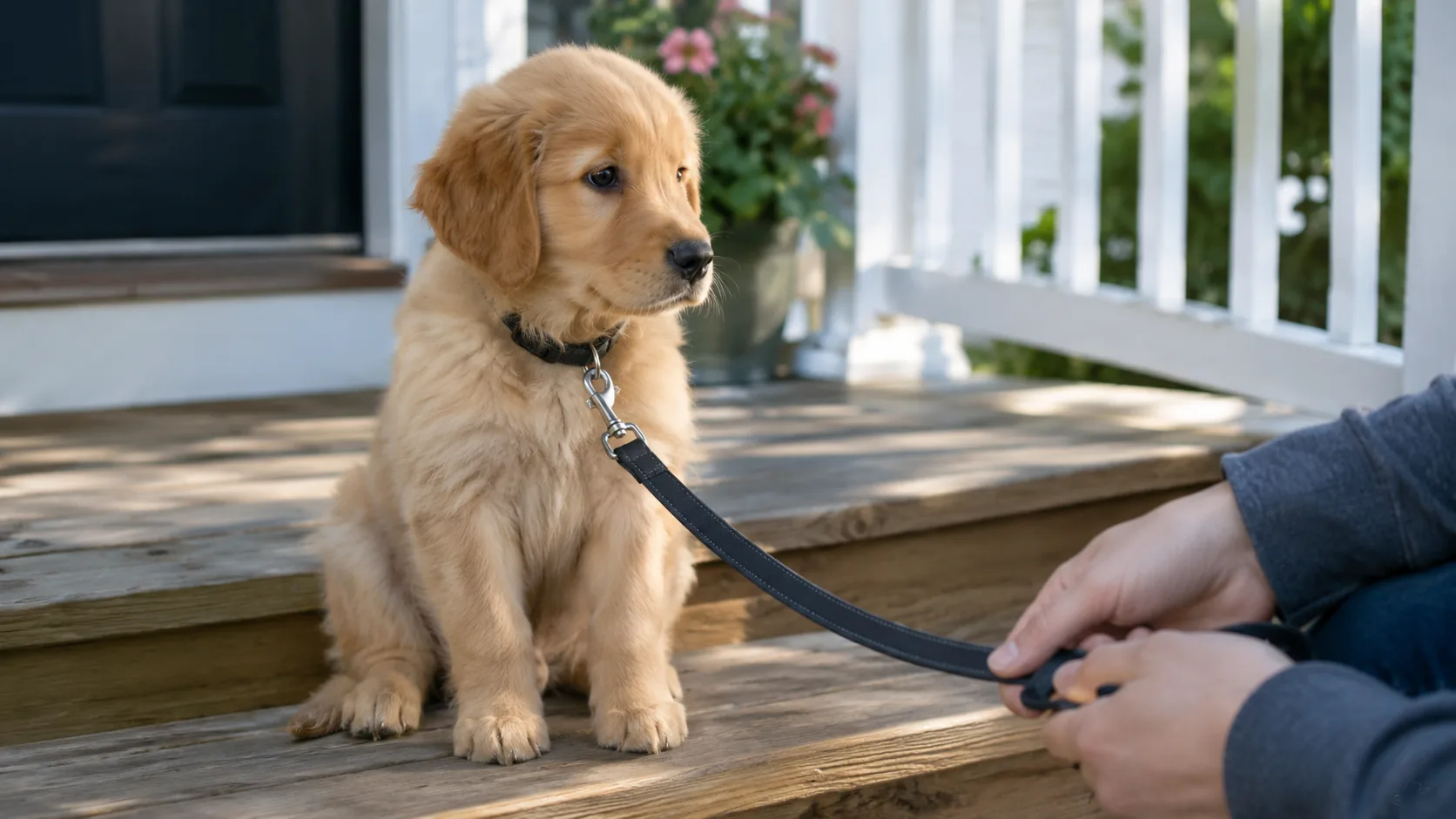
- A leash for walking your dog to the spot
- A crate or gated area for times you cannot watch
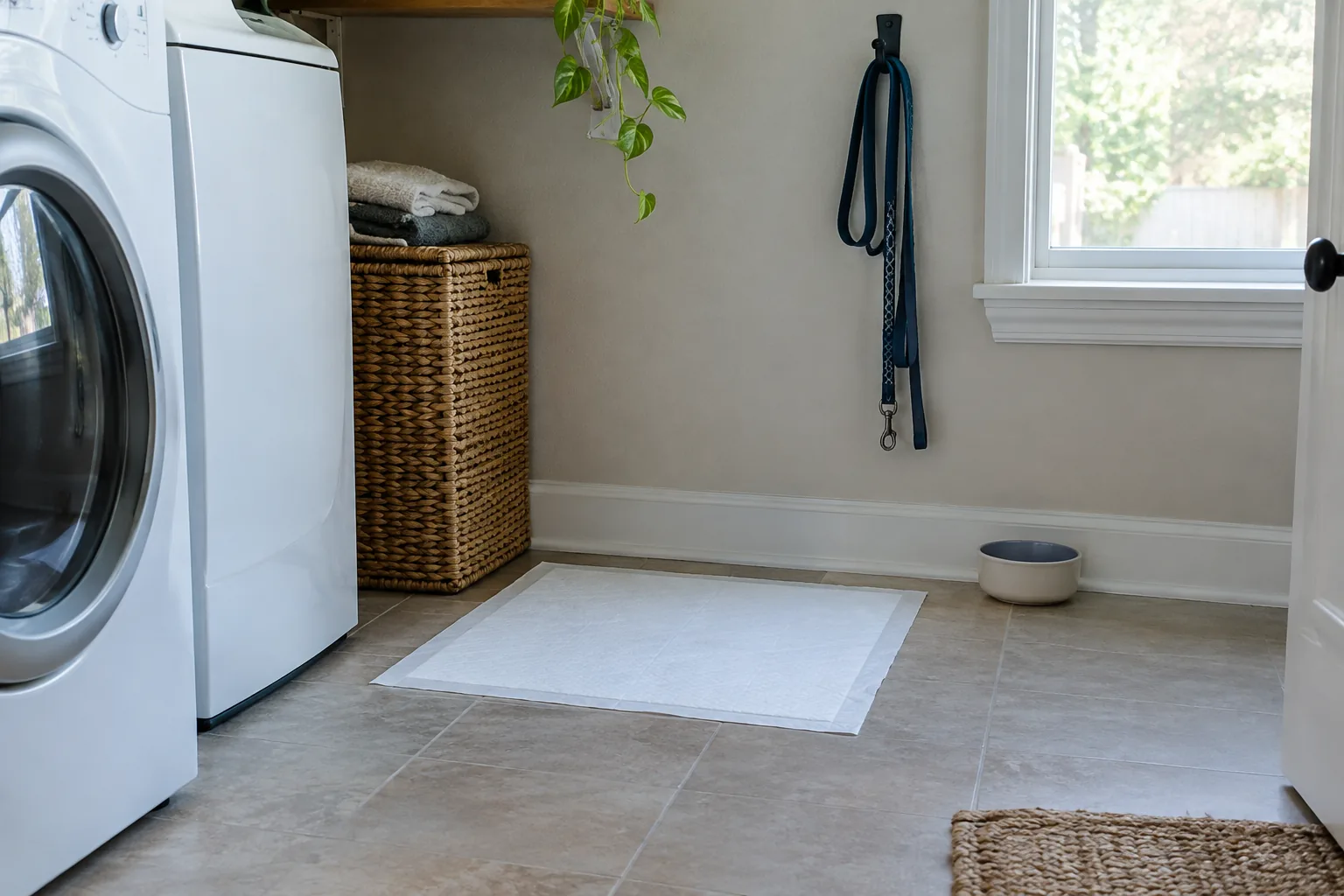
Choose a flat spot away from food and bed, and one you will not want to move later. A bathroom, a laundry room or a balcony corner can work. If you plan to move to grass later, pick a spot near the door you will use.
How a dog learns where to go
A dog does not know what a pad is for. It learns that this surface, in this place, is where peeing brings a reward. A pad that carries a trace of scent can help point your dog back to the same designated area.
Sniffing, circling and pacing are your cues that a dog needs to go. When you see them, walk your dog to the pad right away instead of waiting to see what happens.
How to train a dog to use a pee pad: the weekly plan
| Week | Goal | What you do |
|---|---|---|
| 1 | Learn the spot | Cover a small area with pads, take your dog there on a schedule, reward every success |
| 2 | Add the cue | Say one phrase as your dog starts to go, reward right after |
| 3 | Shrink the area | Cut back to one pad, then reward only when paws are on it |
| 4 | Build the habit | Reduce treats, keep the schedule, start the grass pad swap if you want one |
Week 1: schedule and supervision
Take your dog to the pad first thing in the morning, after each meal, after naps and after play. Stay with your dog and stand quietly. Give a treat and calm praise as soon as the business is done, not after you walk away.
Between trips, keep your dog in view, or use a crate or gated area. Supervision helps reduce accidents elsewhere, and each accident off the pad slows the habit.
Week 2: the cue word
Pick one short cue phrase, such as "go potty," and have everyone in the house use it. Say it once, calmly, as your dog sniffs and circles on the pad. Reward right after, so the phrase links to the act.
Week 3: shrink the area
If you covered the floor with pads, remove them gradually until one is left in the chosen spot. If your dog misses, go back one step instead of scolding. Keep the pad in the same place so the location stays the same.
Week 4: make it routine
Keep the schedule, and give treats on most successes, then fewer. Praise stays. By now you should know your dog's rhythm and can spot the signs early.
How long it takes and the 10-10-10 rule
There is no fixed timeline. Age, bladder control, past habits and how consistent you are all change the pace. Young puppies have less bladder control and need more frequent trips. Adult dogs that already know another surface may need extra patience. Judge progress by fewer accidents over the weeks, not by a date.
The 10-10-10 rule
The label 10-10-10 gets used for different routines, and there is no single official version, so check what a given trainer means by it. A cautious way to use the idea is a short-session routine: a brief, scheduled trip to the pad, a calm wait on the spot, and a reward when your dog goes.
Whatever numbers you choose, keep them the same each day and adjust to your dog's age and rhythm. Use it as a way to structure trips, not as a promise of a result by a certain date.
Pad training at night
Plan nights ahead. Take your dog to the pad right before bed, and again first thing in the morning. A young puppy may need a middle-of-the-night trip, so set an alarm and keep it dull: no play, little talking, a treat on success.
If your dog sleeps in a crate, keep the crate sized to the dog and place the pad outside it. If you leave a pad inside, the crate can become a bathroom. Ask your veterinarian if a dog suddenly has many nighttime accidents.
Field note
Keep a simple log for the first two weeks: time, meal, nap, success or miss. Patterns show up and tell you when to adjust trips.
Moving from pad to grass pad
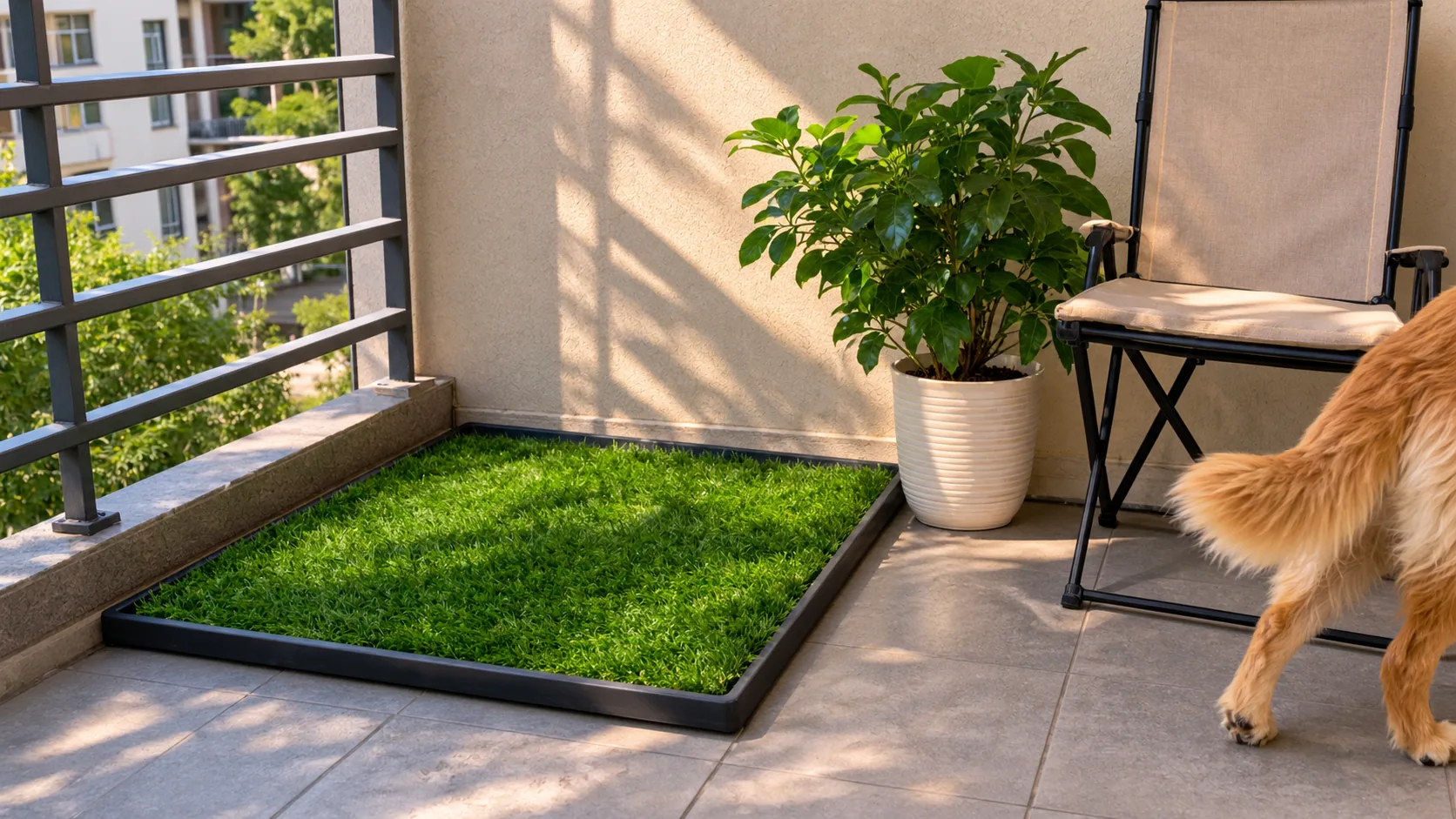
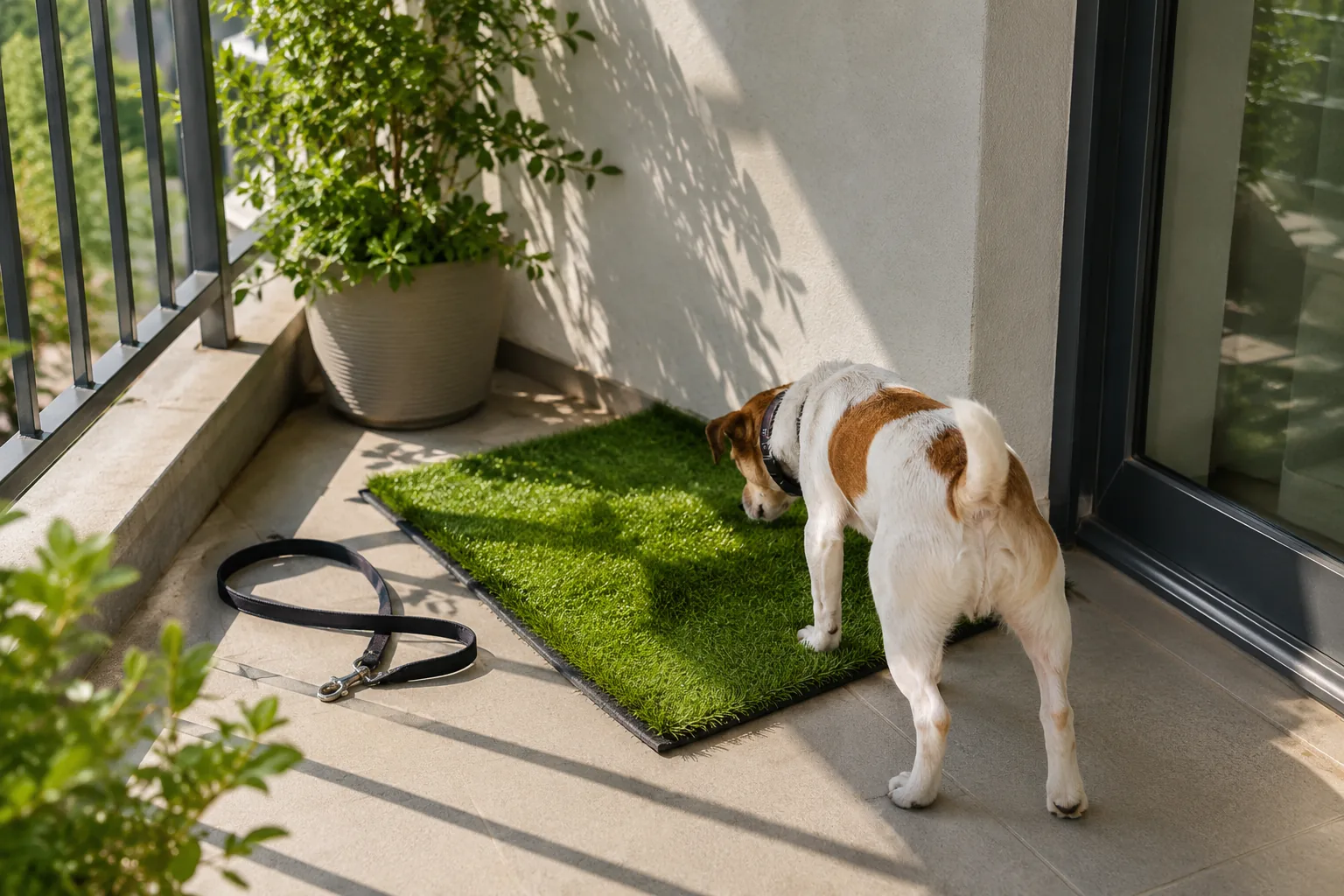
A grass pad suits a balcony or patio. Make the change in steps, not all at once.
- Set the grass pad next to the pad that is already working.
- Let your dog sniff it, then use the cue word and reward on it.
- Move the old pad partly under or beside the grass pad for a few days.
- Remove the old pad once your dog uses the grass pad on its own.
For this step we stock PawTerrace, an artificial grass dog pad for balconies, patios and indoor floors. It has a PE blade texture over multi-layer perforations that let liquid pass through, and a stitched border finishes the edges so you can place it against a wall, railing or door frame.
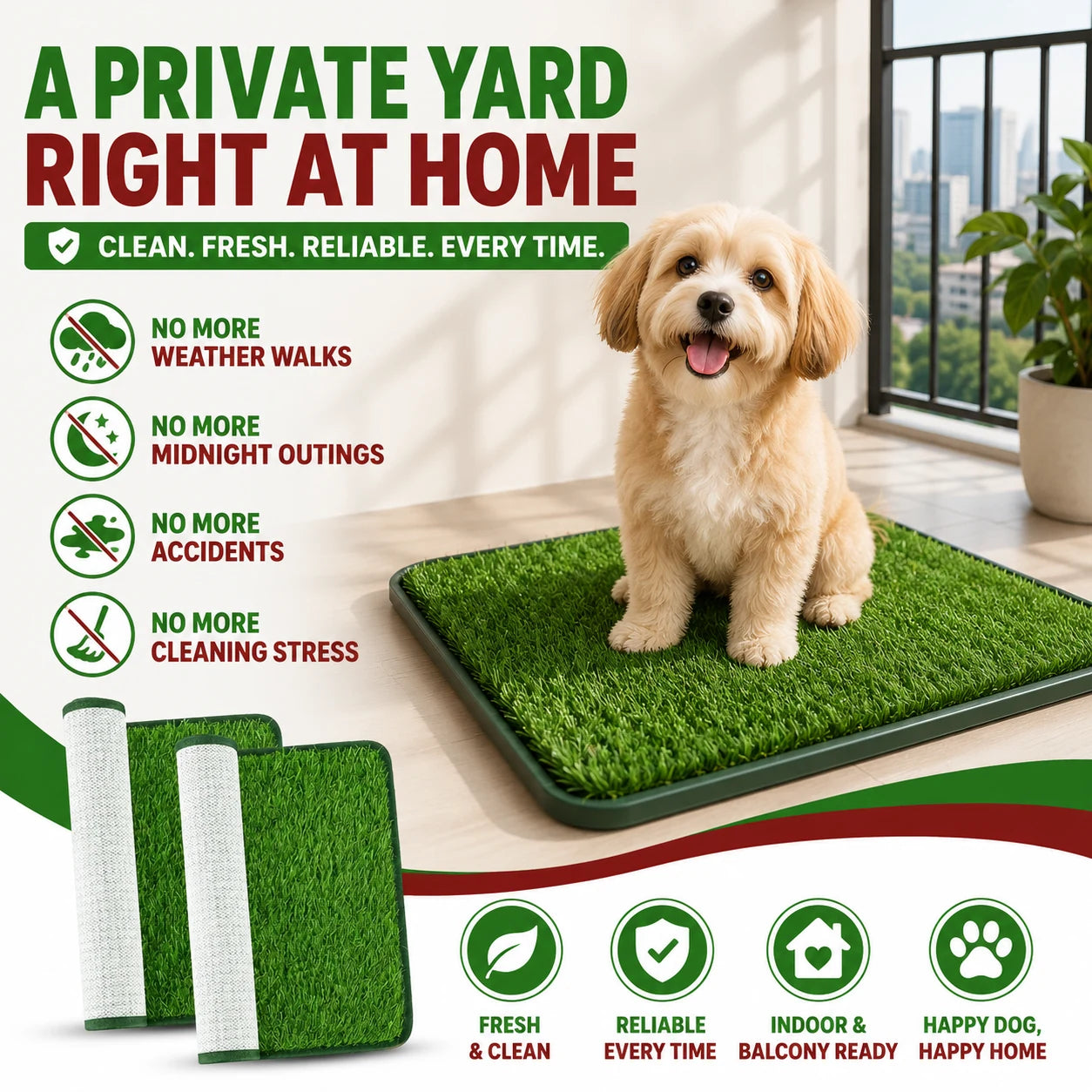 In this guidePawTerrace$59.99View
Lay it flat, let your dog sniff and step on the blades, and rinse it with running water after use. For a dog that hesitates, an attractant spray, sold separately, is something you can add on the first day. Indoors, set it over an easy-to-clean floor or a standard tray you already own. If you would rather build your own, see DIY Dog Grass Pad for Balcony for steps and drainage ideas.
Fixing common setbacks
| Problem | What to try |
|---|---|
| Dog goes next to the pad | Make the pad area larger again, then shrink it more slowly |
| Dog plays with or chews the pad | Stay with your dog, keep trips short, and remove the pad between visits |
| Poop lands off the pad | Take your dog out after meals, use the same spot and cue, and use a larger pad area or a larger pad if the misses continue |
| Accidents after weeks of success | Add trips back, check for a changed routine, and ask your veterinarian if it persists |
| Dog avoids a soiled pad | Change the pad or rinse the grass pad after use |
| Dog hesitates on grass | Go back to the side-by-side step and add the cue word and a treat |
Teaching pee and poop on the pad
Dogs often need to poop soon after eating, so the trip after a meal matters most. Use the same spot, the same cue word and the same reward. Praise calmly while your dog finishes, then give the treat.
Cleaning accidents
Blot, then use an enzyme cleaner on the floor. Scent left behind can draw your dog back to the wrong spot. Do not scold after the fact, since your dog will not link it to the accident. For the room-wide approach, see How to Get Dog Smell Out of the House. You can also browse cleanup supplies in our Home Comfort & Cleanup collection.
Going outside, plus a daily checklist
If you want your dog to go both on a pad and outdoors, keep the cue word the same in both places. Take your dog out on the same schedule and reward outdoors with the same treat. Use the pad for times you cannot go out, such as bad weather or when you are away. For a day-by-day outdoor routine, read Dog Potty Training Tips.
Daily checklist
- One spot, one surface, same place daily
- Trips after meals, naps, play and before bed
- One cue word used by everyone
- Reward within moments of finishing
- No scolding; clean with an enzyme cleaner
- Change soiled pads and rinse a grass pad after use
Keep the routine steady, and adjust one thing at a time when something slips.