How to Get Mats Out of Dog Hair: Brush-Out vs Clip-Out Steps
To get mats out of dog hair, check how tight the mat sits: brush out loose tangles, and send mats lying flat against the skin to a groomer or veterinarian.
The Millbrook Team
November 11, 2026 · 7 min read
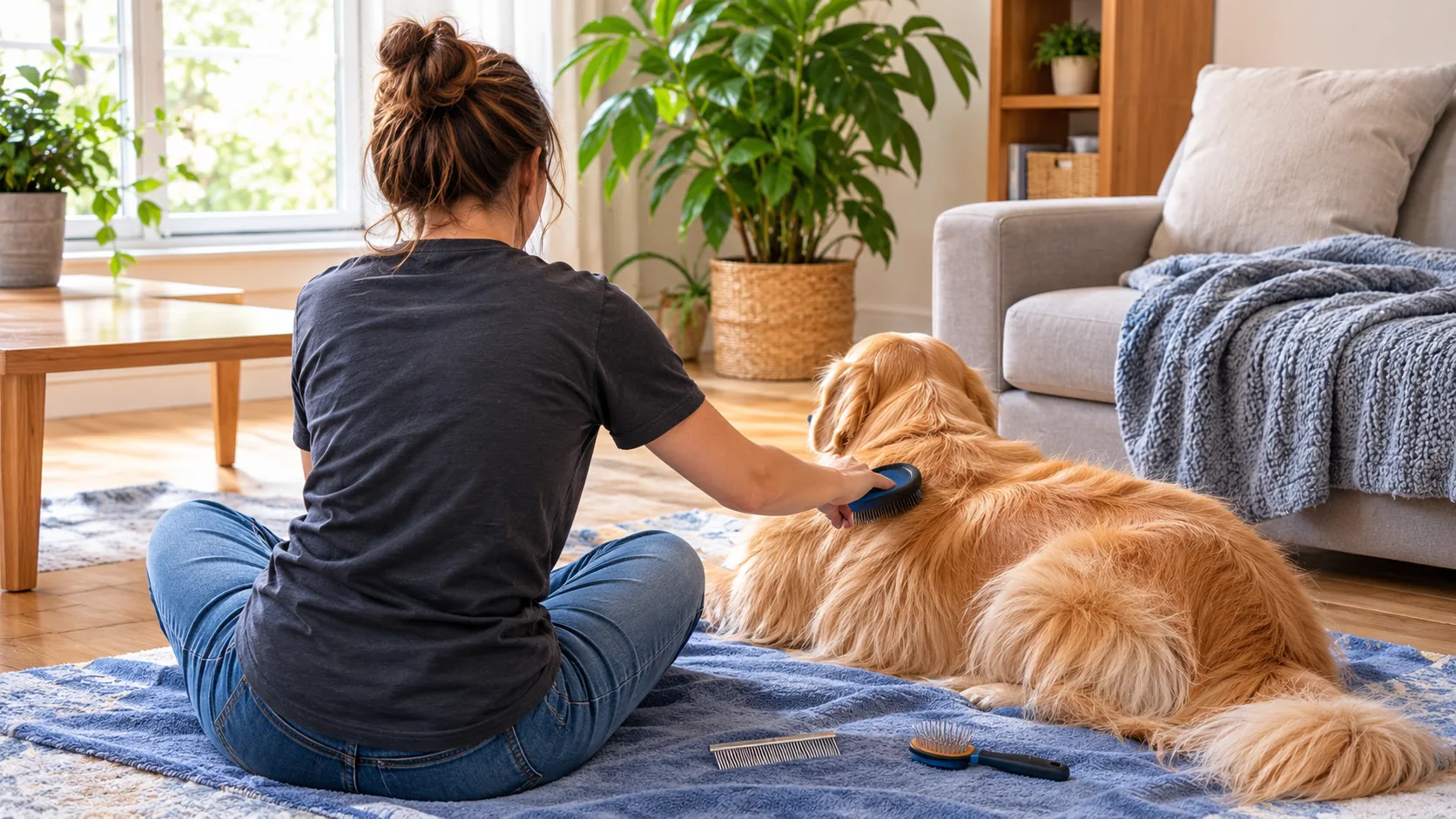
To learn how to get mats out of dog hair, first check how tight the mat sits. A loose, surface-level tangle can be brushed out with a detangling spray, a wide-tooth comb and a slicker brush. A mat you can lift clear of the skin with a comb can be clipped in small layers, and a mat that lies flat against the skin belongs with a groomer or veterinarian. This guide gives you a decision step, mat-by-mat technique and a prevention routine by coat type.
Matting forms when loose fur and live coat twist together, usually where friction is highest: behind the ears, around the collar, under the legs and along the harness line. Once a mat tightens, brushing over it only pulls on the skin, so the first job is to judge it correctly.
Brush out or clip out: the decision step
Part the fur around the mat and look at it in good light. Then slide a comb under the edge. The table below shows which route fits each situation.
| What you see and feel | Route |
|---|---|
| Small tangle, fur still separates at the edges, comb slides under | Brush out with spray, comb and slicker brush |
| Thick mat the size of a coin or larger, but a comb still passes under it | Split with a dematting tool, then brush out in layers |
| Mat is tight, but a comb passes between it and the skin | Clip out in layers with a clipper, or book a groomer |
| Mat sits flat against the skin, no gap for a comb | Do not cut it at home; book a groomer or veterinarian |
| Mats cover large areas, or skin looks red, scabbed or sore | Pause and call a groomer or veterinarian |
| Dog does not stand still or snaps when handled | Pause and ask a groomer or veterinarian |
If you are unsure, choose the cautious route. Scissors are the wrong tool for a mat close to the skin, because the skin can fold up into the mat without you seeing it.
What to gather before you start
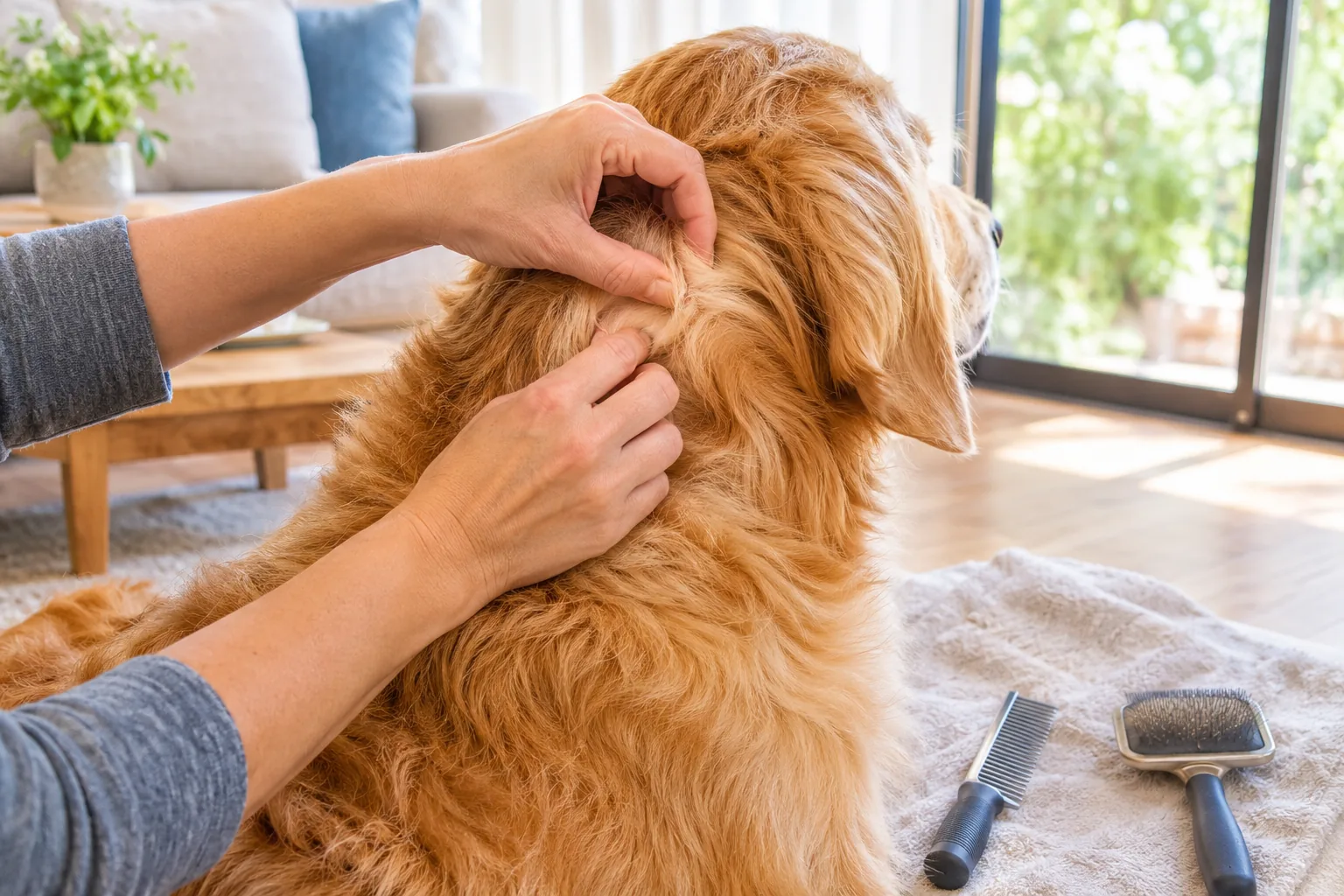
- A wide-tooth comb and a slicker brush
- A detangling spray made for dogs
- A dematting tool or mat splitter, if the mats are thick
- A clipper for small areas that need trimming
- Treats, a towel or non-slip mat, and a helper to hold the leash
Work on a dry coat. Water tightens a mat, so do not bathe a matted dog before you have brushed out what you can. Bathing and drying is the step to do after the mats are gone.
How to get mats out of dog hair by brushing
- Spray the mat lightly with detangling spray and let it sit while you pet and reward your dog.
- Hold the fur at the base, between the mat and the skin, so the brush does not tug the skin.
- Pick the outer edge of the mat apart with your fingers or the tip of the comb, working from the tip of the hair toward the skin.
- Brush the freed fur with the slicker brush in short strokes, one small section at a time.
- Finish by combing the whole area with the wide-tooth comb. If the comb catches, a smaller mat is still there.
Keep each session short. Brush for 5 minutes, then give your dog a break and a treat. A thick mat may take several sessions across days, so plan for more than one night. If the dog resists or the skin looks irritated, pause and ask a groomer.
Using a dematting tool
A dematting tool or mat splitter cuts a thick mat into narrow strips that you can then pick apart. Follow the tool's instructions, keep the blades pointed away from the skin and use it only on mats you can lift clear of the body. Brush each strip out before you split the next.
Knots behind the ears
Ear fur is thin and sits close to a fold of skin, so hold the ear flat in your palm and support the base of the knot with your fingers. Use the comb tip, not the slicker brush, and work in tiny sections. If the knot sits against the skin, leave it for a groomer.
How to clip out a mat that does not brush out
Clip at home only when a comb can pass between the mat and the skin. Check the clipper manual first, charge the clipper and make sure the blade is clean. Lift the mat away from the skin with the comb, then run the clipper in the direction the hair lies, taking the mat off in layers rather than in one pass. If the mat lies flat against the skin and no comb fits under it, book a groomer or veterinarian.
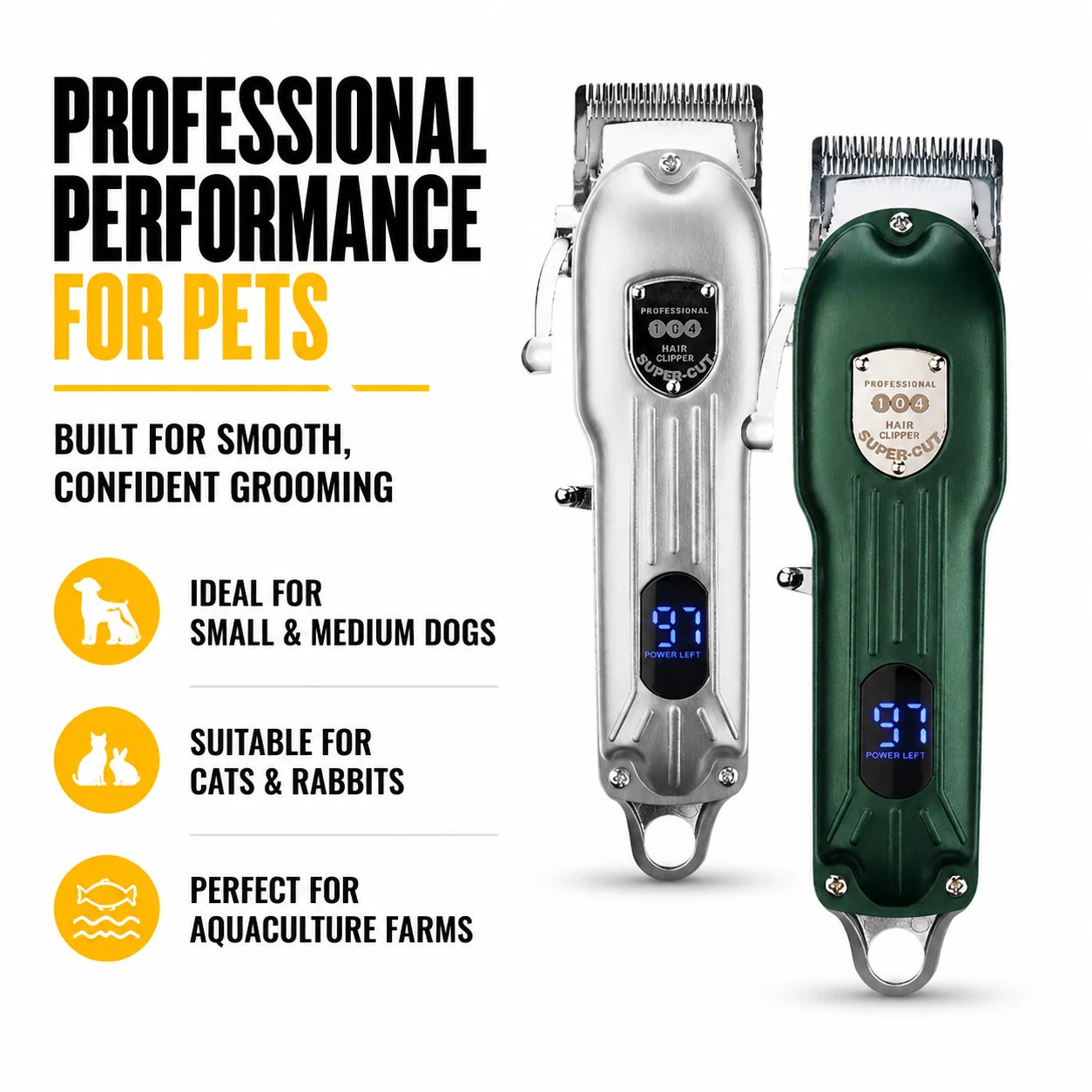
TrimVelvet is a cordless pet hair clipper with steel blades that have a curved R-shaped edge, four blade positions and four guide combs (3mm / about 1/8 inch, 6mm / about 1/4 inch, 10mm / about 3/8 inch and 12mm / about 1/2 inch). Its LED display shows the battery level and an oil reminder, and the rounded blade profile suits small areas such as paws, ears and the muzzle.
 In this guideTrimVelvet$99.99View
Field note
Clip toward the end of the session, after you have brushed out what you can. A smaller mat leaves less to clip, and you keep more of your dog's coat.
Detangling by coat type: poodles, doodles and others
Curly and double coats hide mats close to the skin, so brush down to the skin rather than over the top. The method for a poodle's coat is line brushing: part the hair with one hand, brush a thin layer from the skin outward and move up row by row.
| Coat type | Where mats form | Weekly routine |
|---|---|---|
| Poodle, doodle, curly coat | Armpits, behind ears, tail base | Line brush the whole body, then comb through |
| Long silky coat | Behind ears, feathering on legs | Comb and slicker brush, spray on dry areas |
| Double coat | Behind the ears, britches, undercoat | Undercoat rake or slicker brush, then comb |
| Short-coated breeds | Rarely mat; check under the collar | Brush for loose fur, check the harness line |
Coats that sit under a collar or harness need a check there each time you take it off.
Do mats bother a dog, and is matting neglect?
Mats pull on the skin whenever the dog moves, and a tight mat can hide skin that is red, damp or sore. Any dog whose skin looks irritated under a mat should be seen by a veterinarian or groomer.
Severe matting can be seen as a welfare concern, and rules differ by state. Regular brushing is part of everyday care, so build a routine and book a groomer when the coat is beyond what you can handle. Asking for help with a badly matted coat is the right step.
Prevent mats from coming back
A weekly brushing schedule is the main habit, and the coat table above shows what to do for each type. Add these habits:
- Brush before every bath and dry the coat fully afterward, since damp fur tangles.
- Check the collar, harness line, armpits and behind the ears each week.
- Trim fur around the paws, ears and hindquarters on a schedule.
- Book a groomer for a full trim when your dog's coat gets long.
Browse our Grooming & Paw Care collection for brushes and tools to build that routine.
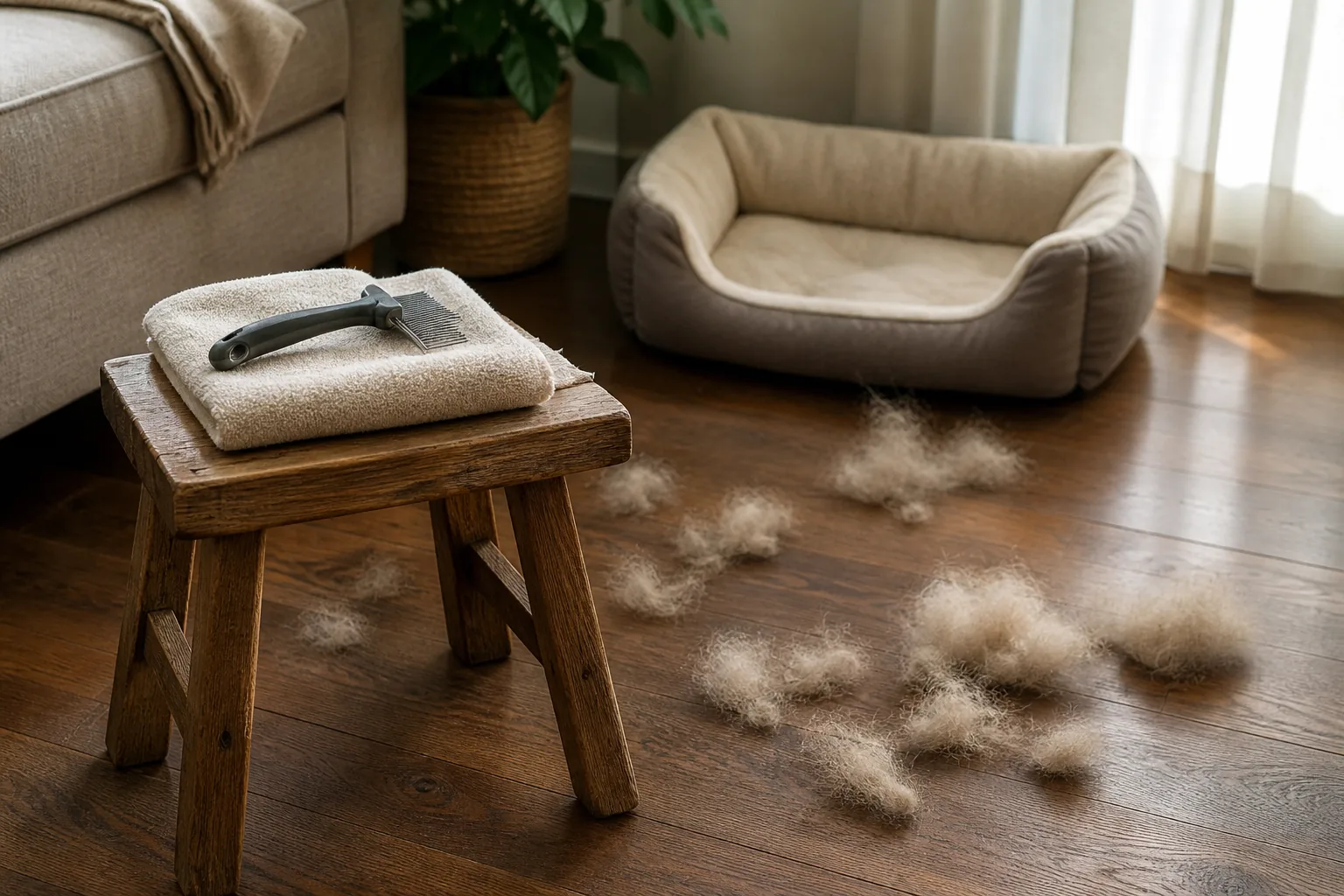
Clean up the fur after brushing
Brushing and clipping leave a lot of loose hair. Brush the dog outdoors if you can, and shake out towels before washing them.
How to get dog hair out of blankets
- Shake the blanket outside to loosen surface fur.
- Wipe it with a damp rubber glove or run a lint roller over it, pulling the hair into clumps.
- Wash it following the care label.
- After the dryer cycle, clean the lint trap so the hair it collected is removed.
For bedding with foam and covers, read Cleaning a Dog Bed: Foam, Cover and Hair Removal Steps. For upholstery, How to Get Dog Hair Off a Couch, by Fabric Type covers each fabric.
Fur on hard floors
Tufts that land on the floor during a session can be picked up by a robot vacuum. PawSweep Pro is a robot vacuum and mop for homes with pets. It uses flexible rubber extractors instead of bristle brushes, collects hair in a 300 ml (about 10 oz) dust bin and passes a water-fed mop pad over hard floors. Empty the dust bin when a run ends and check the brushes and mop pad. More floor and fabric tools are in our Home Comfort & Cleanup collection.
 In this guidePawSweep Pro$159.99View