How to Trim Overgrown Dog Nails Gradually, Step by Step
Do not cut long nails back in one sitting. Take off a little at a time, alternating clipper and grinder over several weeks, and call a groomer if a nail curls into the paw.
The Millbrook Team
November 4, 2026 · 6 min read
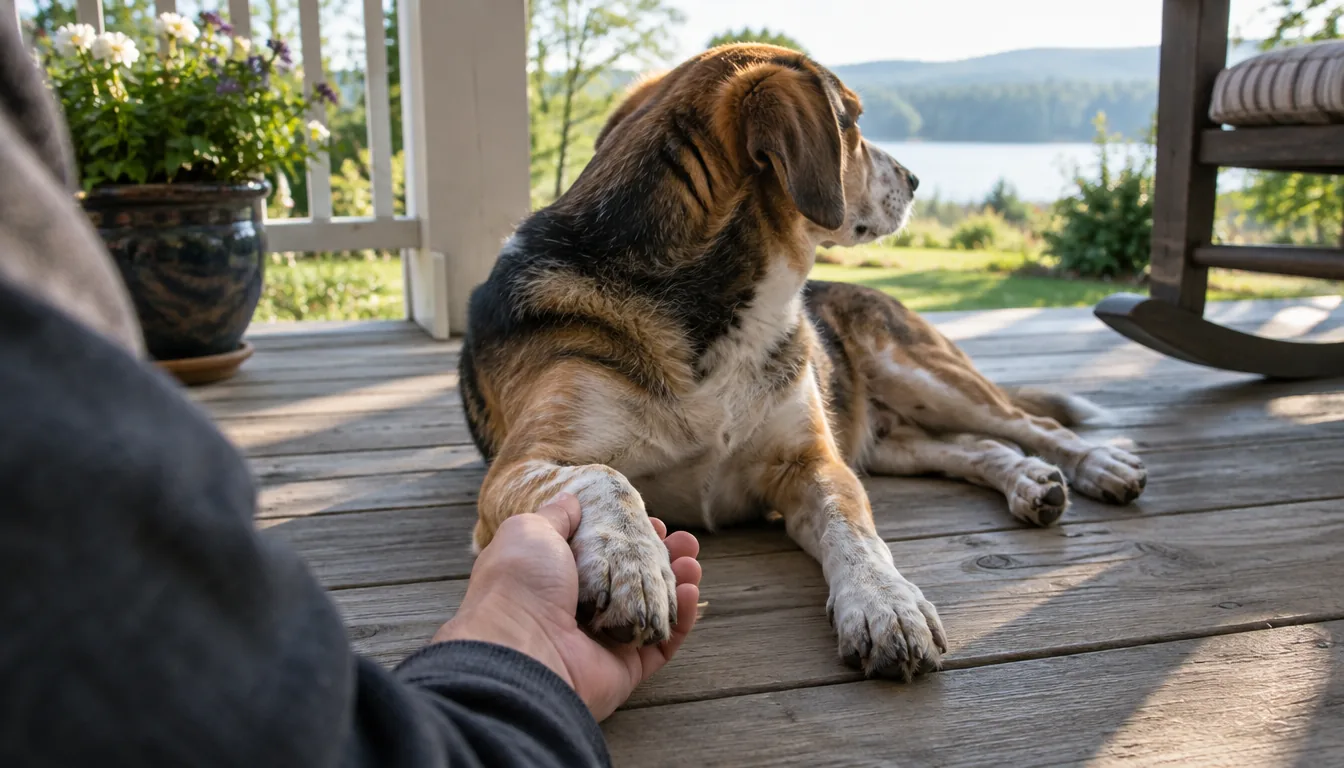
How to trim overgrown dog nails comes down to taking off only a small amount at the tip every few days, instead of cutting back to the target length at once. Alternate a clipper and a grinder, and plan for a gradual routine over several weeks, at your dog's pace. If a nail is curled into the paw, keeps bleeding, or your dog will not allow handling, stop and call a groomer or veterinarian.
Below you will find a week-by-week schedule, a tool comparison, a method for black nails, and clear points to stop.
Why overgrown nails need a gradual plan
Inside each nail is the quick, a bundle of blood vessels and nerves. When a nail grows long, the quick grows with it. For anyone learning how to trim overgrown dog nails, this is the key point: cutting to the ideal length in one session means cutting into live tissue, which causes bleeding and can make your dog dislike every later trim.
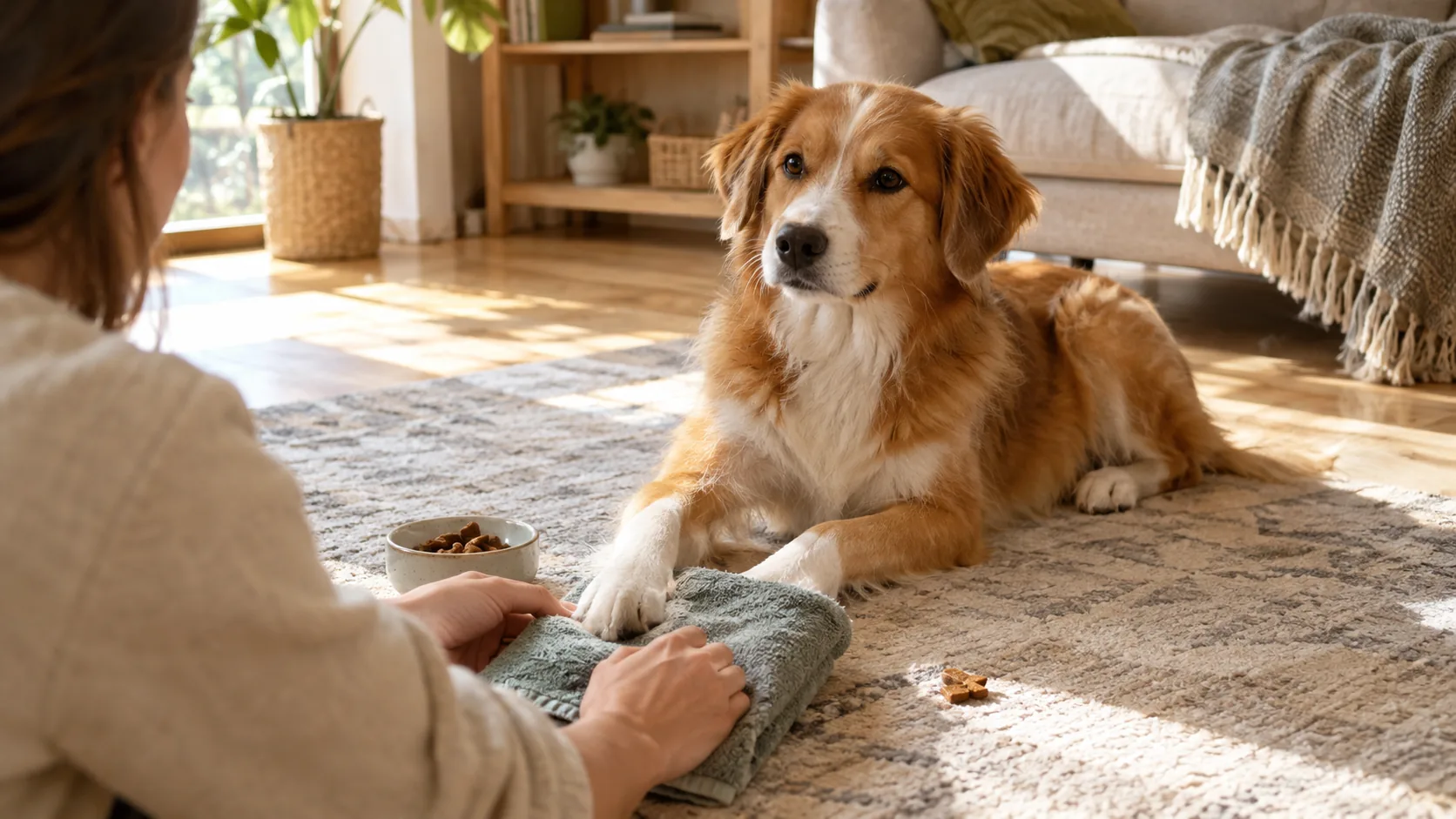
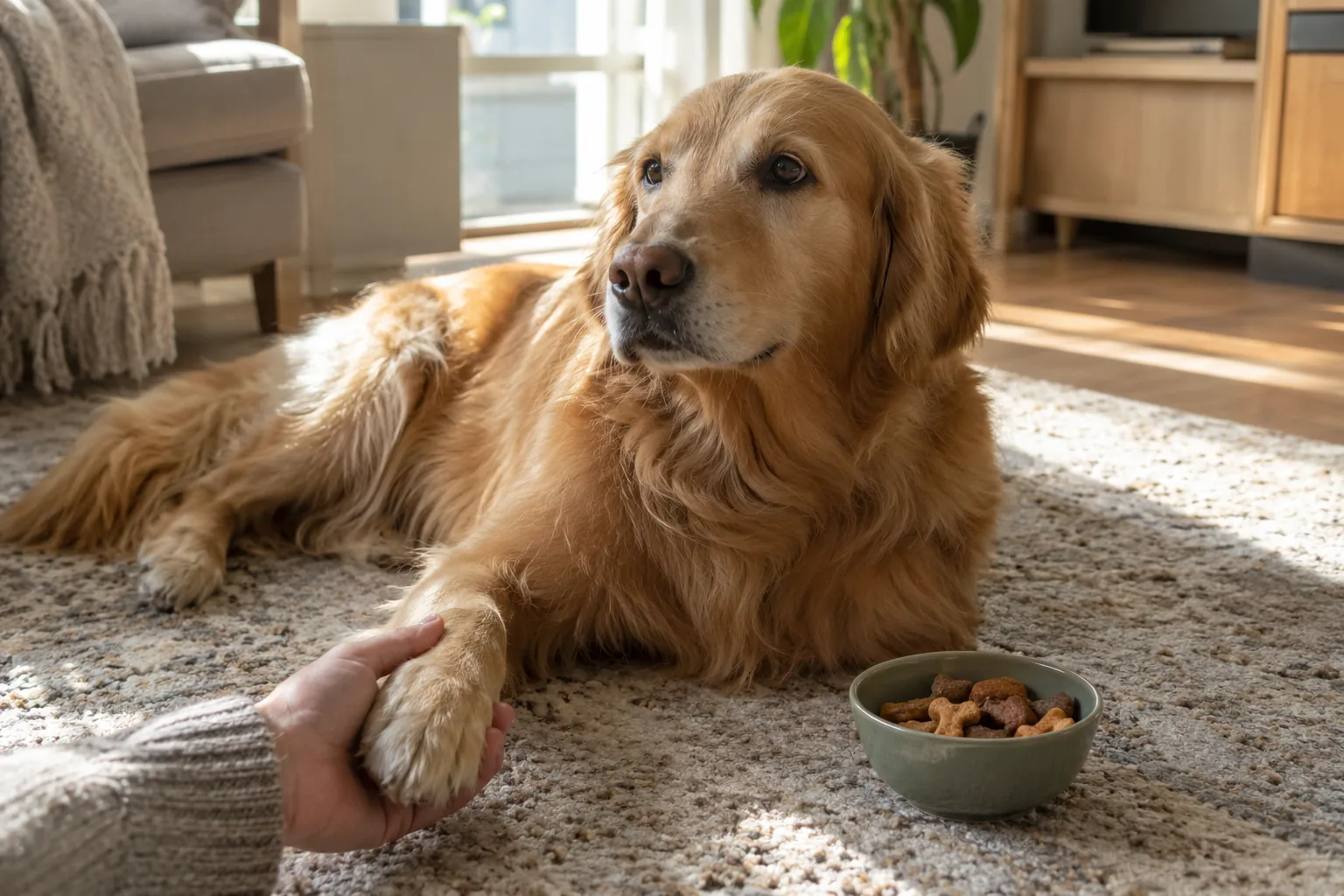
Trimming a little at a time keeps each session low-stakes. Short, frequent sessions also give you repeated chances to pair paw handling with praise and treats, so your dog learns that having their paws touched leads to something good.
Signs the nails are too long
- You hear clicking on hard floors.
- The nails touch the ground when your dog stands still.
- Nails curve sideways or under the toe.
- The toes look splayed, or dewclaw nails snag on fabric.
Clipper or grinder for long nails
Both tools work on overgrown nails. A hand clipper removes a defined piece with one squeeze. A grinder wears the nail down in short passes, so you can stop as soon as the nail changes appearance. Alternating them gives you a fallback when your dog dislikes one of them.
Clippers come in two common styles: guillotine clippers, where the nail passes through a ring, and scissor-style clippers that cut from the side. Choose a size that matches the nail, and check the manual for use.
| Feature | Hand clipper | Grinder |
|---|---|---|
| How it works | Squeeze to cut in one motion | Diamond head sands the nail in passes |
| Good for | Taking off the long, hooked tip | Rounding edges and shortening in small steps |
| Noise | A click, no motor | A motor your dog must get used to |
| Watch for | Cutting too much in one cut | Heat from staying on one nail too long |
For a deeper comparison, read how to use a dog nail grinder, plus grinder vs clippers.
Tools to gather before you start
- A hand clipper sized to your dog's nails, plus a file.
- A grinder with a diamond head, charged before the session.
- Styptic powder, in case a nail bleeds.
- Small, soft rewards your dog loves.
- A bright light and a non-slip surface.
The PreciTrim is a hand-operated clipper with an adjustable aperture dial for cat and dog nail sizes. Its clear guard lets you look at the nail from the side while you line up the blade, including on dark nails, and a nail file is built into the handle.
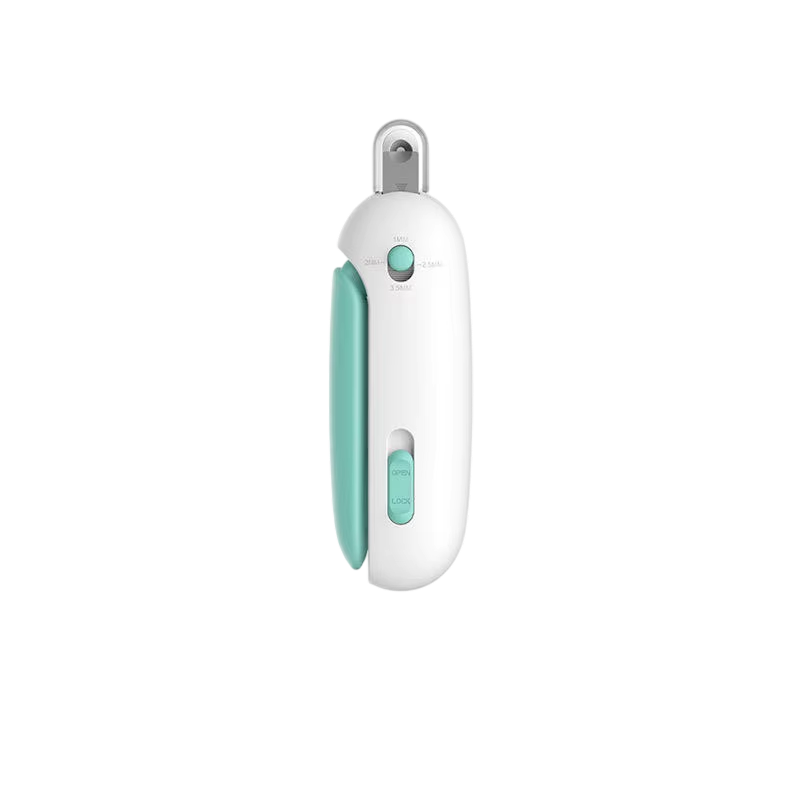 In this guidePreciTrim$69.99View
For the grinding days, the PawHush is a rechargeable grinder with a diamond grinding head and six speed settings from 7,000 to 12,000 RPM. Dual LEDs light the nail while you work, and three ports (S, M and L) fit different nail widths. An introduction card in the box lays out a gradual plan for getting your dog used to it.
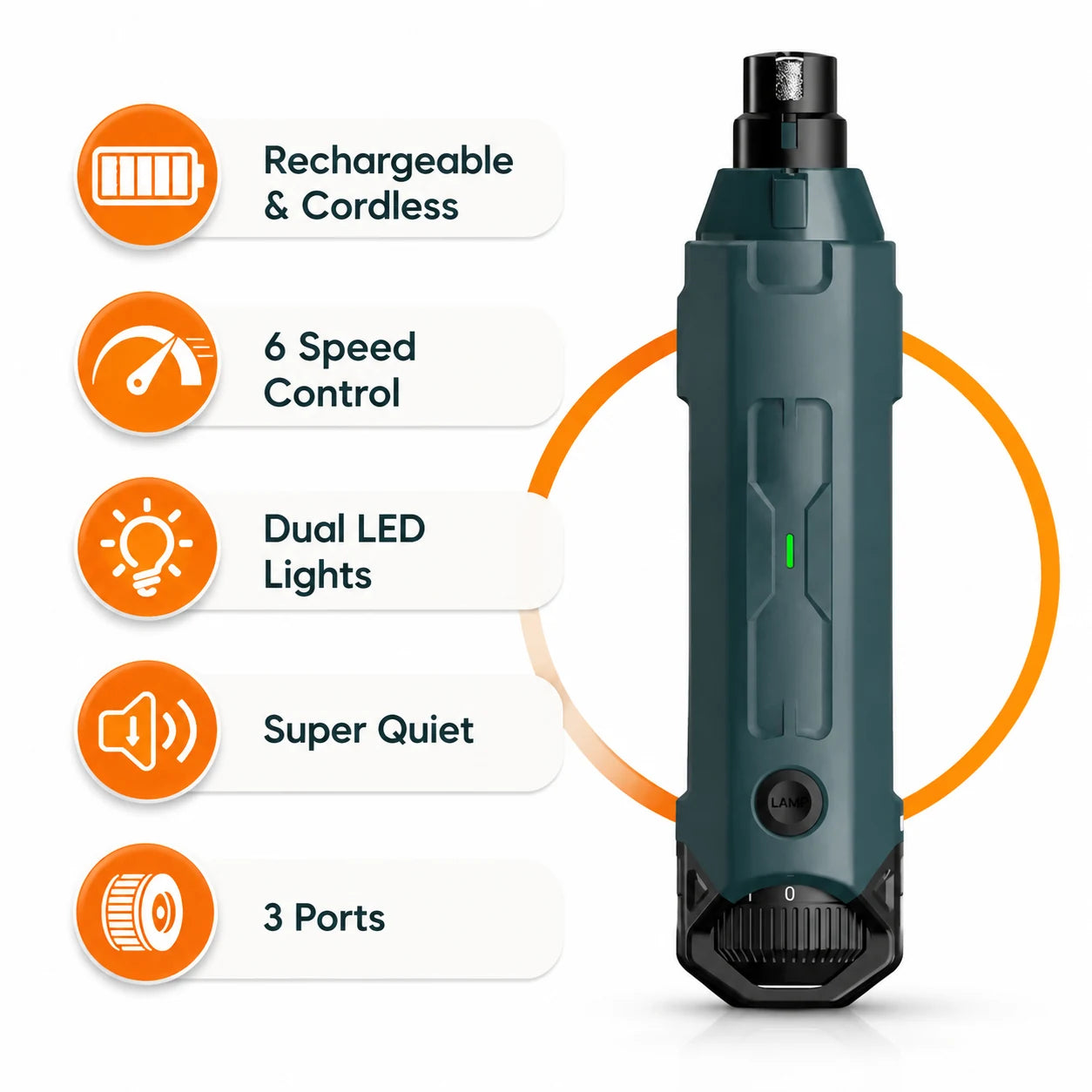 In this guidePawHush$89.99View
A weekly schedule for how to trim overgrown dog nails
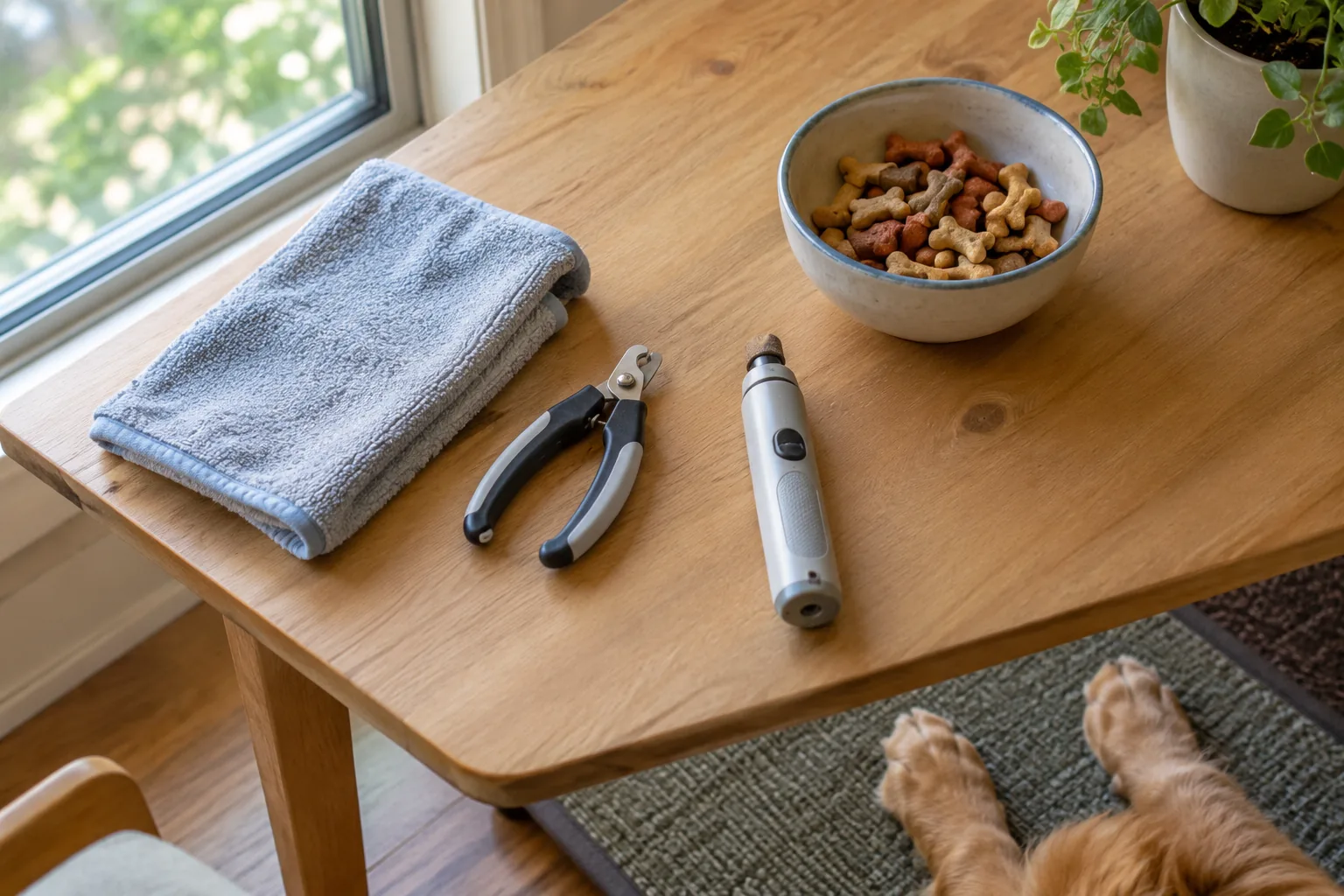
Plan on three or four short sessions per week. End each one while your dog is still relaxed, even if only a few nails are done. Adjust the pace to your dog.
| Week | Clipper day | Grinder day | Goal |
|---|---|---|---|
| 1 | Handle paws, touch the clipper to nails, no cutting | Run the grinder across the room with rewards | Calm acceptance of tools |
| 2 | Clip only the very tip of each hooked nail | Brief touches on one nail, then a full paw | First small cuts |
| 3 | Take another thin slice from the tip | Short passes on every nail, rounding the edges | Thin slices on every nail |
| 4 | Check the cut face and clip only if needed | Shape and smooth all nails | A steady routine |
After week four, keep trimming on a regular schedule. If the nails are still long, repeat weeks 2 and 3 at your dog's pace.
Step by step: a single session
Clipper session
- Settle your dog in a calm spot and hold one paw firmly but gently.
- Set the clipper opening to match the nail.
- Look at the nail from the side and place the blade just past the hooked tip.
- Angle the blade about 45 degrees to the nail and squeeze once.
- Check the cut face. If you see a gray or pink dot in the center, stop on that nail.
- Smooth the edge with a file and reward your dog.
Grinder session
- Choose the port that matches the nail width and start on a low speed.
- Let your dog sniff the grinder while it runs across the room, then move closer in stages.
- Touch the nail briefly, then grind in short passes, lifting often.
- Stop before you reach the quick, and move to the next nail.
Follow the manual for charging and use. For clipper basics, see how to use a dog nail clipper without hitting the quick.
Field note
Trim after a walk or play, when your dog is tired. Keep styptic powder within reach before you start, not after a nail bleeds.
Black nails and finding the quick
On light nails you can often see the pink quick through the nail. On black nails it is hidden, so cut in very thin slices and look at the cut face after each one. A small dark or gray dot in the center signals you are approaching the quick.
A clear guard on the clipper lets you view the nail from the side, and the grinder's LEDs light the nail while you work. With a grinder, stop when the nail's surface looks moist or the center appears darker.
If a nail bleeds
Press styptic powder onto the nail tip and hold gentle pressure. Keep your dog calm, end the session, and try again in a few days. If bleeding continues, call your veterinarian.
When to stop and call a groomer or veterinarian
- A nail is curled into the paw pad or the skin around it looks red.
- The nails are so long that you cannot tell where the quick ends.
- Your dog growls, snaps or panics when you handle the paws.
- A nail is cracked, split or bleeds repeatedly.
For a curled nail, do not try to cut it free at home. Ask a veterinarian to examine it. If you wonder about calming medication for a dog that resists nail trims, that is a question only a veterinarian can answer; do not give your dog any sedative yourself.
Groomers and veterinary staff work with uncooperative dogs using experience, extra handling help and options only a veterinarian can decide on. Booking a visit for the first big reset, then keeping up with short sessions at home, is a sound split of the work.
Common mistakes and how to avoid them
- Cutting too much at once, which reaches the quick.
- Starting with the loudest or scariest tool before your dog is ready.
- Long sessions that end with a stressed dog.
- Skipping the file or the smoothing pass, leaving rough edges.
- Waiting weeks between trims, so the nails lengthen again.
Knowing how to trim overgrown dog nails also means knowing the pace: small cuts, frequent sessions and rewards for your dog's paws being handled. If you are working with a young dog, how to clip puppy nails covers short sessions for getting used to it. You can find more tools in our Grooming & Paw Care collection.