How to Wash Dog Toys: Rubber, Rope and Plush, Step by Step
Rubber toys take warm soapy water or the top rack, rope toys need a soak and a scrub, and plush toys go in a mesh bag. Here are the steps, a schedule and the signs to toss a toy.
The Millbrook Team
November 28, 2026 · 6 min read
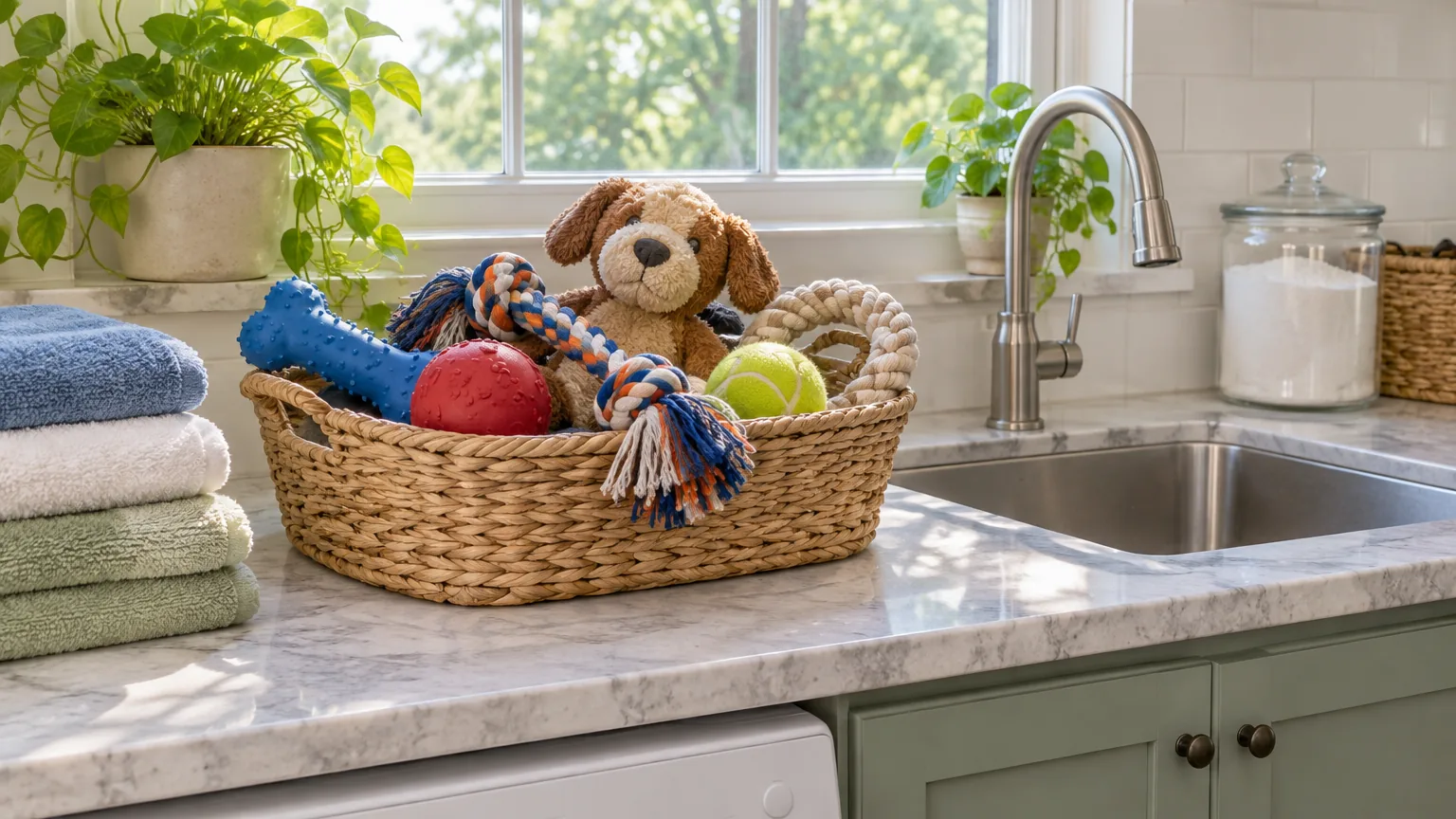
How to wash dog toys depends on the material: rinse rubber in warm soapy water, soak and scrub rope, and machine-wash plush in a mesh bag on a gentle cycle. Rinse out all soap, then let every toy dry fully before it goes back in the toy box. This guide gives the steps for each material, a wash schedule and the signs that a toy has reached the trash.
Toys and dogs spend a lot of time together: dogs carry toys in their mouths, drag them across the yard and drop them on the rug. A regular wash keeps the toy box tidy and lets you look each toy over for damage at the same time.
What to gather before washing dog toys
Set up one wash station so you can wash a batch together. You need very little:
- Mild, unscented dish soap
- A bottle brush or an old toothbrush for grooves and seams
- A bucket or a clean sink
- A mesh laundry bag for plush toys
- Clean towels and a drying rack
Skip bleach, strong cleaners and scented sprays, since a dog will put the toy right back in its mouth. Follow the manual for your washing machine and dishwasher, and check any care tag on the toy first.
How to wash dog toys by material
Sort the toys into piles first: rubber, rope and plush. Each pile gets its own method, and the table below sums them up before the detailed steps.
| Material | Wash method | Dry method | Avoid |
|---|---|---|---|
| Rubber | Warm soapy water and a brush, or the top rack of a dishwasher if the product page allows it | Air dry on a rack | Bleach, harsh cleaners |
| Rope | Soak in warm soapy water, scrub, rinse | Air dry until no damp spots remain | Putting away damp |
| Plush | Mesh bag, gentle cycle, mild soap | Air dry or low-heat dryer if the care tag allows | Fabric softener, high heat |
| Squeaker or electronic parts | Wipe the surface with a damp cloth | Air dry | Soaking the toy |
Rubber toys
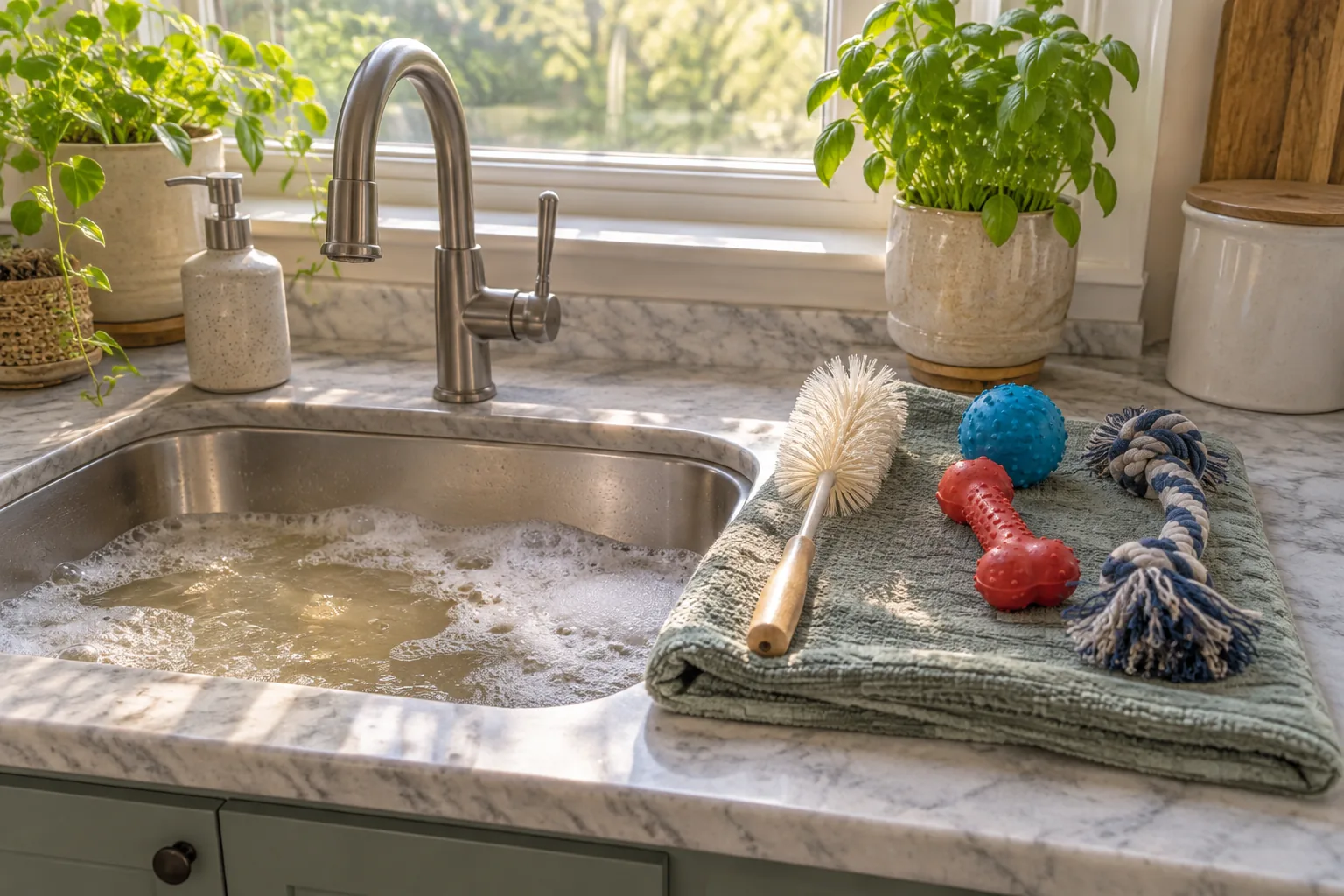
Rubber has a firm, solid surface that suits a brush. Fill a sink with warm water and a little dish soap, then scrub the whole toy, working into every groove and nub. Rinse under running water until no suds remain, then set it on a rack.
Food stuck in grooves is a frequent trouble spot. If you press peanut butter or a paste made for dogs into a toy, rinse it out after the chew session so it does not harden in the texture.
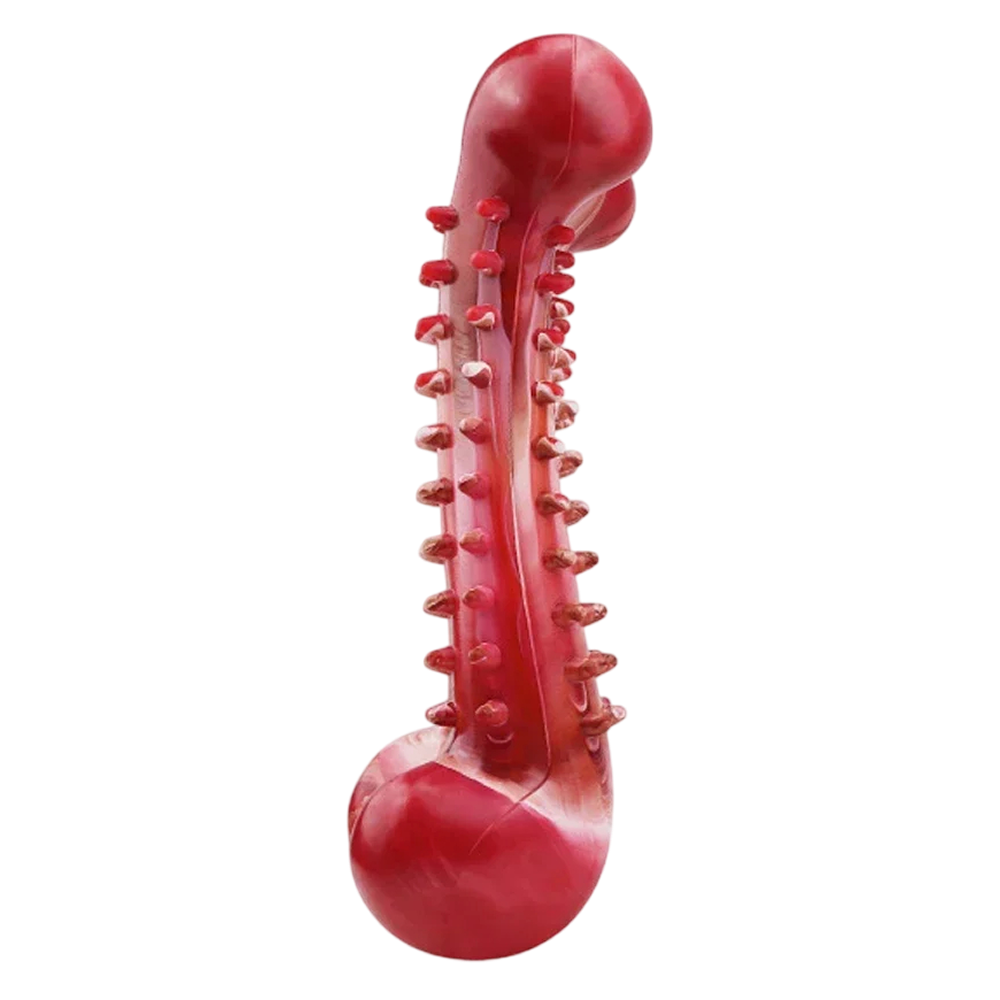
The Gnawvik is a good example. It is a bone-shaped chew toy made of dense natural rubber with grooves and raised nubs, and the product page says to rinse it with warm soapy water or use the dishwasher, then let it dry for the next round. Its top-rack dishwasher cleanup is the option to use when the grooves are packed with paste.
 In this guideGnawvik$49.99View
Rope toys
Rope holds on to saliva and dirt in its fibers, so it needs a soak. Fill a bucket with warm water and dish soap, submerge the toy and soak for 10 minutes. Scrub along the strands with a brush, then rinse until the water runs clear.
Squeeze out extra water with a towel and stand the toy upright or hang it so air reaches the center. Rope that feels damp deep inside should stay out of the toy box. Some owners wash rope in a mesh bag on a gentle cycle, but check the care tag first, because loose strands can tangle.
Plush toys
Plush toys with stuffing have fabric and fill, so they need a different method. Put the toy in a mesh bag, add mild soap and run a gentle cycle. Skip fabric softener, which leaves a scent and a residue behind.
If the toy has a squeaker or crinkle layer, spot clean the surface with a damp cloth instead. Air dry plush toys, and if the care tag allows a dryer, use low heat. Fluff the toy by hand once it is dry.
How often to wash each toy
Frequency depends on how the toy gets used. A toy that lives in the yard needs washing sooner than one that stays by the couch. Use this table as a starting point and adjust to how dirty the toy looks and smells.
| Toy type | Wash schedule | Look-over check |
|---|---|---|
| Rubber chew toy used with paste | Rinse after each session, full wash weekly | Cracks, torn nubs |
| Rubber toy used without paste | Full wash every couple of weeks | Cracks, chunks missing |
| Rope toy | Wash monthly, sooner if it gets wet or muddy | Frayed or loose strands |
| Plush toy | Wash every couple of weeks, sooner after outdoor play | Open seams, exposed stuffing |
| Toys that went outdoors | Wash the same day if muddy | Embedded dirt, damage |
Tie the wash to something you already do, like laundry day or the weekend dishes. Washing dog toys on a fixed day makes the schedule easy to remember.
Field note
Rotate toys: keep a few out and wash the rest. Rotating also gives each washed toy time to dry fully before it goes back out.
When to throw a dog toy out
Washing does not repair damage. Go through each toy as you wash it and discard it when you see any of these:
- Cracks, deep splits or pieces missing from a rubber toy
- Stuffing showing through a plush seam or hole
- A squeaker that has come loose or is exposed
- Rope that has unraveled into long strands your dog could swallow
- A sticky, crumbly or chalky surface that does not wash off
- A smell that stays after a full wash
If your dog swallows a piece of a toy, or you are unsure whether a fragment was swallowed, contact your veterinarian promptly. If your dog tears through soft toys, a firm rubber chew is one option; when you shop for dog toys that are durable, match the toy's size to your dog and keep checking it for wear.
If chewing is aimed at furniture rather than toys, see how to stop dogs from biting furniture for redirection steps. You can also browse play gear in the Training, Behavior & Play collection.
Drying and storing clean toys
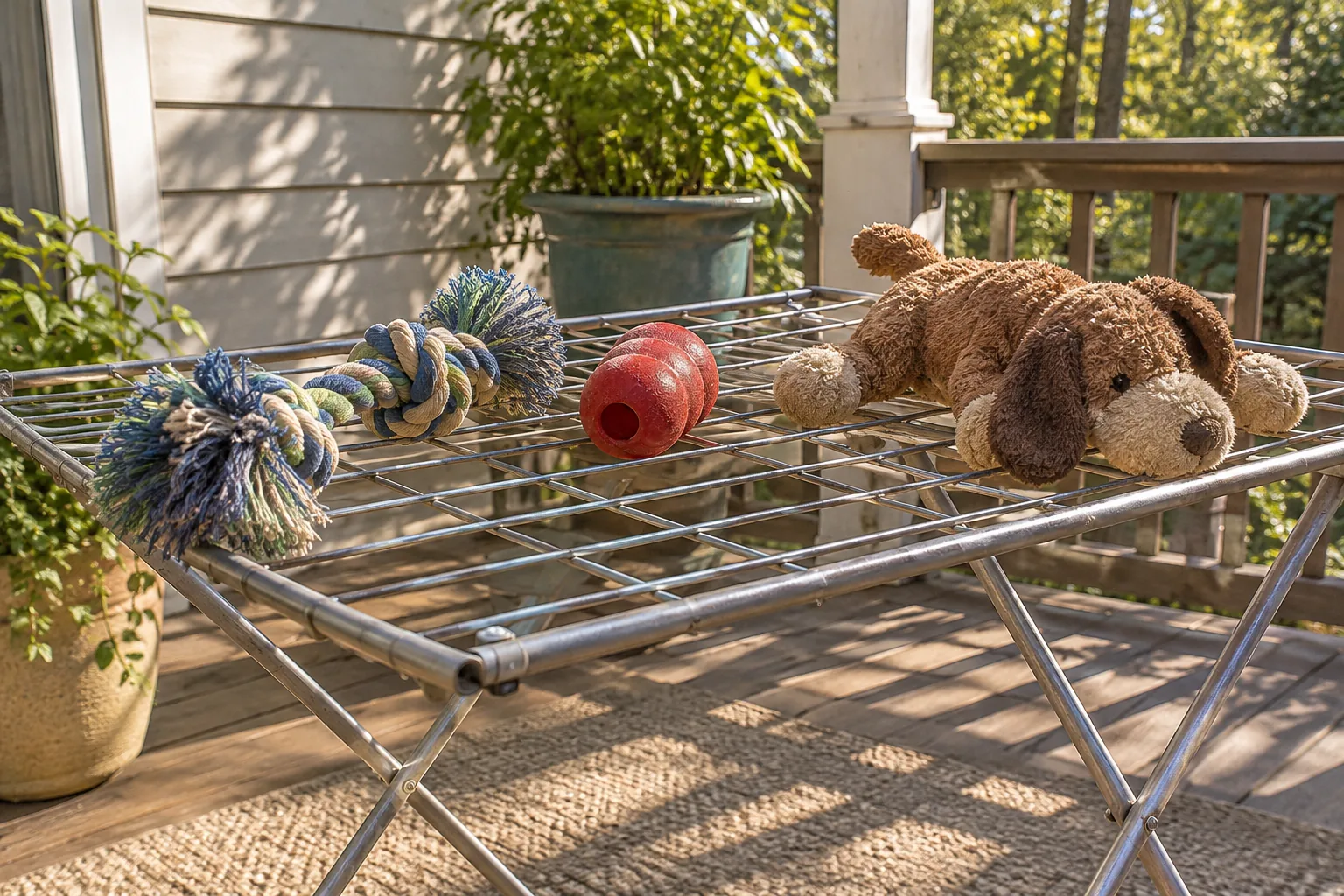
Drying is the step where a wash can go wrong. A toy that goes back damp can smell musty and leave a wet spot in the toy box. Spread the toys on a rack with space between them so air reaches every side.
Once the toys are dry, store them in an open bin or basket instead of a sealed container. Wash the bin itself with the same mild soap when you do the toys.
Common mistakes when washing dog toys
- Using scented soap or fabric softener on toys your dog will chew
- Leaving suds in the grooves or seams of a toy
- Soaking toys with a squeaker or electronic part
- Skipping the damage check after the wash
- Washing every toy in one load, so rope fibers and plush stuffing get mixed
Do the steps in order: sort, wash by material, rinse, dry, inspect. A toy that passes the inspection goes back into rotation, and one that fails goes in the trash.