How to Stop Dogs From Biting Furniture: Causes and Redirection
Find out why your dog chews, then redirect it: chew toys for teething, exercise and food puzzles for boredom, and short practice absences for time alone.
The Millbrook Team
November 4, 2026 · 7 min read
To learn how to stop dogs from biting furniture, find out why your dog is chewing, then give the chewing a proper target. Teething, boredom and being left alone each call for a different redirection step, and a daily routine of exercise, chew items and food puzzles fills the gaps. Scolding after the fact does not teach a dog anything, so focus on management and replacement.
This guide matches each cause to a specific fix, covers sprays and home remedies, and ends with a daily enrichment schedule you can copy.
Why dogs chew furniture
Chewing is natural for dogs. It is how they explore the world, how puppies handle changing teeth and gums, and one way a dog uses up energy or occupies itself when unsettled. Table legs, couch corners and baseboards are easy targets because they are within reach and have an interesting texture.
Look at when and where the chewing happens. The pattern points to the cause, and the cause points to the fix. The table below links each common cause to the step that fits it.
| Cause | Clues | Redirection step |
|---|---|---|
| Teething | Puppy, chews many household items, mouths everything | Offer chew toys of different textures and swap them often |
| Boredom | Chewing while you are home, often in the evening | Add exercise, training and food puzzles before the chewing starts |
| Being left alone | Damage near doors, windows or where you left; pacing or whining | Practice short absences and leave a planned activity |
| Habit or attention | Dog glances at you while chewing | Calmly swap the item for a toy, then reward the switch |
| Health concern | Sudden change, dropping food, pawing at the mouth | Ask your veterinarian to check |
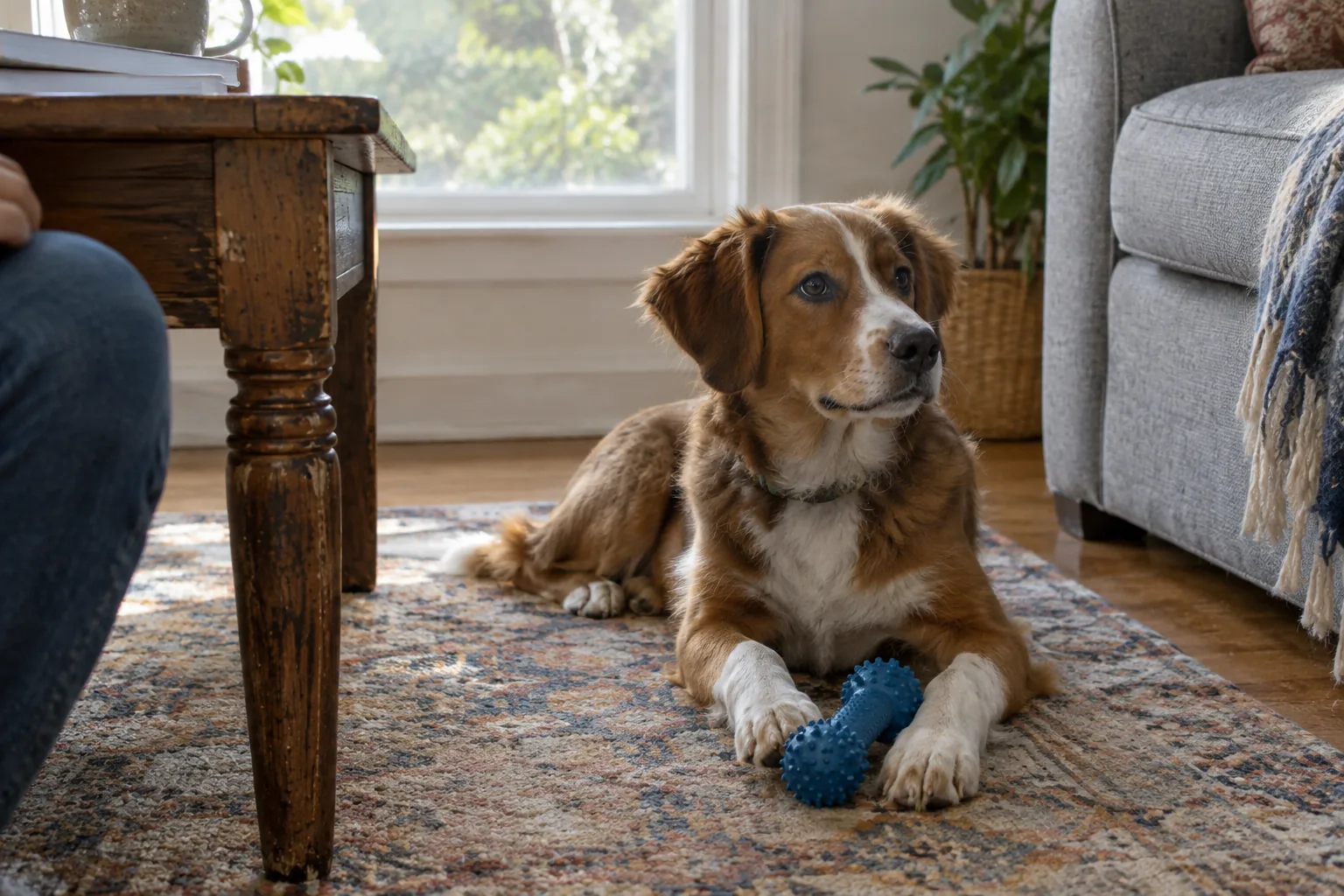
Rule out other problems first
A dog that suddenly starts chewing furniture may have a mouth problem, an upset stomach or other trouble. If the behavior is new, intense or comes with changes in appetite or energy, ask your veterinarian to check before you begin training.
Also review the basics. A dog that gets little physical exercise or has long empty stretches in the day will find something to do with its mouth.
How to stop dogs from biting furniture: step by step
- Manage the space. Close doors, use a gate or an exercise pen, and put chewing targets out of reach when you cannot watch.
- Supervise your dog in the rooms where furniture is available, and keep a toy within arm's reach.
- Interrupt calmly with a cheerful sound the moment the mouth touches the furniture.
- Offer an appropriate item, such as a rubber chew or an edible chew that suits your dog's size.
- Reward your dog as soon as the toy is in its mouth, with praise or a small treat.
- Repeat every time. Consistency across all family members matters more than any single trick.
- Add the daily enrichment schedule below so the urge has an outlet before it reaches the sofa.
If your dog keeps returning to the same spot, keep that piece blocked off while the new habit forms. Moving a rolled towel or a gate in front of a table leg is a simple way to do it.
Match the fix to the cause
Teething puppies
Puppies chew because their teeth and gums are changing. Rotate three or four chew toys with different textures, so each one stays interesting. Teething ends as adult teeth come in, often around six to eight months, though some dogs keep chewing through adolescence and need the same redirection.
Chilled items are one option; follow the toy maker's instructions, and pick sizes your dog cannot swallow. Supervise every new chew, and take it away once it is damaged. For a full plan of the first months, see Puppy Training: A Week-by-Week Plan for the First Three Months.
Boredom
A bored dog invents its own game, and furniture is a ready-made one. Mental stimulation tires a dog in a different way from a walk, so combine both. Food puzzles turn a bowl of kibble into a job.
KibbleQuest is a dog treat ball you fill with dry kibble or small treats. Your dog nudges and rolls it across the floor, and food drops out through adjustable holes. The center chamber is transparent and twists open to fill, and the rubber bumpers are made for rolling on hardwood and tile.
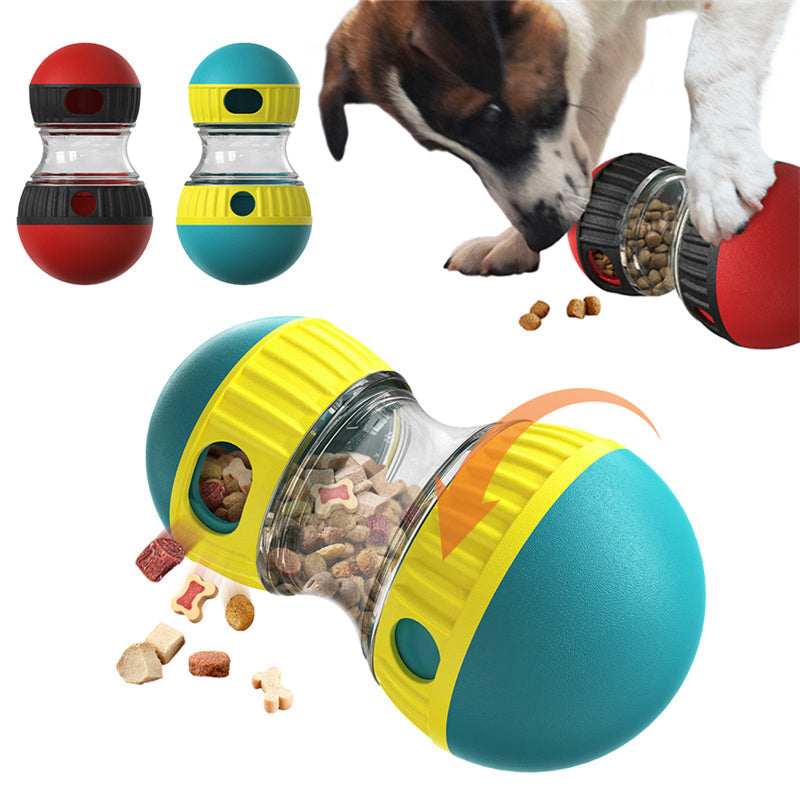 In this guideKibbleQuest$59.99View
Open the holes wider while your dog is learning, then close them down to raise the challenge. It is a food puzzle for play, not a chew toy, so keep an eye on your dog during first sessions. Wash it by hand with warm soapy water and let every part dry fully before the next fill.
Use it at mealtime in place of the bowl, or in the evening when the restless period starts. A food puzzle in the evening gives your dog's mouth a job during that restless period.
Being left alone
Chewing when you are gone often comes with pacing, whining or damage near the door. Start with absences so short your dog does not notice, and extend them gradually. Leave a filled puzzle or chew just before you walk out, and pick it up when you return so it stays special.
Keep arrivals and departures low-key. If your dog also barks or howls while you are out, How to Get a Dog to Stop Barking: Find the Trigger, Then Fix It helps you sort out the trigger. If the distress is severe, ask a veterinarian or a qualified trainer for help.
While you work on this, limit your dog to a gated room or pen with its bed, water and a few chew items. A smaller space means fewer household items within reach.
Habit and attention
Some dogs chew furniture because it gets a reaction. Stay calm, say nothing dramatic, and trade the furniture for a toy. Then reward the switch with a small treat or a game, so the toy becomes the item that gets attention.
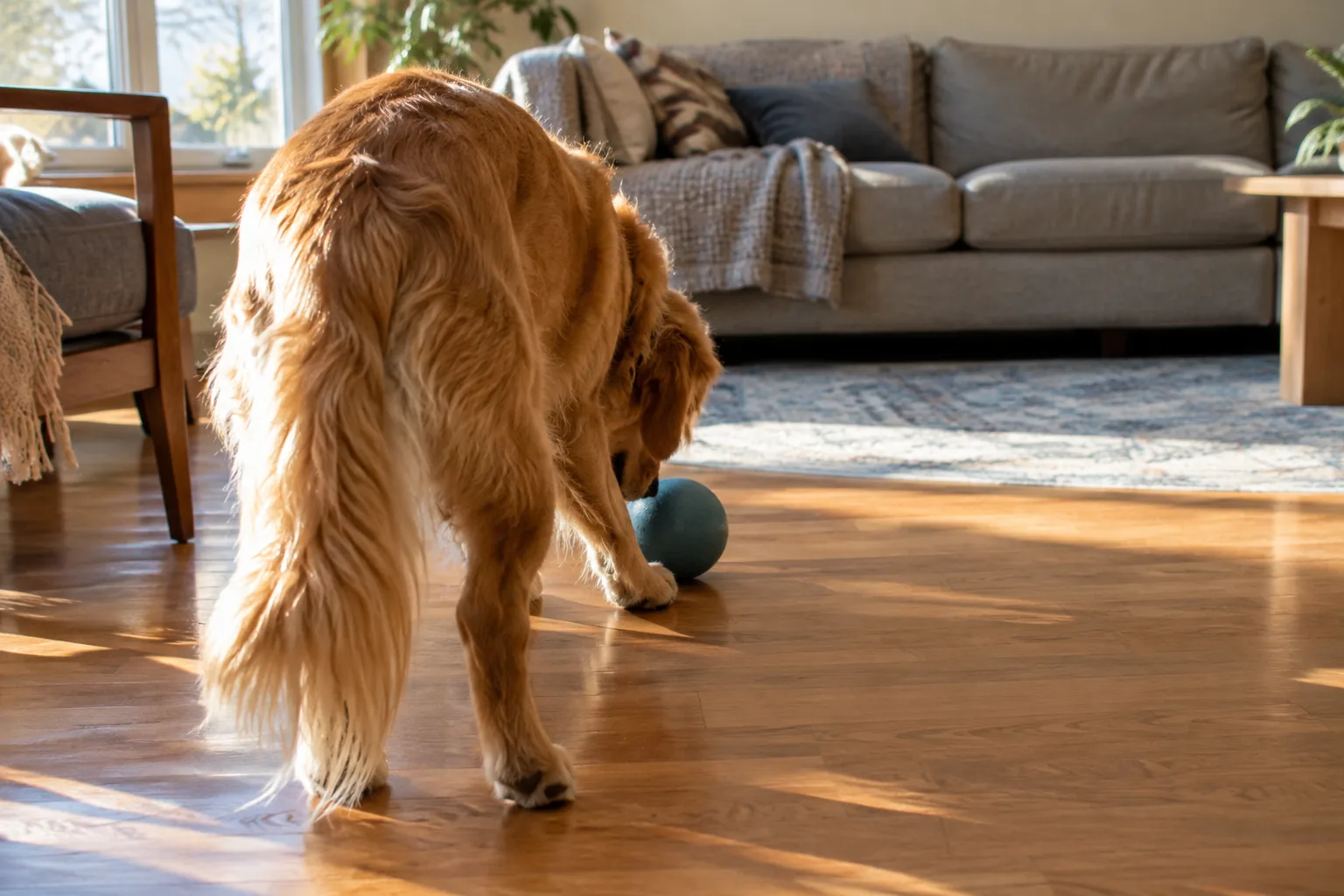
What repels dogs from chewing furniture
Bitter-tasting sprays made for pets are the usual deterrent. Check the label, follow its directions, and try a small hidden patch first because sprays can mark fabric and finishes. Keep any spray away from your dog's eyes, and ask your veterinarian before using a homemade mix, since household ingredients may not suit every dog.
Sprays are a support, not a solution. A dog that is bored or unsettled when left alone will pick another target, so pair any deterrent with the steps above. Home remedies also need repeating, because the taste fades as the surface dries or wears.
- Spray the chewed spot, then offer a toy right away.
- Cover or block table legs with a gate or a pen when you cannot supervise.
- Keep soft household items, shoes and remote controls out of reach.
- Wipe up any spray drips on floors so your dog does not lick them.
Daily enrichment schedule
Spread activities through the day so no long stretch sits empty. Adjust the plan to your dog's age, breed and energy.
| Time of day | Activity | Purpose |
|---|---|---|
| Morning | Walk or fetch, then a short training round | Physical exercise and focus |
| Before you leave | Filled food puzzle or chew in the dog's resting spot | Gives the mouth a job while you are out |
| Midday | Potty break, sniffing walk or play if you are home | Breaks up a long day |
| Evening | Walk, tug or a scatter-feed of kibble on the floor | Uses the restless period |
| Before bed | Calm chew on a bed or mat | Winds the dog down for the night |
Chewing at night
For chewing at night, move the dog's bed to a gated area or crate near your room, and offer a calm chew before lights out. Feeding part of the daily kibble from a puzzle in the evening fits into this routine. Remove anything that could be swallowed in pieces, and follow the toy maker's instructions.
Chewing when you are home but busy
If you work from home, set up a chew or puzzle on a mat near your desk and reward your dog for settling there. Short breaks to play or train every so often keep the routine going on days when you cannot take a long walk.
You can browse more play and training tools in the Training, Behavior & Play collection.
Common mistakes
- Punishing after the damage is found. Your dog cannot connect it to the earlier chewing.
- Offering old shoes or socks as toys, which teaches that all footwear is fair game.
- Giving one toy day after day. Rotate items so they stay interesting.
- Skipping supervision. Each unwatched minute is another chance to practice the habit.
- Ending the routine too soon. Keep the schedule going even after the chewing eases.
- Leaving the same sprayed spot as the only fix, with no toy to swap in.
Knowing how to stop dogs from biting furniture comes down to steady management. Chewing that continues despite it is worth discussing with your veterinarian or a trainer, who can look at your dog's whole day.
Field note
Keep a short log for a week: time, room and what happened before each chewing episode. The pattern shows you which step in this guide to start with.