What Is a Snuffle Mat for Dogs? How to Use One and Make Your Own
A snuffle mat is a fabric or felt mat that hides kibble or treats so your dog finds them by scent. This guide covers first sessions, a DIY build with strip sizes, washing and supervision.
The Millbrook Team
November 24, 2026 · 6 min read
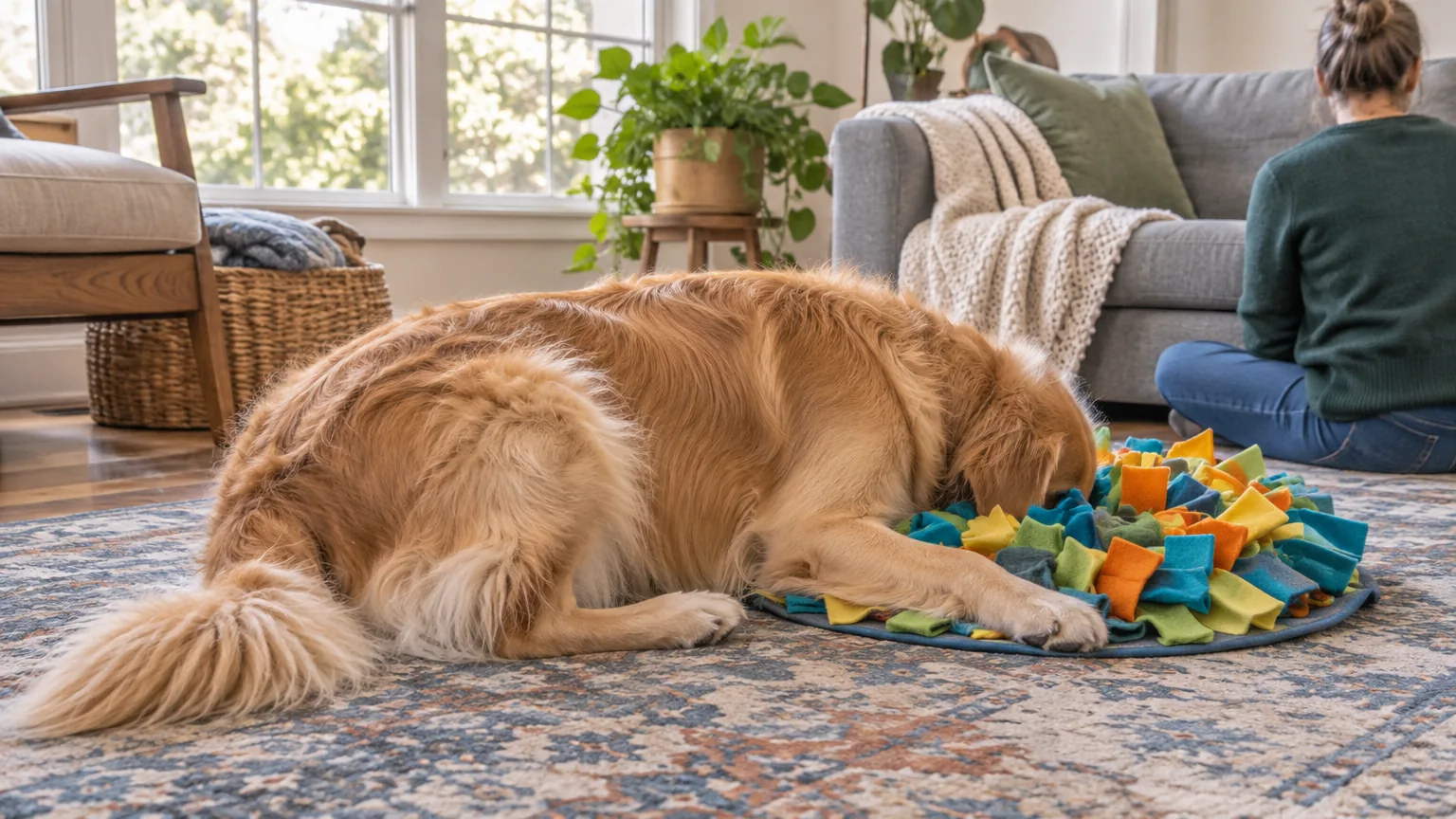
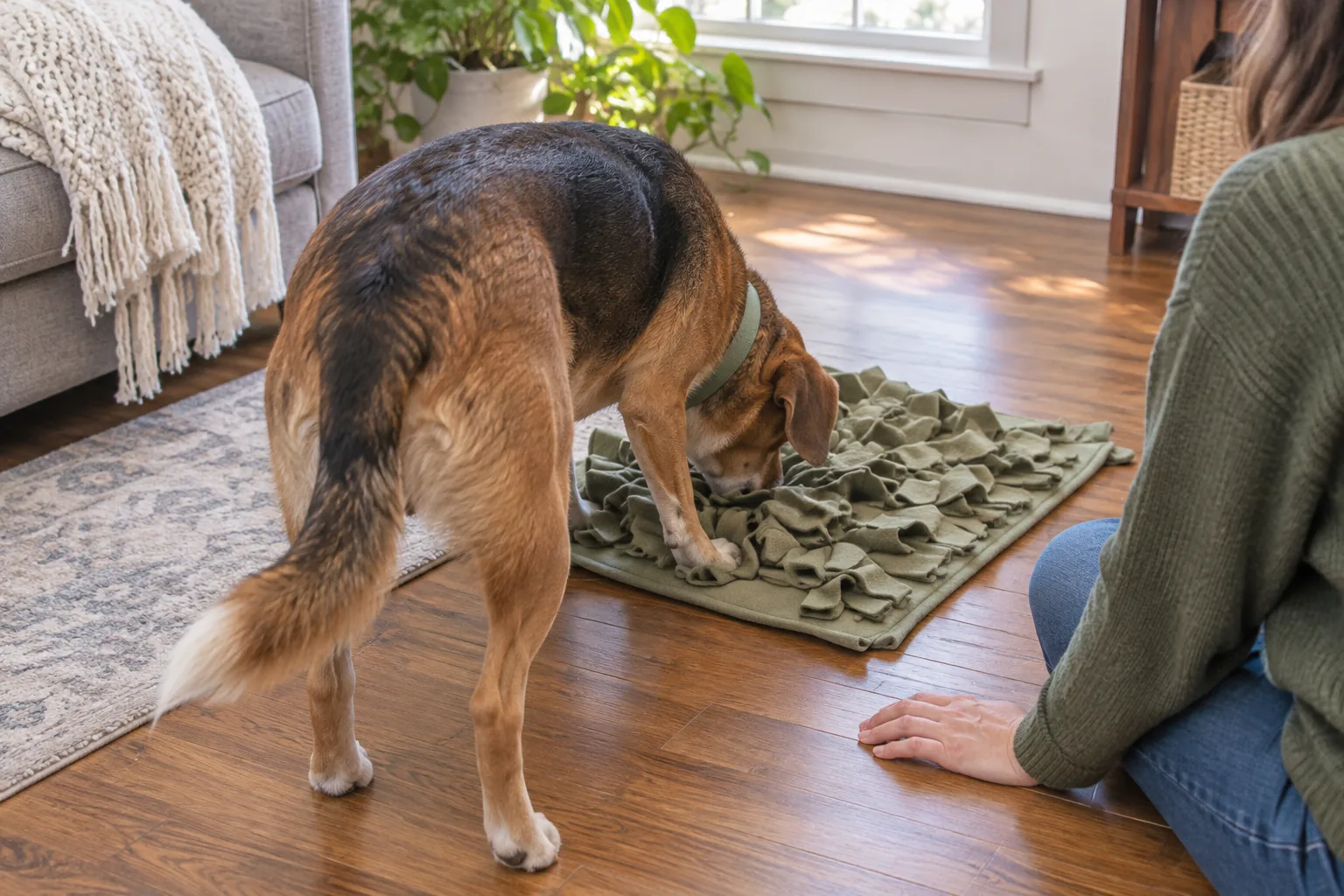
What is a snuffle mat for dogs? It is a mat made of fabric strips or layered felt folds where you hide kibble or treats, so your dog sniffs out each piece with its nose instead of eating from a bowl. You scatter the food, your dog sniffs and digs, and you shake the mat out afterward.
This guide explains how the mat works, how to run the first session, how to build one at home with exact strip sizes, and what to check for supervision and washing.
What is a snuffle mat for dogs and how does it work?
A snuffle mat has a base with many strips, folds or pockets rising from it. Food sits between and under them, out of plain view. Your dog has to move its nose through the material, follow the scent and pick out each piece.
For pets in general, it is a scent feeder that some households also use with cats and dry kibble. The mat turns a meal into a sniff hunt instead of a few gulps from a bowl.
When you can use one
- At mealtimes, in place of a bowl, with part or all of the daily kibble.
- As a place to scatter a handful of snacks while you are busy nearby.
- On a rainy day, when you want a sniffing task indoors.
Keep the amount of food within your dog's normal daily portion. Ask your veterinarian about feeding or care questions.
Snuffle mat, lick mat or slow feeder: which fits
These three feeders look similar on a shelf but work differently. Pick by the food you serve and the way your dog likes to eat.
| Feeder | Food it holds | What your dog does |
|---|---|---|
| Snuffle mat | Dry kibble, small snacks | Sniffs and roots through strips or folds |
| Lick mat | Wet food, yogurt, paste | Licks across textured zones |
| Slow feeder bowl | Kibble or wet food | Eats around ridges or a maze |
If your dog bolts meals from a bowl, the slow feeder article, What Is a Slow Feeder Dog Bowl? Maze Types and How to Start, covers the bowl option. You can also browse the Bowls & Feeders collection.
For dry food, Truffora is a snuffle mat made of layered felt folds. You scatter kibble or treats into the folds, and the multi-tier felt pockets tuck the food out of sight. It folds small for a bag, and cats can use it with dry kibble or treats too.
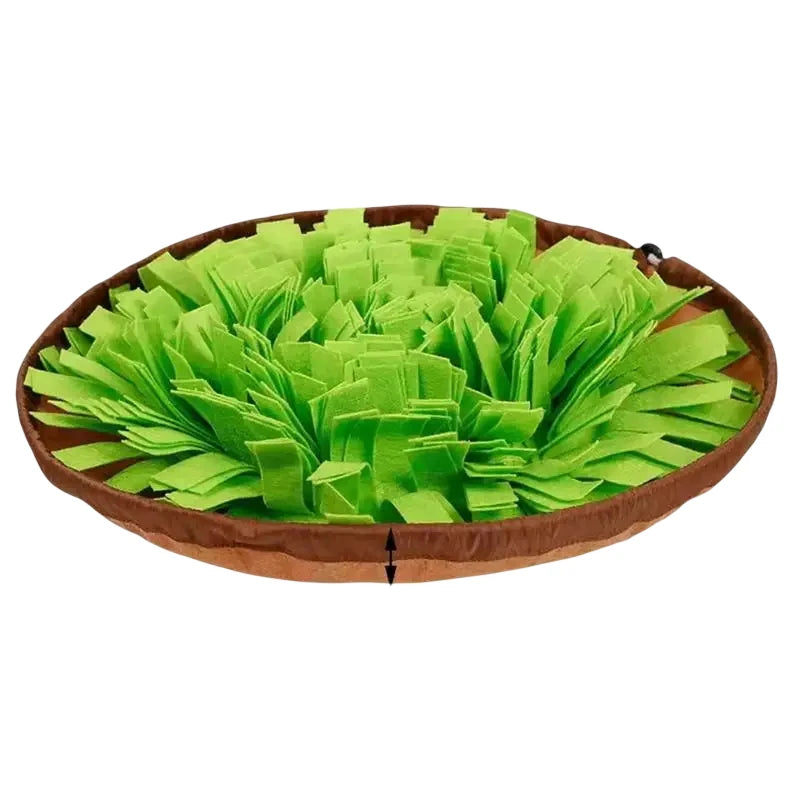 In this guideTruffora$49.99View
For wet food, Nibblora is a silicone lick mat with four textured areas: chevron ridges, bumps, honeycomb cells and fine dots. Suction cups on the back grip smooth surfaces, which leaves both hands free during grooming.
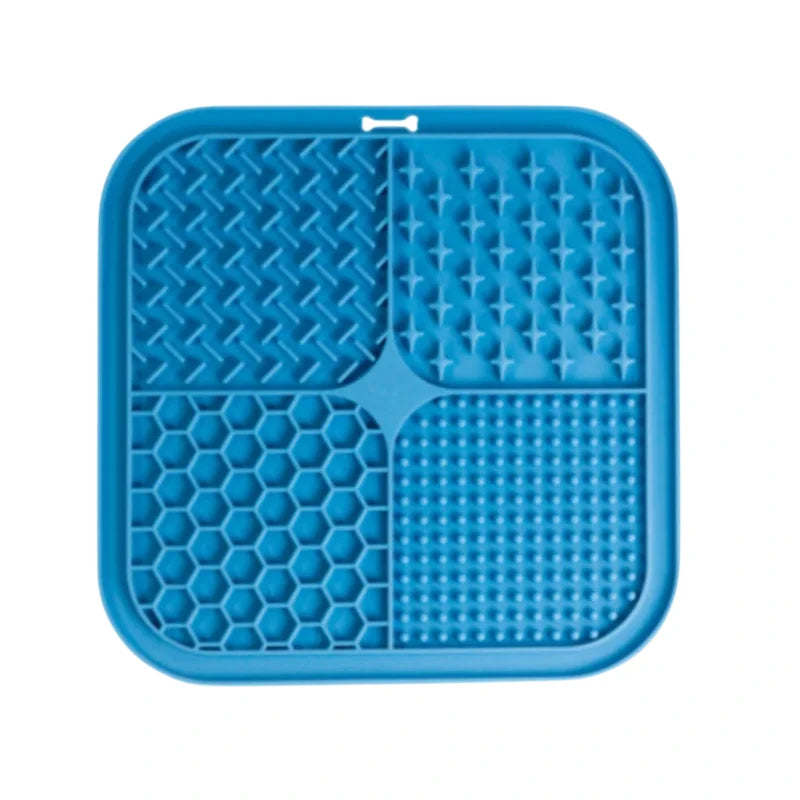 In this guideNibblora$49.99View
How to introduce a snuffle mat in the first session
Start with the strips or folds loosened and the food in plain view. A dog that meets a tangled mat with buried food may lose interest. Use the steps below and let your dog set the pace.
- Pick a quiet room and a floor that does not slide. Put the mat flat, with the strips or folds loosened.
- Sprinkle a few pieces of kibble on top of the mat, in plain view.
- Let your dog eat them. Add a few more pieces and push them slightly under the first strips or folds.
- Once your dog nose-dives in on its own, scatter the food deeper and wider across the mat.
- Stay beside the mat and supervise the whole session. Pick up the mat when your dog stops sniffing or starts chewing the fabric.
Keep the first sessions short and end while your dog is still interested. If your dog walks away, leave more pieces on the surface in the next round.
Common mistakes
- Packing the mat full on day one, so it feels like a chore.
- Leaving the mat out between meals for your dog to chew on.
- Adding food on top of the daily portion without adjusting the bowl.
- Using a dense mat for a dog with a flat face or a very small muzzle; look for shorter strips instead.
How to make a snuffle mat for dogs
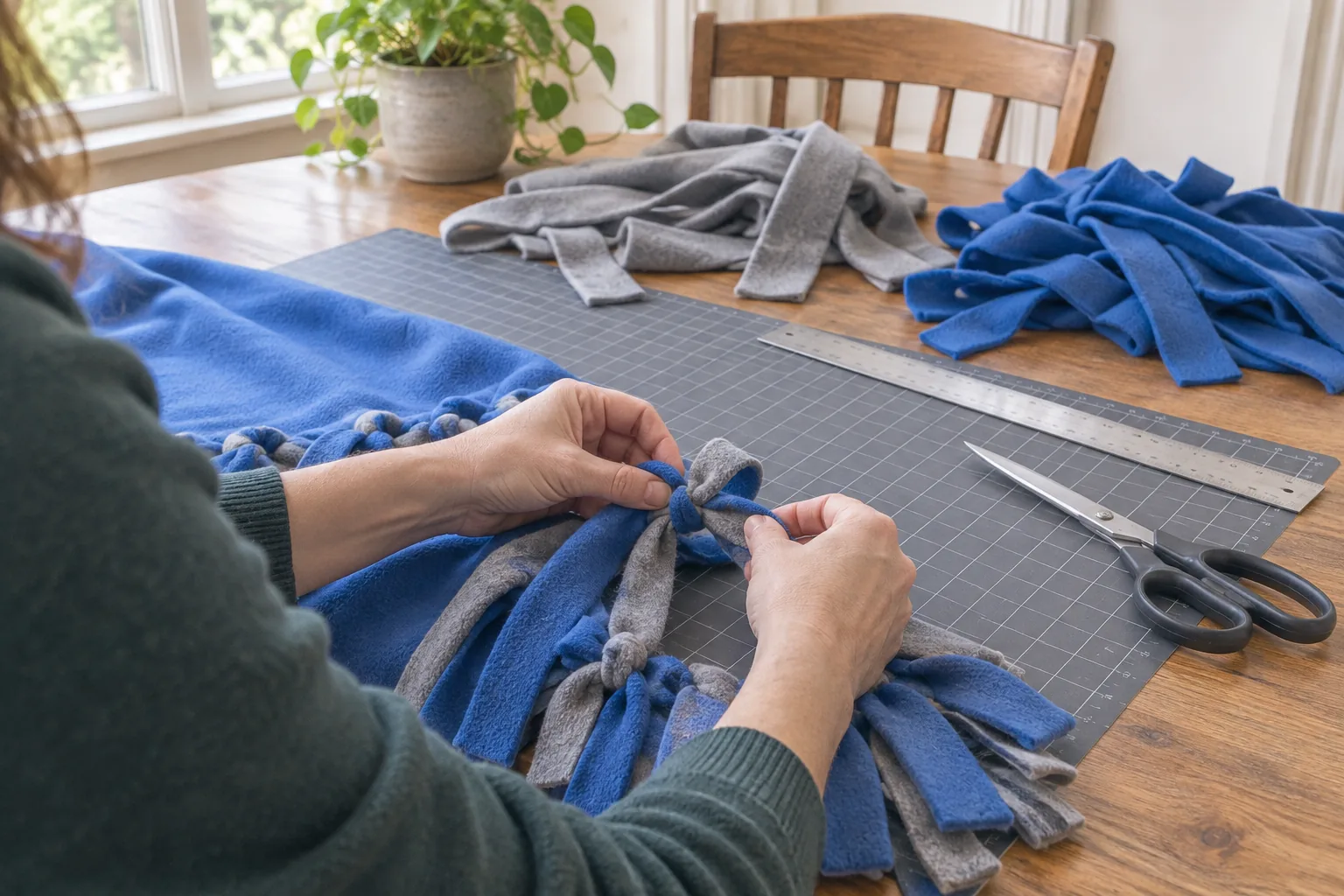
A homemade mat needs a base with holes, fleece strips and some knots. Fleece is a good fit because its cut edges do not fray the way woven cotton can. Use fabric scraps you do not mind your dog nosing at.
Materials
- A rubber sink mat or a plastic grid with evenly spaced holes
- Fleece fabric, in one or two colors
- Fabric scissors and a ruler or a cutting guide
Strip sizing
| Dog size | Strip width | Strip length | Base size |
|---|---|---|---|
| Small dog | 1 inch | 4 to 6 inches | 10 by 14 inches |
| Medium dog | 1 inch | 6 to 8 inches | 14 by 18 inches |
| Large dog | 1 to 1.5 inches | 8 to 10 inches | 18 by 24 inches |
These are starting sizes, not rules. Short strips suit small muzzles. Longer strips give a large dog more to dig through.
Steps
- Cut the fleece into strips of the width and length in the table. Cut on a flat table with sharp fabric scissors, keeping your fingers clear of the blade; if you are unsure, buy a ready-made mat.
- Fold a strip in half and push the folded end up through one hole in the base.
- Pull the two loose ends through the loop and tighten into a firm knot against the base.
- Repeat across the grid, filling every hole so the strips stand close together.
- Trim any strip that is clearly longer than the rest, then tug each knot to check it holds.
That covers how to make snuffle mat for dogs of different sizes, using the same method with different strip lengths.
Supervision checks for any snuffle mat
A mat is a feeding tool, and fabric can be swallowed. Follow these checks each time.
- Stay in the room while your dog uses the mat.
- Look over the mat before each session for loose threads, torn strips or knots that have worked free.
- Stop the session if your dog starts pulling out and chewing strips.
- Put the mat away when the food is gone.
- Keep it out of reach of puppies and dogs that chew fabric, and retire a mat that is torn.
If your dog guards food, feed it in a separate room and keep other pets away. Ask your veterinarian about feeding or care questions.
Field note
Check the mat for loose strips before each meal. If a knot or seam has come undone, fix it or replace the mat before you add food.
Washing and care schedule
Crumbs and food scent collect between strips, so a regular routine keeps the mat ready to use. The routine is short: shake, wash, dry, check.
| When | What to do |
|---|---|
| After each meal | Shake out crumbs over a trash can or the yard |
| When it looks soiled | Hand wash in cold water with mild detergent |
| After washing | Air dry fully before the next meal |
| Before each use | Check for loose strips and torn seams |
For a felt mat such as Truffora, the product page lists shaking out the crumbs or hand washing gently in cold water with mild detergent, then letting it air dry. For a homemade fleece mat, check the fabric care label and the base material, and let the whole mat dry before you store it. A silicone lick mat is rinsed in warm water and brushed with soapy water over the ridges, then dried completely.