Airline Approved Pet Carriers for Cats: Size and Fit Checklist
No carrier fits every airline. Measure your cat, find your airline's under-seat limits, then pick a carrier that fits both. Here is the checklist, step by step.
Dana Whitfield
October 14, 2026 · 9 min read
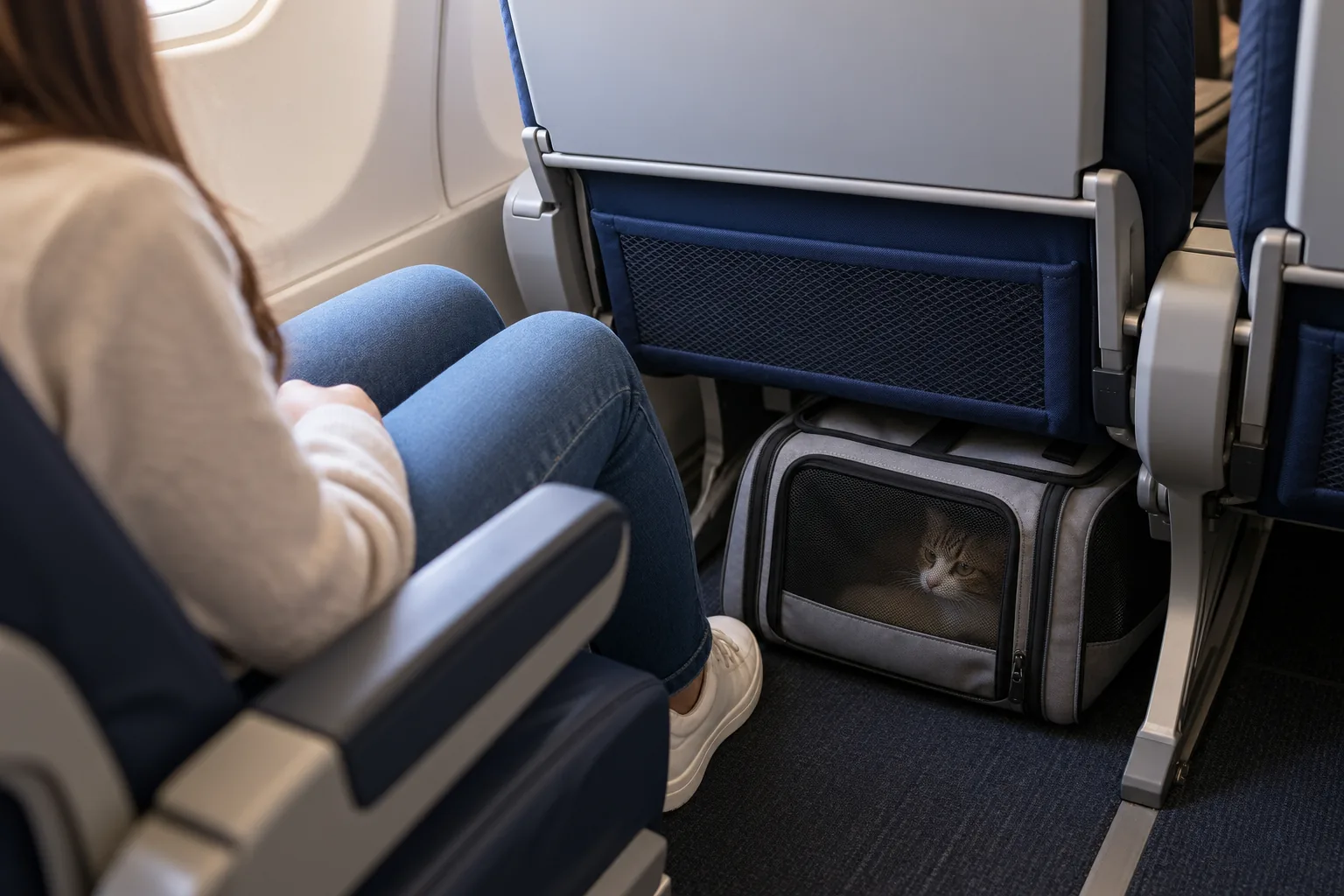
There is no single carrier that every airline accepts. Each airline sets its own under-seat size limit and carrier rules, so the right airline approved pet carriers for cats are the ones that fit your cat comfortably and also fit the space under the seat on your specific flight.
This guide is a checklist, not a ranked list. You read the airline's rules, measure your cat and the space, and only then buy. Work through these steps before you spend anything:
- Read your airline's pet travel page and write down the carrier limits.
- Measure your cat.
- Choose a carrier style and features that suit the trip.
- Compare the carrier's dimensions with the airline's limits.
- Run a fit test at home.
Airline approved pet carriers for cats: check the rules first
Many carriers are sold with wording about airlines on the listing. That wording is a marketing description, not a promise that your airline will accept the bag. Airlines decide at their own counters and gates, and aircraft types differ in how much room sits under the seat.
Start with the airline, not the carrier. Open its pet travel page and look for the items below.
- Cabin policy: whether cats are allowed in the cabin on your route and aircraft type.
- Maximum carrier dimensions: length, width and height, often listed separately for soft-sided carriers.
- Carrier type: whether soft-sided, hard-sided or both are allowed.
- Pets per carrier: some airlines allow more than one small pet in a single carrier, others do not.
- Fees and booking: whether you must add the pet to the reservation in advance, and how many pets the cabin can hold.
- Weight limit: some airlines list a combined weight for pet and carrier.
Rules can change, so read the page again close to your travel date. If your route has a connection, check the rules for each aircraft on the itinerary, since the smallest under-seat space sets your limit.
How to read the wording on a carrier listing
Product pages use phrases that sound official but mean different things. Treat each one as a prompt to check, not as an answer.
- "Fits most airlines" says nothing about your airline or your aircraft. Compare the actual measurements.
- "Under-seat size" raises a question: which airline's limit did the maker have in mind, and is the figure for the empty bag or a full one?
- Outside and inside dimensions are different numbers. The airline measures the outside of the bag, while your cat needs the inside.
- Expandable sides: airlines usually want the carrier in its smallest form during the flight, so check the rule for expanded panels.
If a listing gives no measurements at all, skip it. You cannot do the fit check without numbers.
Measure your cat and the under-seat space
Measure your cat
A carrier has to suit the cat inside it, not only the airline. Measure at home with a soft tape measure while your cat is standing relaxed. Write the numbers down so you can compare them with product dimensions later.
- Length: from the base of the neck to the base of the tail, then add some extra room so she is not pressed against the ends.
- Height: from the floor to the top of the shoulders, and to the top of the head when she sits upright.
- Width: across the widest part of the body when she lies down.
Your cat should be able to stand, turn around and lie down in the carrier. Under-seat carriers are tight by design, so a cat who is already large for the airline's limits may need a different travel plan. Ask your veterinarian if you are unsure about your cat's fit or readiness to fly.
Check the under-seat space
The airline's dimensions describe the largest bag it allows, but the real space can differ from seat to seat. Check these items.
- The airline's stated under-seat dimensions for your aircraft.
- Whether the seat in front has a bar, a box or a raised support that cuts into floor space.
- Exit row and bulkhead seats, which often do not allow floor storage. Cats generally need a standard seat with floor space in front.
Soft-sided carriers have an advantage here because the walls can flex slightly to fit a tight spot. A rigid shell cannot give at all, so the stated dimensions need to hold on the day.
Carrier types compared for cabin travel
Carrier shape and material change how the bag behaves at the gate, in the security line and under the seat. Use the table to narrow your choice, then confirm the type is allowed by your airline.
| Type | Under the seat | Carrying | Check before buying |
|---|---|---|---|
| Soft-sided | Walls can flex a little | Shoulder or cross-body strap | Shell holds its shape when lifted |
| Hard plastic | Fixed shape, fixed size | Top handle, sometimes a side handle | Some airlines limit hard shells in the cabin |
| Wheeled | Must fit with the wheels and handle in place | Pull handle on a rolling base | Whether your airline allows rolling carriers in the cabin |
| Backpack style | Depends on the pack shape | Both shoulders | Whether it stays upright and open at the front for ventilation |
For most cabin trips, soft sided pet carriers for cats are the practical option. Pick one whose shell holds its shape while carried, so the cat is not squeezed when the bag is lifted. Plastic pet carriers for cats suit car rides and vet visits well, but a fixed shell leaves no room for error under a seat.
Large cats, small cats and two cats
Size labels such as small or medium on a listing are not standard. Ignore the label and compare the inside measurements with your cat's numbers.
- Small cats: a small carrier leaves less spare room, so confirm she can still turn around.
- Large cats: pet carriers for large cats often run close to or past the airline's limit. If the carrier that suits your cat is bigger than the under-seat space, a cabin trip may not work. Ask your airline and your veterinarian about options.
- Two cats: pet carriers for two cats are usually too big for an under-seat space, and many airlines allow only certain pets per carrier. Check the rule first. Two separate carriers may be needed, one per cat, and each must be allowed.
Features that matter for flying
Wide opening
A side door that opens wide lets a cat walk in on her own. That matters at the airport, where you load and unload in a crowded space, and it means you do not have to lift a nervous cat over an edge.
Ventilation and a view
Mesh panels let air in and let you check on your cat. You want to be able to see and touch her without opening the zippers.
Zippers that close fully
Look for zippers on the door and window that close firmly. Close them before you pick the bag up.
A removable liner and a comfortable carry
A liner you can pull out and wash is useful after a long travel day, and a wipeable shell helps too. A shoulder or cross-body strap keeps your hands free for your boarding pass and bag.
A soft carrier that fits the checklist
If you are comparing soft pet carriers for cats, WanderPaw is the one we stock for cats. It has a wide side door, a mesh window, a thickened soft shell with zippers on the door and window, and a removable plush cushion liner that is machine washable. The shell wipes clean with a damp cloth, and you can carry it over one shoulder or cross-body.
It is made for vet trips, car rides and flights, but your airline sets the rules for flights. Check the carrier's dimensions on the product page and compare them with your airline's limit before you book. You can also browse the full Trackers & Travel Carriers collection.
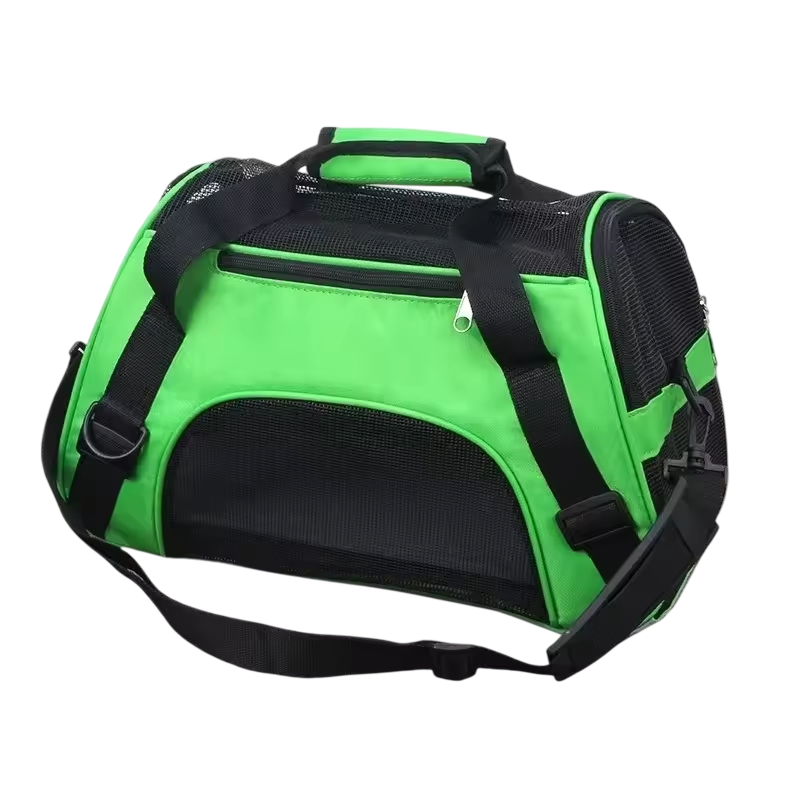 In this guideWanderPaw$99.00View
Field note
Put the carrier on the floor at home with the door open well before the flight. Add the liner and a few treats so your cat sees it as a normal place to rest, not just something that appears on travel days.
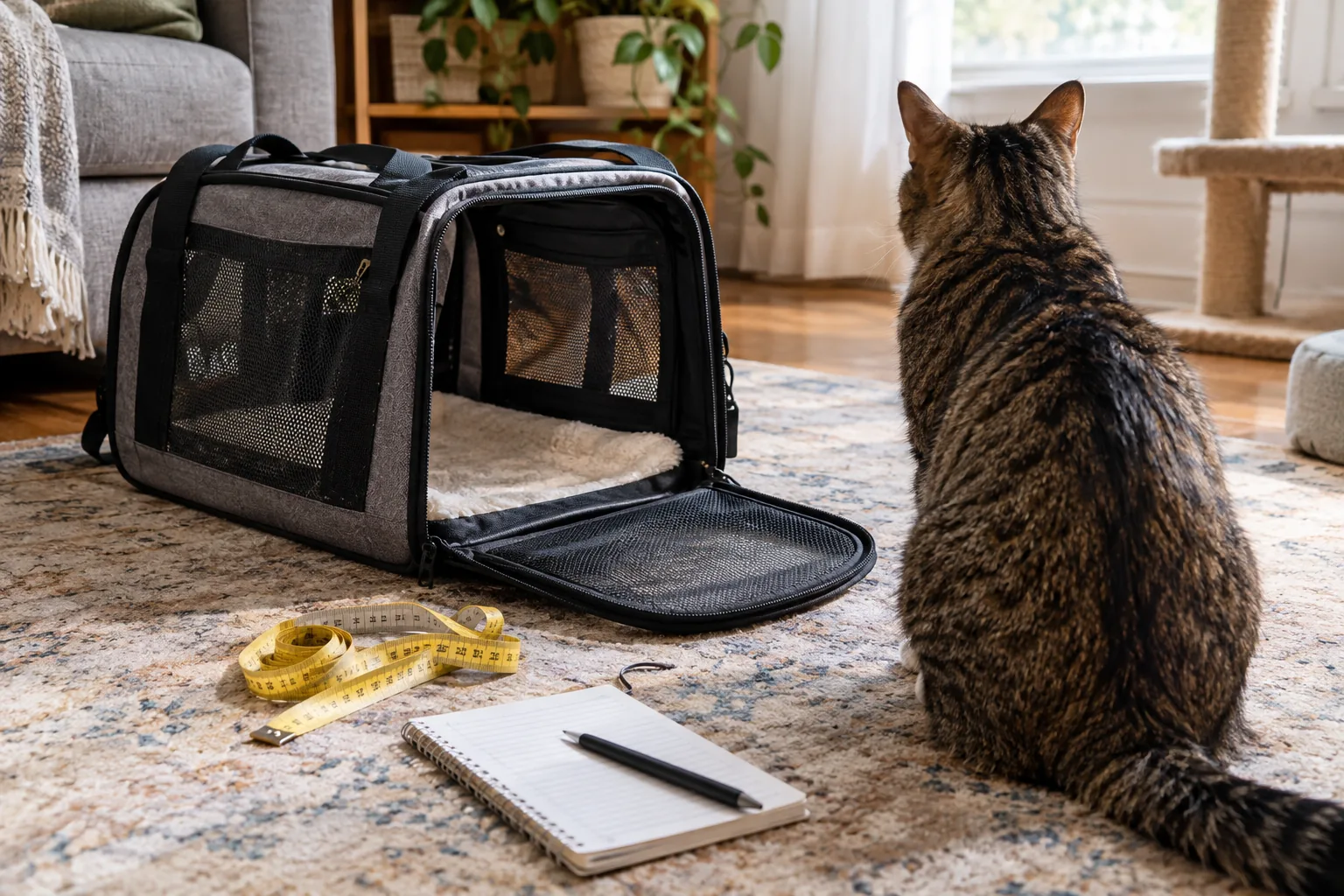
Do a fit test at home
Before the trip, run through the checklist with the carrier in hand. Each line should be a clear yes.
| Step | What to check |
|---|---|
| 1. Inside room | Your cat stands and turns around with the door zipped |
| 2. Contact points | No part of her presses against the mesh or the ends of the bag |
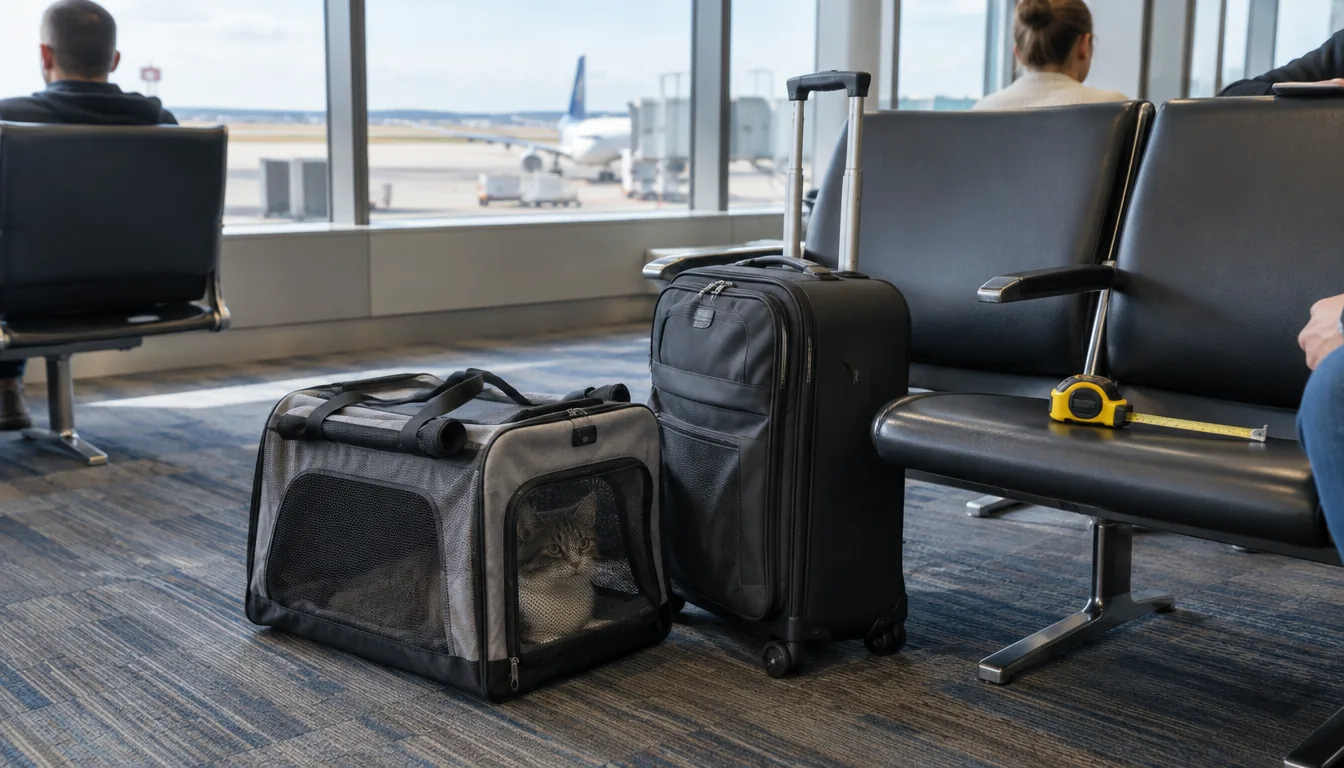
| 3. Space test | The carrier slides into a gap the size of the airline's under-seat limit, such as under a table or a taped outline on the floor |
| 4. Carry test | A walk around the house shows whether the strap and weight are comfortable |
| 5. One-hand test | You can zip and unzip the door with one hand |
If anything fails, change the carrier or the plan before you pay for the ticket. Only a carrier that passes every line belongs on your shortlist of airline approved pet carriers for cats.
Get your cat used to the carrier
A cat who knows the carrier is easier to load at the gate. Build the habit well before the flight, at your cat's pace.
- Leave the carrier open on the floor in a room she uses, with the liner inside.
- Drop a few treats near the door, then just inside, then at the back.
- Once she walks in on her own, praise her calmly and let her leave again.
- Zip the door closed for a short spell while you stay beside her, then open it.
- Lift the carrier a little, then carry it across the room by the strap.
- Repeat with a short trip to the car or around the block.
If your cat shows strong stress at any step, go back one step and slow down. Your veterinarian can advise on travel preparation for your cat.
Security screening and travel-day packing
At the checkpoint, your cat usually comes out of the carrier and you carry her through while the empty carrier goes through the scanner. This is where many cats bolt, so plan it. A harness and leash that your cat already wears can help. Ask the airline and the checkpoint staff what they require.
For travel day, pack these items:
- A clean liner and a spare in a sealed bag.
- Paper towels and a few small waste bags.
- Your cat's identification and the paperwork your airline asks for.
- A harness and leash for the screening step, if your cat is used to them.
Keep the carrier closed in the terminal and on the plane, and follow the crew's instructions about storing it under the seat.
Common mistakes and care between trips
- Buying first and checking later. Read the airline's dimensions before you purchase.
- Choosing by the cat's weight alone. Body length and height decide the fit in a carrier.
- Assuming all aircraft are alike. Smaller aircraft can have less under-seat room, so check each leg.
- Skipping the practice runs. A carrier your cat has not entered before is harder to load at the gate.
- Forgetting the screening step. Decide in advance who carries the cat and who handles the bag.
After each trip, keep the carrier ready for the next one with a short routine:
- Unzip everything and shake out loose fur and crumbs.
- Pull out the liner and machine wash it if the care label allows.
- Wipe the shell and mesh with a damp cloth and let it dry fully before storing.
- Store it open in a room your cat uses, so it stays familiar.