Attaching a Dog Harness to a Seat Belt: Setup Checklist
Attaching a dog harness to a seat belt comes down to a snug harness, a short connector and a back-seat anchor. Follow this buckle-by-buckle checklist before every drive.
Dana Whitfield
October 18, 2026 · 7 min read
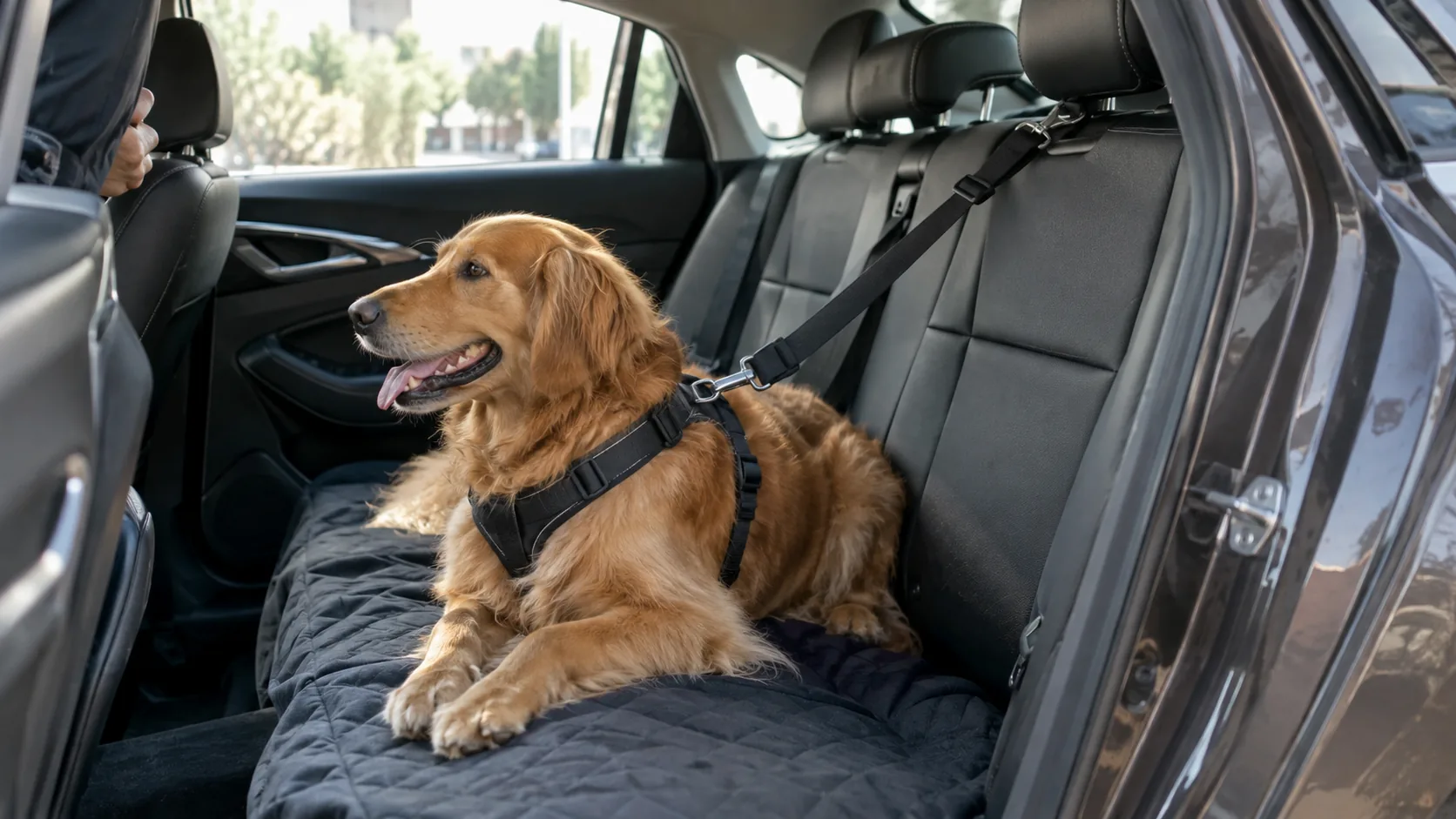
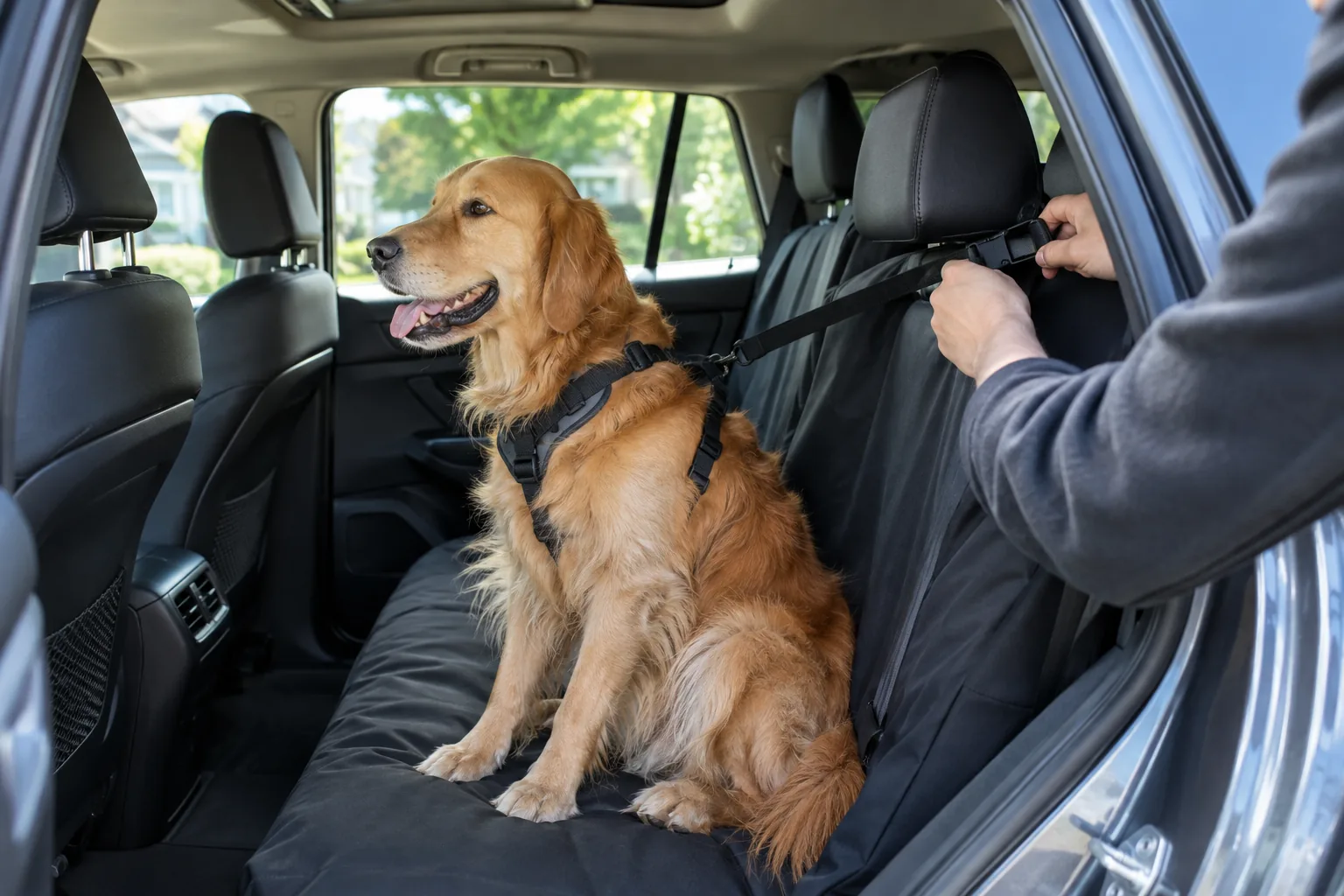
Attaching a dog harness to a seat belt means fitting the harness snugly, then linking its attachment point to the car's buckle system or a headrest anchor with a short connector. Your dog should sit or lie in the back seat with only enough slack to change position. Check the harness and connector manuals first, because designs differ on where they clip in.
This guide walks through the setup in order: what to check, how to connect each piece, how long the tether should be and how to confirm the fit before you pull out of the driveway.
The three links in the chain
Every dog car restraint has the same three parts. The harness wraps your dog's body, the connector runs from the harness to the car, and the anchor is the point on the vehicle where the connector attaches.
A problem in any one link affects the whole setup. A loose harness lets your dog shift around, a long connector gives too much room, and a poorly placed anchor lets your dog end up in the wrong part of the car. The checklist below addresses each link separately.
Before you start: a quick checklist
- Read the harness manual and the connector manual. Look for any statement about vehicle use.
- Check stitching, buckles and clips for fraying, cracks or bent hardware.
- Pick a back-seat position and clear the seat of bags and loose items.
- Have treats ready so the first few minutes feel calm.
- Put the harness on a dog standing still, not one jumping around at the car door.
If your dog has never worn a harness in the car, run a short practice session in the parked vehicle first. Let your dog climb in, clip in, get a treat and step out. Repeat until the routine looks relaxed.
Attaching a dog harness to a seat belt: buckle-by-buckle steps
Work in this order. Each step builds on the one before it, so a mistake early on carries through.
- Put the harness on outside the car, with your dog standing. Set the neck, chest and belly straps one at a time.
- Check that the straps sit clear of the armholes so the front legs can move freely.
- Lead your dog into the back seat and ask for a sit.
- Choose your anchor: a headrest post, or the seat belt system as described in the connector's manual.
- Attach the connector to the anchor and close the buckle fully. Give it a tug to confirm it holds.
- Clip the other end to the harness attachment point named in the harness manual.
- Adjust the length so your dog can sit up and lie down, but cannot reach the front seats or the window opening.
- Recheck the harness fit once your dog is settled, since straps can shift as the dog sits.
Finish by walking around and looking at the setup from each rear door. Follow your vehicle manual for anything specific to your seats.
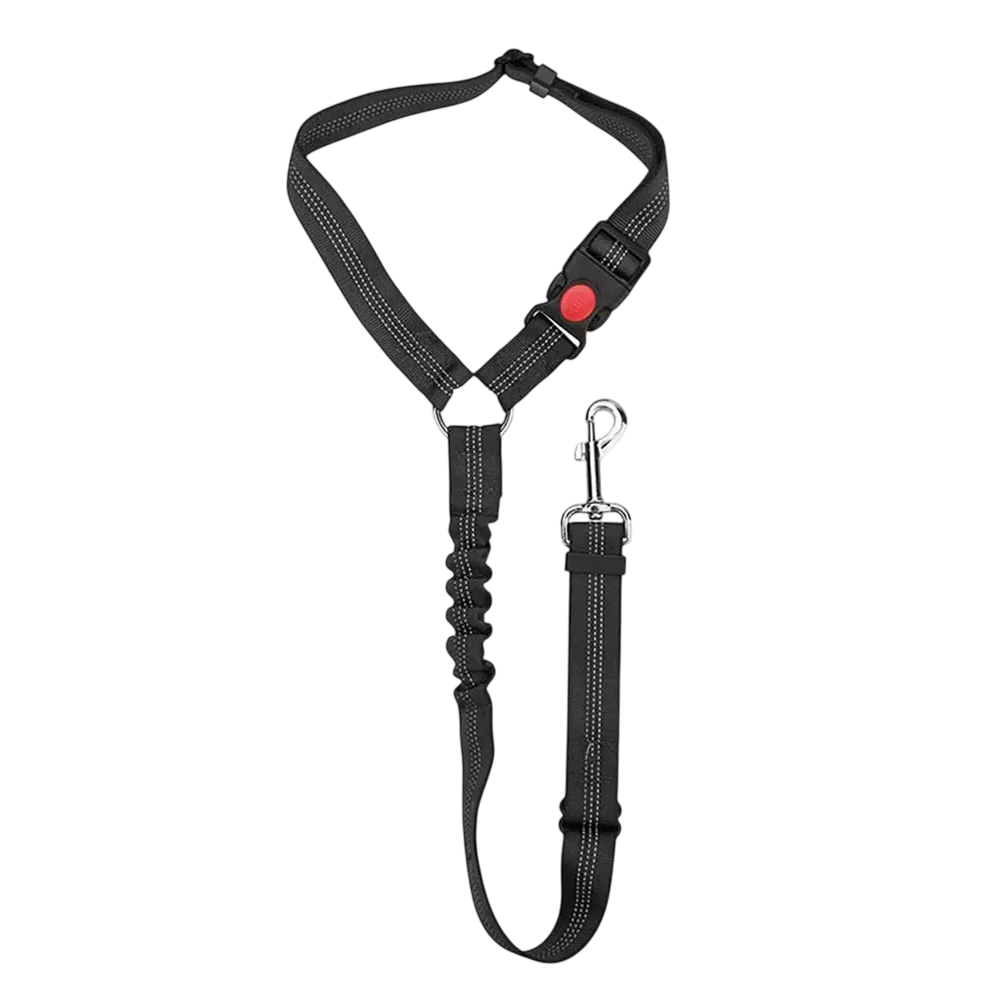
Using a headrest tether as the connector
If your seat belt buckle does not line up with your dog's position, a headrest tether gives you another anchor. RideTether is a dog seat belt that loops around a car headrest and clips to your dog's harness through a built-in bungee. It is used in the back seat.
To set it up, loop the adjustable strap around the headrest post and close the buckle. Then clip the other end to your dog's harness. The elastic bungee section sits between the headrest loop and the clip, and the strap adjusts from 17.7 to 25.6 inches (about 45 to 65 cm) without tools, so you can set the loop for a sedan, SUV or truck.
When the drive ends, unclip the tether from the headrest and use it as a walking leash at your stop. The box includes 2 RideTether dog seat belts and an adjustable headrest strap.
 In this guideRideTether$49.99View
Tether length rules
Length needs a check every time you attach a dog harness to a seat belt or headrest. Use these rules, then adjust for your dog's size and your back seat.
| Check | What to look for |
|---|---|
| Sitting | Your dog can sit upright with the tether not pulled tight |
| Lying down | Your dog can lie on the seat without the strap pulling the harness sideways |
| Front seat reach | Your dog's nose cannot reach the center console or the driver |
| Window reach | Your dog cannot get head or paws out of an open window |
| Floor drop | Your dog cannot slide off the seat and dangle by the harness |
With the RideTether range of 17.7 to 25.6 inches, start at the shorter setting and lengthen the strap only if your dog cannot sit or lie comfortably. Do not tie knots in a strap to shorten it unless the manual allows it.
Why shorter slack matters
Extra slack lets your dog roam and tangle. A short tether also holds the harness in the position it was fitted in, so the strap pulls along the body rather than twisting the harness to one side.
Fit check for the harness
A tether is only as good as the harness it clips to. A harness that is too loose can let your dog twist or back out of it, so fit comes first if you want to know how to keep a dog from slipping out.
Run the same fit check each time:
- Slide two fingers under each strap. You should fit them in, but not much more.
- Pull gently backward on the harness while your dog stands. It should not slide over the shoulders.
- Look at the belly strap. It should sit behind the ribs, not on them.
- Check that no strap rubs the armpit area when your dog walks.
- Recheck after a few minutes in the car, when your dog has settled.
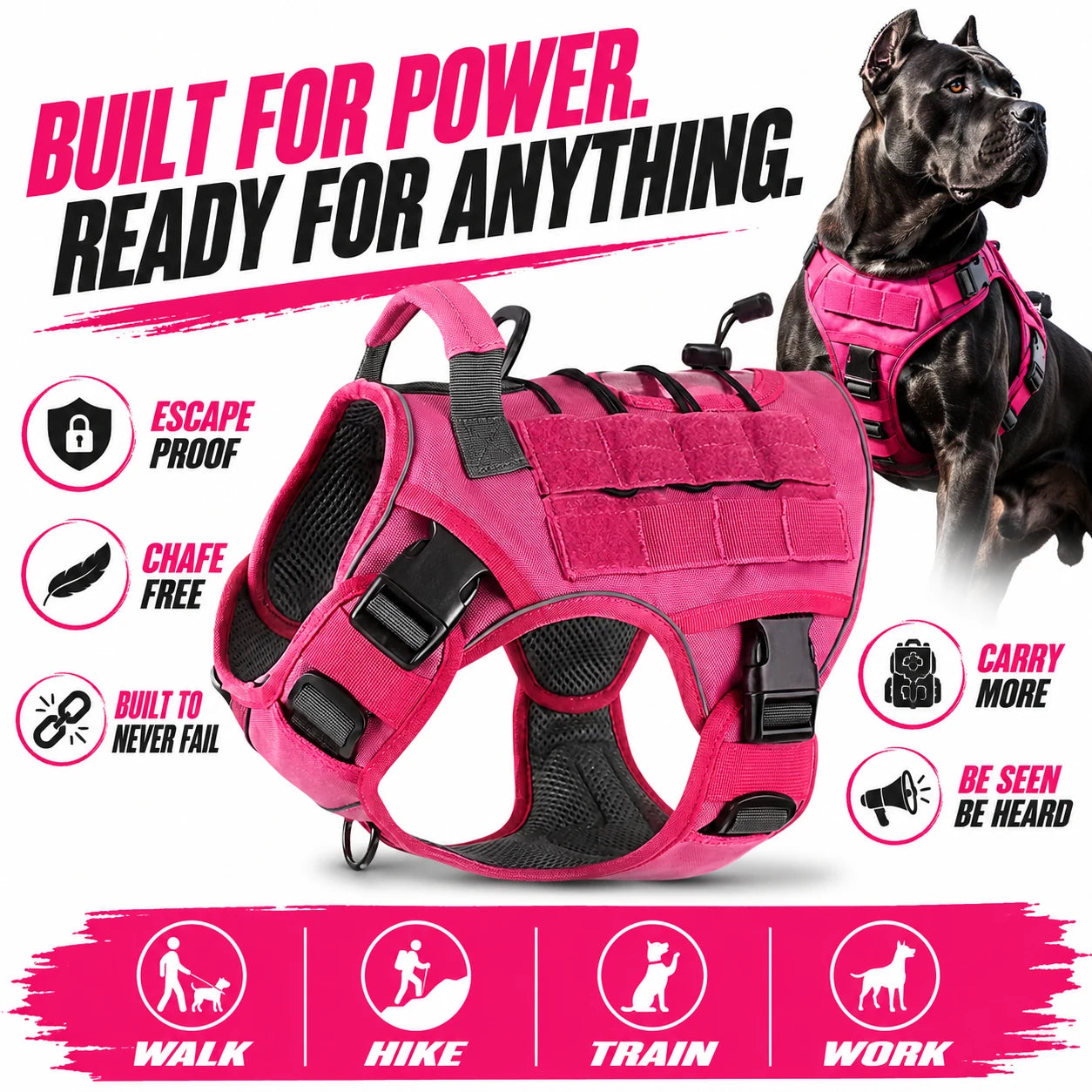
A harness with several independent adjustment points helps with this. RoveTac has six adjustment points, and the neck, chest and belly straps adjust on their own. The belly strap sits behind the floating rib, and the open-shoulder design leaves room around the front legs. Mesh padding lines the inside, and dual clips are used to put it on and take it off. Its leash rings are at the front and rear. Before using any seat belt for a dog harness in a car, check the manual for whether it covers vehicle use and which point to clip to.
 In this guideRoveTac$59.99View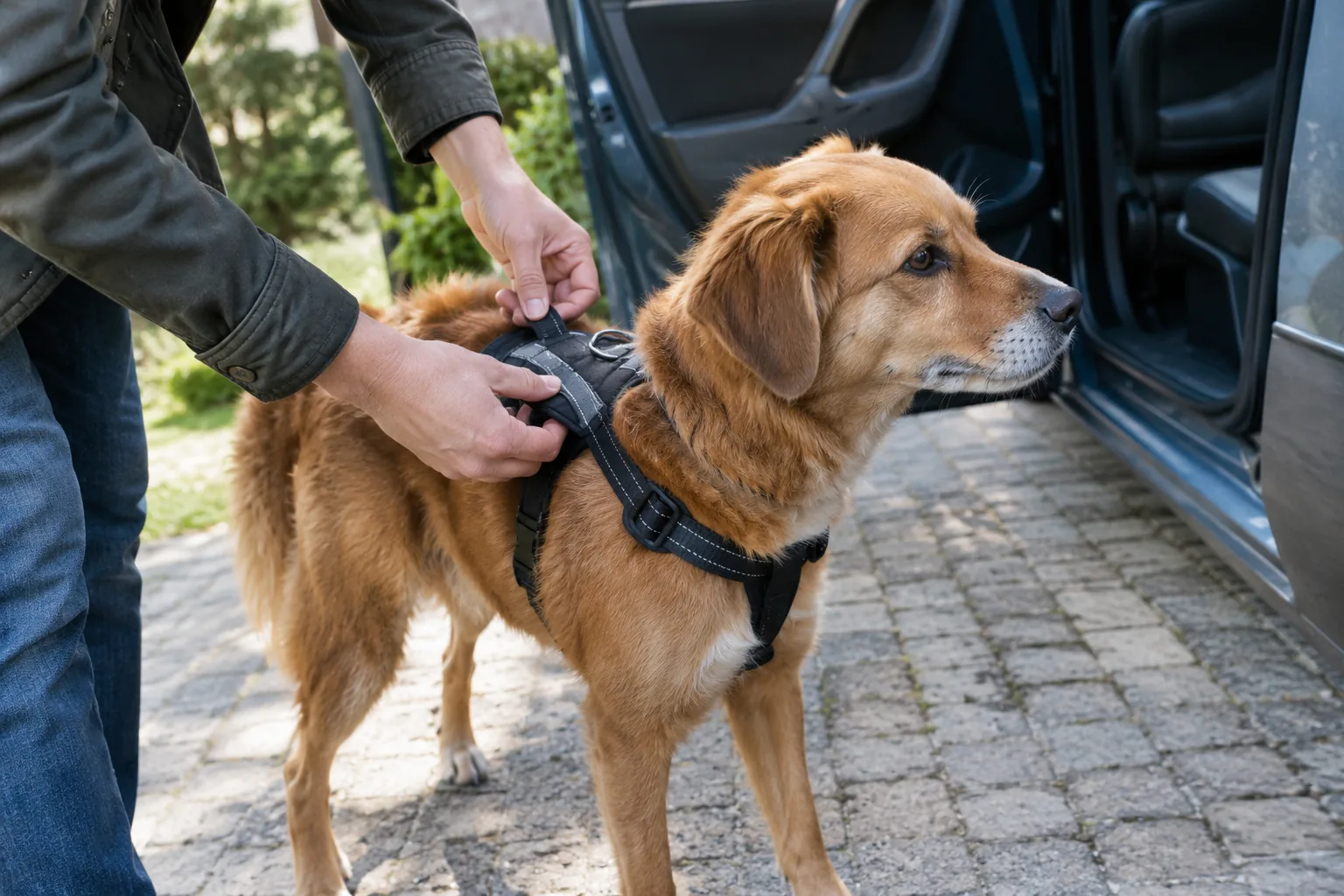
Front seat or back seat
Put your dog in the back seat. A front-seat position puts your dog near the driver and the airbag, and it invites a dog to climb into your lap. The KU EHS driving-with-pets tip covers why a loose pet in the cabin is a distraction.
In the back seat, the seat itself can be a place where a dog slides. A non-slip seat cover or a blanket under your dog adds grip, and a short tether limits how far a slide on a turn can go. For vehicle-specific questions, such as cargo areas behind the front seat, follow your vehicle manual and ask a professional if you are unsure.
Common mistakes
- Clipping to a collar instead of a harness, which puts the load on the neck.
- Leaving the tether so long that your dog can reach the front seat.
- Using a walking leash with a bolt snap as a tether without checking whether the manual allows it.
- Skipping the fit check because the harness fit last week.
- Attaching to a point on the harness meant for something else, such as a handle.
- Letting your dog ride unrestrained for short trips.
Replace any strap, buckle or clip that shows fraying, cracking or deformation, and keep the connector clean and dry so buckles close fully. Make this routine part of attaching a dog harness to a seat belt or headrest anchor every trip.
Field note
Do a quick pre-drive check every time: harness snug with two fingers under each strap, buckle closed and tugged, tether short enough to stop front-seat reach.
Where to find gear
If you are comparing connectors, harnesses and leashes, browse the Leashes, Harnesses & Car Travel collection. Pick a harness that fits your dog's body first, then match the connector to your anchor point.