Cat Carriers: Hard vs Soft, Sizing and Getting Your Cat Inside
Pick a hard or soft carrier your cat can stand, turn and lie down in, then train her to walk in on her own. This guide gives the comparison, the sizing rule and the steps.
The Millbrook Team
November 29, 2026 · 6 min read
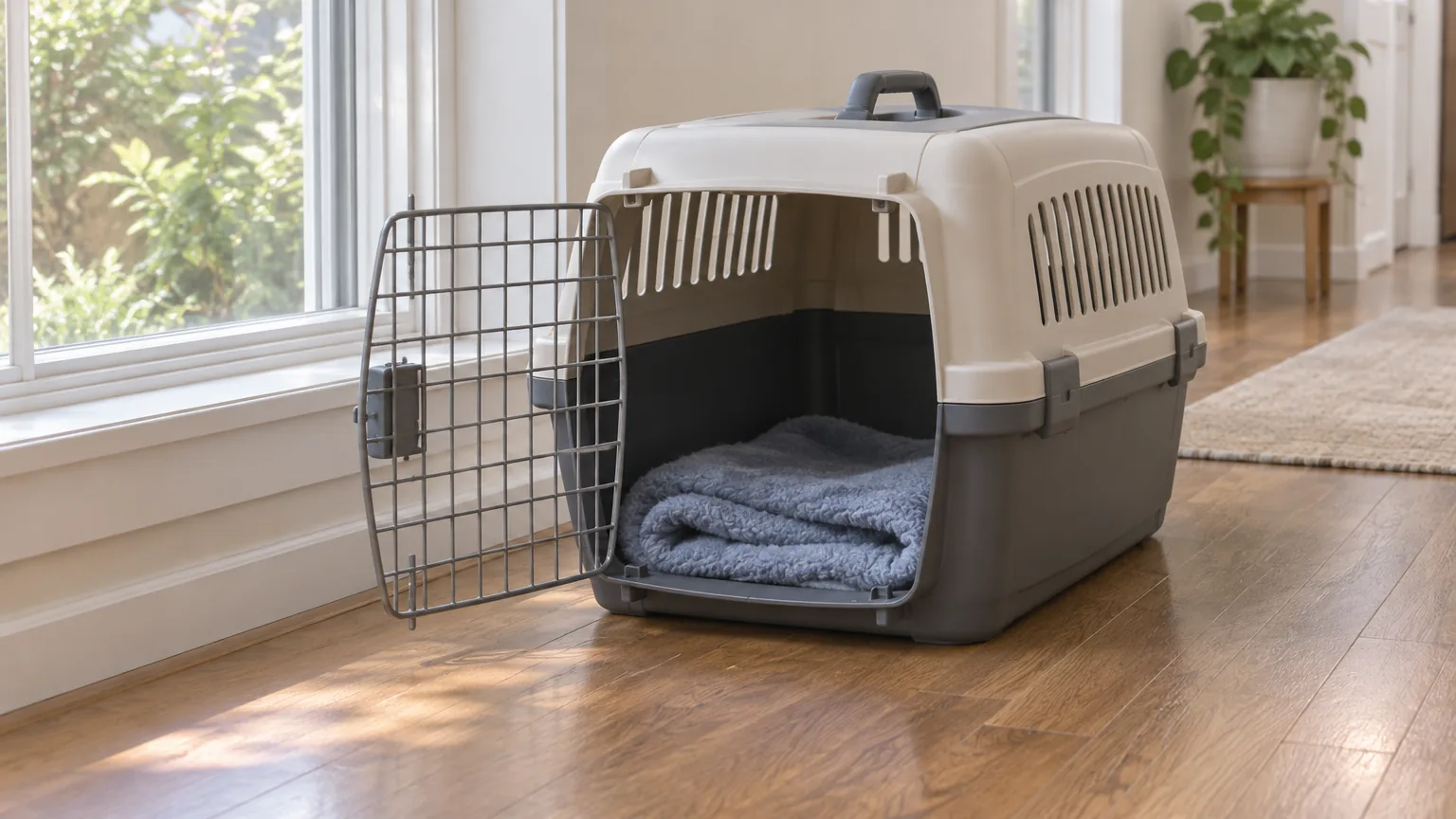
Cat carriers come in hard-shell and soft-sided styles, and the right one lets your cat stand up, turn around and lie down with a little room to spare. Measure your cat first, choose the style that suits your trips, then leave the carrier out so it becomes a normal part of the room. This guide covers the comparison, the sizing rule and a step-by-step plan.
Some cats settle into a hard carrier, others into a soft one. Both work when the size is right and the carrier smells and looks familiar, so the training matters as much as the model.
Hard and soft cat carriers compared
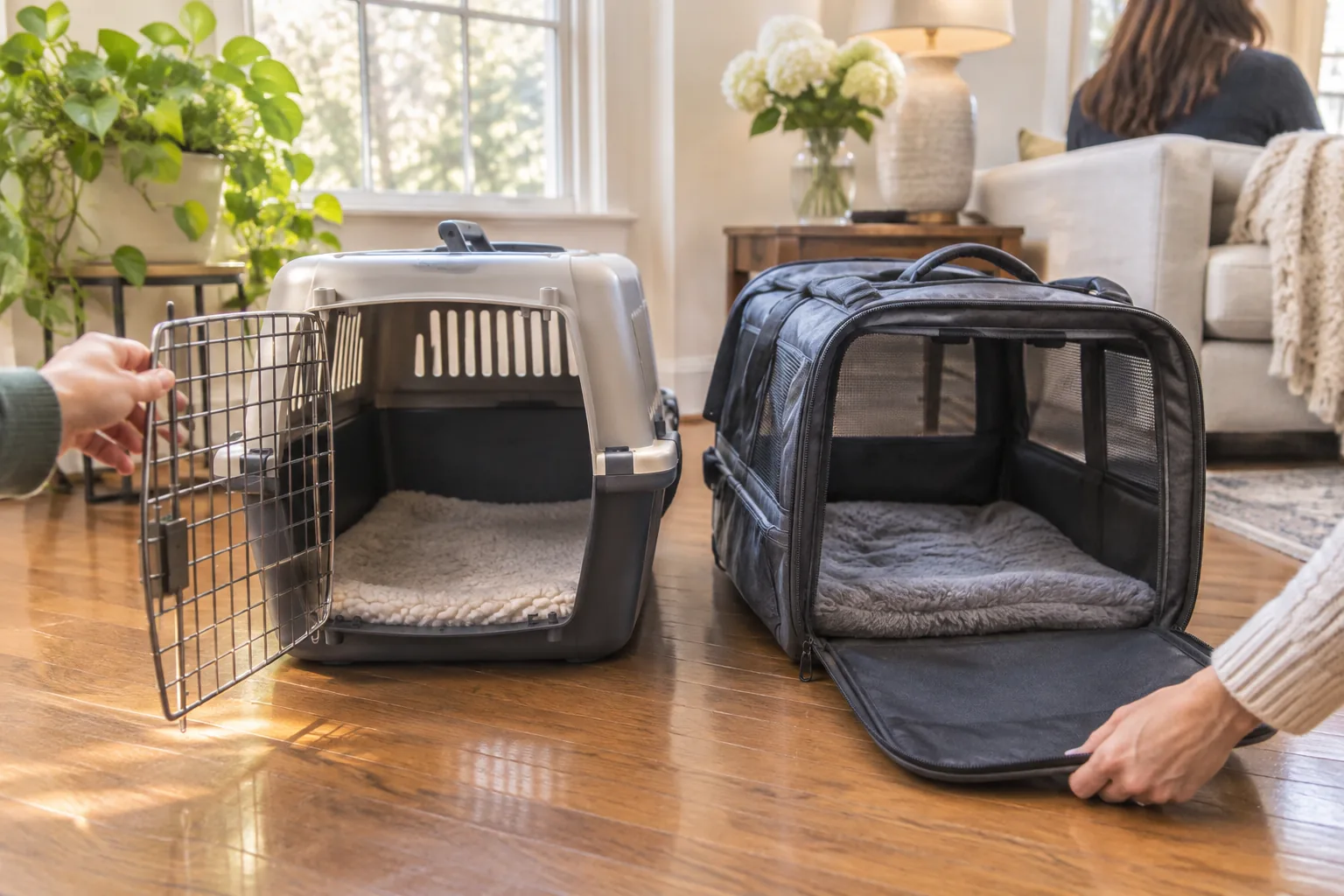
The choice comes down to how you travel and how your cat behaves. A rigid shell holds its shape and wipes clean. A soft-sided carrier flexes, carries on a shoulder and often has mesh panels for air and a view.
| Feature | Hard carrier | Soft carrier |
|---|---|---|
| Shape | Rigid shell, usually plastic | Fabric over a structured frame |
| Openings | Front door, and some have a top door | Side, top or end zippers, depending on the model |
| Ventilation | Slots or a wire door | Breathable mesh panels |
| Carrying | Top handle | Handles, shoulder strap or backpack straps |
| Cleaning | Wipe or rinse the shell | Wipe the shell; some liners go in the washing machine |
| Storage | Stays bulky | Some models fold flatter |
| Car rides | Sits on a seat or floor; check how it is held in place | Sits on a seat or floor; check how it is held in place |
If your cat hides when she sees the carrier, a hard model with a removable top lets you lift the lid instead of pulling her out of a door. If she likes a cozy, enclosed space, a soft carrier with a wide opening can be a good fit.
What kind of carrier do cats like?
There is no single style that suits every cat. Look for a carrier that has a roomy entrance, a soft base, some shade and a smell she knows. A worn T-shirt or her usual blanket inside makes an unfamiliar object more familiar.
How big should cat carriers be?
The rule: the carrier should be a few inches longer than your cat, and tall enough that she can stand without her head touching the roof. She should be able to turn around and lie down, but not have so much space that she slides around when you move.
- Measure from the tip of her nose to the base of her tail while she stands.
- Measure from the floor to the top of her head or ears.
- Add a few inches to both numbers.
- Compare them with the inside dimensions on the product page, not the outside ones.
| Your cat | What to check |
|---|---|
| Small or slim adult | Room to stand and turn; a cramped carrier is the usual issue, not an oversized one |
| Large or long-bodied cat | Inside length and height first; look at models listed for large cats |
| Two cats | Plan one carrier per cat, unless the product page says it fits two |
| Kitten | Size for the adult cat she will become, with a liner so she is not sliding around |
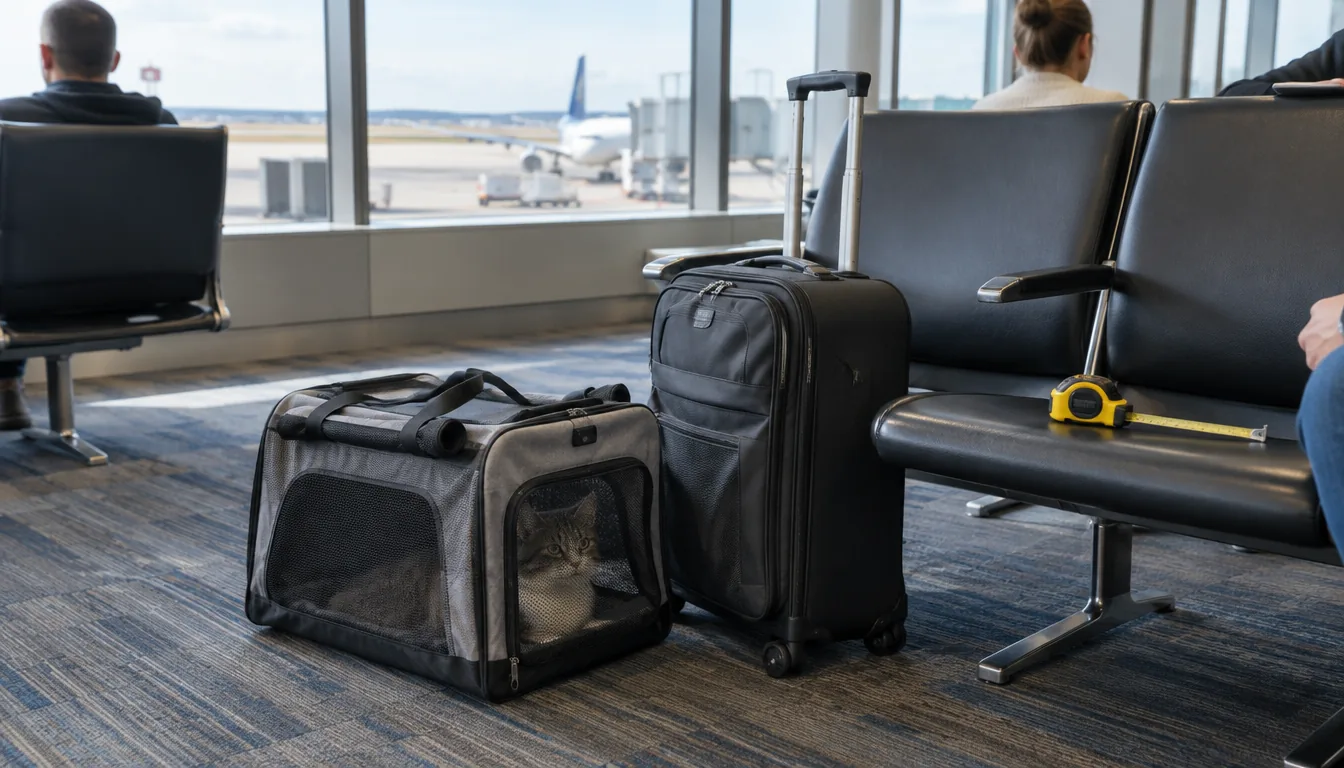
Padding and liners take up space, so measure with the cushion in place. If you plan to fly, airlines set their own size limits for what goes under the seat; the airline carrier size and fit checklist walks through what to measure before you book.
What to look for before you buy
Use this checklist when you compare models, whether you shop in the Trackers & Travel Carriers collection or elsewhere.
- A wide opening, so your cat can walk in on her own
- Mesh or vents on more than one side for air flow
- Zippers or latches that close fully and can be checked at a glance
- A removable, washable liner or a wipe-clean base
- A strap or handle that keeps the carrier level when you walk
- Inside dimensions that match your measurements
Avoid a carrier with a narrow top opening if your cat resists being lifted. Check that the door and window zippers close before you pick it up.
A soft carrier option: WanderPaw
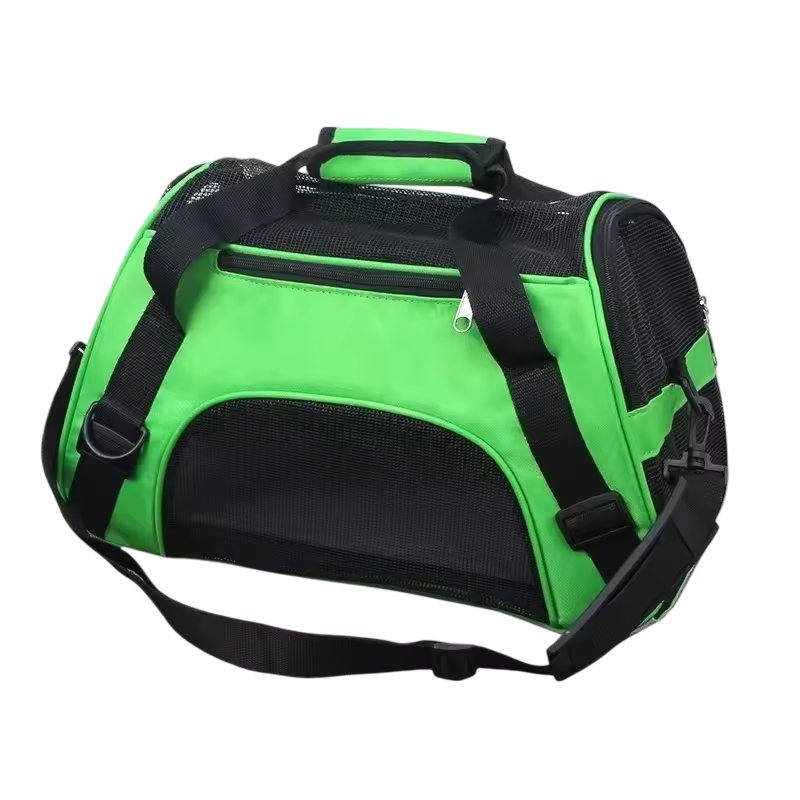
WanderPaw is a soft-sided travel carrier with a wide side door, a mesh window and a removable plush cushion liner. The side door opens wide, so your cat can walk in on her own instead of being lowered through a narrow opening.
The liner pulls out for machine washing, and the outer shell wipes clean with a damp cloth. The shell is thickened and has zippers on the door and window; close them before you pick it up. You carry it on one shoulder or cross-body, and you can set it down with the mesh window facing you so you can see her and reach in a hand.
 In this guideWanderPaw$99.99View
How to get your cat used to a carrier
Cats take to a carrier when it is part of the home, not something that appears on the morning of a vet visit. Work through these steps at your cat's pace and go back a step if she backs away.
- Place the carrier in a room she uses, with the door open or removed, and leave it out for several days.
- Put her blanket or a worn shirt inside, then add a snack or a toy near the entrance.
- Move the snack farther inside as she steps in. Let her walk out whenever she wants.
- Feed some meals beside the carrier, then inside it.
- Close the door for a moment while she eats, then open it again before she asks to leave.
- Lift the carrier a few inches, set it down and reward her. Repeat until lifting is routine.
- Carry the cat with carrier a few steps around the house, then to the car and back.
Short, calm sessions do more than a long one. If your cat seems nervous, slow down and keep the carrier's smell familiar rather than adding new objects.
Field note
Keep the carrier out all year with a blanket inside. A cat who naps in it on ordinary days has a different view of it on trip day.
Getting your cat inside on trip day
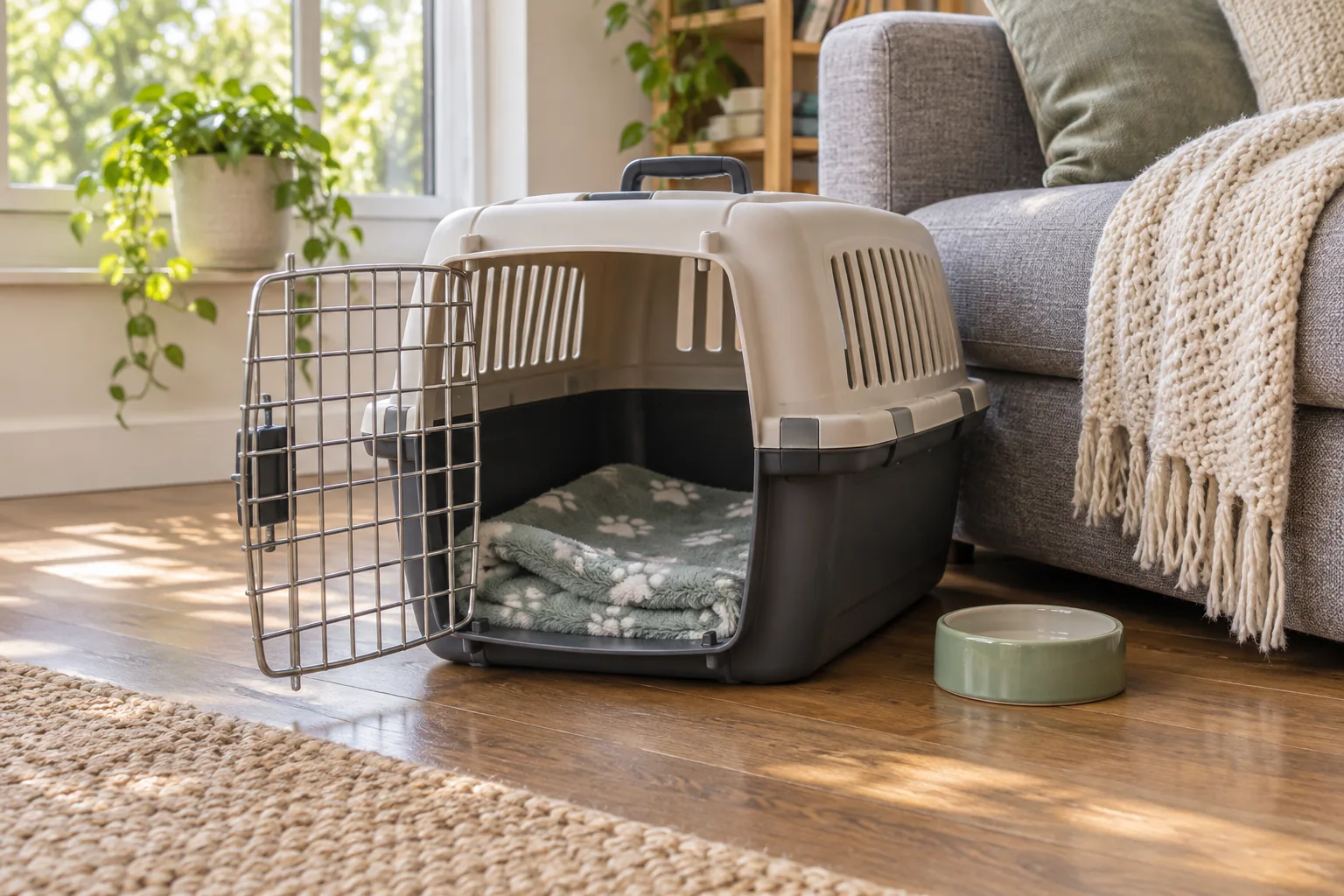
Even a trained cat can hesitate. Prepare the carrier first: liner in place, door open, zippers or latches checked. Then bring the cat to it instead of chasing her around the house.
If she will not walk in
- With a top-opening carrier, lower her in with one hand under her chest and one supporting her back legs.
- With a front-door carrier, stand it on its end so the door faces up, then lower her in. Follow the manual for your model.
- With a side-door soft carrier, open the door wide and let her step in; do not push.
Close the door or zipper right away and check that it is fully shut before you lift. Carry the carrier level, hold it close to your body and set it on the floor or a seat with the door facing you. Do not place it where it could slide or tip.
Common mistakes with cat carriers
- Buying a size that is too tight because it looks neat; measure first.
- Pulling the cat out by force at the vet, which makes the carrier a bad memory.
- Bringing the carrier out only for trips.
- Leaving a cat and carrier unattended in a hot car or in direct sun.
- Skipping the liner wash after an accident; follow the care instructions for your model.
Carriers are for transport, not for storing a cat for a long time. For questions about how long your cat can stay in one, or about feeding or care on longer trips, ask your veterinarian.