How Does a Self Warming Cat Bed Work? Layers, Uses and Limits
A self-warming cat bed has no plug: foil layers in the base reflect your cat's own body heat back toward the cat. Here are the layers, the limits and when electric heat fits.
The Millbrook Team
November 23, 2026 · 7 min read
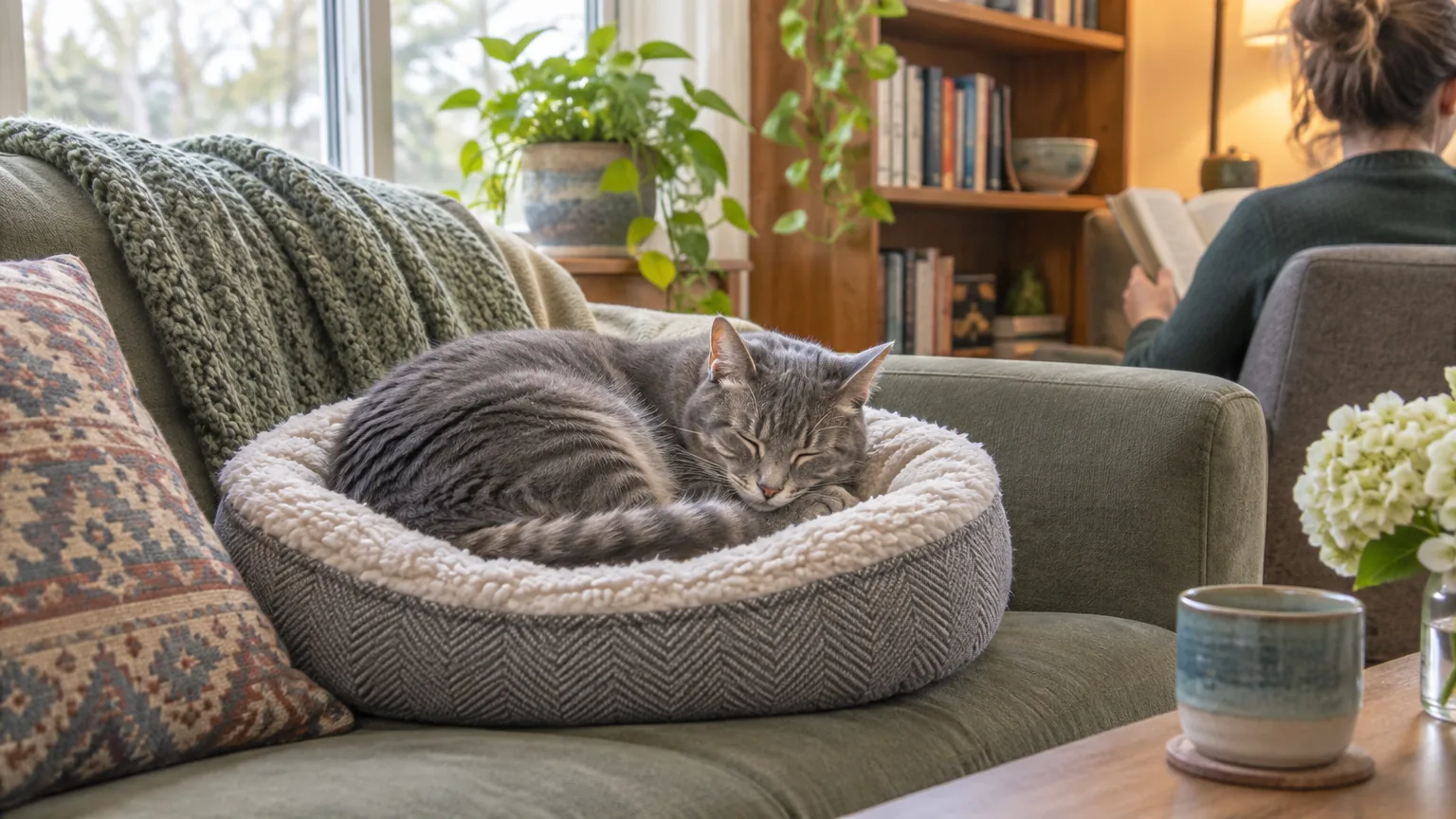
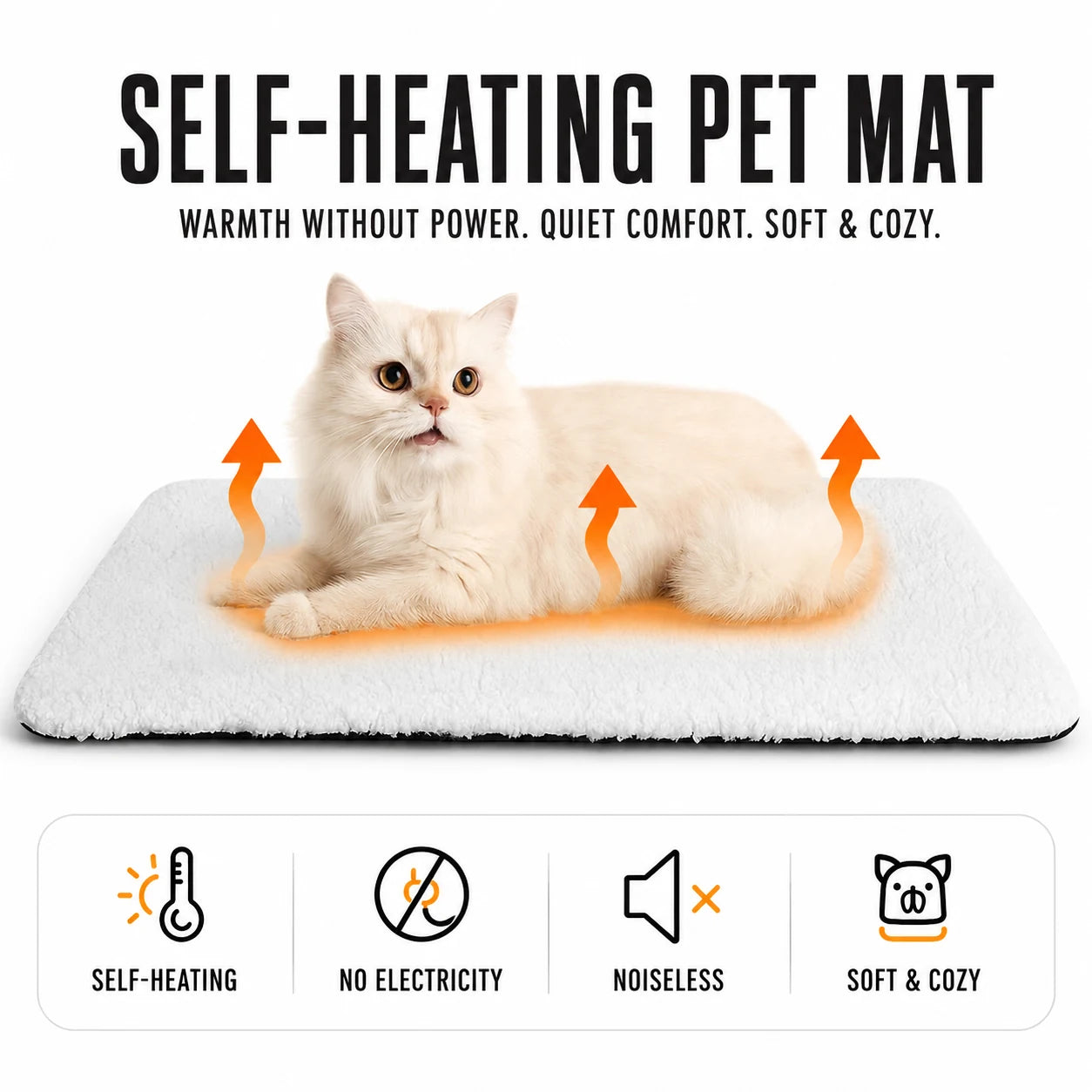
How does self warming cat bed work without a plug? A reflective foil layer in the base sends your cat's own body heat back toward the cat, so the bed has no cord, no batteries and no heating element. A self-warming cat bed adds no heat of its own: it only reflects heat while a cat is lying on it.
This guide explains the layers inside the bed, how that design differs from an electric heating pad, which cats and spaces suit each type, and how to build a simple version at home.
How does self warming cat bed work, layer by layer
A self-warming cat bed is a pad built around a reflective core. When your cat settles in, body heat travels down into the bed. The foil layer reflects part of that heat back up, and the soft top layer holds it close to the cat instead of letting it drain into a cold floor.
Designs vary, but the parts you will see are:
- A plush fleece cover that your cat lies on.
- One or two reflective foil layers in the core, sometimes with a thermal film or insulation pad.
- A grip base that holds the bed in place on the floor.
The PurrNest has three of these parts: a removable fleece cover, a dual-foil thermal core in the base and a dotted grip pattern on the underside. It has no electrical parts, cord or batteries. The dual-foil layer works with your cat's own body heat, which is why nothing plugs in.
What the foil actually does
Foil reflects radiant heat the way an emergency blanket does. The bed does not create warmth; it redirects the warmth your cat already gives off. An empty bed stays at room temperature because there is no heat to reflect until a cat lies on it.
 In this guidePurrNest$44.99View
What a self-warming cat bed does not do
Knowing the limits helps you choose the right bed. A self-warming bed has no thermostat, no temperature setting and no heat source. It cannot warm a space, and it cannot warm a cat that is not lying on it.
- It depends on the cat's body heat, so a very small or thin cat gives it little to work with.
- It does not replace a draft-free, dry sleeping spot.
- It does not change the room temperature or the surface under it.
- The thermal insert is kept out of the wash. Follow the bed's care guide; some cores can be wiped with a damp cloth.
If your cat gets cold easily or has trouble moving, ask your veterinarian before choosing any heated product.
Self-warming bed vs electric heating pad
An electric heated bed or pad draws power from an outlet and produces heat through an element. A self-warming bed uses reflection only. The table lays out the differences you can check on a product page.
| Feature | Self-warming bed | Electric heating pad | Microwave pad |
|---|---|---|---|
| Power source | None, uses your cat's body heat | Wall outlet and cord | Heated in a microwave |
| Cord or batteries | No | Cord, yes | No |
| Where it can go | Sofa, carrier, shelter, garage | Within reach of an outlet | Anywhere, after heating |
| Heat when the cat is away | No added heat | Heats while switched on | Warm only after heating |
| Cleaning | Cover unzips for the washer | Follow the pad's manual | Follow the pad's manual |
A human heating pad is built for people and is not made for a pet's bed. If you choose electric heat, use a product made for pets and follow its manual on cords, covers and supervision. For a microwave pad, follow the manual on heating time and check that the pad is not hot to the touch before you offer it.
When a cat needs one or the other
When a self-warming bed fits
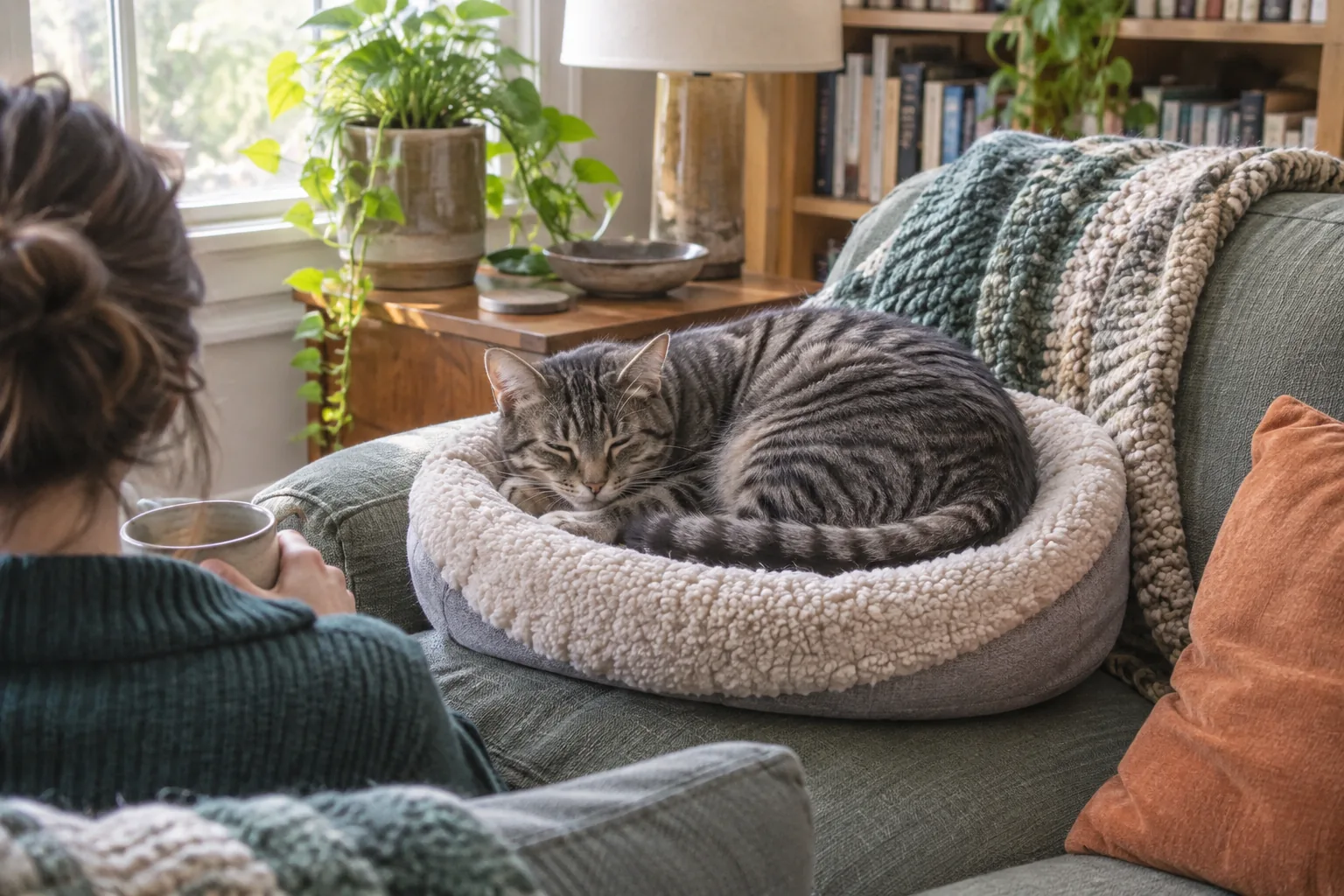
Choose a self-warming bed when you want a cordless option or need to move the bed around. It suits a sofa, a carrier, a porch, an outdoor shelter, a foster room or a garage, since nothing has to reach an outlet. It also suits cats that already curl up in a tight, snug spot.
When electric heat may be worth asking about
Some cats, such as seniors or short-haired cats in a cool room, may look for additional warmth beyond their own body heat. In that case, ask your veterinarian and look at pet-made electric pads, following the manual. Do not layer straw or loose bedding over an electric heating pad; the manual of the pad you own is the rule to follow.
Some cats seek out warm spots such as a sunny sill or a laundry basket, so a warm bed may be welcome, but each cat chooses for itself. Offer the bed and watch whether your cat uses it.
Warm weather
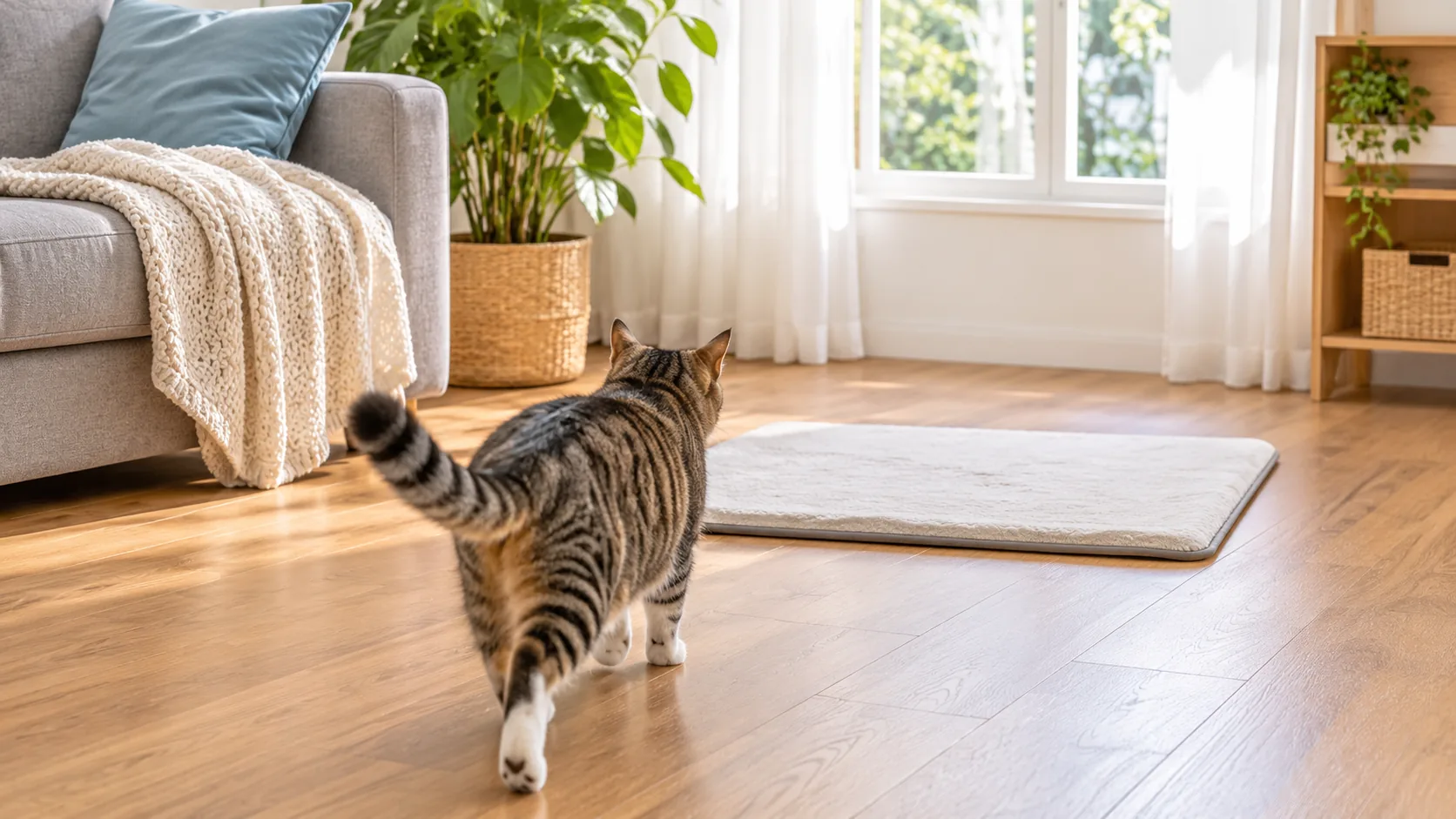
In hot weather, cats move off warm beds to cooler spots such as tile or a shaded floor. Put the bed away or leave a cooler option nearby. How to get a cat to use a cooling mat covers placement and steps for the warm months.
Field note
Put the bed beside a spot your cat already uses, not in a new room. Leave the old blanket on top for a few days so the bed smells familiar.
Where to place a self-warming cat bed
Placement matters as much as the bed. Use this checklist:
- Pick a spot out of drafts, away from open doors and cold windows.
- Set the bed on a flat, dry surface.
- Use a grip base on smooth floors. The WyldNook has a dotted non-slip base made for hardwood, tile and laminate floors.
- Check the sizing card that comes with the bed for weight guidance.
- Keep it near the places your cat already naps, such as a window sill, a crate or carrier, or a corner of the room.
WyldNook uses a dual-foil reflective core with carbon-infused insulation, and a thermal film layer sits beneath the fleece top. It has no plug, batteries or power cord.
 In this guideWyldNook$44.99View
For an outdoor cat shelter, the bed is one layer of the setup. Walls, a raised floor and a dry roof matter too, and insulating an outdoor cat house for winter covers those steps.
How to make a self-warming cat bed at home
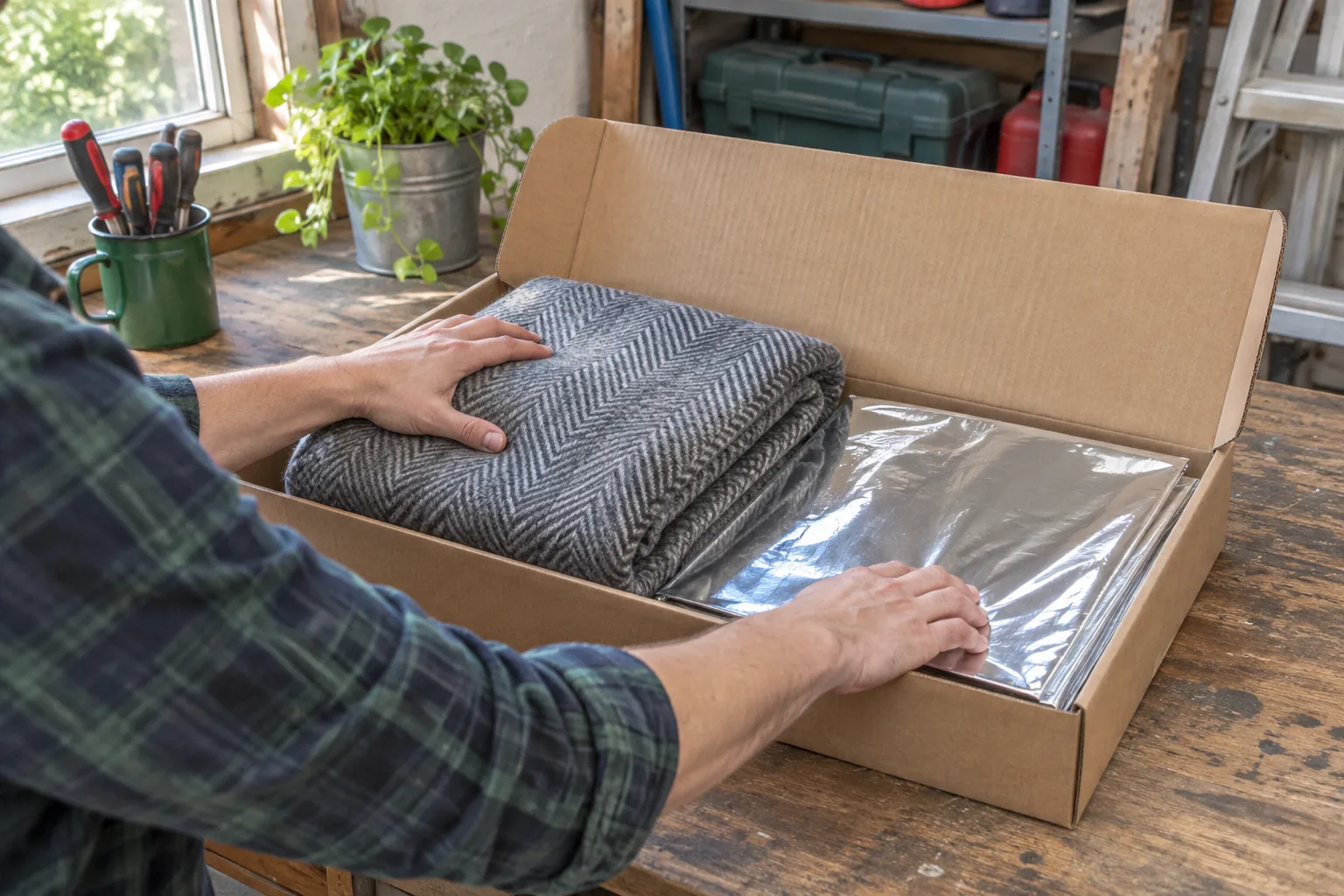
A homemade bed copies the layers above. It does not match a built core, but it shows the idea. Use only materials that are not electrical, and keep everything dry.
- Choose a shallow box or a firm cushion base, sized so your cat can stretch out.
- Line the bottom with a flat layer of folded cloth or felt for insulation.
- Lay a sheet of reflective film, like the material used in emergency blankets, shiny side up, on top. Keep it flat and tuck the edges so they do not poke up.
- Cover the film with another soft layer, then a washable fleece cover that you can remove. Keep the reflective film fully enclosed so the cat cannot chew or swallow it.
- Add a non-slip mat under the box if the floor is smooth.
Check the bed often for torn film or loose edges, and replace any damaged layer. If the film is exposed at any point, remove the bed until you have enclosed it again. Do not add a heating pad to a homemade bed unless the pad's manual allows that use.
Care schedule for a self-warming cat bed
| Task | How to do it |
|---|---|
| Remove loose hair | Shake out or brush the cover between washes |
| Wash the cover | Unzip it and follow your bed's care guide; the WyldNook cover goes in the washer on a cold cycle, then air dries |
| Clean the core | Keep it out of the wash and follow the care guide; the WyldNook core can be wiped with a damp cloth |
| Check the base | Look at the grip dots and the flat shape of the insert |
Wash the cover whenever it looks dirty or carries odor. Keep the insert separate until the cover is fully dry, then zip it back together.
So, how does self warming cat bed work? It reflects your cat's body heat with foil layers, so it suits cordless spots and cats that curl up. When you want a bed from the beds, houses and scratching posts collection, check the product page for the core and cover details.