Do Female Cats Spray? Spraying vs Peeing and Home Fixes
Yes, female cats can spray, including spayed ones. This guide shows how to tell spraying from peeing, what to change at home, and when to call your vet.
The Millbrook Team
November 6, 2026 · 6 min read
Do female cats spray? Yes. Female cats can spray, and spayed females can too. Spraying is scent marking, not a litter habit gone wrong, and it looks different from regular peeing.
A cat sprays to say who lives here, to react to a change, or, in an unspayed female, to signal that she is ready to mate. This guide shows how to tell spraying from a litter problem, what to change at home, how to clean up, and when to call your veterinarian.
Spraying vs peeing: how to tell the difference
Start with posture and location. A cat that sprays usually stands, often backs against a vertical surface such as a wall, door or furniture leg, and her tail may quiver. A cat that pees outside the box squats and leaves a puddle on a horizontal surface such as a rug, bed or floor.
| Clue | Spraying | Peeing outside the box |
|---|---|---|
| Posture | Standing, tail raised and often quivering | Squatting |
| Surface | Walls, doors, furniture sides, windows | Rugs, beds, laundry, floor |
| Amount | Small streaks or spots | A puddle |
| Litter box use | Often still uses the box | May avoid the box |
| Likely theme | Marking, stress, territory | Box problem, or a health question for your vet |
Both can happen in the same cat, so write down what you see. A note of the date, place and posture gives your vet clear information.
Do female cats spray in the house, and why?
They can. Indoor spraying is often tied to territorial feelings or stress, and the trigger may look small from your point of view. Common triggers include:
- A new pet, baby or housemate
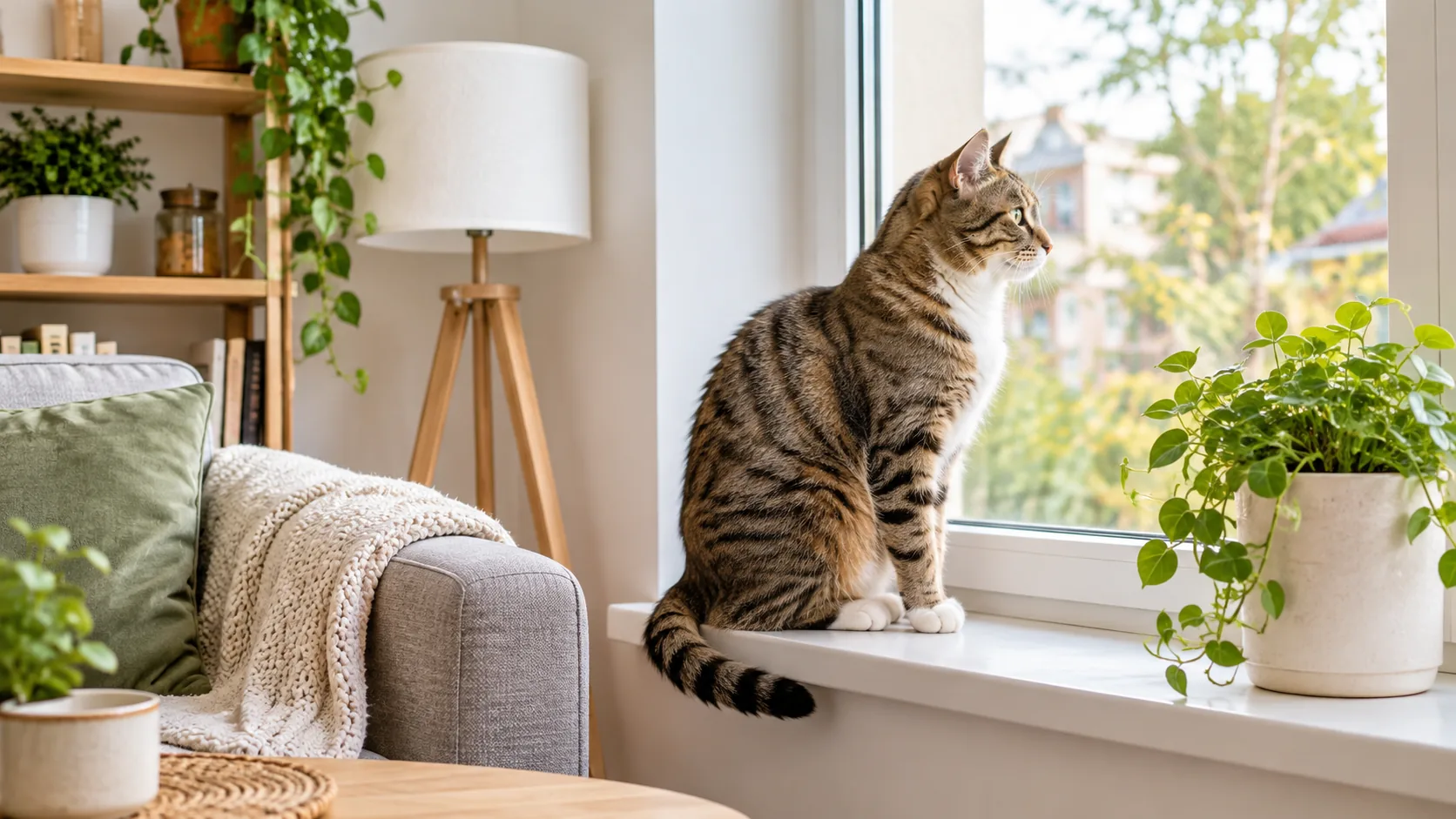
- A stray or neighborhood cat seen through a window
- Moved furniture, a new home or unfamiliar smells
- Tension between cats that share boxes, beds or bowls
- Heat in an unspayed female, when marking helps attract mates
Spayed females and other cats
Spayed cats can still spray, and the cause is often a stressor rather than hormones. Unneutered male cats are the cats most often linked with spraying, but females and neutered cats of either sex can do it too, so spay or neuter status does not rule it out.
How often and how long
There is no fixed pattern. Spraying tends to continue while the trigger is still present, so ask what changed before it started. In an unspayed female, spraying that appears during heat is tied to that period and is a reason to talk with your vet about spaying.
What cat spray smells like, and where to look
Spray has a pungent, musky odor that can linger on walls and fabric. Because it sits on vertical surfaces in small amounts, you may smell it before you find it. Check the lower part of walls, door frames, curtains, the sides of furniture and anything near a window.
A flashlight with a UV bulb can help you locate dried spots in a dark room. Follow your cleaner's label when you use it.
Do female cats spray their owners? It is uncommon, but a cat can mark belongings such as bags, shoes, clothes or bedding that carry your scent, especially when she is stressed. Read that as a marking sign and look for the trigger.
Home setup checklist to reduce spraying
Work through these steps in order and change one thing at a time. That way you can see which change matters.
| Step | What to do | Why it matters |
|---|---|---|
| 1. Litter boxes | One box per cat plus one extra, in different quiet spots | Gives each cat a box of her own to choose |
| 2. Scratching spot | Place a scratcher near the marked area | Gives scent marking a different place |
| 3. Stress sources | Block window views, add perches and hiding places | Addresses territorial triggers |
| 4. Routine | Keep feeding and play times steady | Gives the day a predictable shape |
| 5. Cleanup | Wash every marked spot with an enzymatic cleaner | Targets the scent that can invite repeat marking |
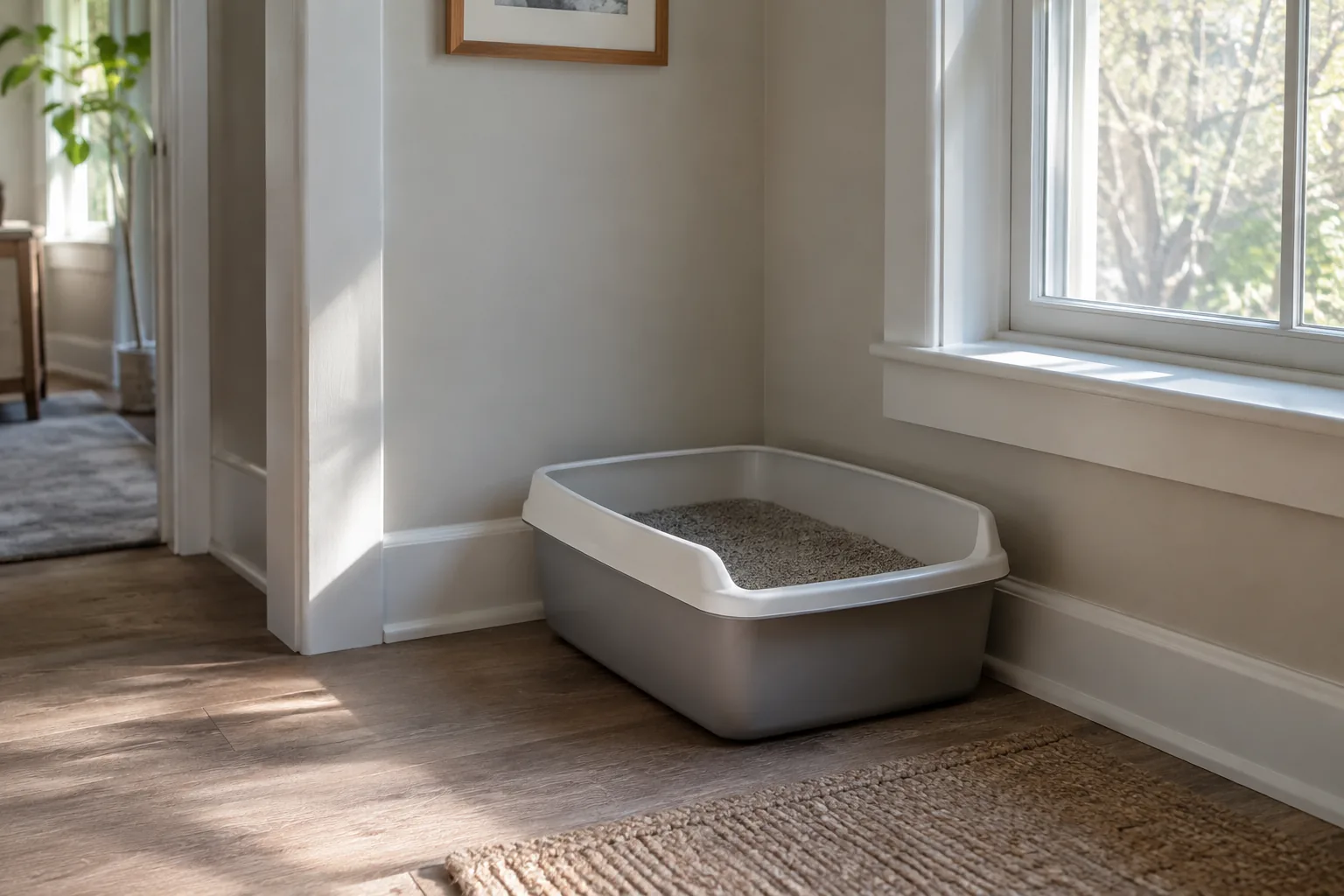
1. Get the litter box setup right
- Provide one box per cat plus one extra, in different quiet spots.
- Scoop at least once a day and wash the box on a regular schedule with unscented soap.
- Keep the litter type your cat already uses.
- Place boxes away from noisy appliances and food bowls.
- Do not line boxes up side by side, since a row works as one large box for the cat.
A clean, easy-to-reach box matters because a cat that avoids the box is a different problem from a cat that sprays. If the box is dirty, hidden behind a closed door or placed where she feels cornered, you may see peeing outside it. Keep the routine steady for a couple of weeks before you judge whether anything changed.
2. Give scent marking another place
Cats leave scent when they scratch, so a scratching spot gives marking an outlet that is not your wall. Put it near the area your cat already targets, ideally by a corner or doorway.
ClawHaven is an L-shaped scratcher made of corrugated paper that fits into a room corner. It has a bell ball in a built-in cavity and comes with a catnip sachet. Sprinkle the catnip across the corrugated surface to draw your cat over, then let her explore at her own pace. It does not use anchors or adhesive. For other materials, see sisal vs cardboard scratcher posts.
 In this guideClawHaven$139.99View
3. Reduce stress and outside triggers
- Block the view of outdoor cats from windows with film or by moving furniture.
- Offer high perches, hiding places and separate feeding spots in multi-cat homes.
- Keep daily feeding and play times steady.
- Introduce changes, such as a new pet, slowly and with separate spaces at first.
You can browse beds, hideaways and scratchers in Beds, Houses & Scratching Posts.
Field note
Keep a simple log for two weeks: date, time, spot, standing or squatting, and anything new in the home. Patterns often point to the trigger and give your vet clear information.
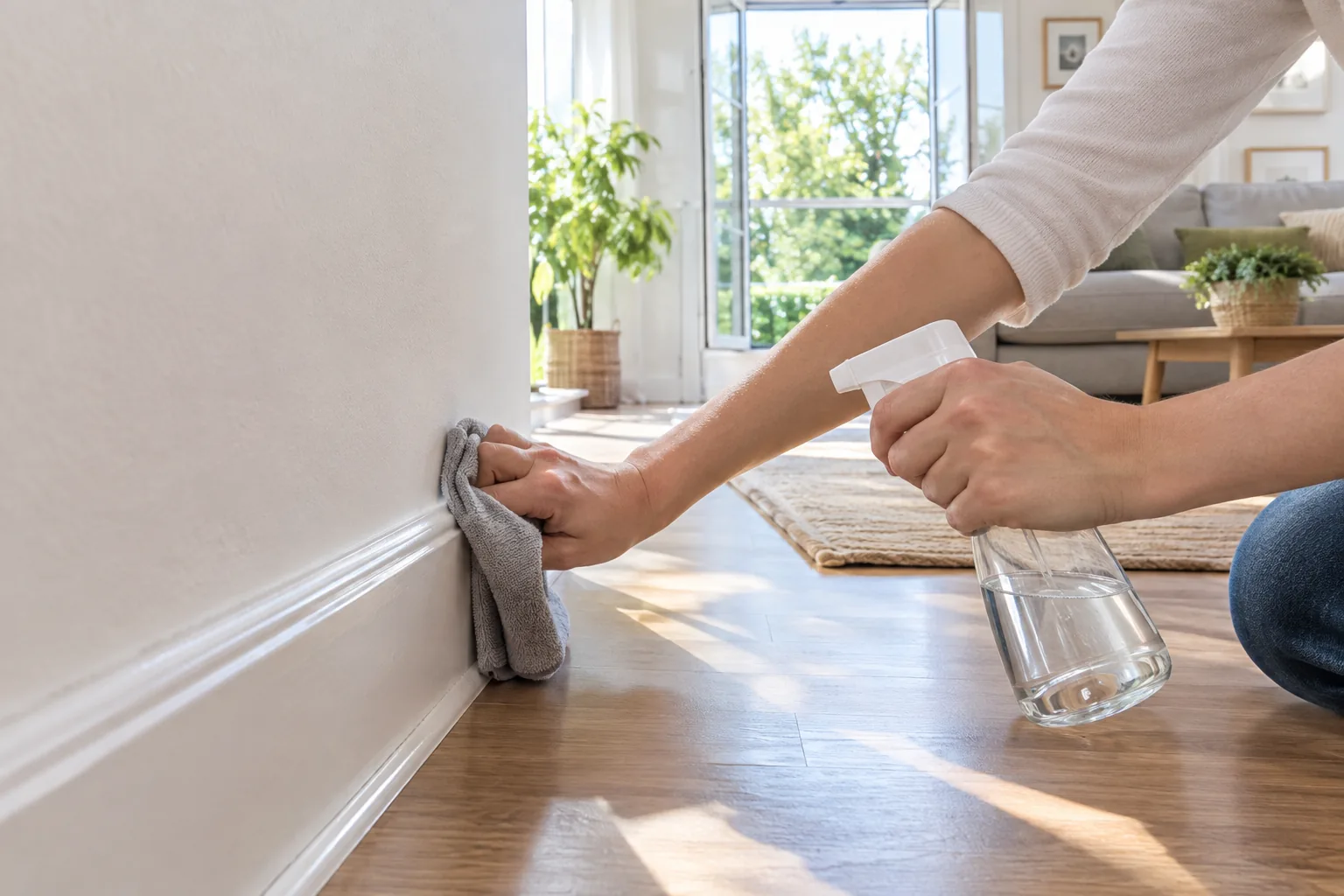
Cleaning up spray
Cats return to spots that still smell like urine, so cleanup matters as much as the cause. Use an enzymatic cleaner made for pet urine and follow the label.
- Blot fresh spray with paper towels and discard them.
- Wash the surface with the cleaner, following its label.
- Let it air dry fully. Ventilate the room and keep your cat out while it dries.
- Skip ammonia-based cleaners, since the smell resembles urine.
- Wash washable fabrics according to their care labels.
- Try the cleaner on a hidden area first, since some surfaces react to it.
Check the spot again after it dries. If you still smell it, repeat the wash, because dried urine can hold scent in porous surfaces such as unsealed wood, grout and carpet backing.
Common mistakes to avoid
- Changing several things at once, which hides the real trigger.
- Switching litter brands or box types during the problem.
- Cleaning with a scented product that covers the smell for you but not for your cat.
- Placing boxes side by side, which works as one large box for the cat.
- Skipping the vet visit because the behavior looks like marking.
When to see a vet
Call your veterinarian if your cat strains in the box, goes often in small amounts, cries while urinating, or suddenly changes her litter habits. A vet can rule out an underlying urinary or other health cause, which this article cannot do.
Call too if spraying continues after you have adjusted the home, or if you are unsure whether it is spraying or peeing. Bring your log and, if you can, a photo of the spot. Your vet will advise on next steps, including whether spay status matters in your cat's case.