Are Cats Nocturnal? How to Manage Night and Dawn Activity
Are cats nocturnal? No, they are crepuscular, with peaks at dawn and dusk. Use this schedule of play, timed meals and a set sleeping spot to move that energy away from your sleep.
The Millbrook Team
November 6, 2026 · 5 min read
Are cats nocturnal? Not quite: cats are crepuscular, which means they are most active around dawn and dusk, and they sleep for long stretches of the day and night. Indoor cats often shift toward your schedule, but a burst of energy in the early morning or late evening is normal. A routine of play, a meal and a set sleeping spot can move that burst to a time that suits you.
Are cats nocturnal, crepuscular or diurnal?
A nocturnal animal is active mostly at night, and a diurnal animal is active mostly in daylight. Crepuscular animals peak in the low-light hours of dusk and dawn. Cats fit the last group, which is why the answer to "are cats nocturnal or crepuscular" is crepuscular.
| Term | Active mostly | Fits a cat? |
|---|---|---|
| Nocturnal | At night | Partly: cats can be active in the dark |
| Diurnal | In daylight | Partly: indoor cats follow household activity |
| Crepuscular | Dawn and dusk | Yes, the closest label |
Why cats are crepuscular
Cats descend from hunters of birds and rodents, and those prey animals move around at dawn and dusk. Cats see well in low-light conditions, so those hours suit stalking and pouncing. Even a well-fed house cat keeps this hunting rhythm, and it shows up as sudden zoomies, pacing and chatter at the window.
Are indoor cats nocturnal?
Indoor cats are not strictly nocturnal. With no hunting to do, they sleep through much of the daytime, which leaves them with energy to spend when the house goes dark and quiet. If your cat is awake at night, the cause is often a daytime spent dozing and a quiet house, not a true night schedule.
Are cats nocturnal during the day?
No. Cats nap in short and long blocks through daylight, and they wake for play, food and attention when something is going on. This is why boredom matters: a cat that sleeps through the daytime is likely to be awake when you want to sleep.
A schedule that shifts night and dawn activity
The goal is to move the cat's peak energy to the evening and tie the first meal to your wake-up time. Adjust the times to your own day, and give each change a week or two before you judge it. Write the plan on a note so everyone in the household follows the same steps.
| Time of day | What to do | Why it helps |
|---|---|---|
| Morning | Short play, then breakfast | Links your wake-up with food |
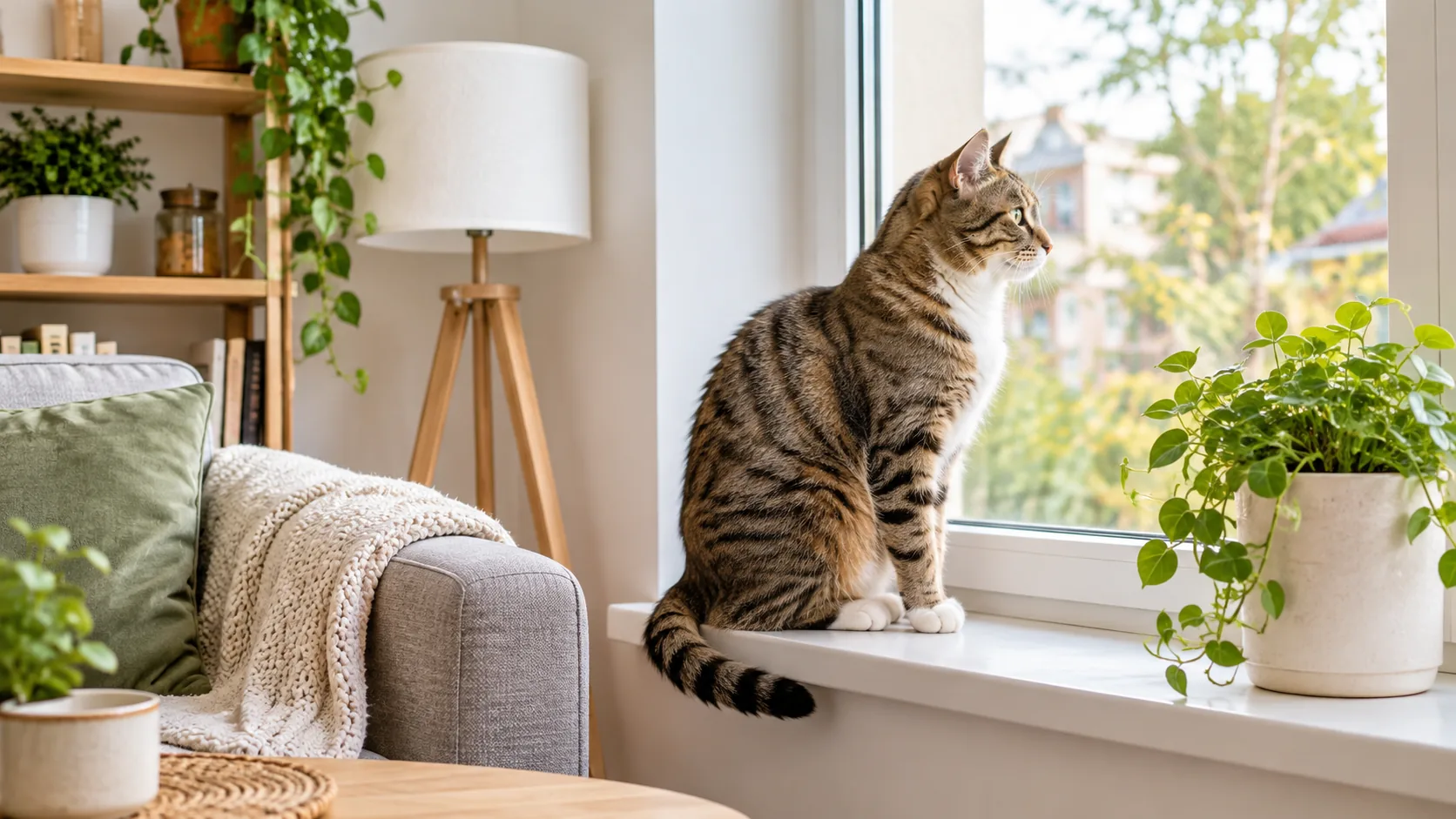
| Midday | Window perch, puzzle toy or scratcher | Gives the cat something to do besides sleep |
| Early evening | Interactive play session, 10 to 15 minutes | Uses the dusk energy peak |
| Before bedtime | Small meal after play | Follows the hunt, catch, eat, groom, sleep pattern |
| Night | Cat settles in its own warm bed | Builds a sleep cue |
Play before bedtime, then feed
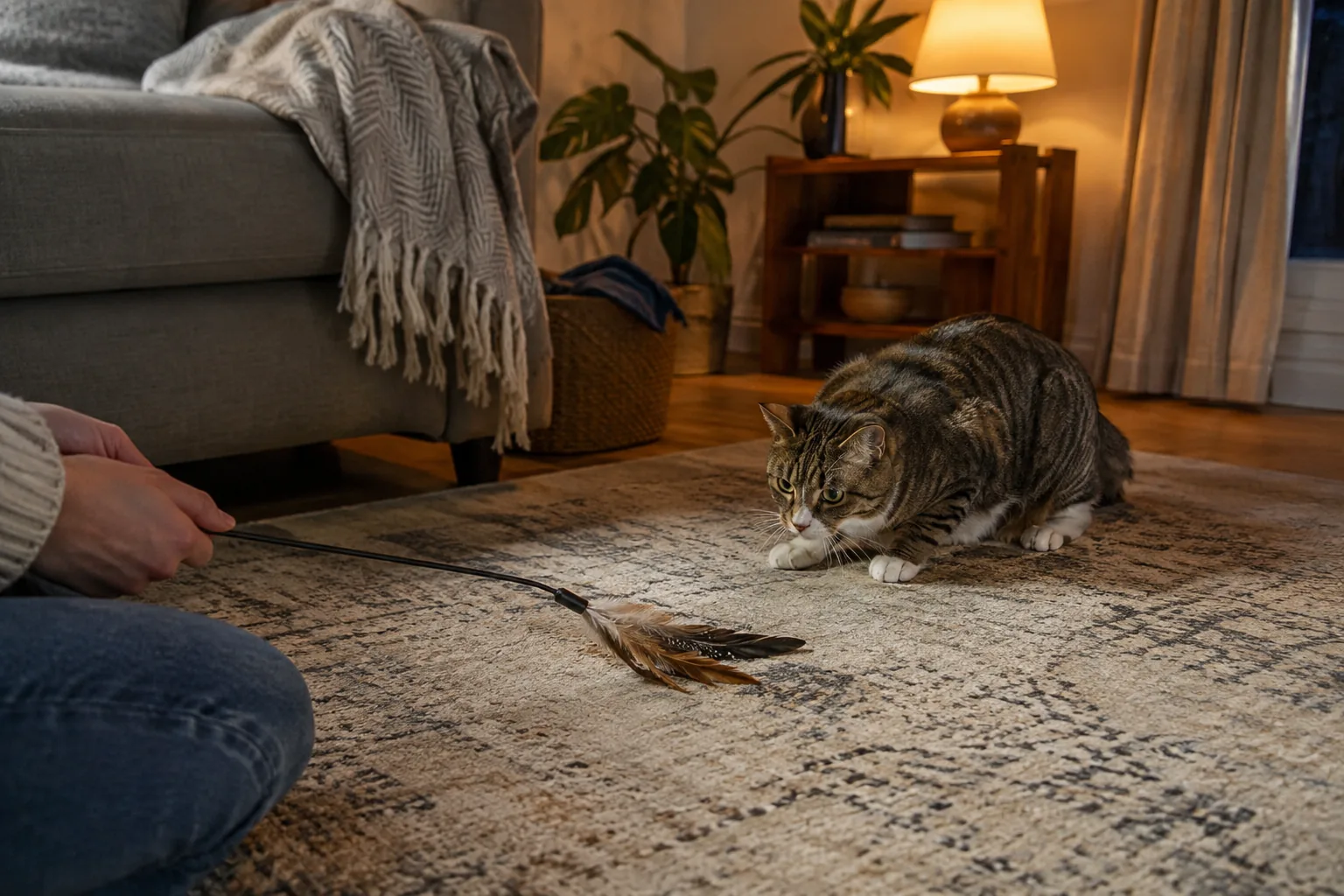
Use a wand toy so the cat can stalk, chase and pounce, and end with a catch. Then offer a meal. Cats naturally hunt, eat, groom and sleep in that order, so the meal works as a closing step to the play session.
Use timed meals for dawn and night
A cat that wakes you at 4 a.m. often learns that noise brings food. Timed meals break that link, because food arrives without any action from you. An automatic feeder can serve a small meal in the early hours, so you can stay in bed while the cat eats.
NouriPaw is an automatic cat feeder for dry kibble. You set meal times and portion sizes on the backlit screen or in the app, and it programs 8 daily meals with custom portions. The hopper holds 7 lbs of dry kibble, the lid locks, and a built-in battery backup keeps it following your schedule if household power drops.
 In this guideNouriPaw$149.99View
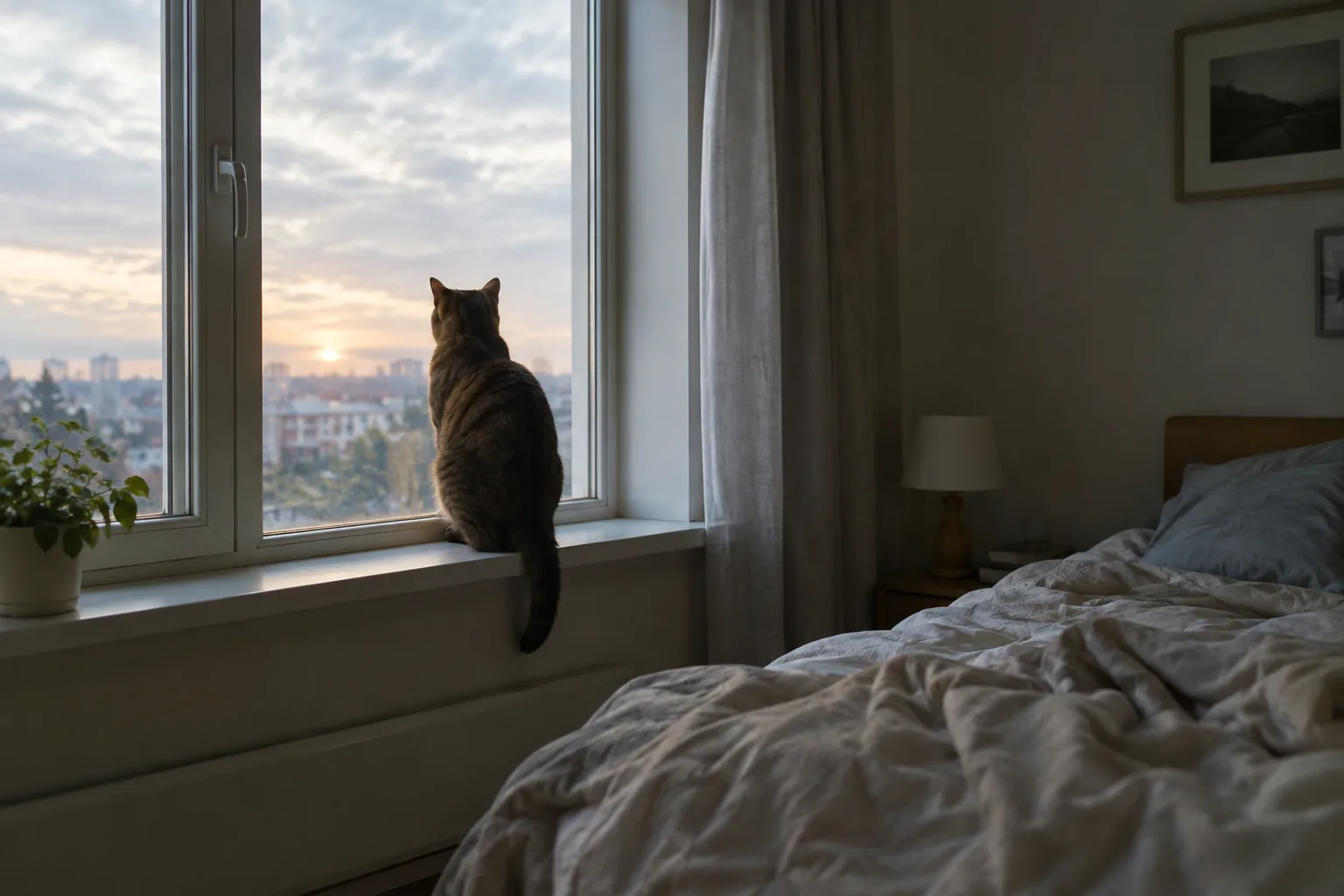
Give the cat a daytime outlet and a sleeping spot
A cat with nothing to do will sleep and then wake restless. Rotate toys, add a window perch, and give scratching a clear place. ClawHaven is an L-shaped scratcher made of corrugated paper that fits into a room corner, with a bell ball in a built-in cavity for pawing. It comes with a catnip sachet, and you place it near the spot where your cat already scratches. For more on materials, see Cat Scratcher Posts: Sisal vs Cardboard and How to Choose.
 In this guideClawHaven$139.99View
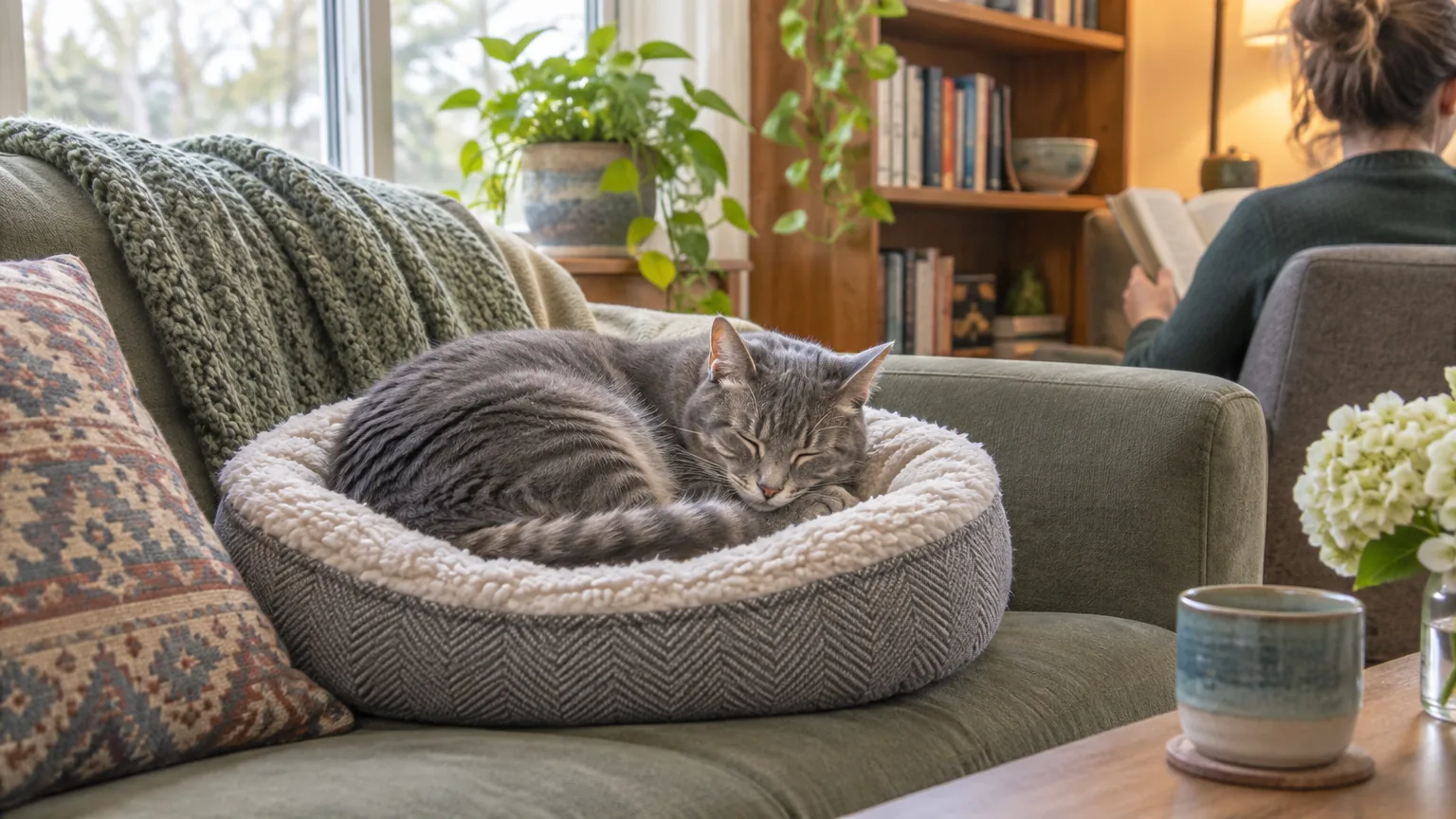
Also pick one bed for night. PurrNest is a self-warming cat bed with a dual-foil thermal core and a removable fleece cover. It has no cord, plug or batteries, so you can set it on a sofa or in a carrier. A consistent bed gives the cat a place to settle. You can browse more options in Beds, Houses & Scratching Posts.
 In this guidePurrNest$44.99View
Field note
Keep the evening play and the late meal at the same times each day. The pattern is what moves the wake-up time.
What to do when the cat wakes you anyway
- Do not respond to meowing, even with a glance, or the cat learns that noise gets a reaction. Reward quiet with attention later.
- Keep morning routines the same each day so the first meal follows your alarm.
- Keep the bedroom door closed if the cat keeps waking you. Add a bed, a scratcher and a toy elsewhere so the cat has something to do.
- Check the litter box habits and the water bowl before bed so basic needs are covered. See Cat Meowing: What Each Meow Means and How to Respond for what the calls mean.
Is it cruel to lock cats out at night?
Closing a bedroom door is not cruel if the cat has food, water, a litter box, a warm bed and toys in the rest of the home. Expect some protest for the first few nights and do not open the door in response, since that rewards the noise. If the crying continues, ask a veterinarian.
When night activity may signal a health issue
A sudden change deserves a call to your veterinarian. Night wandering, loud crying, excessive grooming, changes in litter box habits or a sharp rise in energy in an older cat can have causes beyond habit, including hyperthyroidism or cognitive dysfunction. Do not assume it is a schedule issue when the change is abrupt.
Common mistakes
- Feeding in response to early meowing.
- Playing hard and then going straight to bed without a meal.
- Letting the cat sleep alone through the daytime with no stimulation.
- Changing the schedule every few days instead of holding it steady.