How to Measure a Dog's Chest for a Harness, With a Size Check
Wrap a soft tape around the widest part of the ribcage, just behind the front legs, and add the neck measurement. Then match both numbers to the size chart and run a two-finger check.
The Millbrook Team
November 7, 2026 · 6 min read
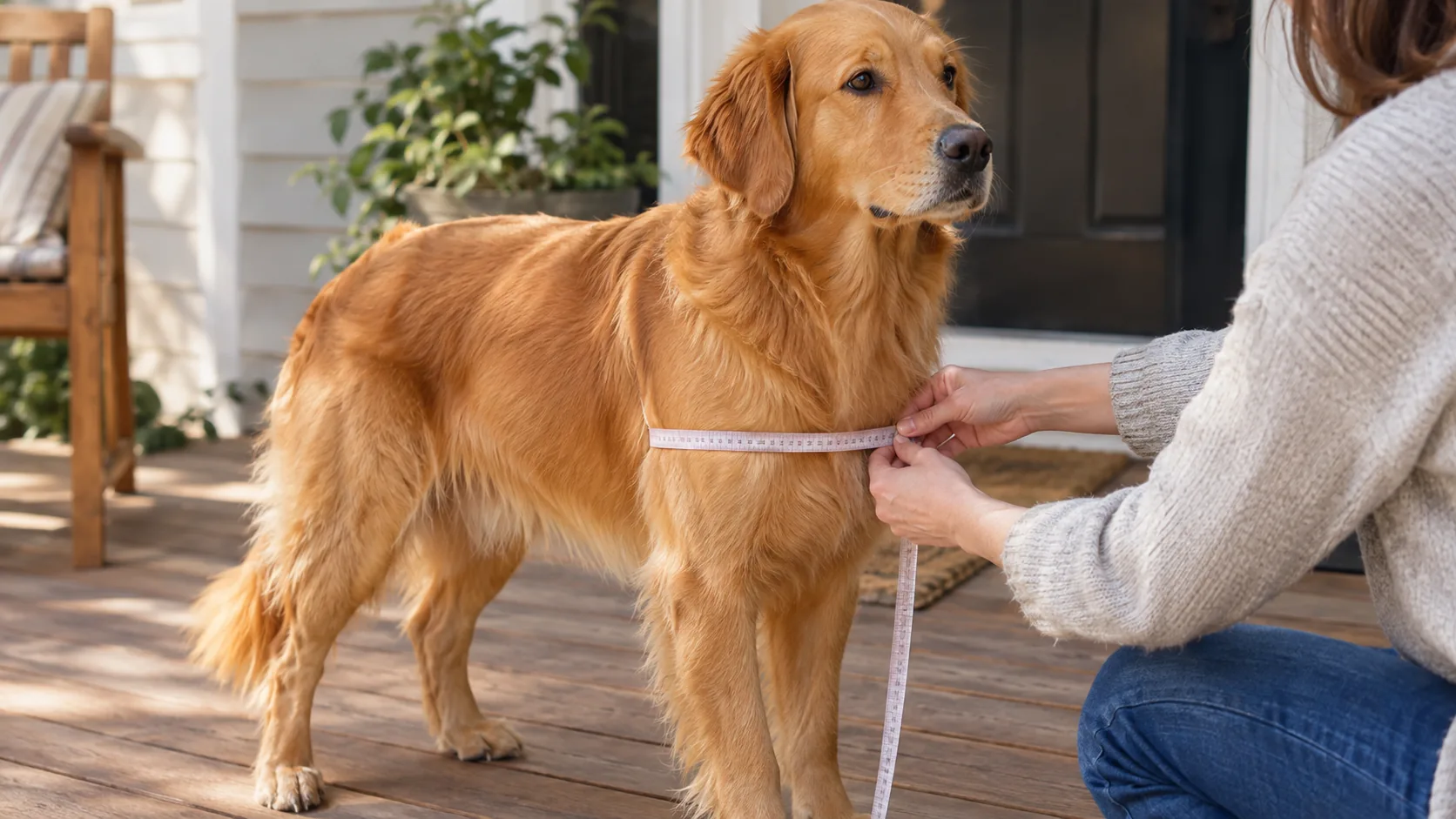
To learn how to measure a dogs chest for a harness, wrap a soft tape measure around the deepest, widest part of the ribcage, just behind the front legs. Keep the tape snug but flat, and read the number where the tape meets the end. Measure the neck too, then compare both numbers to the size chart of the harness you want.
This guide walks through each step, explains what to do when your dog falls between two sizes, and ends with a fit test for the day the harness arrives.
What you need before you start
You need a flexible measuring tape, the kind used for sewing. If you only have a rigid metal tape, use a piece of string or a shoelace, mark it, and then lay it against a ruler.
- A soft tape measure, string or ribbon
- A notepad or phone to write the numbers down
- A few treats to keep your dog standing still
- A second person, if your dog wiggles
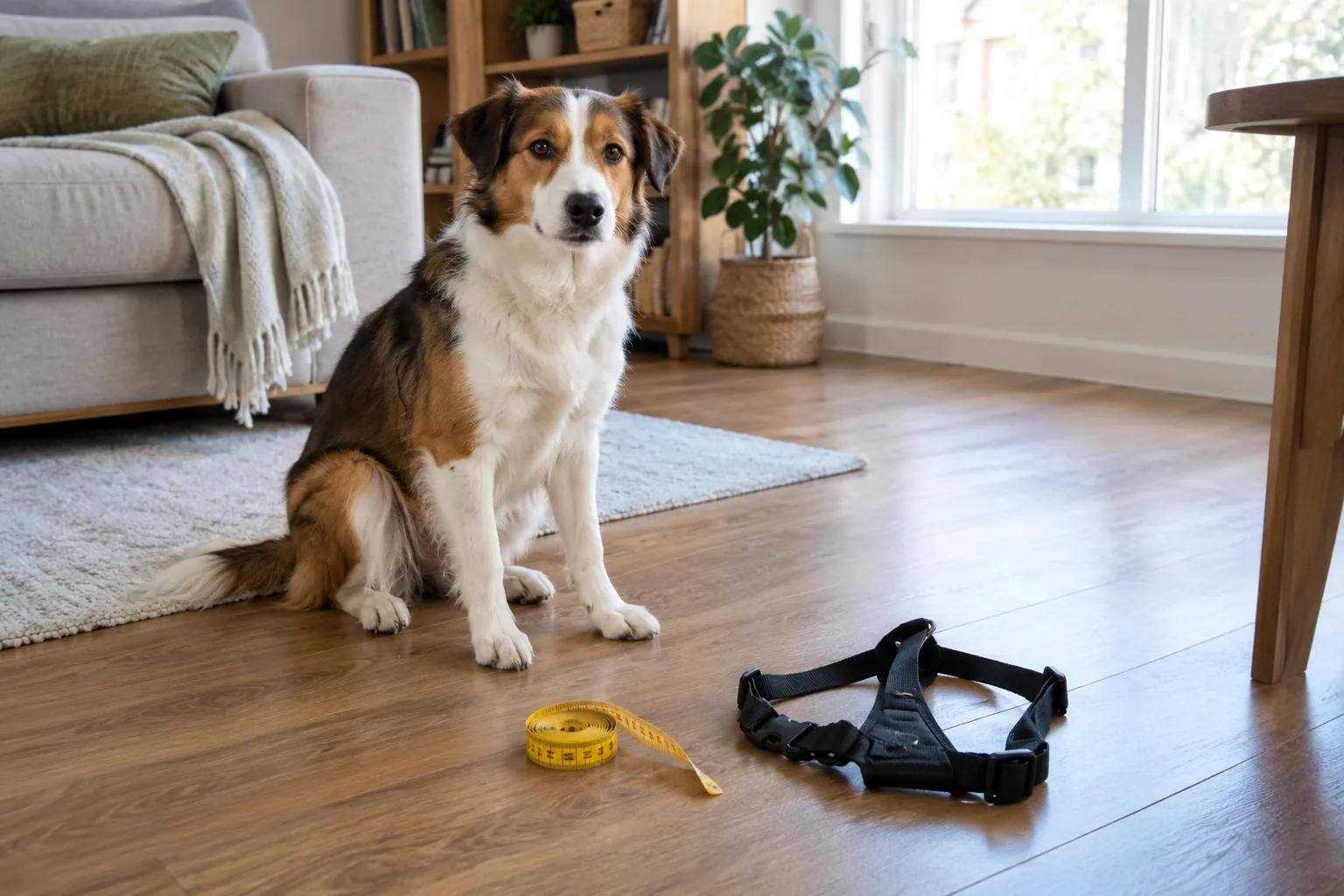
Have your dog stand square on all four paws on a flat floor. Measuring a dog that is sitting or leaning gives a different number from the one the harness will see on a walk.
Step-by-step: how to measure a dogs chest for a harness
Step 1: find the chest girth line
Feel for the point just behind your dog's front legs, where the ribcage is deepest. This is the chest girth line. In a deep-chested breed, it sits a few finger widths behind the elbow.
Step 2: wrap the tape
Bring the tape up one side, over the back, and down the other side, then under the belly to meet itself. Keep it level on both sides. A tape that slopes toward the tail or the shoulders will read wrong.
Step 3: check the snugness
The tape should lie flat against the coat without pressing into it. Slide one finger under the tape to confirm it is not tight. For a thick coat, press the fur down gently as you read the number.
Step 4: measure the neck
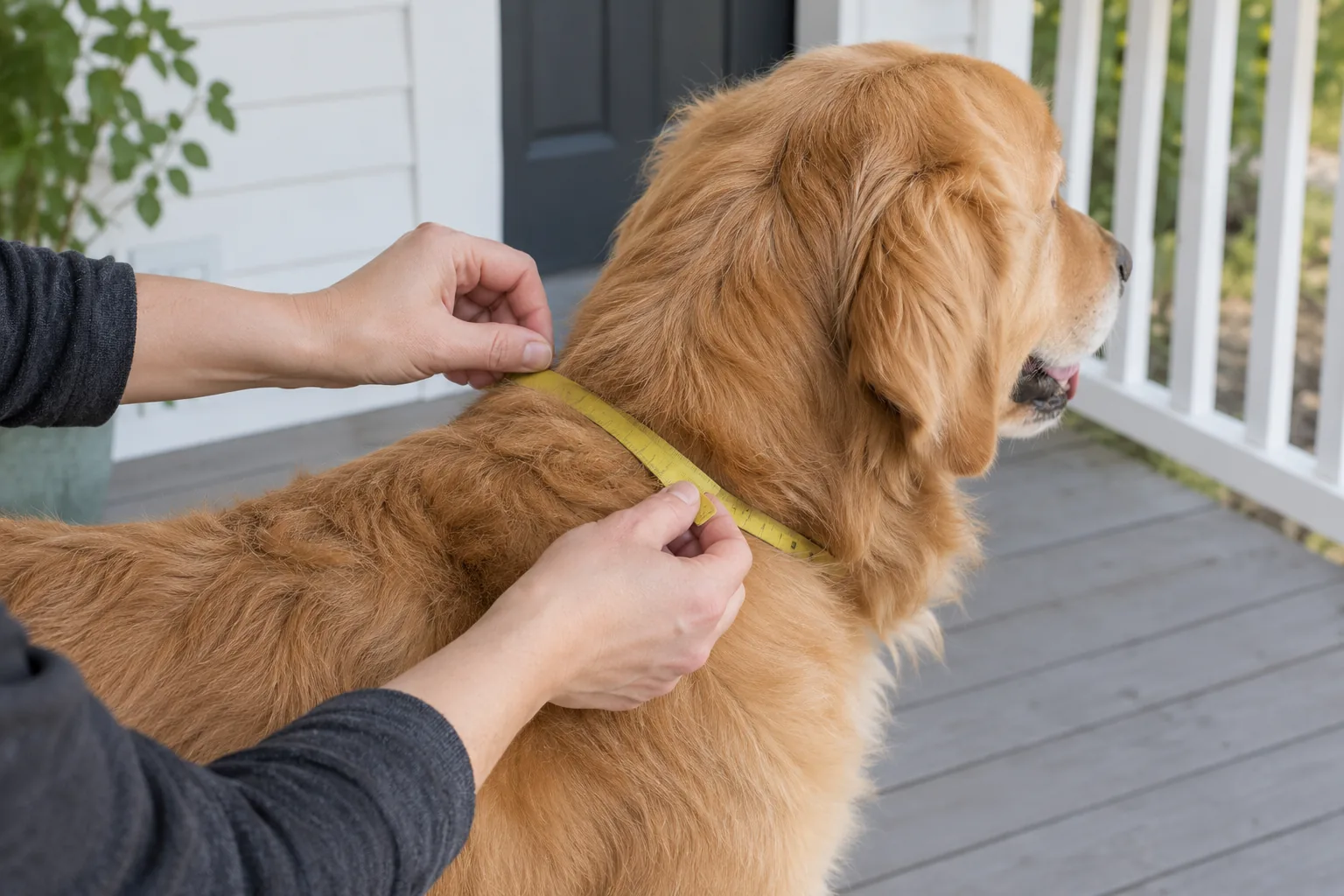
Place the tape where a collar normally sits, at the base of the neck, not up under the jaw. Add the same one-finger gap. Chart layouts differ by model: some step-in styles list only a chest range, overhead styles also list a neck range, and vest charts vary.
Step 5: write down both numbers
Measure twice and record the larger reading if the two differ. Note your dog's weight as well, since some charts list weight beside the chest range. Use weight as a secondary check, because dogs of the same weight can have very different builds.
Where the tape goes: reference table
| Measurement | Where to place the tape | Common mistake |
|---|---|---|
| Chest girth | Widest part of the ribcage, behind the front legs | Measuring too far forward, over the shoulders |
| Neck | Base of the neck, where a collar sits | Measuring high up under the jaw |
| Weight | Scale reading | Relying on weight alone |
| Back length (if the chart asks) | Follow the maker's instructions for the start and end points | Not following the method the chart describes |
Reading a size chart
Each maker draws its own chart, so an L in one line can differ from an L in another. Use the chart on the product page, not a size you used before. This also answers the question of whether your dog is L or XL: the chest number decides, not the breed label or the weight.
If a chart lists a chest range, find the row where your number sits inside the range. A dog measuring 42 inches around the chest, which is the full loop around the ribcage and not the pit-to-pit width, belongs in a range that includes 42 inches. A pit-to-pit reading is the straight-across width of the chest, from armpit to armpit, and is much smaller, so do not compare it to a girth chart.
If your dog falls between two sizes
- Check the neck number. If the neck fits the smaller size and the chest fits the larger, look at which strap has more adjustment room.
- Choose the size whose range holds your chest number closest to its middle, so the straps can move in both directions.
- For a puppy that is still growing, choose the larger size only if the straps can be tightened to fit today.
- For a dog with a deep chest and a narrow waist, pick the size that fits the chest, then use the belly strap to take up the slack.
Harness styles and which measurement matters
The style changes which number you lean on. A step-in harness relies mostly on the chest girth. An overhead style needs the neck and chest. A vest style spreads the load over a wider panel and often has several straps to adjust.
| Style | Key measurement | Adjustment to expect |
|---|---|---|
| Step-in | Chest girth | One or two straps |
| Overhead (Y-shaped) | Neck and chest | Neck and chest straps |
| Vest | Chest, neck and sometimes belly | Several straps, depending on the model |
As for why some owners choose Y-shaped harnesses: the Y panel sits at the front of the chest and leaves the shoulders open, so the straps stay clear of the front legs. Check that the shoulders move freely on your own dog rather than assuming a shape fits. For help with putting the different styles on, read How to Put a Harness on a Dog.
A vest-style option with adjustable straps
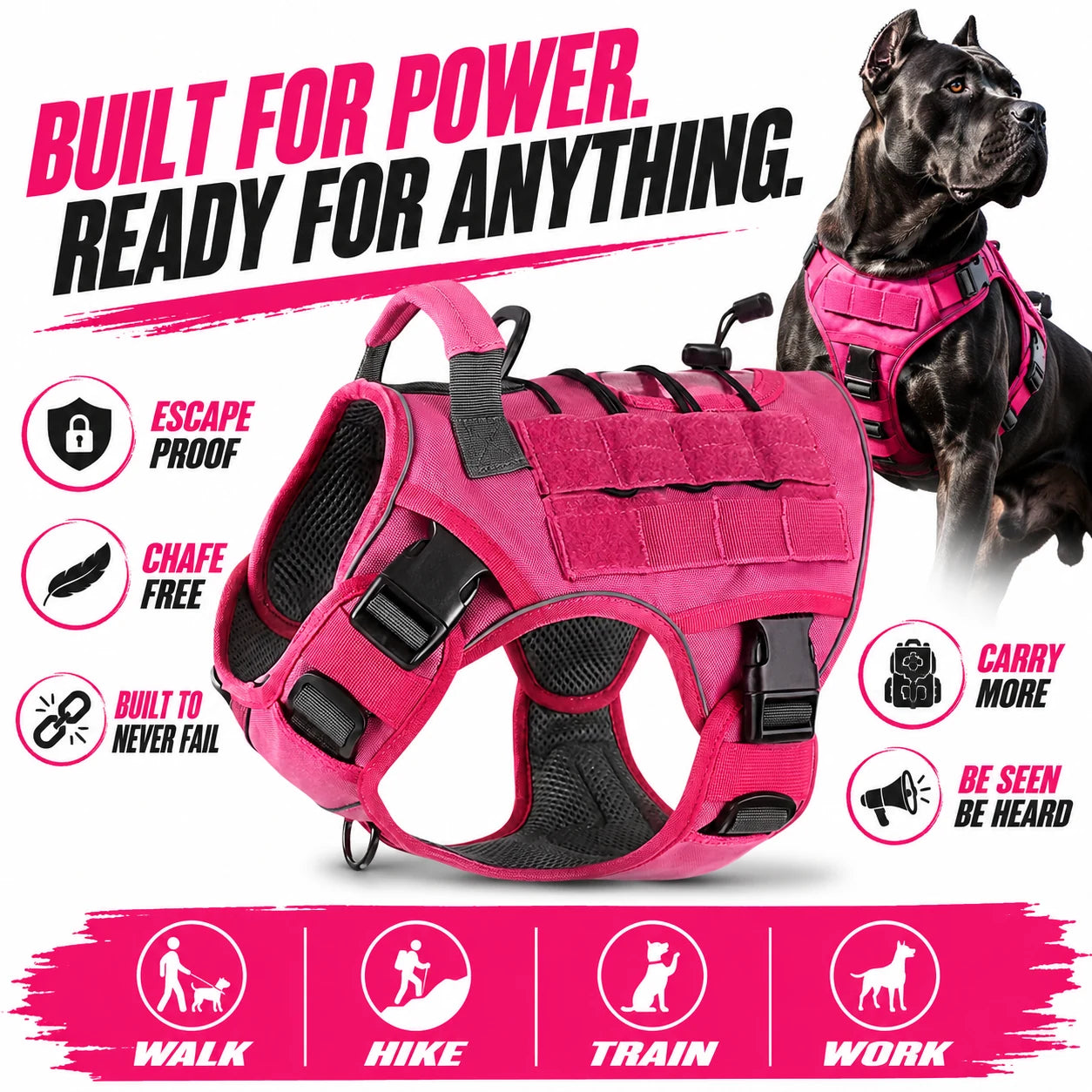
If you want a vest, the RoveTac tactical dog harness has six adjustment points. The neck, chest and belly straps adjust on their own, and the belly strap sits behind the floating rib. The open-shoulder design leaves room around the front legs so the straps stay clear of the armholes. Use its size guide, then set the neck, chest and belly straps one at a time.
 In this guideRoveTac$69.99View
The two-finger fit test when the harness arrives
A measurement gets you a size on paper. The fit test checks it on the dog.
- Put the harness on following the maker's instructions, with your dog standing.
- Tighten the neck and chest straps until the harness sits steady without shifting to one side.
- Slide two fingers flat under each strap. They should fit with light contact. If you can fit a whole hand, tighten; if two fingers will not fit, loosen.
- Check behind the front legs. Straps should not rub the armpit or sit on the elbow.
- Have your dog walk a few steps and trot. Watch that the shoulders move freely and nothing twists.
- Clip the leash on and give a light tug. The harness should stay centered rather than rotate or slide up toward the neck.
Field note
Repeat the fit test after a few walks. Straps can settle, and a dog's coat can change with the seasons, so check the two-finger gap again.
Common mistakes and when to re-measure
- Measuring over a thick coat without pressing the fur down.
- Pulling the tape tight, which gives a number below the real girth.
- Measuring while the dog is sitting or leaning.
- Using a breed average in place of your own dog's numbers.
- Ignoring the chart's adjustment range and choosing a size at the very edge.
Re-measure a growing puppy every few weeks, and measure an adult again after a change in weight or coat. If the harness rotates, gaps at the neck or rubs behind the legs, go back over how to measure a dogs chest for a harness above before you buy a new size. Pulling that continues with a well-fitted harness is a training matter; see How to Get Your Dog to Stop Pulling on the Leash.
To compare more styles, browse the Leashes, Harnesses & Car Travel collection. If you are unsure about a fit for a dog with a health or mobility concern, ask a veterinarian.