How to Teach a Puppy to Walk on a Leash, Week by Week
Start indoors with a harness and light leash, reward steps beside you, then move to the yard and street in stages. Session lengths and retractable leash rules included.
The Millbrook Team
October 29, 2026 · 7 min read
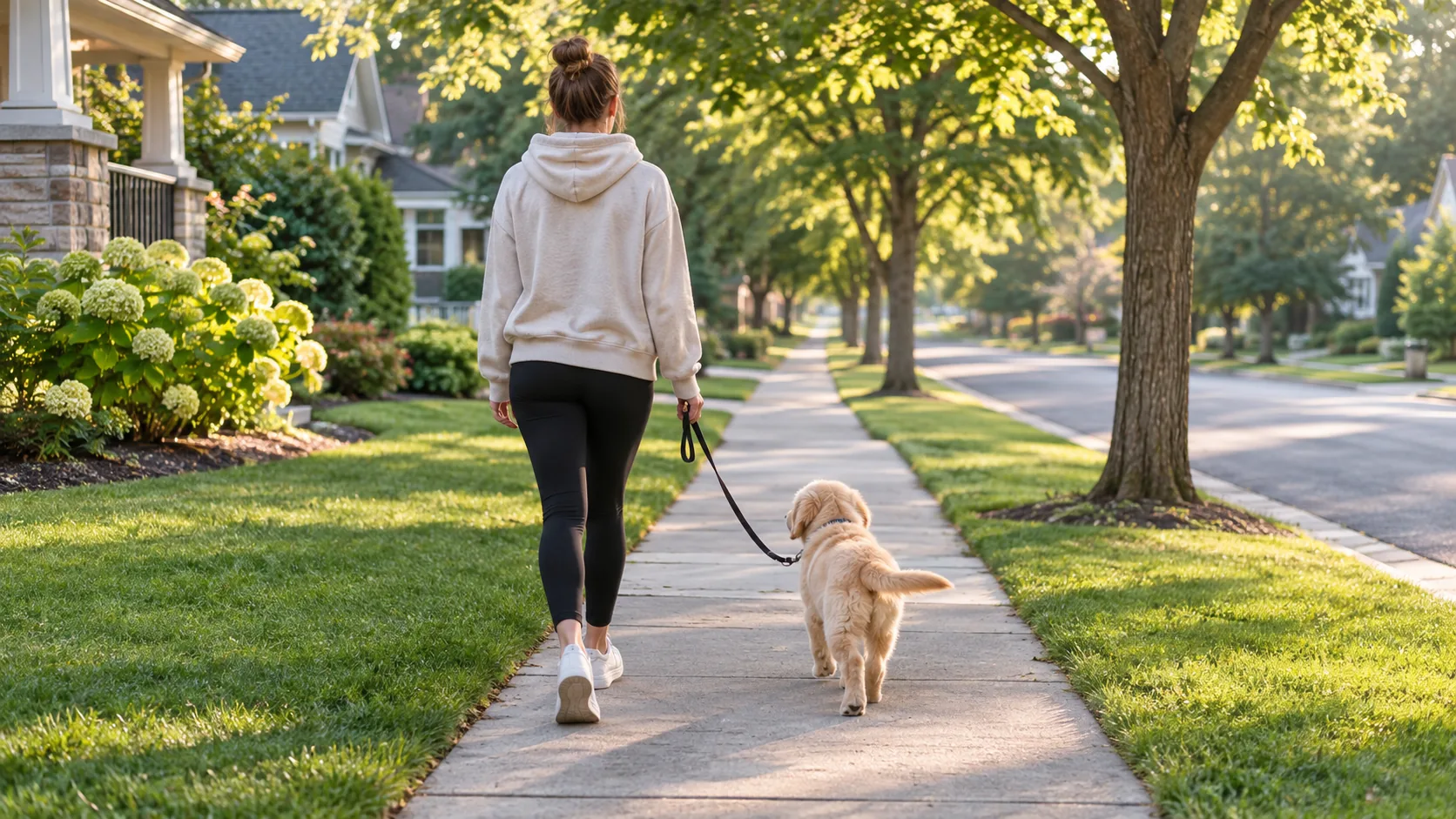
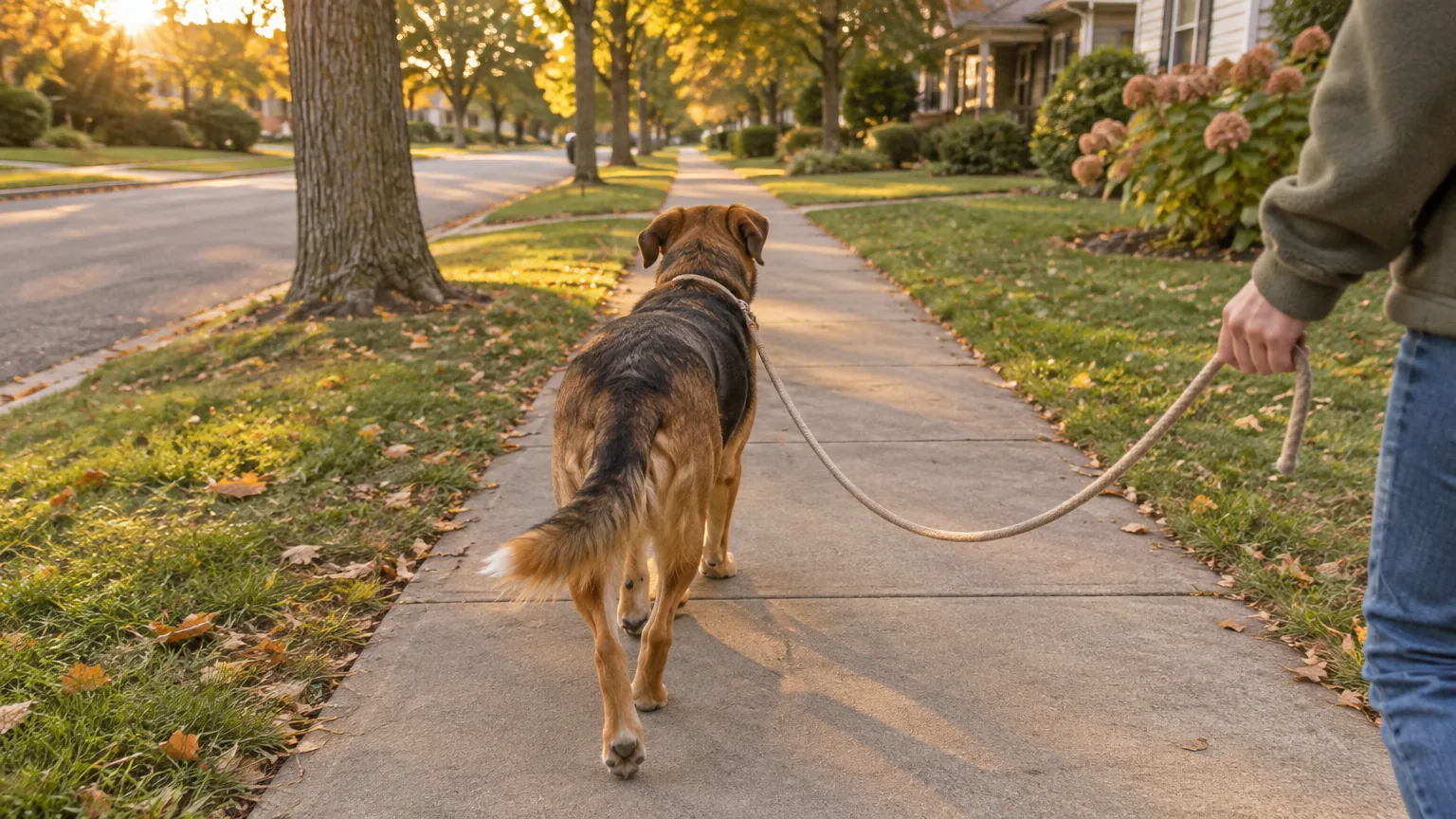
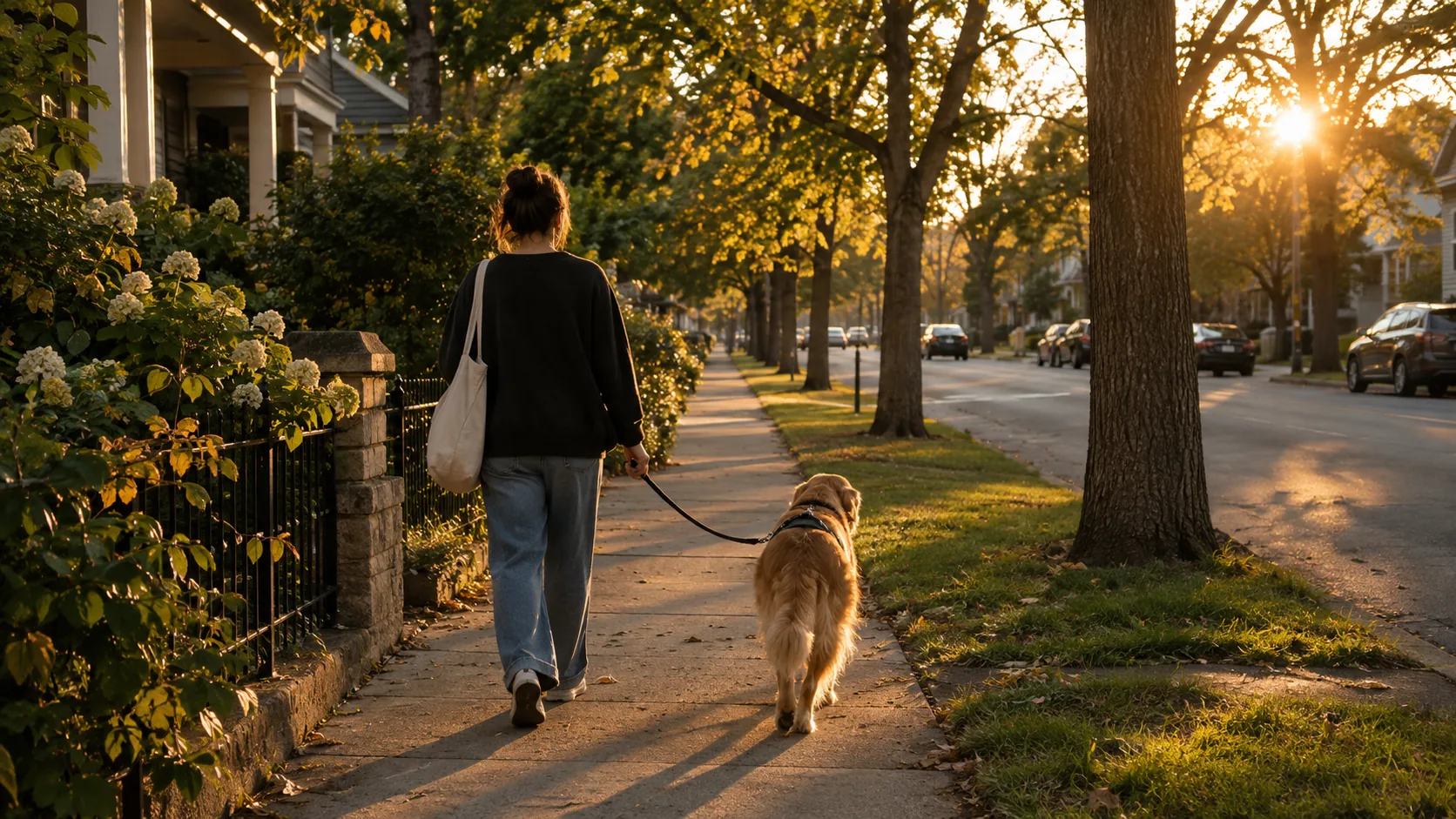
To teach a puppy to walk on a leash, start indoors by getting the puppy used to the harness and a light leash, then reward every step taken beside you, and move to the yard and the street in stages. Keep sessions short, stop before the puppy tires, and add distractions only after the puppy walks loosely on the last surface. This guide gives you a week-by-week plan, session lengths, a troubleshooting table and a clear rule for when a retractable leash fits.
The plan below runs in six stages, one per week. Your puppy may need more time on any stage, and that is fine: repeat a week until the leash stays loose before you move on.
Before week one: gear and ground rules
Pick a flat collar or a well-fitted harness, a standard leash about 4 to 6 feet long, and small food rewards your puppy can swallow in one bite. Keep the rewards in a treat pouch or pocket so your hand is ready when the puppy is in the right spot.
Choose one side, such as the left, as the walking side. Pick one cue such as "let's go" and use it the same way every time. Your puppy learns the position more easily when the rules do not change from day to day.
Check with your veterinarian about when the puppy can go to public ground. Until then, the first weeks of this plan run indoors and in your own yard. For the wider picture of early training, see our week-by-week puppy training plan, which covers the first three months at home.
Collar or harness: choose the setup
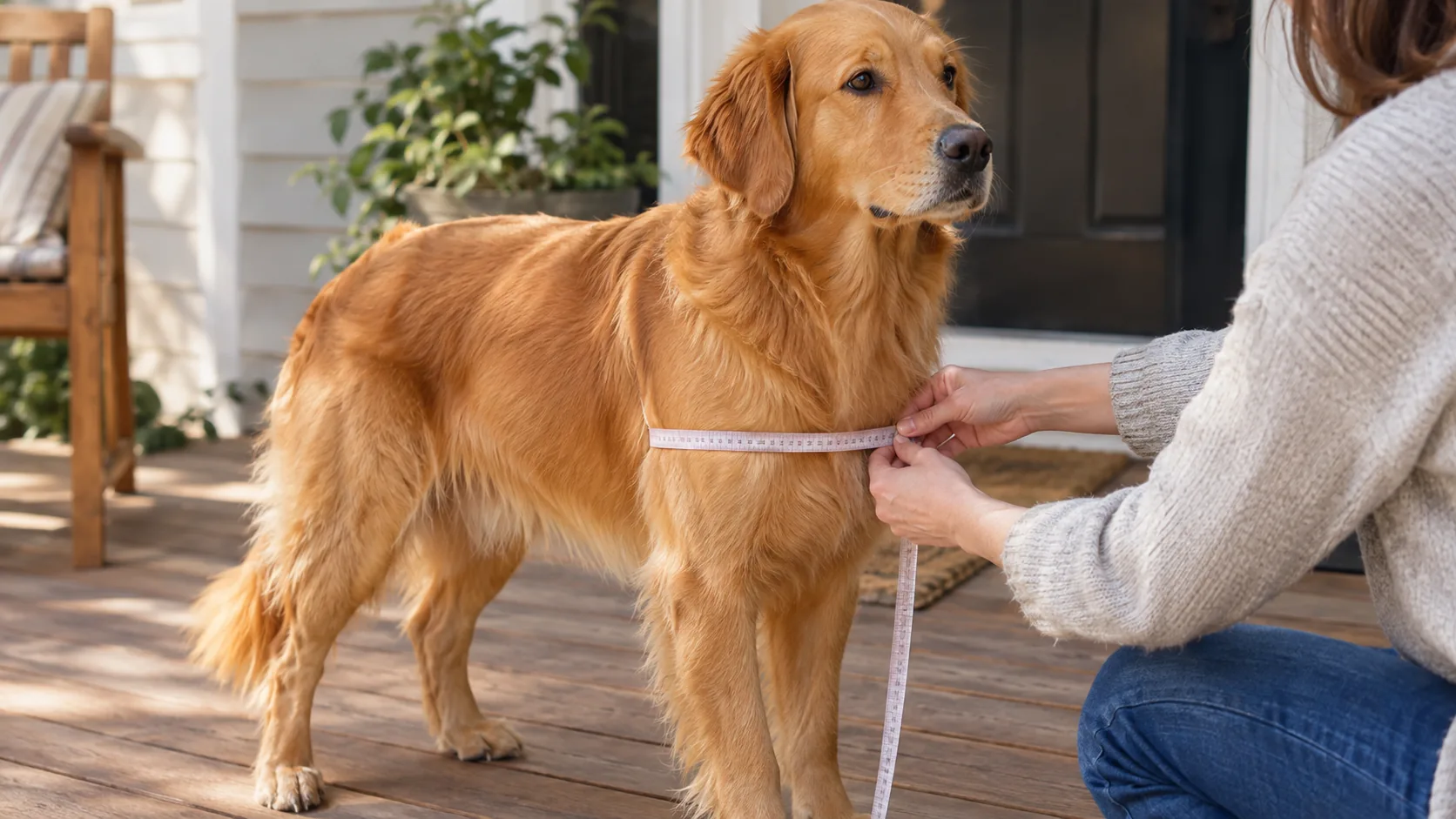
A harness spreads the pull of the leash across the chest instead of the neck, and you may prefer it for a puppy that lunges at first. A flat collar works too once the puppy is not pulling. Whichever you choose, fit it using the maker's size guide and adjust it to the puppy's current size.
Puppies grow, so recheck the fit every week. If you need help with the steps, how to put a harness on a dog walks through step-in, overhead and vest styles.
The RoveTac tactical dog harness is a vest with six adjustment points: the neck, chest and belly straps adjust on their own, and the belly strap sits behind the floating rib. It has front and rear D-ring leash positions, so you can clip to the rear ring for relaxed everyday walks or to the front ring for walks where you want to turn your dog toward you. Mesh padding lines the inside, and the open-shoulder design leaves room around the front legs.
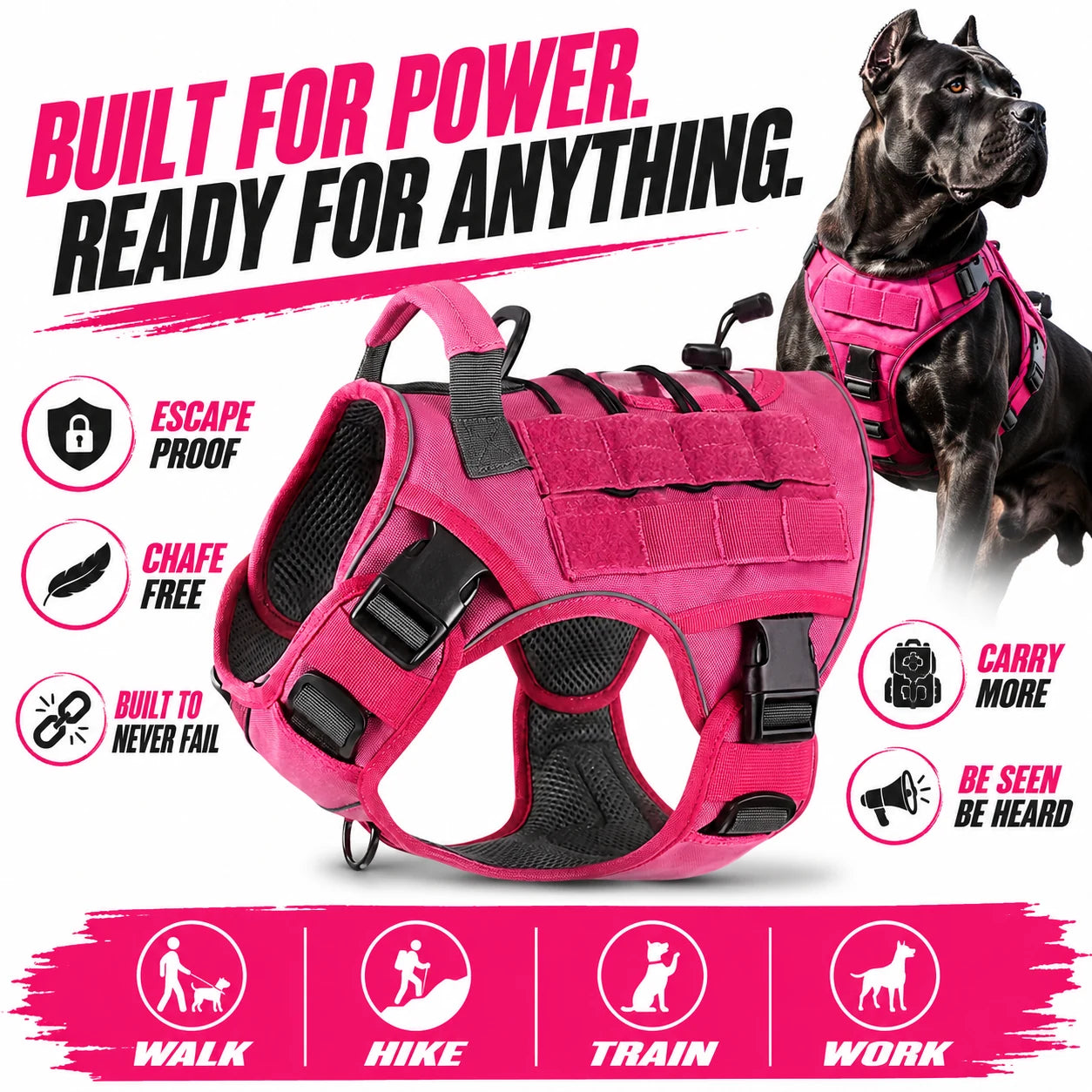 In this guideRoveTac$69.99View
How to teach a puppy to walk on a leash: the week-by-week plan
Use this table as a map, then read each stage below. Session lengths are a starting point; end any session early if your puppy gets distracted or tired.
| Week | Where | Goal | Session length |
|---|---|---|---|
| 1 | Living room, hallway | Wear the harness; drag a light leash while eating or playing | Very short, several times a day |
| 2 | Indoors, then back door | Follow you a few steps with the leash held | A few short rounds, two or three times a day |
| 3 | Fenced or quiet yard | Walk beside you with a loose leash | Short, twice a day |
| 4 | Front yard, driveway | Turns, stops and sits at your side | A little longer, ending while the puppy is still keen |
| 5 | Quiet street | Loose leash with mild distractions | A short outing, with breaks |
| 6 | Neighborhood loop | Short outings with a calm pace | A modest outing; stop when attention drops |
Week 1: harness and leash indoors
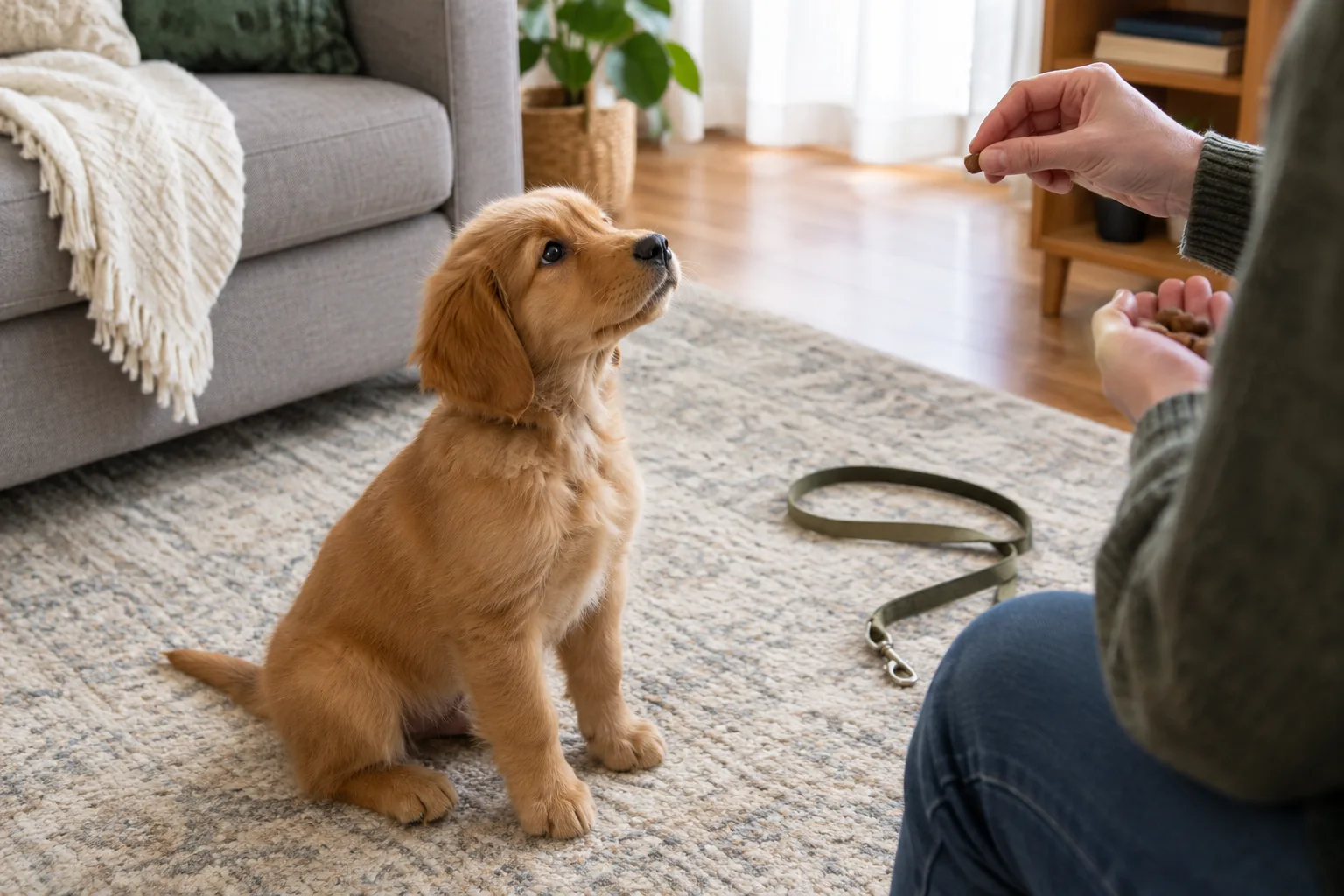
Put the harness on for a short time while the puppy eats or plays, then take it off before the puppy fusses. Repeat several times a day. The goal is for the puppy to link the harness with something good.
Once the harness is accepted, clip on the leash and let the puppy drag the leash while you stay close and watch. Pick it up and put it down again when the puppy is not paying attention to it. Do not tug or steer yet.
Week 2: follow the food
Hold the leash loosely in one hand and a reward at your side in the other. Take two or three steps, and give the reward when the puppy is next to your leg. Add a step at a time. Say your cue just before you move.
If the puppy gets ahead, stop and stand still. When the leash slackens, reward and walk again. Standing still teaches the puppy that a tight leash does not move you forward.
Week 3: the yard
The yard adds smells and open space, so expect the puppy to forget what it knew indoors. Start with a few steps in a straight line, reward often, and keep sessions short.
Change direction when the puppy drifts. Turn away, say your cue, and reward the puppy for catching up. This is the core of loose leash walking: the puppy gets paid for staying near you, not scolded for pulling.
Field note
Carry more rewards than you think you need. Reward every few steps at first, then space the rewards out only when the leash stays loose.
Week 4: stops, turns and sits
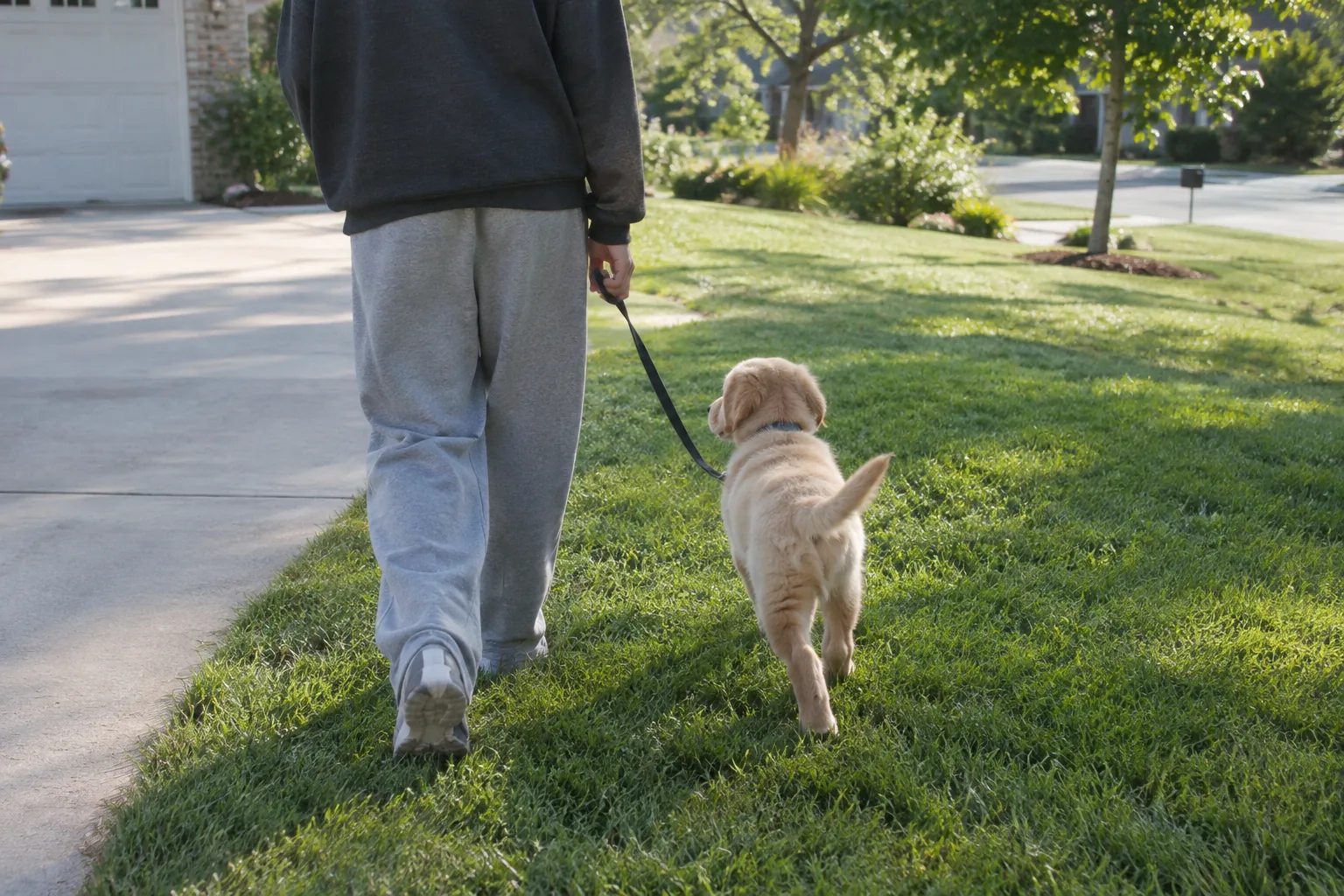
Move to the driveway or front yard. Practice walking, stopping and having the puppy sit at your side. A sit at every stop gives the puppy something to do while waiting, which helps when you reach a street corner.
Weeks 5 and 6: the street
Start at quiet times with few people, cars or other dogs. Keep a little distance from any distraction at first, and reward the puppy for looking at it and then back at you. If the puppy is too excited to take food, increase the distance or go back a stage.
When the leash stays loose for most of the outing, lengthen the walk. This is also how to get a puppy to walk on a leash around the neighborhood without turning every outing into a tug-of-war.
Why puppies pull and how to respond
Dogs pull because they cover ground at a brisker pace than people and because pulling works: when the leash is tight, they often get where they want to go. A puppy also has no idea yet what you want from it. The fix is to make a loose leash the way to get forward.
| What you see | What to do |
|---|---|
| Puppy surges ahead | Stop and stand still. Reward and walk on when the leash slackens. |
| Puppy sits or lies down and will not move | Wait a moment, then call cheerfully and reward a few steps. Shorten the session. |
| Puppy bites the leash | Stop, offer a reward for a different action, and keep the leash short and calm. |
| Puppy zigzags and sniffs | Allow set sniff breaks with a release cue, then ask for walking again. |
| Puppy lunges at people or dogs | Increase distance, reward calm behavior, and ask a trainer if it continues. |
Do not yank or drag the puppy. Pulling back on the leash teaches nothing and can make a puppy wary of walks.
Common mistakes to avoid
- Starting outdoors on day one, where everything competes for attention.
- Holding the leash tight all the time, which gives the puppy something to lean against.
- Letting the puppy pull to a spot once, then asking for a loose leash the next time.
- Training when the puppy is tired, hungry or has just woken up and needs to go out.
- Moving on to the next stage because the calendar says so, rather than because the puppy is ready.
Keep sessions short and end on a small success, even if that success is only three good steps.
When a retractable leash fits, and when it does not
A retractable leash is for later, not for learning. Its tape changes length as the puppy moves, so the puppy feels light tension on and off, which can undo the lesson that a tight leash means stop. Use a fixed leash of 4 to 6 feet for every stage in the plan above.
After the puppy walks beside you reliably, a retractable can suit open, quiet spaces such as a large park or a field, where you have room to see the surroundings. It does not suit sidewalks, parking lots, crowded paths or anywhere near traffic. In those places, lock the tape with the brake or switch to the fixed leash.
The RoamLine retractable dog leash has a 26-foot flat nylon tape in a sealed housing, a 360-degree swivel clip and a one-thumb brake button on a contoured grip. Press the button to pause or lock the tape and release it to let the tape extend or reel back in. It is sized for dogs weighing 110 lbs or less. Clip it to your dog's collar, and keep your thumb near the brake.
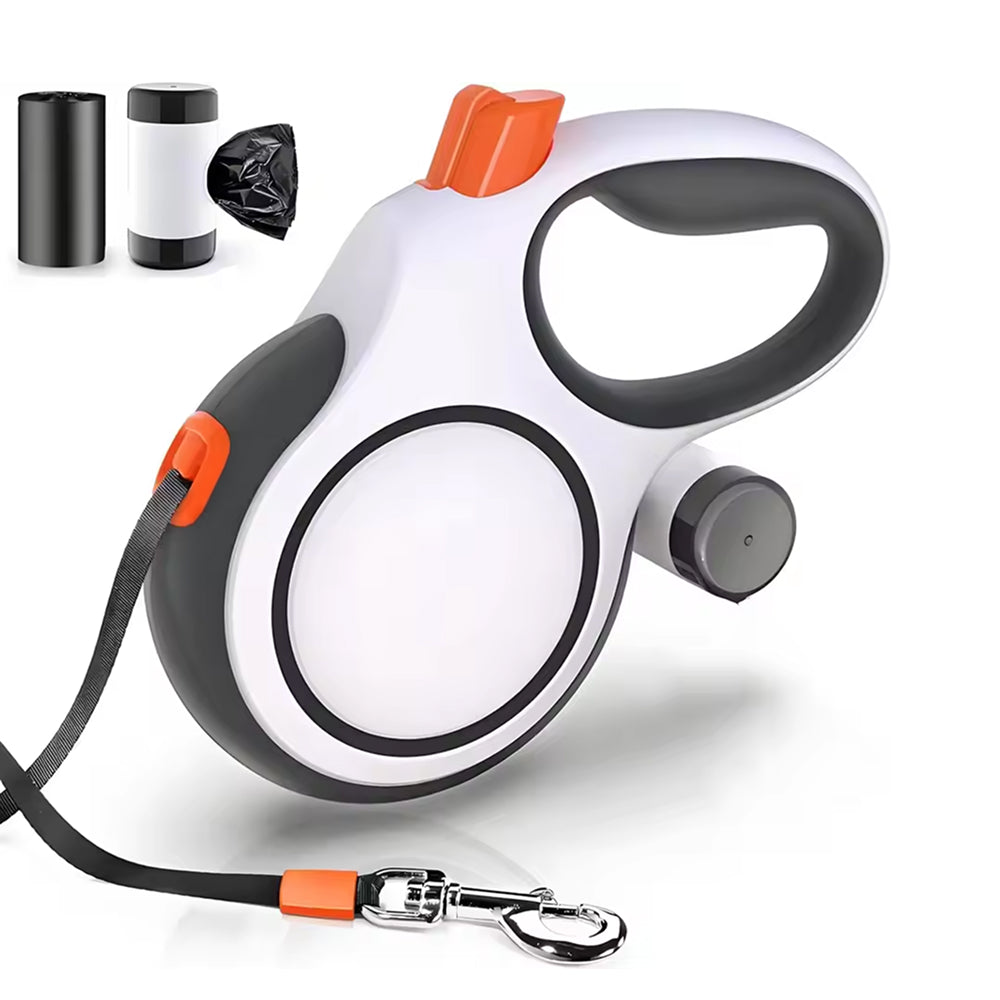 In this guideRoamLine$69.99View
Build the habit over time
Once the puppy walks nicely on the street, keep practicing. Vary the route, add short training breaks, and revisit an earlier stage after any setback, such as a busy day or a growth spurt. Check the harness or collar fit as the puppy grows.
You can browse harnesses, leashes and travel gear in our Leashes, Harnesses & Car Travel collection. Follow each product's manual for fitting and use, and ask your veterinarian if your puppy resists the harness or seems unwell on walks.