How to Put a Harness on a Dog: Step-in, Overhead and Vest Styles
Lay the harness flat, guide your dog into the neck or leg openings, close the clips, then adjust until two fingers slide under every strap. Steps for each style are below.
The Millbrook Team
October 27, 2026 · 7 min read
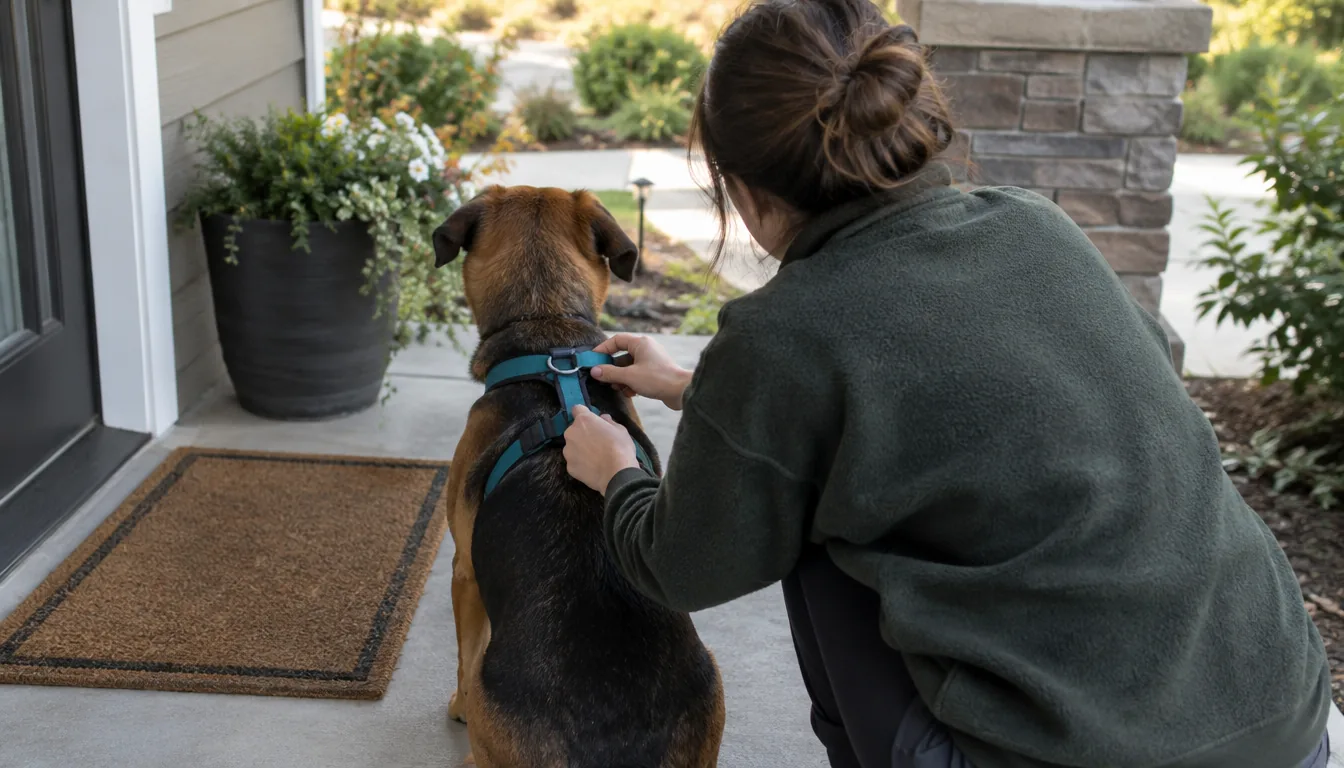
To learn how to put a harness on a dog, start by identifying the style: step-in, overhead or vest. Lay it flat or open it, guide your dog's head or front legs into the right openings, close the clips, then adjust each strap until two fingers slide under it. The steps below cover each style, plus measuring, the fit check and the mistakes that let a dog back out.
Work in a calm spot, keep a few treats nearby, and let your dog sniff the harness first. A short, unhurried first session sets the pattern for every walk after it.
Measure first, then pick the style
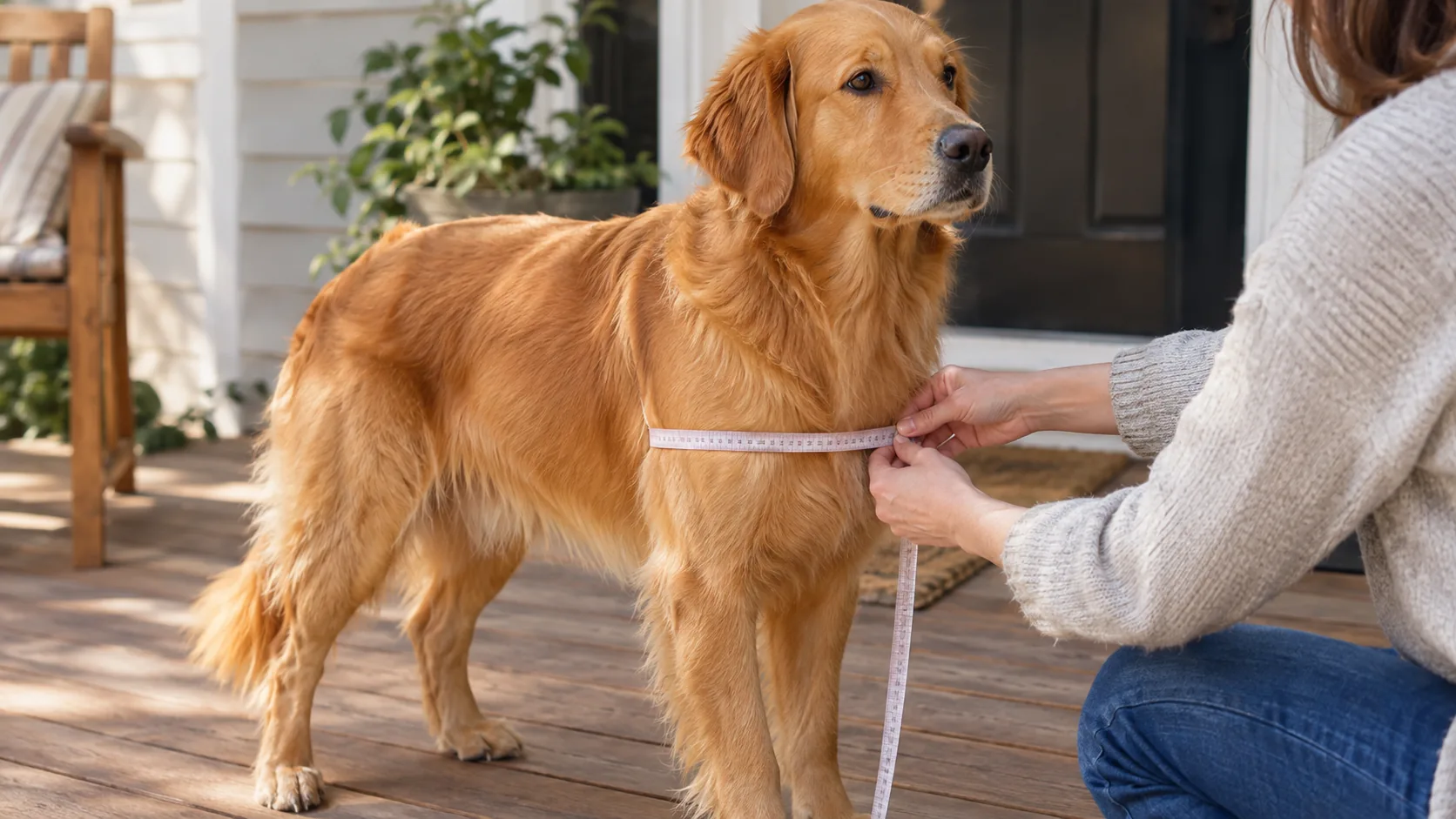
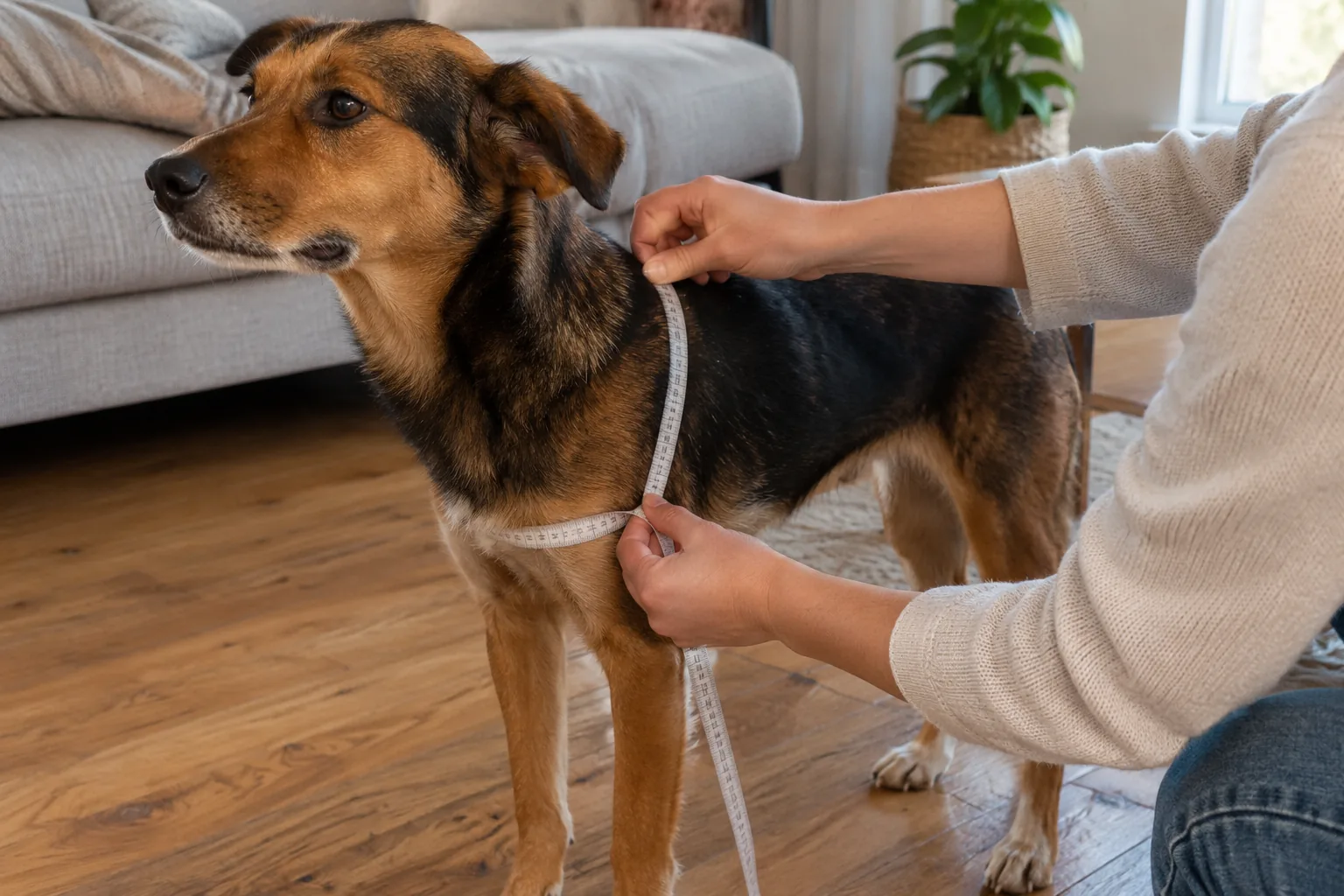
A harness fits well only when it matches your dog's body, so measure before you buckle anything. Here is how to measure a dog for a harness with a soft tape:
- Neck: wrap the tape around the base of the neck, where a collar normally sits.
- Chest: measure the widest part of the ribcage, just behind the front legs.
- Weight: note your dog's current weight, since some size charts list it next to the measurements.
Compare the numbers with the size guide on the product page. If your dog falls between two sizes, check which one has more adjustment range at the chest and belly straps. Measure again if your dog gains or loses weight, or is still growing.
Harness styles at a glance
Before you learn how to put a harness on a dog, find which of these three styles you own. The order of steps changes with the style.
| Style | How it goes on | Check before you start |
|---|---|---|
| Step-in | Dog steps both front paws through two loops, then you close the back | Straps lie flat, not twisted |
| Overhead | Neck loop slips over the head, then the belly strap closes | Neck opening faces the head, leash ring up |
| Vest with clips | Vest sits over the back, then the clips close and the straps are set | Straps are loose enough to open fully |
If the harness has a leash ring on the back, that ring should end up between the shoulder blades. A front ring, if present, sits on the chest.
How to put a harness on a dog: step-in style
A step-in style suits dogs that dislike something pulled over the head. It has two leg loops and a back closure.
- Lay the harness flat on the floor with the leash ring facing up and the straps untwisted.
- Have your dog stand beside it, then guide one front paw into each loop. A treat held low helps your dog look down.
- Lift the harness up the legs until the loops sit behind the front legs.
- Bring the two sides together over the back and close the clip or buckle.
- Adjust the straps one at a time, then do the fit check below.
If your dog steps on the straps, lift each paw and place it in the loop instead of coaxing a big step. For a small dog, you can set the harness on a table or your lap so you are not bending over.
How to put an overhead harness on a dog
An overhead style has a neck loop and a belly strap. It suits dogs that accept a loop passing over the head.
- Open the neck loop fully before you start, so it is wide.
- Hold the harness with the leash ring facing up and the neck opening toward your dog's head.
- Slip the loop over the head, offering a treat so your dog lowers it into the opening.
- Reach under the belly, pull the belly strap back, and close the buckle on the side or underneath, depending on the design.
- Tighten the neck and belly straps a little at a time.
Keep the ears free as the strap passes over, and do not drag the loop across the eyes. If your dog pulls away, pause and reward it for holding still near the harness.
How to put on a vest harness with clips
A vest harness covers the chest and back and closes with clips. The RoveTac is a tactical dog harness vest with six adjustment points and dual clips, so these steps apply to other clip-style vests too.
- Open the clips and loosen the neck, chest and belly straps before you start.
- Lay the vest over your dog's back, with the top handle running along the spine.
- Close the clips and listen or feel for each click.
- Set the neck, chest and belly straps one at a time; on this vest they adjust on their own.
- Place the belly strap behind the floating rib, the last, shorter rib at the back of the ribcage.
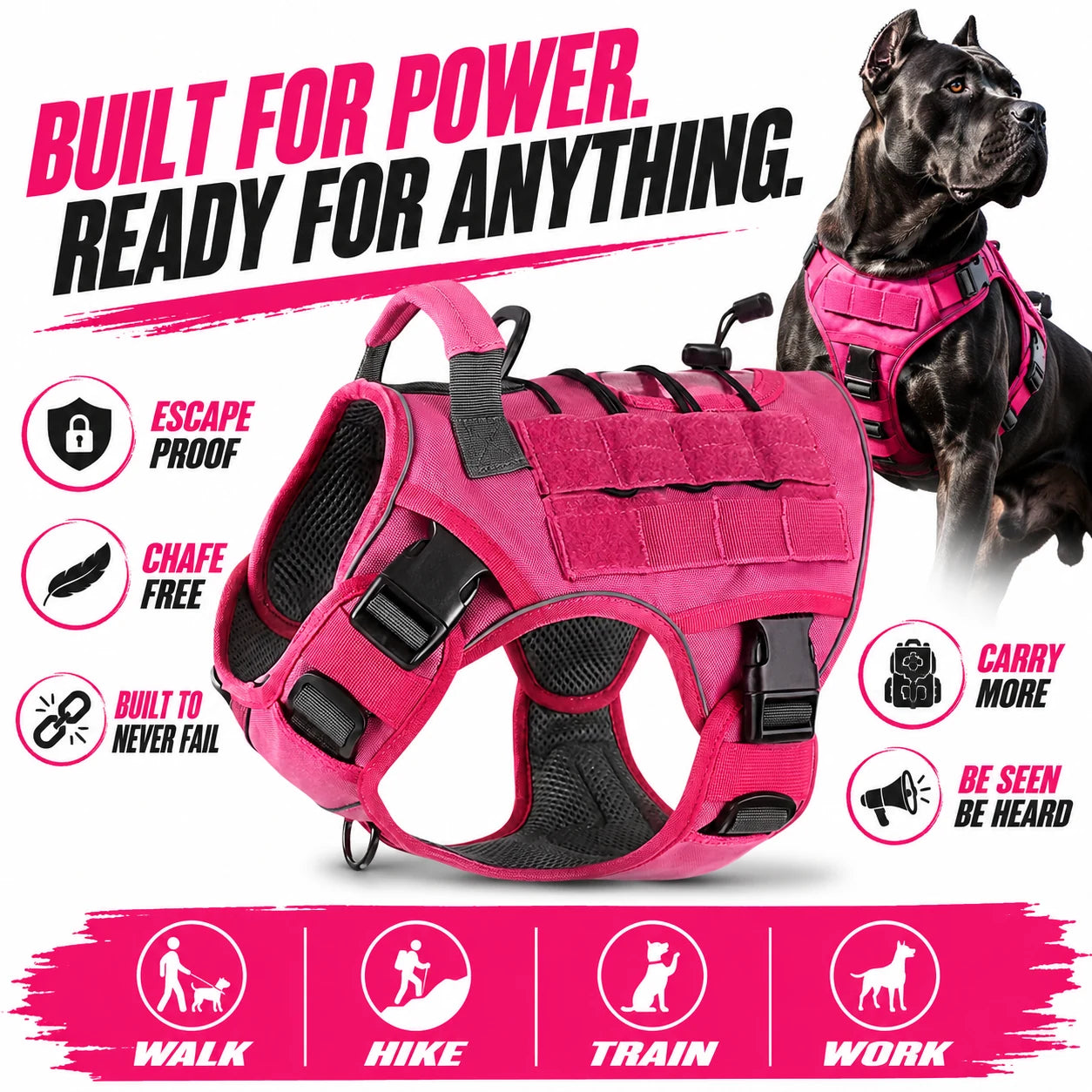 In this guideRoveTac$69.99View
The open-shoulder design leaves room around the front legs so the straps stay clear of the armholes. Use the size guide first, then clip the leash to the front D-ring for walks where you want to turn your dog toward you, or to the rear D-ring for relaxed everyday walks. If you plan to add pouches, a water bottle or waste bags, fit the vest first and attach extras afterward so you can judge the fit without added weight.
Harnesses with four clips
Some harnesses close with four clips instead of two. Open all of them before you start, lay the harness over the back, and close them one at a time, checking each for a click. Then adjust the straps in the order the manual lists, and follow its diagram for where each strap sits.
The two-finger fit check
Once every clip is closed, run the two-finger fit check on each strap. Slide two flat fingers between the strap and your dog's body; if a third finger fits, tighten the strap, and if two fingers do not fit, loosen it.
| Strap | What you should find | If it is wrong |
|---|---|---|
| Neck | Two fingers fit; the strap does not slide over the ears | Tighten if it shifts; loosen if it bunches the fur |
| Chest | Two fingers fit; the harness does not rotate to one side | Tighten evenly on both sides |
| Belly | Two fingers fit; the strap sits where the manual places it | Reposition it per the manual and keep it clear of the armpit area |
| Front legs | Legs swing freely, no rubbing at the armpit | Loosen or try another size |
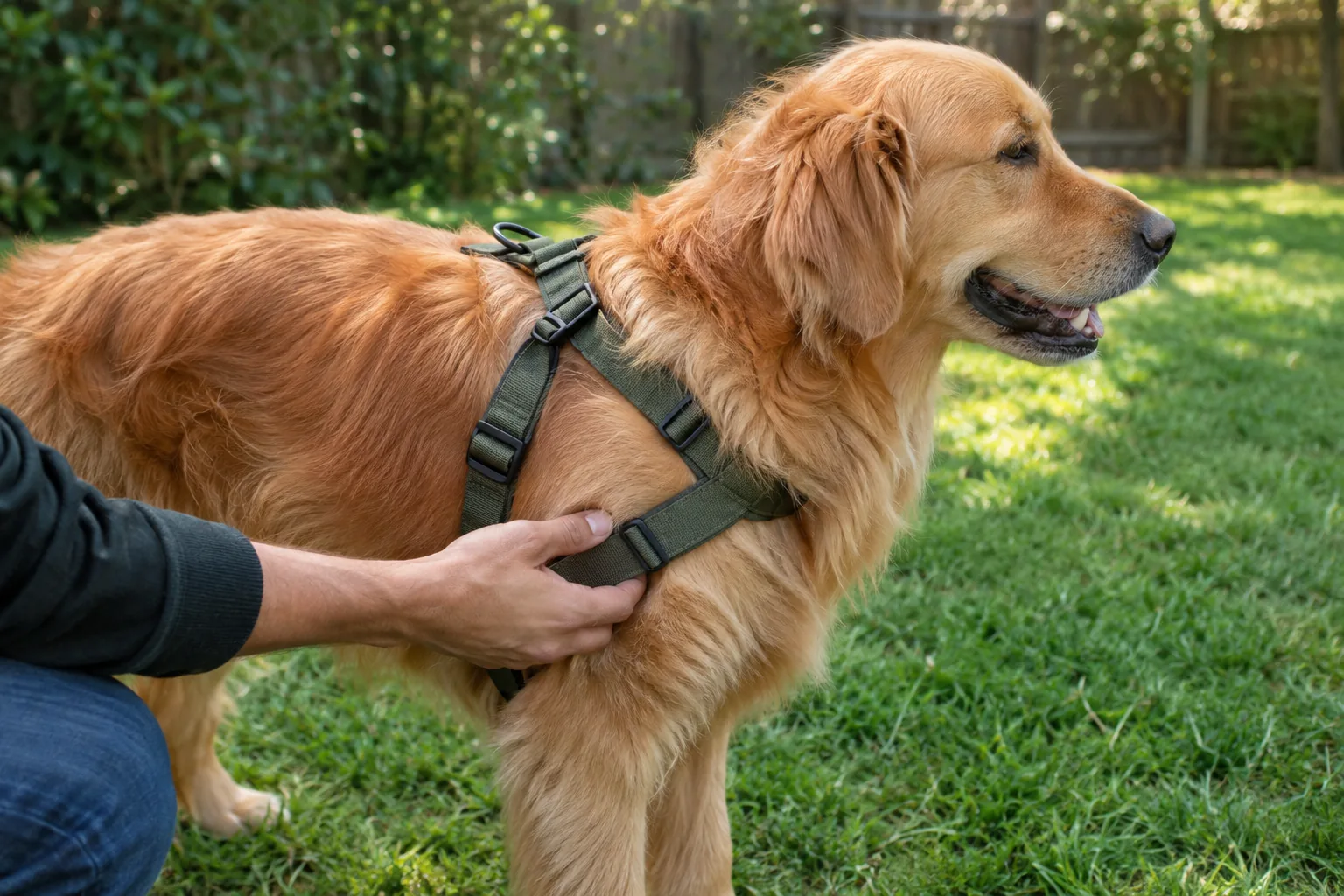
After the check, walk your dog around the room. Watch the shoulders move, and see whether the harness slides back or twists. Recheck after the first few minutes of a walk, because straps can settle.
Threading mistakes that let dogs back out
A harness that looks snug can still loosen when a dog pulls backward. Check these points:
- A neck strap left loose, so the loop can slip over the head when your dog backs up.
- A belly strap in the wrong spot. On the RoveTac it sits behind the floating rib; on other harnesses, follow the manual for its placement.
- Strap tails threaded through the keeper loop wrongly or left unsecured, so the webbing creeps through the slide.
- A twisted strap, which holds the harness off-center.
- Clips that are not fully closed. Listen or feel for the click and tug each one.
- A size that is too large, with all straps pulled to their shortest setting.
To test, hold the leash ring and gently pull backward with your dog standing still. If the neck loop moves toward the ears, tighten the neck and chest straps and test again. A harness does not replace supervision, so keep your hand on the leash near roads, and ask a trainer if your dog keeps backing out.
Putting a harness on a small or nervous dog
For a small dog, approach from above and beside rather than from the front. When you work out how to put a harness on a dog this size, lift the harness slowly, avoid pushing the head down and keep the first sessions short. Some harnesses use a loop at the back for a leash instead of a ring; the loop should sit on the back, not the neck.
With a nervous dog, break it into steps: show the harness, give a treat, touch the harness to the shoulder, give a treat, and so on. Add the clip sound as its own step. Take your time, and stop if your dog shows stress.
Care and daily check
Before each walk, look over the stitching and clips for wear, frayed webbing or cracks. Take the harness off after the walk, and check the fur and skin under the straps for rubbing. Wipe dirt off and let it air-dry as the manual says. Brush matted fur under the straps; our at-home grooming routine covers it.
If you also drive with your dog, read attaching a dog harness to a seat belt for the car setup. You can find more options in the Leashes, Harnesses & Car Travel collection.
Field note
Practice at home for a few days: put the harness on, give a treat, take it off. Your dog learns that the harness means a walk or a reward, not a struggle.