What Is a Slow Feeder Dog Bowl? Maze Types and How to Start
A slow feeder dog bowl has ridges, mazes or spirals that make your dog work around obstacles to reach food. This guide covers patterns, matching, and a step-by-step start.
The Millbrook Team
November 13, 2026 · 5 min read
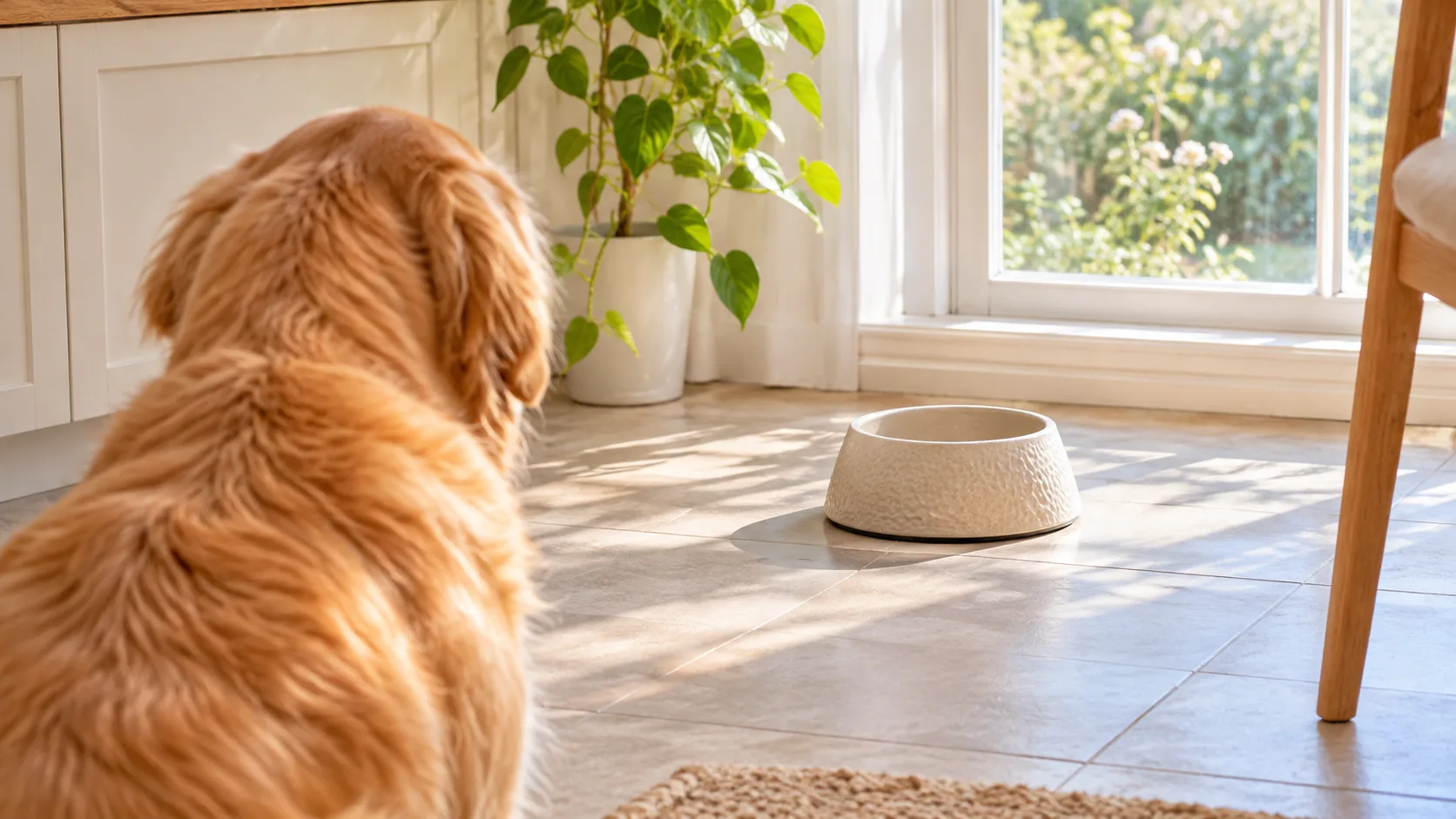
What is a slow feeder dog bowl? It is a dish with ridges, mazes or spirals built into the floor of the bowl, so your dog has to work around obstacles to reach each bite instead of eating from a flat surface. It is a feeding tool that changes how a meal is delivered, and it does not replace advice from your veterinarian.
This guide explains the main maze patterns, how to match difficulty to kibble size and snout shape, and a step-by-step plan to introduce the bowl.
What is a slow feeder dog bowl and how does it work?
A standard bowl is an open surface. A dog that empties it in a few gulps meets nothing along the way. A slow feeder adds raised obstacles that divide the food into smaller sections, so your dog uses its tongue and nose to pick out portions.
The bowl does not control anything on its own. It adds physical steps between your dog and the food, and the pattern you choose sets how many steps there are.
What is the purpose of a slow feeder dog bowl?
The purpose is to pace eating speed and give mealtime a small job to do. Some dogs finish a meal and have nothing else to do, so the ridges also work as light mental enrichment, a bit like a puzzle. If you have questions about your dog's digestion or a deep-chested breed's feeding setup, ask your veterinarian.
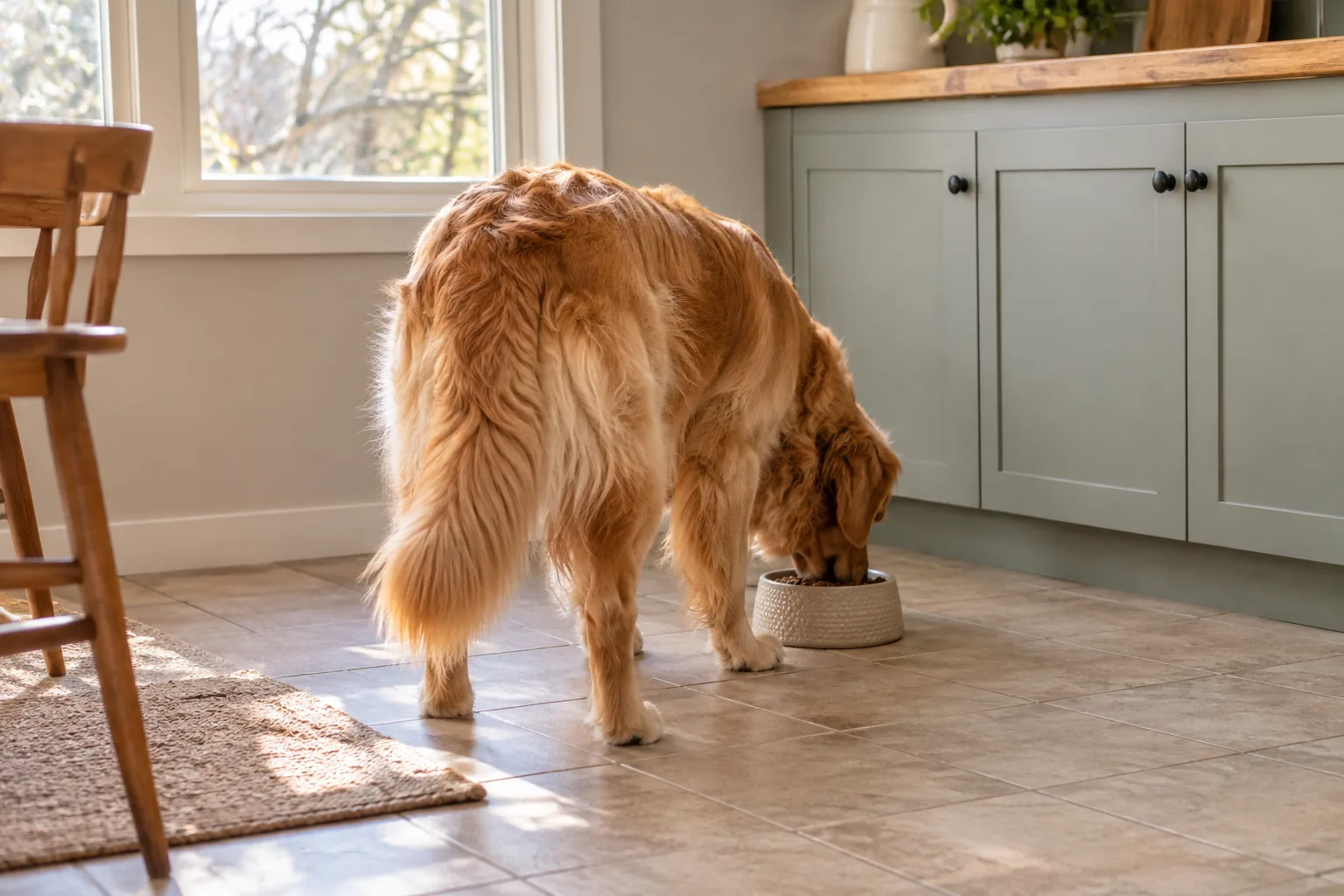
Ridge, maze and spiral patterns compared
Slow feeder bowls fall into three pattern families. The table shows how each one shapes the meal.
| Pattern | How it is built | What your dog does | Starting point for |
|---|---|---|---|
| Low ridges | Short, rounded bumps with wide gaps | Pushes food around the bumps | Puppies, first-timers, flat-faced dogs |
| Maze | Raised walls forming channels and pockets | Follows channels to reach each section | Adult dogs on kibble |
| Spiral or tall pegs | Curved walls or posts around a center | Licks and noses around the curves | Dogs that already manage a maze |
Depth matters as much as shape. Tall, tight walls raise the difficulty, while low walls with wide lanes lower it.
VoraPace is a maze-style example: raised maze ridges divide a meal into smaller sections, and a locking suction base grips tile, hardwood and laminate floors so the bowl stays where you set it.
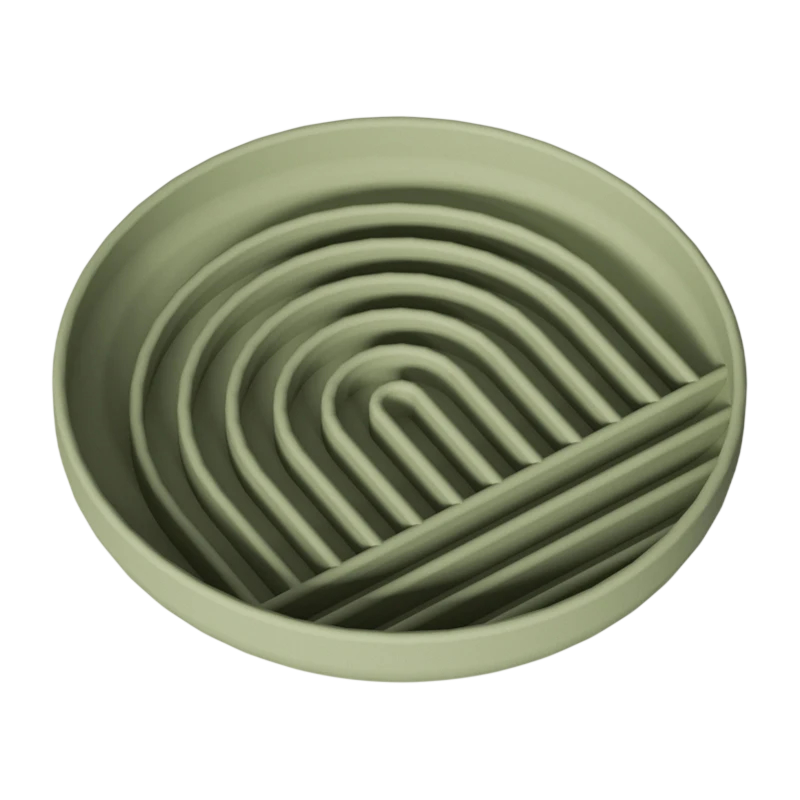 In this guideVoraPace$49.99View
How to match difficulty to kibble size and snout shape
Your dog has to be able to reach the food, so match the bowl to two things: the size of the food and the shape of the face.
Kibble size
- Small kibble slips into narrow lanes, so choose wider channels or lower walls to keep it reachable.
- Large kibble can bridge a tight maze and sit on top of the walls. Pick channels wide enough for a piece to sit inside.
- Wet food and soft food press into the ridges, which turns the bowl into a lick-and-search routine.
Snout shape and size
| Face or size | What to look for |
|---|---|
| Flat-faced dogs | Low walls and wide lanes the tongue can reach |
| Long-snouted dogs | Medium walls; narrow channels are workable |
| Large dogs | A wide bowl with room for a full portion and a stable base |
| Small dogs and puppies | Shallow ridges that leave enough open space |
If your dog gives up, paws at the bowl or flips it, the pattern is too hard. Move to a lower, wider design.
Materials, bases and food types
Look at what the bowl is made from and how it sits on the floor. Stainless steel, ceramic and plastic slow feeders are all sold. Whatever you choose, check the product page for the material, and wash a new slow feeder dog bowl before the first meal and after each one.
A bowl that slides is a daily nuisance, so check the base. VoraPace uses BPA-free pet-grade material with a smooth surface that rinses with warm soapy water, plus the suction base noted above. Raised stands are sold too; if your dog is a deep-chested breed, ask your veterinarian before changing the height of the bowl.
For wet food, pick a design with open pockets you can press food into. Frozen treats can go into the ridges of a maze bowl as well, which suits a lick-and-search routine.
How to start: introducing a slow feeder step by step
Dogs differ in how they handle a new bowl, so go at your dog's pace with any slow feeder bowl for dogs. For puppies, see the week-by-week puppy training plan for routines to build around mealtime.
- Wash the bowl and place it on a hard floor, away from foot traffic.
- For the first meals, fill only the open areas or spread food loosely so every bite is within reach.
- Stay in the room and watch. If your dog walks away or paws at the bowl, lift it and serve the meal in the old dish.
- Repeat for a few meals, then press food deeper into the pockets.
- Add wet food or a frozen treat in the ridges once your dog works the maze calmly.
- Move to a harder pattern only after your dog works the current one calmly.
Keep servings the same size as before. The bowl changes how food is delivered, not how much your dog is given; follow your veterinarian's feeding amounts.
Some households also set a pick-up time for leftover food so meals follow a routine. That is a household habit rather than a feature of any bowl, so ask your veterinarian what schedule suits your dog.
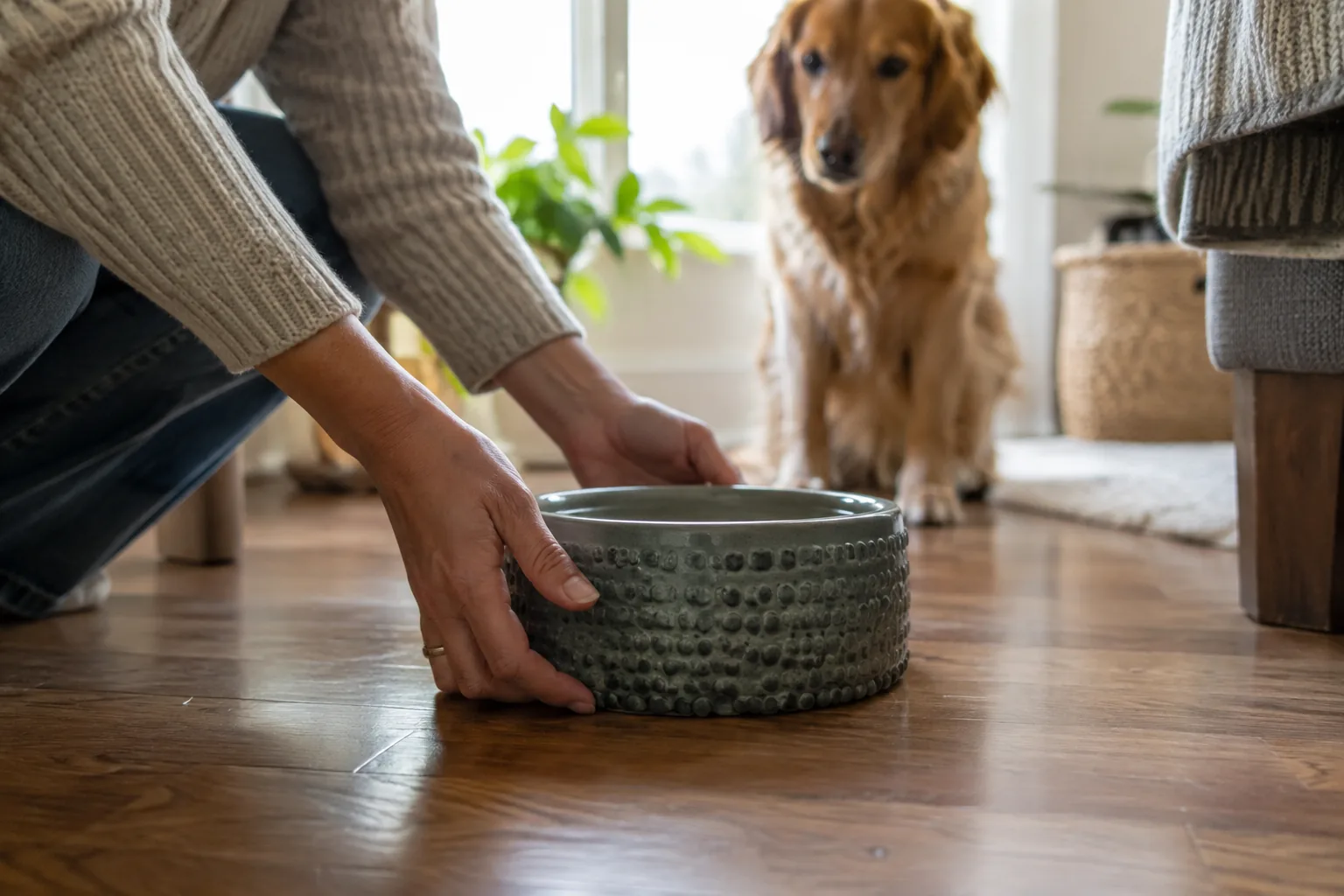
Field note
If your dog turns the first session into a game of keep-away, serve the meal in a flat dish alongside it for a few days, then bring in the maze gradually.
Common mistakes and other ways to pace a meal
- Choosing a maze that is too hard on day one.
- Using a bowl that slides on the floor.
- Leaving a dog unwatched with a new bowl.
- Expecting the bowl to settle a feeding concern. Questions about your dog's digestion belong with your veterinarian.
- Skipping cleaning. Food packs into the grooves, so wash the bowl after each meal.
If a bowl is not a fit, a food puzzle is another route, and so are lick mats and other puzzle toys. KibbleQuest is a dog treat ball you fill with dry kibble or small treats. Your dog nudges and rolls it, and food drops out through adjustable holes. Open the holes wider while your dog is learning, then close them down. It is a food puzzle, not a chew toy, so watch your dog during the first sessions.
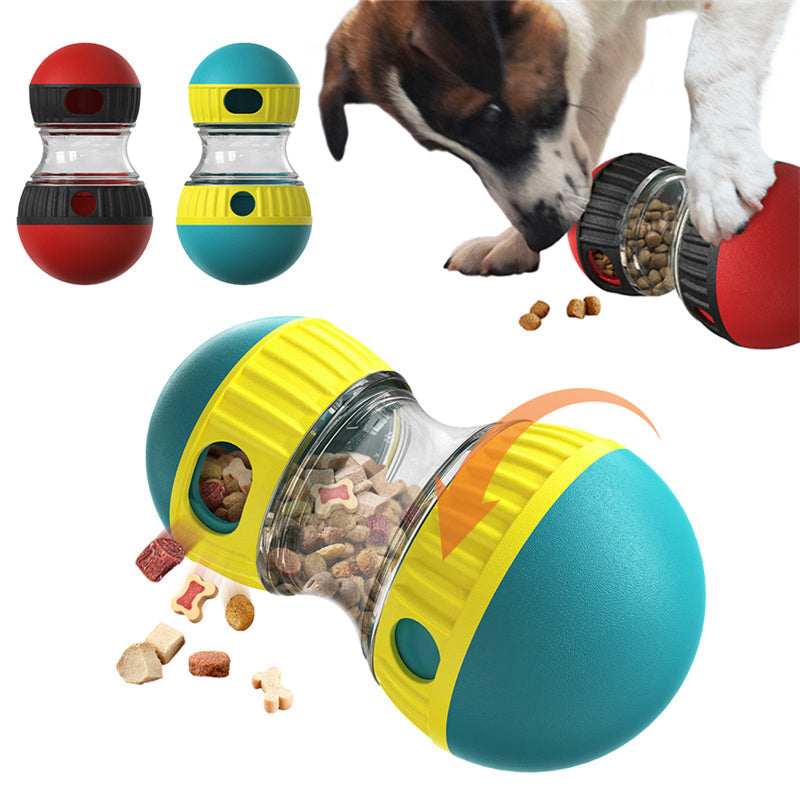 In this guideKibbleQuest$59.99View
For more feeding-time and play ideas, browse the Training, Behavior & Play collection.