Puppy Training: A Week-by-Week Plan for the First Three Months
Puppy training moves in short, repeated steps: name and crate first, then handling and alone time, then leash skills. Here is the week-by-week checklist.
The Millbrook Team
October 27, 2026 · 6 min read
Puppy training follows a clear order when you teach one small skill at a time: name, crate and potty routine in week 1, handling in week 2, sit, settle and gentle mouth in weeks 3-4, alone time, impulse control and recall in weeks 5-8, then leash skills and first walks in weeks 9-12. This plan counts weeks from the day your puppy comes home and fits a puppy that arrives at a young age. If your puppy is older, start at the week that matches the skills you see today and adjust the pace.
Everything below can be done at home with a leash, a crate, soft treats and a few short sessions a day. Ask your veterinarian before any outing with other dogs.
The week-by-week puppy training plan at a glance
Use this table as your checklist. Each row is a focus, not a deadline: if a skill is shaky, repeat the week before moving on.
| Weeks | Main focus | Daily practice |
|---|---|---|
| 1 | Name, crate introduction, potty routine | Say the name, reward eye contact, feed meals near the crate |
| 2 | Crate rest, first handling | Touch paws, ears and collar area, then reward |
| 3 | Sit and settle, gentle mouth | Short sit sessions, redirect biting to a toy |
| 4 | Calm greetings, car and new sounds | Introduce one new surface or noise at a time |
| 5-6 | Alone time, supervised food puzzles | Brief absences; a puzzle at mealtime while you watch |
| 7-8 | Impulse control, come when called | Wait at doors and bowls, recall in the house |
| 9-10 | Collar, harness and leash intro | Indoor leash drag and short follow games |
| 11-12 | First leash walks | Short walks in quiet areas, reward the loose leash |
Before week 1: setup checklist
Prepare the home so the first days are about learning, not chasing. Set up the space before the puppy arrives.
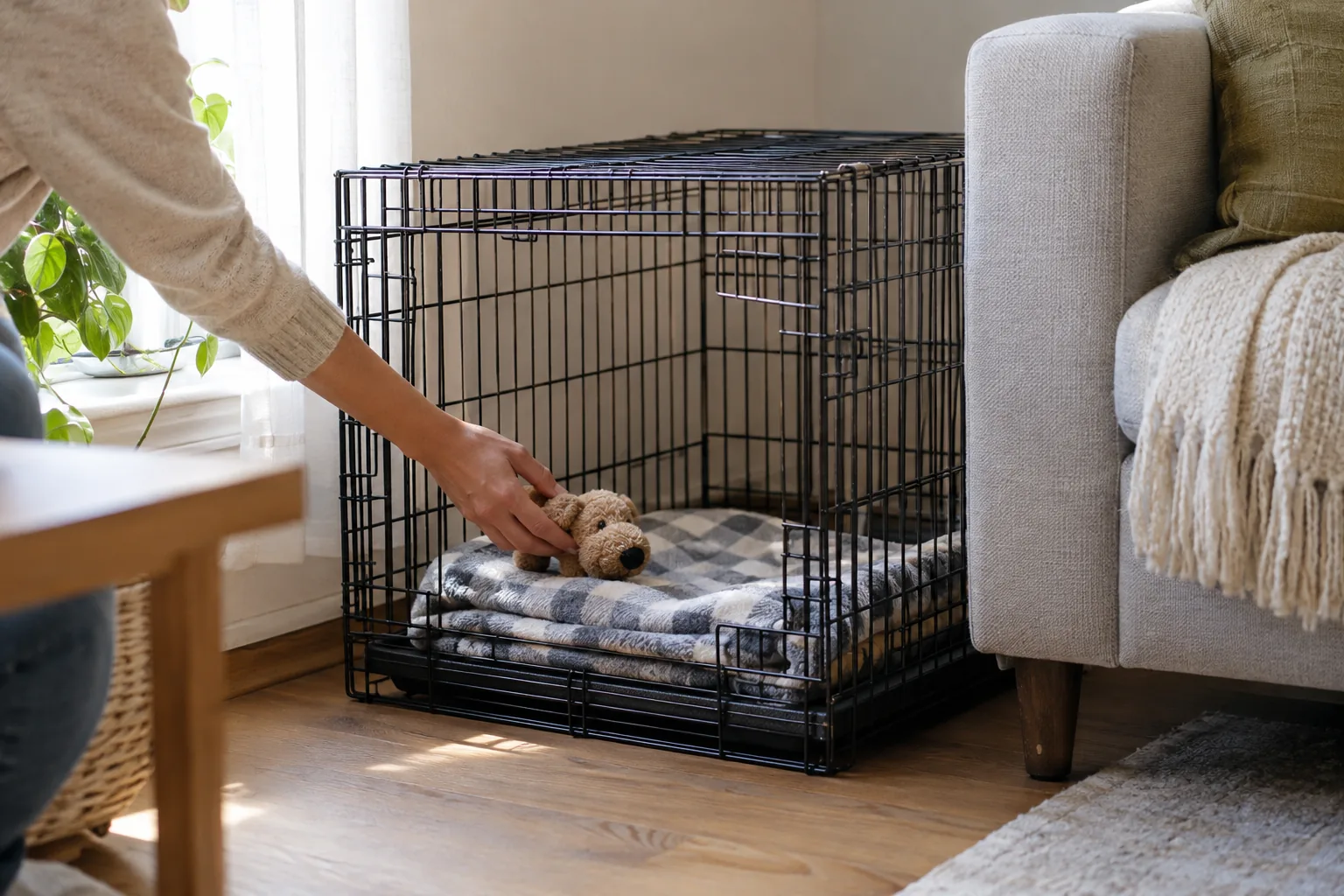
- A crate sized so your puppy can stand, turn and lie down, with a soft mat.
- A gated area or playpen for supervised free time.
- Soft, tiny treats kept in a pocket or a small pouch.
- A flat collar or harness and a light leash.
- Two or three chew toys and one food puzzle for supervised play.
- A fixed potty spot outside and a written feeding schedule.
Pick one cue word for each skill and have everyone in the household use it. Mixed words make it hard for the puppy to tell which sound matters.
Weeks 1-4: name, crate, handling and potty routine
Week 1: name and crate
Say your puppy's name in a bright voice, and the moment your puppy looks at you, give a treat. Repeat in different rooms, a few times a day. Keep the name for good things only, not for scolding.
Introduce the crate as a calm place. Toss treats inside, feed meals near the door, then move the bowl inside. Close the door for a moment while your puppy eats, then open it before any fussing. A crate by your bed at night lets you hear when your puppy needs to go out.
Week 2: handling
Handle paws, ears, mouth and collar area in tiny steps, pairing each touch with a treat. This prepares your puppy for grooming and vet visits. If your puppy pulls away, go back to the previous step. Our dog grooming at home routine shows where these skills lead later.
Weeks 3-4: sit, settle and the mouth
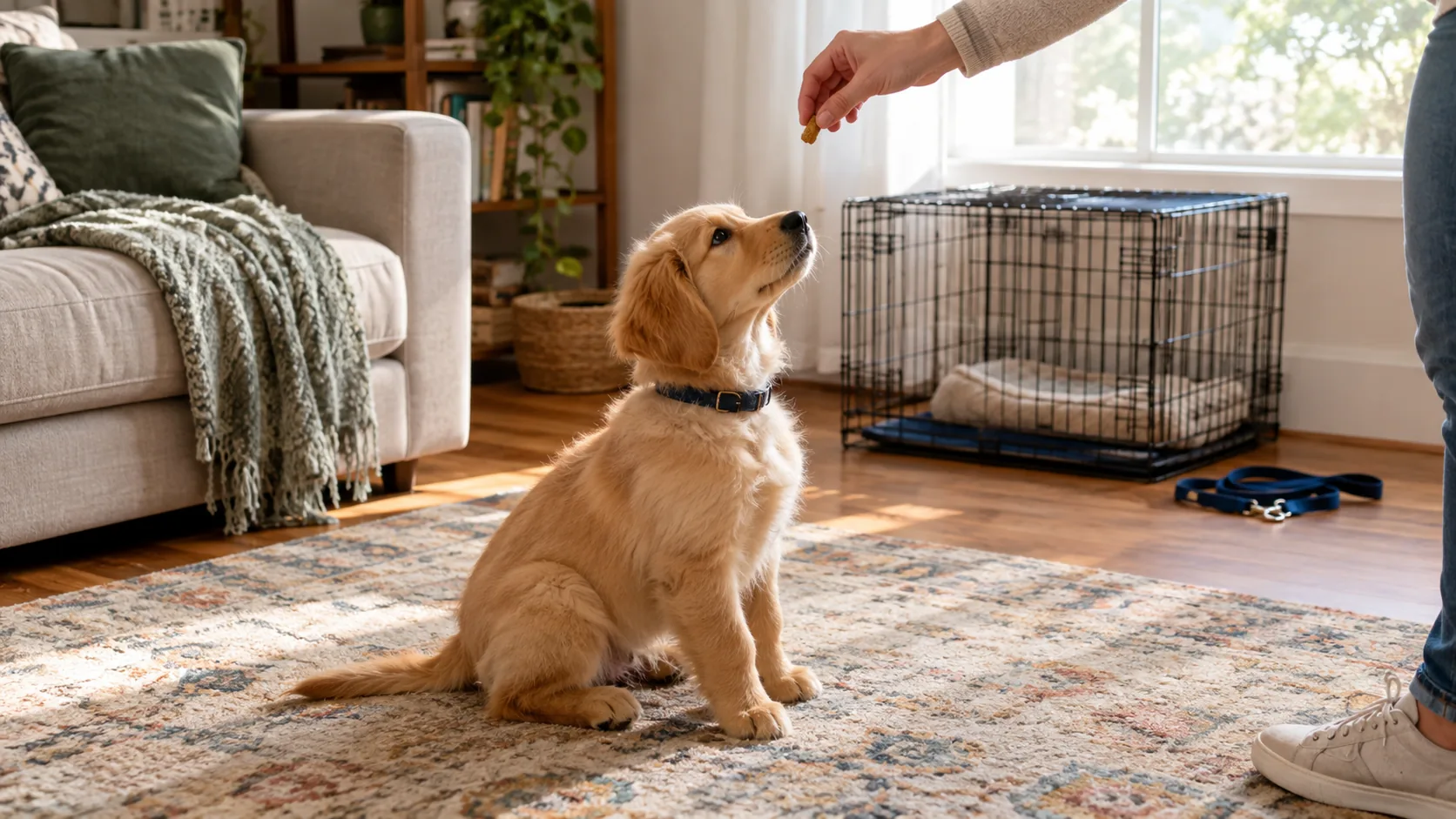
Lure a sit with a treat above the nose, then say the cue as the rear lowers. Add a settle on a mat: reward any lying down, and build calm behavior by rewarding quiet moments rather than excitement. When teeth touch skin, say "ouch," pause play and offer a toy.
Keep the potty routine steady through all four weeks: out after waking, eating, play and naps. The dog potty training tips day-by-day plan covers the schedule and cleanup in detail.
Weeks 5-8: alone time, food puzzles and impulse control
Practice being alone
Start with absences so short your puppy barely notices: step out of the room, return, and reward calm. Build gradually, and leave and return without a big greeting. Leave only items your puppy already uses calmly while you watch, and follow each product's instructions. If whining grows into barking, the trigger-by-trigger barking plan explains how to respond.
Mealtime and play puzzles
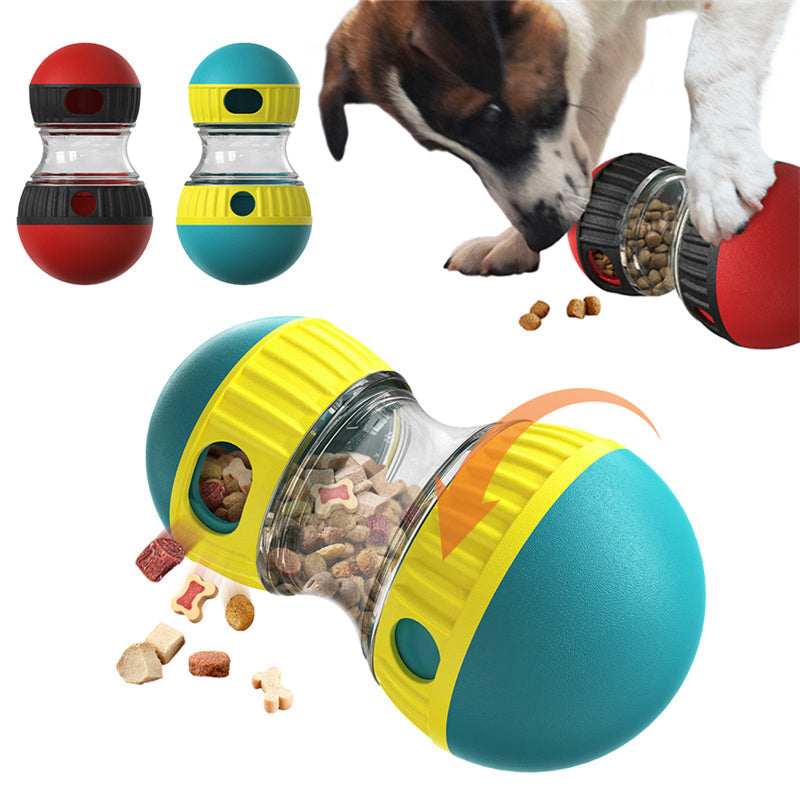
A food puzzle gives your puppy a job at mealtime or during supervised play, with you in the room. KibbleQuest is a dog treat ball you fill with dry kibble or small treats. Your puppy nudges and rolls it across the floor, and food drops out through adjustable holes.
 In this guideKibbleQuest$59.99View
Open the holes wider while your puppy is learning, then close them down to raise the challenge. The nylon body is a food puzzle for play, not a chew toy, so keep an eye on your puppy during first sessions. The rubber bumpers suit hardwood and tile, and the center chamber twists open for filling and hand washing. More options are in our Training, Behavior & Play collection.
Impulse control and recall
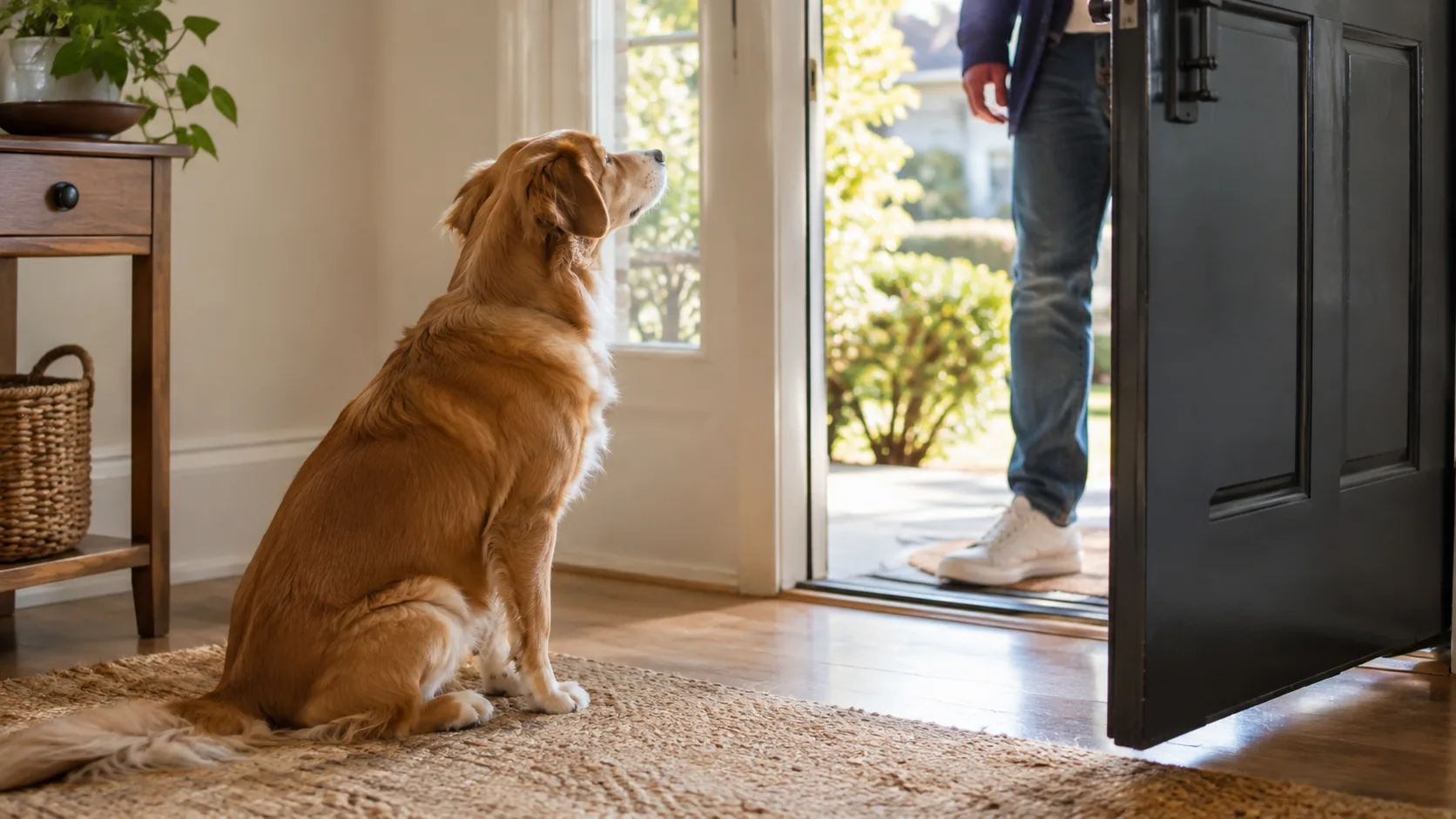
Impulse control means your puppy waits for permission. Ask for a sit before the bowl goes down, before the door opens and before the leash clips on. Release with a word such as "okay."
For recall, say the name and a cue like "come" in a happy voice from a few steps away indoors, then reward generously. Do not call your puppy to something unpleasant. Practice in a closed room or on a long line before trying outdoors.
Weeks 9-12: leash skills and first walks
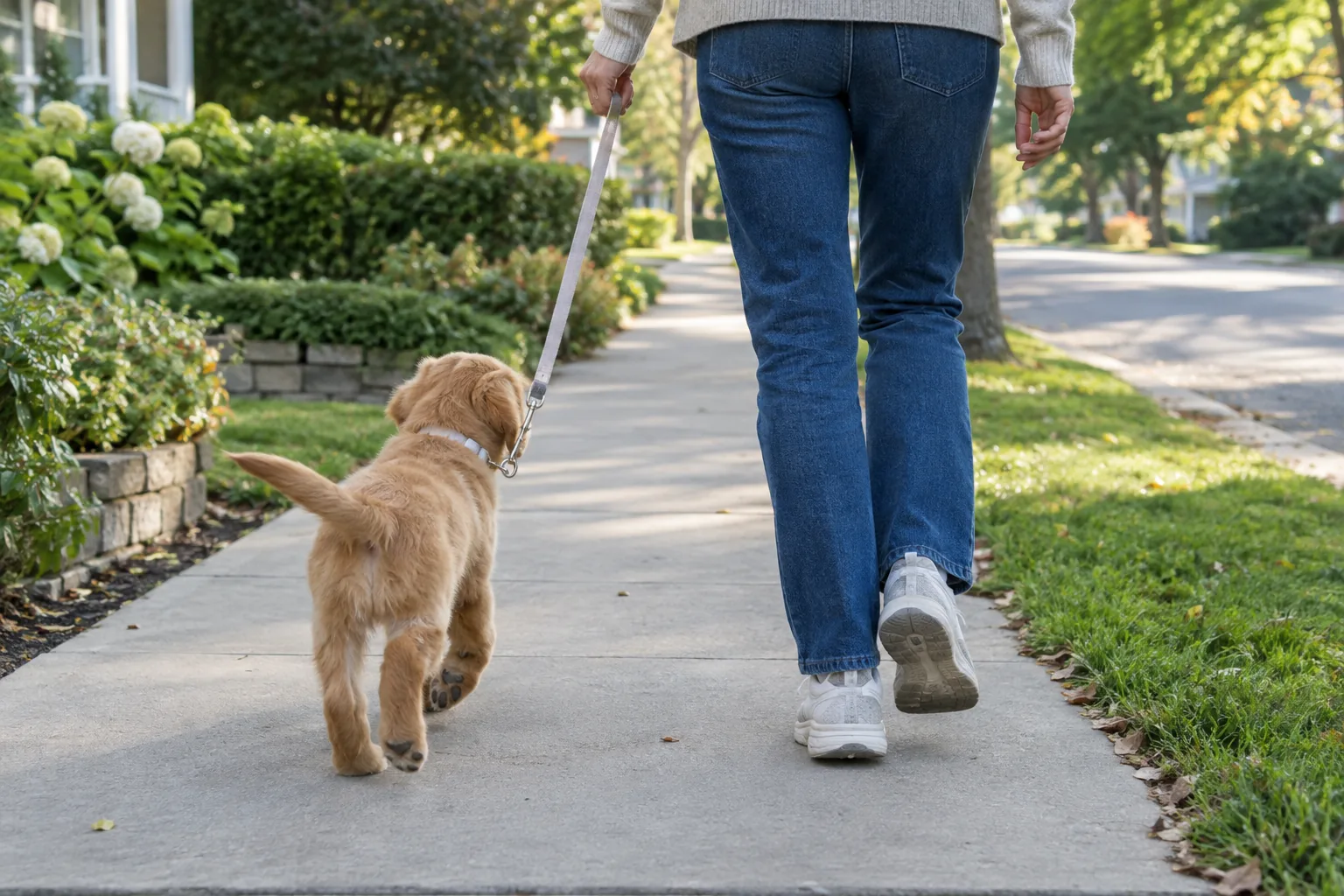
Learning how to train puppy to walk on leash comes down to three stages: wearing the gear, following you indoors, then walking outside. Ask your veterinarian which areas fit your puppy's vaccine schedule before you choose where to walk.
- Let your puppy wear the collar or harness for short stretches while you feed treats.
- Clip on the light leash indoors and let it trail while you play. Pick up the end and follow your puppy.
- Walk backward a few steps, call the name, and reward when your puppy comes along with the leash loose.
- Move to a quiet yard or driveway. Reward every step beside you.
- When the leash tightens, stand still. Walk again when it loosens, and reward that moment.
Keep early walks short and end while your puppy is still interested. Use a light leash and a harness or collar that fits; check the fit with two fingers under the strap.
Field note
Train before meals, using part of the daily kibble as the rewards, so treats stay small and meals stay on schedule.
Common puppy training mistakes
- Long sessions. Keep each one to a few minutes and end on a success.
- Rewarding late. Mark the behavior at the moment it happens.
- Changing cue words between family members.
- Skipping the potty schedule when training other skills.
- Moving to distractions before the skill works in a quiet room.
- Punishing accidents or mouthing; redirect and reward the right choice instead.
Positive reinforcement means rewarding what you want to see again. If progress stalls, step back to an earlier stage of the skill and rebuild.
Socialization and what comes after week 12
Socialization means calm, positive exposure to new people, sounds, surfaces and settings. Introduce them one at a time, let your puppy watch from a distance, and reward calm behavior. Ask your veterinarian before dog-to-dog meetings.
After week 12, keep practicing each skill in new places, with more distractions. Group classes or online lessons can add structure if you want them, but the daily practice at home does the teaching.