How to Train a Dog Not to Jump on People, Guests Included
Remove the reward for jumping, pay for four paws on the floor, and rehearse the door greeting with helpers. Includes drills and a troubleshooting table.
The Millbrook Team
November 1, 2026 · 8 min read
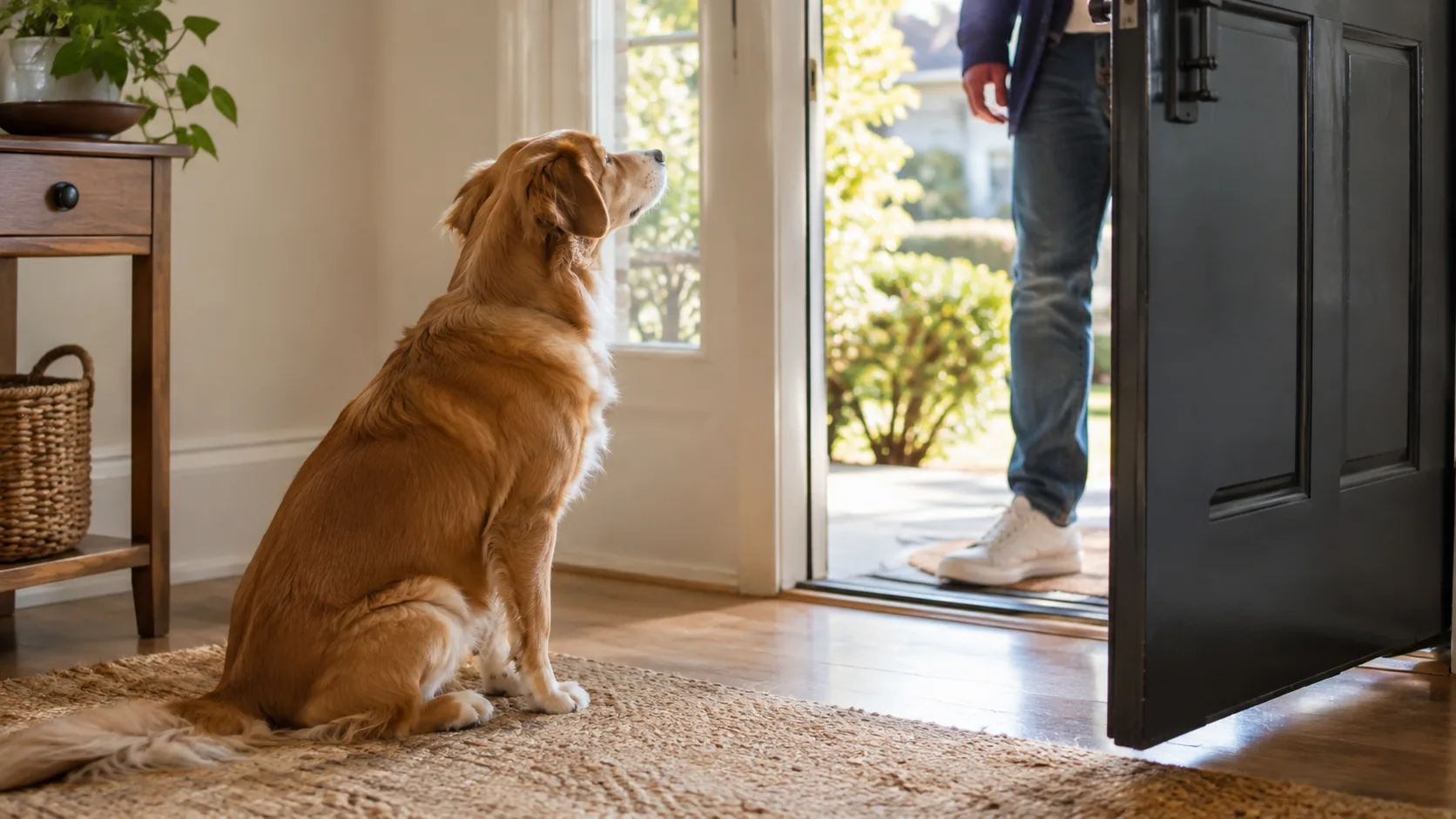
To learn how to train a dog not to jump on people, remove the reward for jumping and pay your dog for keeping four paws on the floor. Attention, eye contact, touch and even pushing away all count as rewards, so greetings only happen when your dog sits or stands calmly. Practice at the front door with helpers, in short sessions, until the calm greeting becomes the habit.
This guide gives you a door-greeting protocol, a table of helper drills, and a troubleshooting table for dogs that jump from excitement versus dogs that jump to get attention.
Why dogs jump on people
Dogs greet each other face to face, so jumping is a natural way to say hello. It continues because it works: people lean down, talk, laugh, or push the dog away, and every one of those responses is attention. A dog that has learned that jumping gets a reaction will try it again on the next visitor.
The reason behind the jump changes the fix, so watch your dog before you start:
- Excitement: the whole body wiggles, and the jump comes the moment the door opens or you arrive home.
- Attention seeking: the dog jumps, glances at your face, and repeats if you look away.
- Frustration: the dog jumps while a person is out of reach, such as behind a gate or on the far side of a leash.
- Stress: the jumping is frantic, paired with pacing or mouthing. If this sounds like your dog, ask a veterinarian or a qualified trainer for guidance.
How to train a dog not to jump on people: the four-part method
Every good plan uses the same four parts. Learn them first, then apply them to the door.
- Remove the reward. When paws leave the floor, turn away, fold your arms, and say nothing. Stay still until all four paws are down.
- Reward the behavior you want. As soon as your dog sits or stands calmly, give a small food reward and calm praise.
- Teach an alternative. A dog cannot sit and jump at the same moment, so a solid sit-to-greet gives your dog a job to do when people arrive.
- Manage the environment. Use a leash, a gate, or a closed door so your dog cannot practice jumping while the skill is new.
Consistency matters more than intensity. If one family member allows jumping, the dog learns that jumping is sometimes rewarded, and that keeps the habit alive. Agree on the rules with everyone in the house before the first drill.
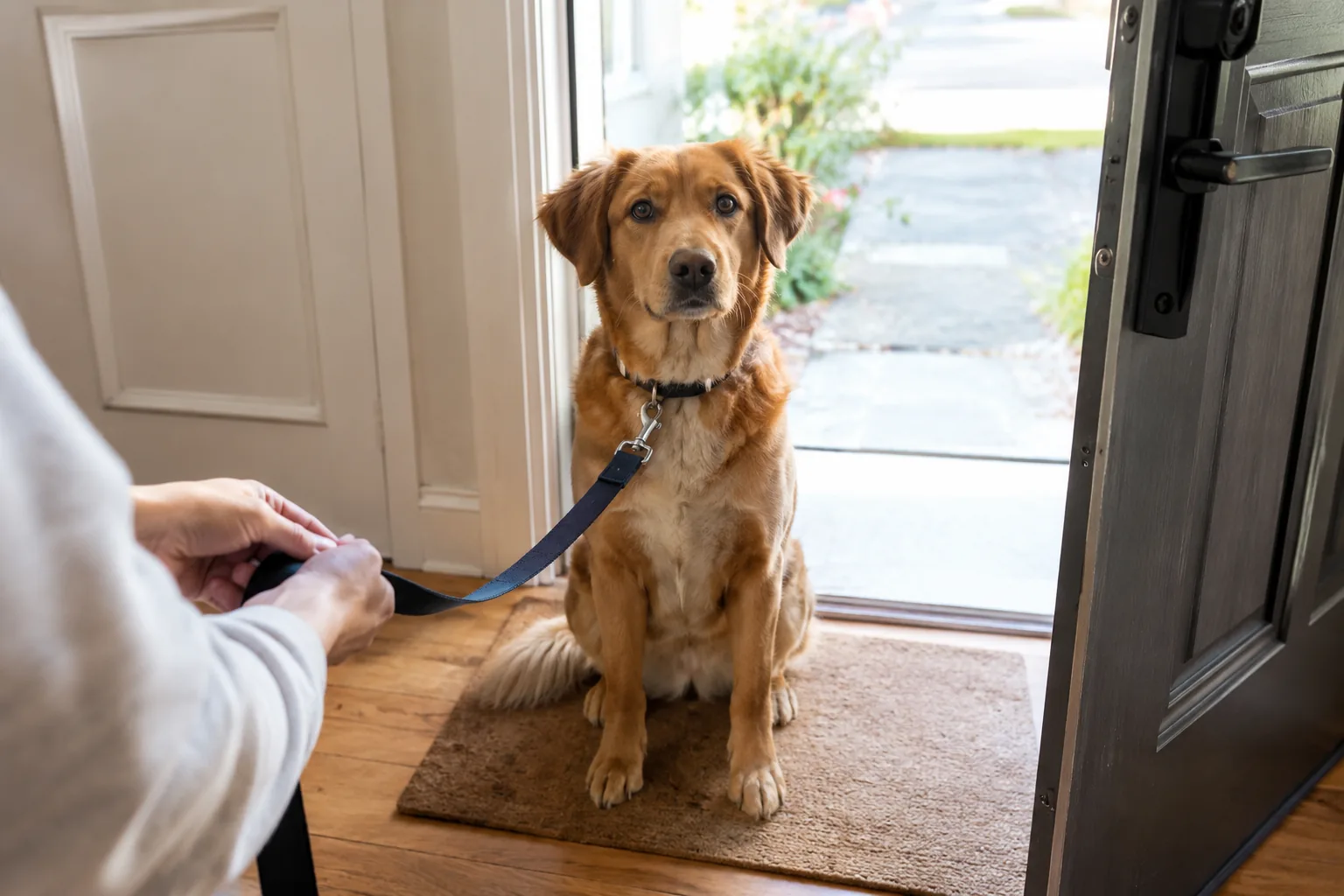
The door-greeting protocol, step by step
Doorbells and arrivals are the hardest moment, so build the routine in small pieces. When you work out how to train a dog not to jump on people at the door, do each step on its own for several short sessions before you combine them.
Step 1: Teach a sit at the door
With no visitor, ask for a sit on a mat near the door and reward it. Add a release word such as "okay" so your dog knows when the sit is over. Repeat in short sessions through the day.
Step 2: Add the door sounds
Knock on the door or press the bell yourself, then ask for the sit. Reward only if your dog stays seated. If your dog jumps or bolts, lower the difficulty and try a softer knock.
Step 3: Put your dog on leash
Clip a leash on before you open the door. With the leash in hand, you can step back to reset without shouting or grabbing.
Step 4: Open the door, then greet
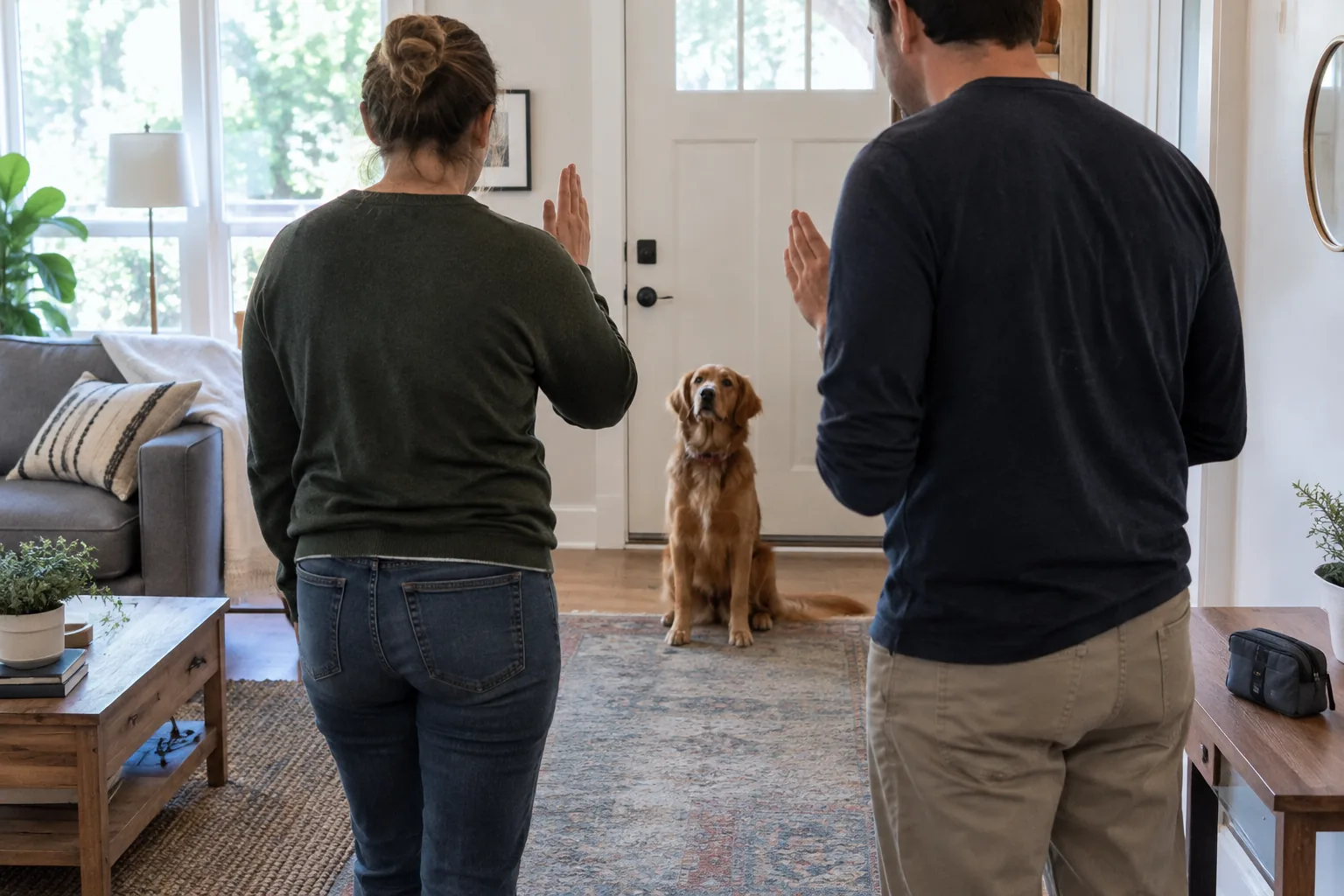
Open the door while your dog sits. Let the visitor step in and look past your dog until the sit holds. Only then does the visitor offer a calm greeting, and if paws lift, the visitor stands up straight and the greeting ends.
Step 5: Reset and repeat
If the dog jumps, the visitor steps back out or turns away, and you try again. A short pause, even a trip out of the room, shows your dog that jumping makes people leave. This is why a consistent routine matters across every visitor.
Practice drills with helpers
Real guests are unpredictable, so rehearse with friends or family who follow your instructions. Give each helper a written script and a pocket of small treats. Start with the easiest drill and move down the table only when your dog succeeds several times in a row.
| Drill | Helper does | You do | Move on when |
|---|---|---|---|
| 1. Calm approach | Walks toward the seated dog, then stops | Reward the sit, release with your word | Dog stays seated as the helper arrives |
| 2. Bend and pet | Bends slowly and offers a hand under the chin | Hold the leash loosely, reward the sit | Dog keeps four paws down during petting |
| 3. Door entrance | Knocks, enters, ignores the dog until seated | Ask for a sit before opening | Dog sits without being asked |
| 4. Excited arrival | Enters with a happy voice and brisk movement | Reset by stepping back if paws lift | Dog stays calm at higher excitement |
| 5. Multiple guests | Two or three people arrive together | Keep the leash on, reward each calm greeting | Dog greets everyone without jumping |
End each session while your dog is still succeeding. If your dog starts to struggle, go back one drill and stay there for a few sessions.
Troubleshooting: excitement jumping versus attention jumping
If progress stalls, match the problem to the cause. The same drill needs a different adjustment depending on why your dog jumps.
| Sign | Excitement jumping | Attention jumping |
|---|---|---|
| When it happens | At the door, on arrival, during play | When you are busy, on a call, or sitting |
| Body language | Wiggly, loud, hard to focus | Looks at your face, jumps again if ignored |
| Main fix | Lower the excitement before the greeting: calm arrivals, leash, a few seconds of waiting | Remove attention for jumping, give it generously for sitting |
| Common mistake | Greeting in a high-pitched voice | Pushing the dog away, which is still attention |
| Helper tip | Keep hellos low-key and brief | Wait for the sit before any eye contact |
A dog that jumps on you but not on another family member may have found that you respond. Ask the other person what they do differently, then copy it. Those habits often include standing still, staying quiet, and rewarding only after four paws are down.
Whichever cause fits, how to train a dog not to jump on people comes down to the same rule: the dog gets the greeting only for calm behavior.
Tools that support the training
A leash, a gate and a mat cover most setups. For dogs that already know a command such as sit or off, a training collar can pair a tone or vibration cue with that command. PawSignal is a dog training collar with a handheld remote and a receiver that sits on the collar. It sends tone or vibration cues across 100 levels, so you can pair a cue with a command your dog already knows.
The manual describes starting at the lowest level and stepping up one level at a time until you see a small head turn or ear flick. Follow the manual, keep sessions short, and ask a veterinarian or a qualified trainer first if you are unsure whether a collar suits your dog. Our remote collar introduction plan walks through the first sessions.
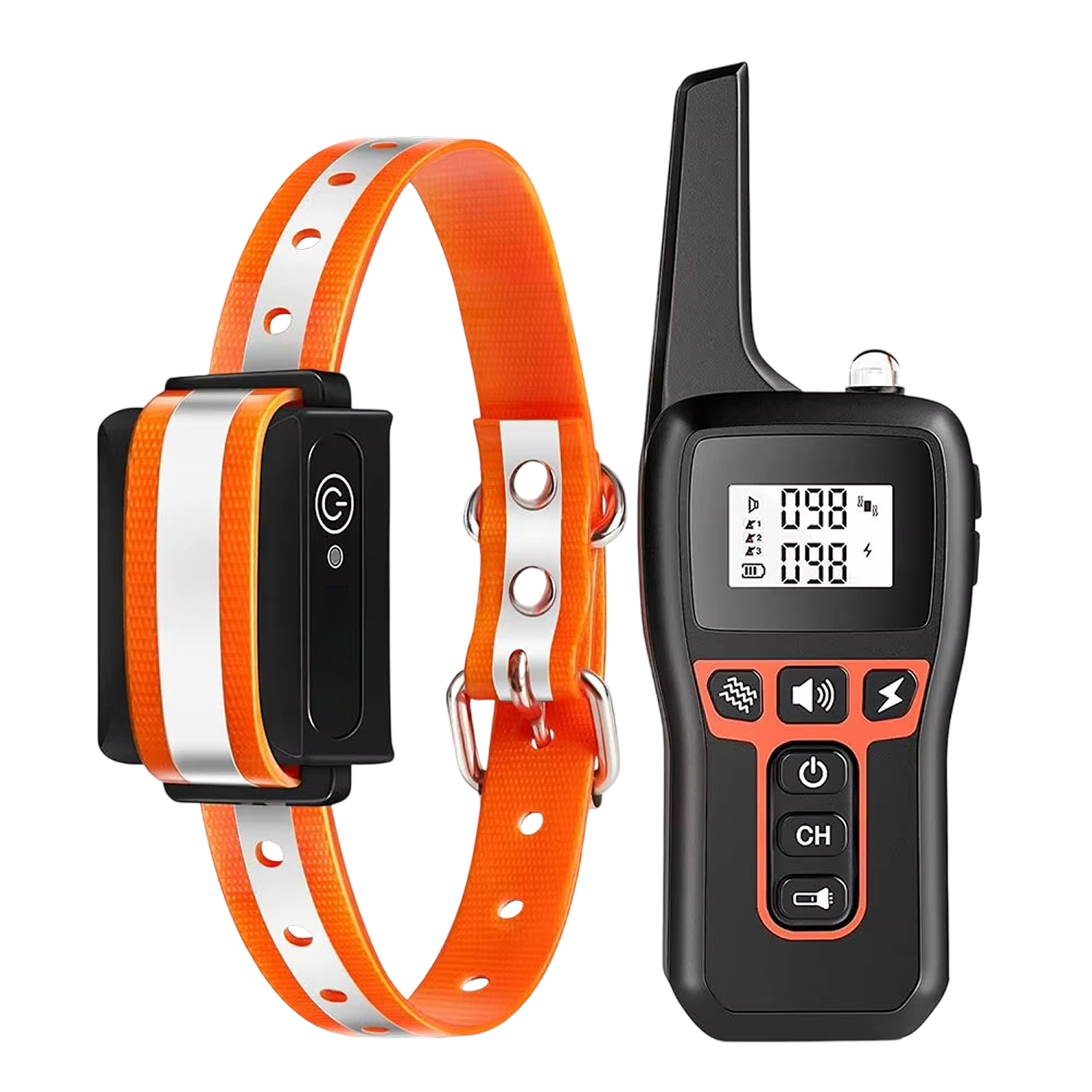 In this guidePawSignal$99.99View
Field note
Keep a jar of small treats beside the front door and a mat in view. When the routine is ready to start, everyone in the house can use it.
Special situations
Children
Show children the tree pose: stand still, fold their arms, and look away from the dog until it sits. Supervise every greeting between a dog and a child and keep the leash on while you practice. Young children should not run toward a dog that is learning.
Multi-dog homes
Train each dog alone first, then together with a helper holding each leash. Dogs can copy each other's excitement, so reward calm in whichever dog settles first. PawSignal works with a setup of three dogs on one handset, though each dog still needs its own training.
Walks and strangers
When a dog jumps up at strangers on walks, ask the person to wait, then ask your dog to sit before any greeting. If your dog cannot sit near people yet, cross the street or turn away and build distance first. Hold the leash short and keep your voice calm.
Barking at visitors
Some dogs jump and bark at the same moment. If you are also working on how to train a dog not to bark at people, the same sit-and-wait routine applies: reward quiet, then greet. For trigger-specific plans, read our barking plan.
Common mistakes to avoid
- Pushing the dog down or saying "off" repeatedly. Both give attention.
- Greeting your dog enthusiastically when you come home, which sets a high-energy tone.
- Letting guests decide the rules. Brief them before they walk in.
- Training only when guests arrive. Keep sessions short and daily rather than rare and long.
- Moving on too fast. If your dog fails two drills in a row, go back a step.
Young dogs are still learning impulse control, so plan on many repetitions. Our puppy training plan shows how to build a sit and a calm greeting in the first weeks.
Give the waiting dog something to do
After the greeting, a dog that has just held back may still be wound up. A food puzzle such as KibbleQuest gives your dog something to nudge and roll while guests settle. It is a dog treat ball you fill with dry kibble or small treats, and food drops out through adjustable holes.
Rubber bumpers sit on the outside, which suits rolling on hardwood and tile. It is a food puzzle, not a chew toy, so watch your dog during the first sessions. You can browse more tools in our Training, Behavior & Play collection.
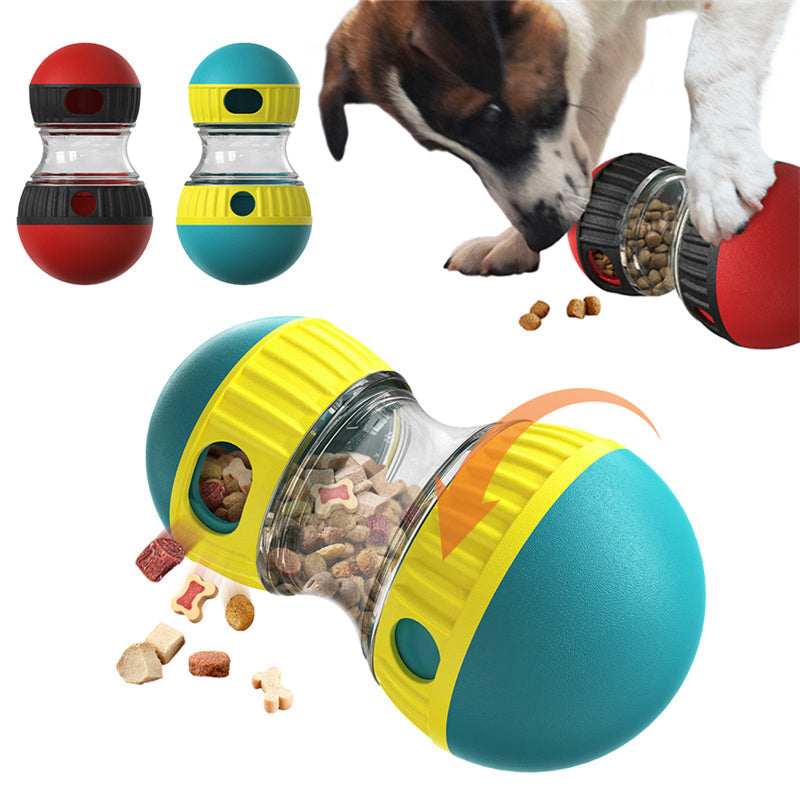 In this guideKibbleQuest$59.99View