Airline Approved Dog Carrier: Size Rules, Fit Test, Packing List
An airline approved dog carrier is one that meets your airline's own size and type rules. Measure your dog, check the airline's limits, then run the fit test below.
The Millbrook Team
October 24, 2026 · 7 min read
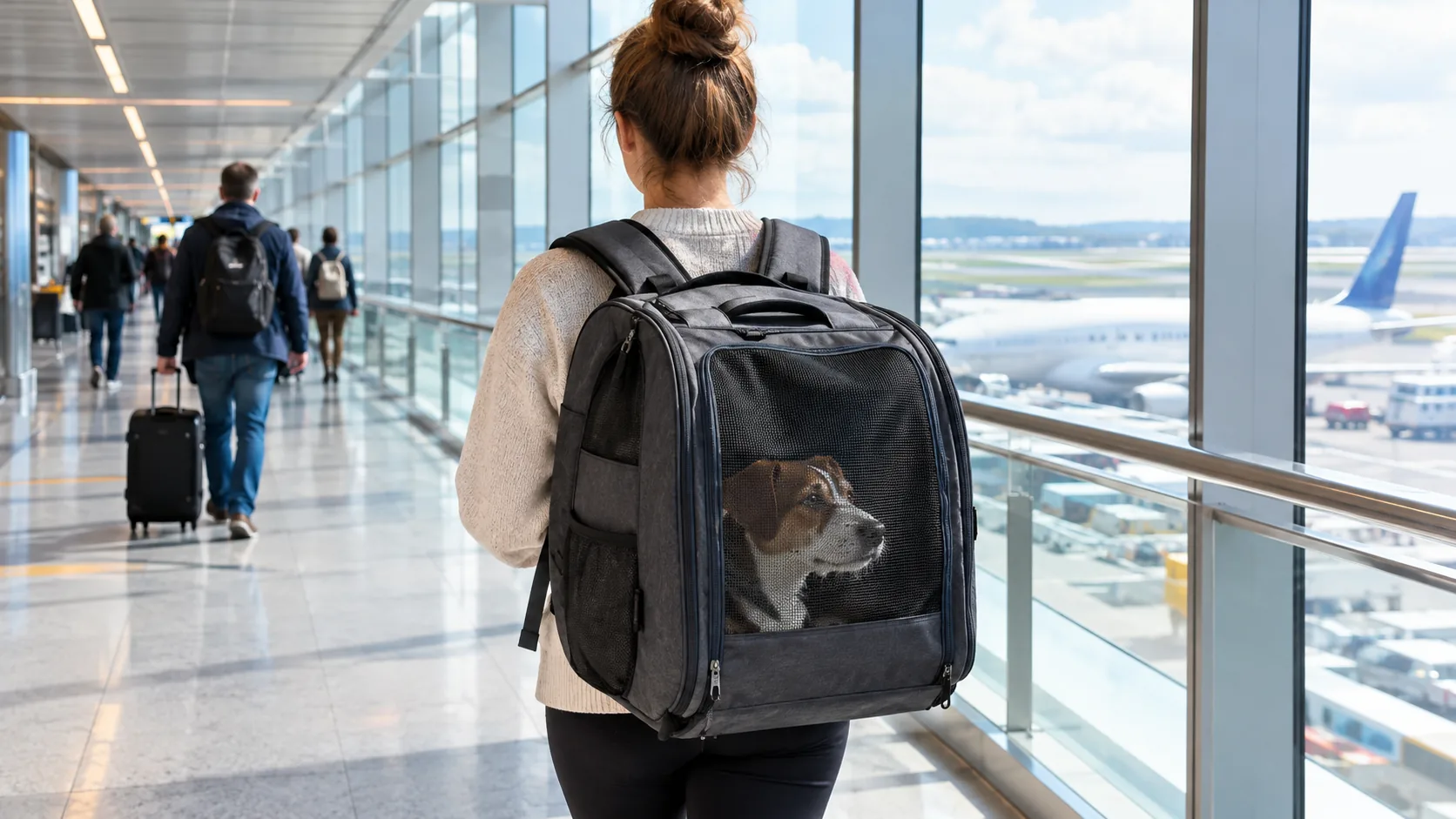
An airline approved dog carrier is one that meets the size, type and ventilation rules of the airline you are flying. No carrier is accepted everywhere, so a label on a box does not settle it. Compare the airline's published under-seat limit with the carrier's outside measurements, then confirm your dog fits inside.
This guide gives you a measure-your-dog fit test, tables for reading the rules, a wheels-or-backpack decision, and a pre-flight packing checklist.
What an airline approved dog carrier means
Airlines set their own rules, and the rules can differ by airline, aircraft and route. For a dog riding in the cabin, the carrier has to go under the seat in front of you. That makes the under-seat space the number that matters, not a claim on the carrier's packaging.
Look for these points on the airline's pet policy page before you buy:
- Maximum carrier length, width and height for in-cabin travel
- Whether soft-sided carriers are allowed, and whether the sides may flex
- A combined weight limit for pet and carrier, if the airline sets one
- Whether the dog must stay inside the carrier for the whole trip
- Any breed, age or route restrictions, plus the fee and booking steps
Policies change, so check again close to your travel date and again when you book the pet's spot.
Step 1: Measure your dog for the fit test
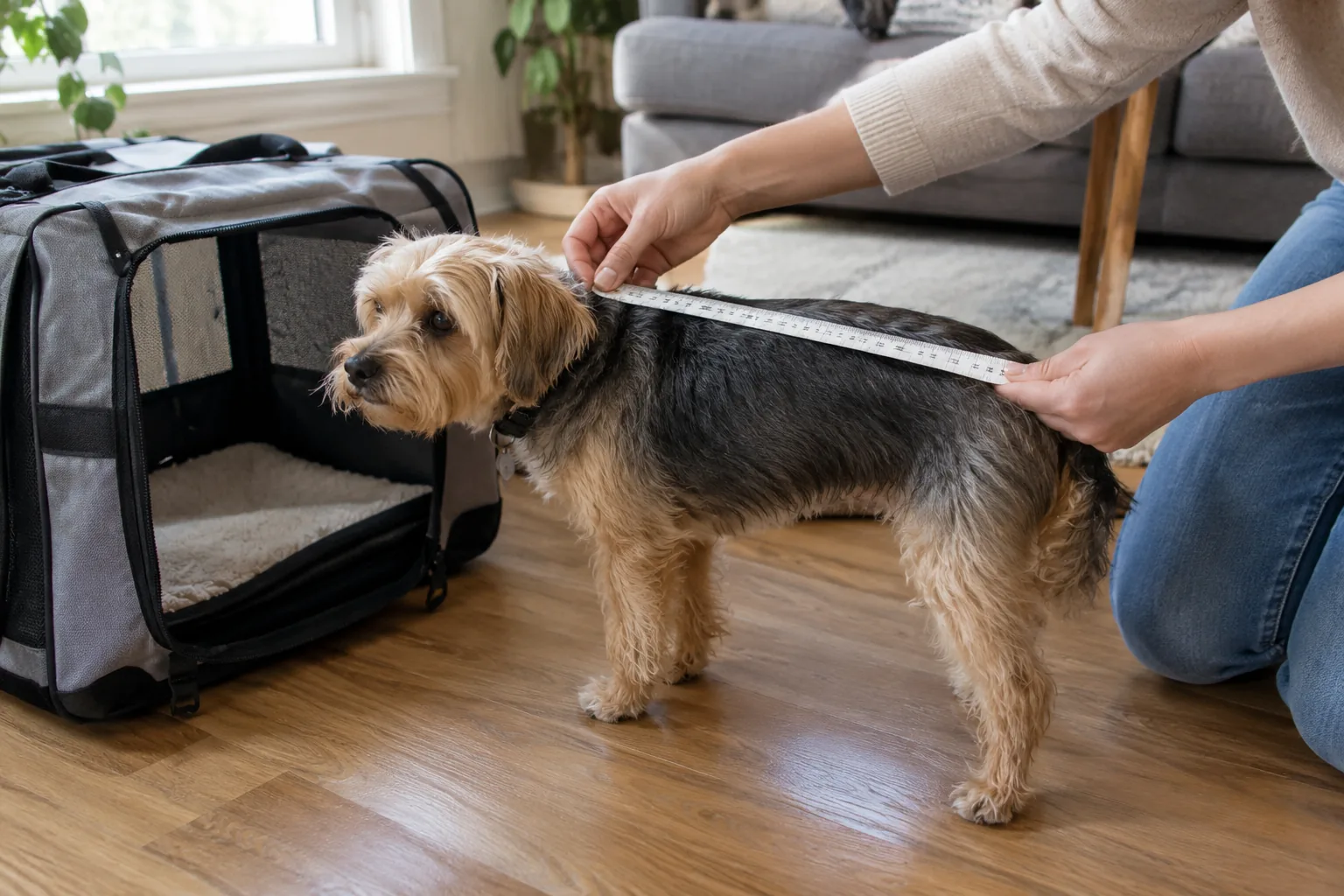
Carrier listings give outside dimensions and sometimes interior ones. What your dog needs is interior room, so measure the dog first. Use a soft tape and have your dog stand square on a flat floor.
| Measurement | How to take it | What the carrier needs |
|---|---|---|
| Body length | Base of the neck to the base of the tail | Interior length at least this long, plus a few inches for turning |
| Standing height | Floor to the top of the shoulders, then to the top of the head | Interior height that lets your dog stand without the head pressing the roof |
| Lying height | Floor to the top of the head while your dog lies in a natural position | Room to lie down with the head up |
| Width | Across the widest point of the chest or hips | Interior width that lets your dog turn around |
| Weight | Weigh your dog on a home scale | Below the carrier's listed maximum, and within any airline total weight limit |
Check whether your airline wants the dog to stand, turn around and lie down inside the carrier. If a measurement lands right at the edge, look for a carrier with more interior room, as long as the outside still fits the under-seat limit.
Step 2: Match the carrier to the under-seat space
Two sizes need to agree: the airline's under-seat limit and the carrier's outside size. A soft-sided carrier can flex a little, but check the airline's wording on that rather than assuming.
| Check | Where to find it | Why it matters |
|---|---|---|
| Airline in-cabin limit | The airline's pet travel page | This is the size the carrier has to meet |
| Carrier outside size | The product page or a tape measure | Outside size decides if it goes under the seat |
| Carrier interior size | The product page | Interior size decides if your dog fits |
| Carrier weight limit | The product page | Your dog must be under it |
| Aircraft type | Your booking details or the airline | Under-seat space can differ between planes |
If a listing uses metric figures, convert them: 2.5 cm is about 1 inch, and 1 kg is about 2.2 pounds.
Soft-sided, wheeled or hard-sided: pick the type
The carrier type changes how you move through the airport and what the airline allows.
Soft-sided carriers
A soft-sided carrier is the usual format for a small dog in the cabin. The fabric body can flex when you slide it under a seat, and mesh panels provide ventilation. Look for reinforced corners and sturdy zippers.
Carriers with wheels
A wheeled carrier suits long terminal walks, but wheels, handle and frame add to the outside size. Check that the carrier meets the under-seat limit with the handle and wheels included. Some airlines ask you to lift the carrier at times, so confirm how yours handles wheeled bags.
Backpack carriers
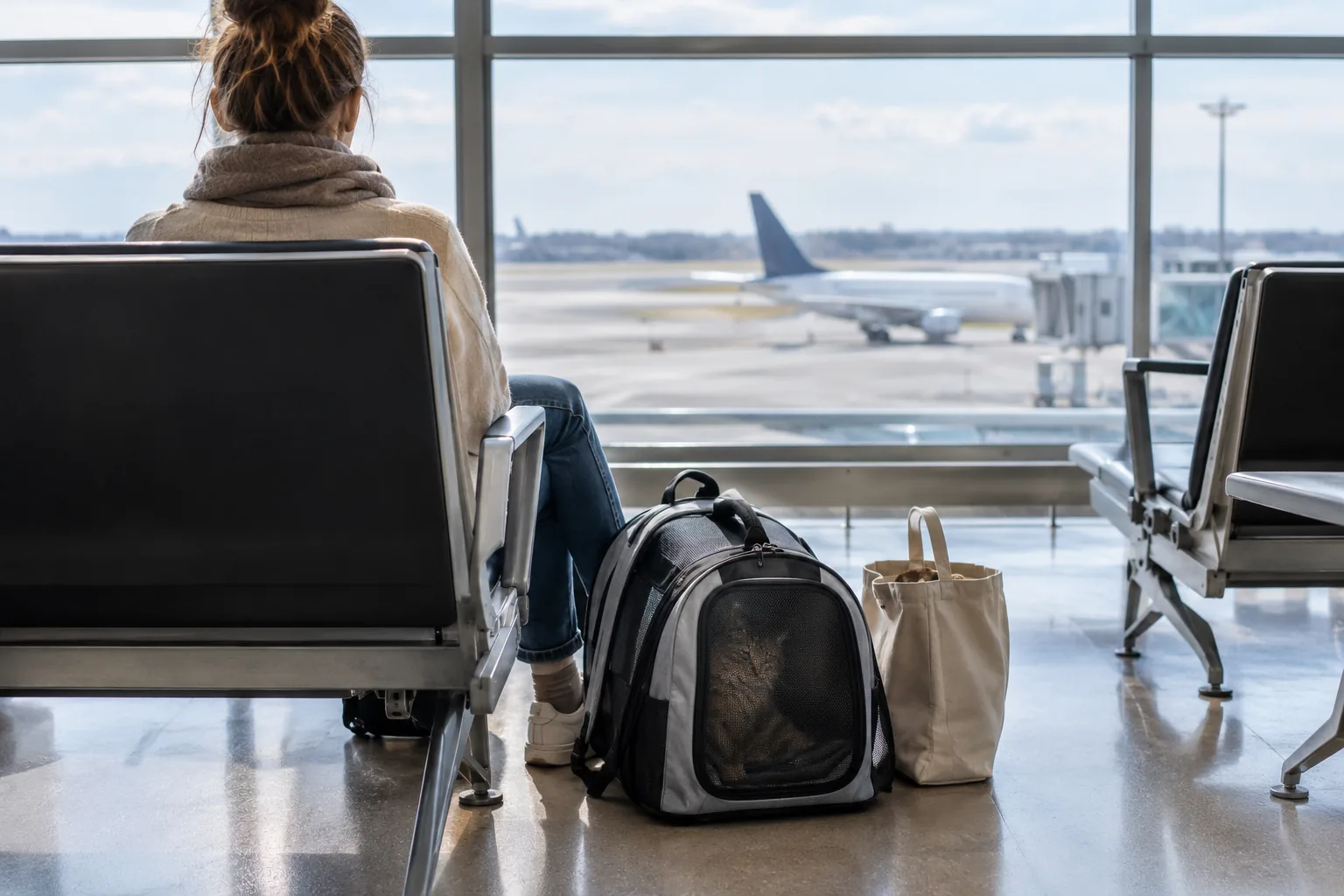
A backpack dog carrier leaves both hands free for boarding passes, bags and the security line. Padded straps matter if you will be walking a while. Some airlines ask that the dog be taken out at security, so you may carry the dog by hand or on a leash while the empty carrier is scanned.
Hard-sided kennels
Larger dogs that cannot fit under a seat may travel as checked pets or cargo, in a rigid kennel the airline specifies. That is a different set of rules, so ask the airline directly about crate size, ventilation and booking. For a large dog carrier backpack, remember that the cabin limit is about the space under the seat, not the dog's size.
A backpack option for small dogs
If your measurements point to a small dog, PawVoyage is a pet backpack carrier we stock. The interior measures 33x40x25 cm (about 13x15.7x9.8 inches) and holds pets with a maximum weight of 7 kg (about 15.4 pounds). Compare those interior numbers with your dog's measurements from the table above.
It has a padded interior, a wide opening, and mesh panels on two sides, so air can pass through from one panel to the other. The Oxford cloth body has PVC reinforcement, with reinforced corners and zippers. You can wear it as a backpack, carry it on one shoulder or hold it by hand, using the padded, adjustable straps.
The product page lists the interior size, not an airline's rules. Before you book, compare its outside size with the under-seat limit on your airline's page to decide whether it works as your airline approved dog carrier.
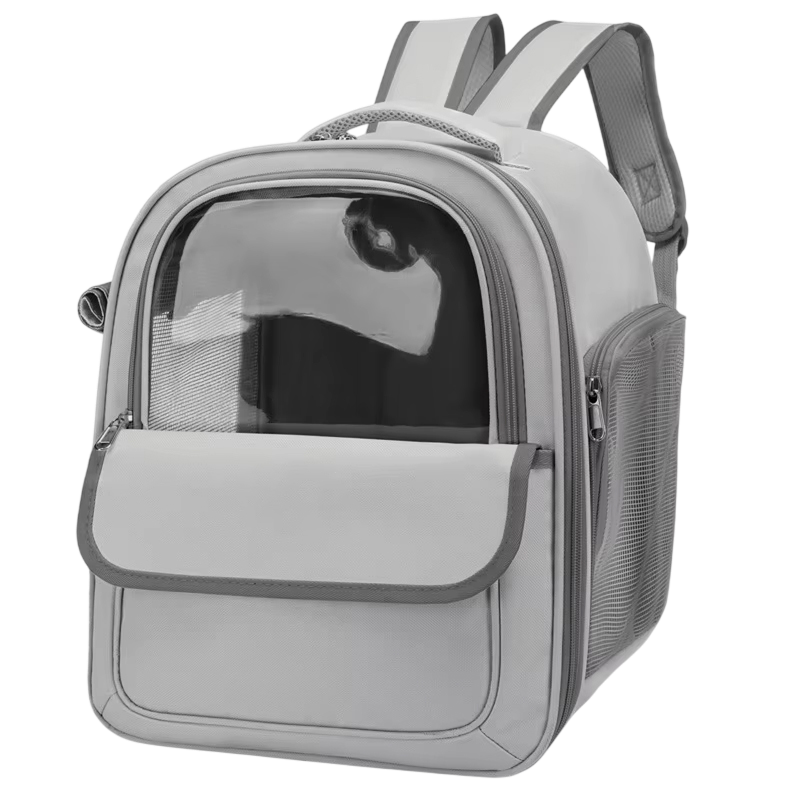 In this guidePawVoyage$99.99View
Run the home fit test
Do this a few weeks before travel so your dog has time to get used to the carrier.
- Set the carrier up in its ready shape in a room your dog likes, with the opening facing the dog.
- Let your dog sniff the carrier. Leave a familiar blanket inside.
- Guide your dog in through the opening and check that it can stand, turn around and lie down.
- Zip the carrier closed for a short spell, then lengthen the time over several days.
- Pick up the carrier and walk a few laps in the house with your dog inside, using the carry mode you plan to use.
- Measure the packed carrier on the outside, with pockets filled, and compare it with the airline's limit.
Watch your dog's body language and pause the practice if it looks stressed. If you have worries about your dog flying, ask a veterinarian before you book.
Field note
Measure the carrier while it is fully packed and the straps are tucked in. Bulging pockets and dangling straps can add inches that the empty carrier did not have.
Pre-flight packing checklist
Pack the carrier and a small personal bag so you can reach everything without opening the carrier more than the airline allows.
| Item | Why you pack it |
|---|---|
| Airline booking confirmation for the pet | Shows the pet's spot is booked |
| Health and vaccination papers | Some routes and airlines ask for them; check yours |
| Collar or harness with ID tag | Identification in case of separation |
| Leash | For use outside the carrier before and after the flight |
| Absorbent pad for the carrier floor | Lines the floor of the carrier |
| Spare pads and sealable bags | For changes and waste |
| Collapsible water bowl and water | For offering water at the right times |
| Small portion of your dog's usual food | Keeps meals familiar |
| Familiar blanket or small toy | Smells like home |
| Cleaning wipes | For wiping the exterior or spot cleaning |
Ask your veterinarian about feeding timing and about any medication before the trip. Do not give your dog anything new on travel day.
Airport and in-flight rules to know
Can you take your dog out of its carrier on a plane? Check your airline's pet policy: some airlines expect the dog to stay inside the carrier, under the seat in front of you, for the whole flight. Do not plan on taking your dog out in the cabin.
At security, you may be asked to take the dog out so the empty carrier can go through the scanner. Keep a leash or harness on your dog and hold it firmly. Walk your dog before heading to the gate, and use any designated dog area the airport offers.
Mistakes to avoid
- Buying an airline approved dog carrier because of its label, without checking the airline's limit
- Comparing the carrier's outside size with the dog instead of the interior size
- Forgetting that wheels, handles and pockets add to outside size
- Skipping the practice sessions at home
- Booking the ticket before confirming the pet's spot on the flight
Cats, car legs and what to read next
The same measuring logic applies to cats, and you can find a size and fit checklist in our size and fit checklist for cat carriers. For the drive to the airport, our seat belt harness setup checklist covers the steps. You can also browse Leashes, Harnesses & Car Travel for harnesses and leashes to pack.