How to Keep a Dog Pool Clean: Daily, Weekly and Season-End Steps
To keep a dog pool clean, drain it after every swim, scrub it weekly with mild soap, and dry it fully before storing. Skip pool chemicals in small pools.
The Millbrook Team
November 15, 2026 · 6 min read
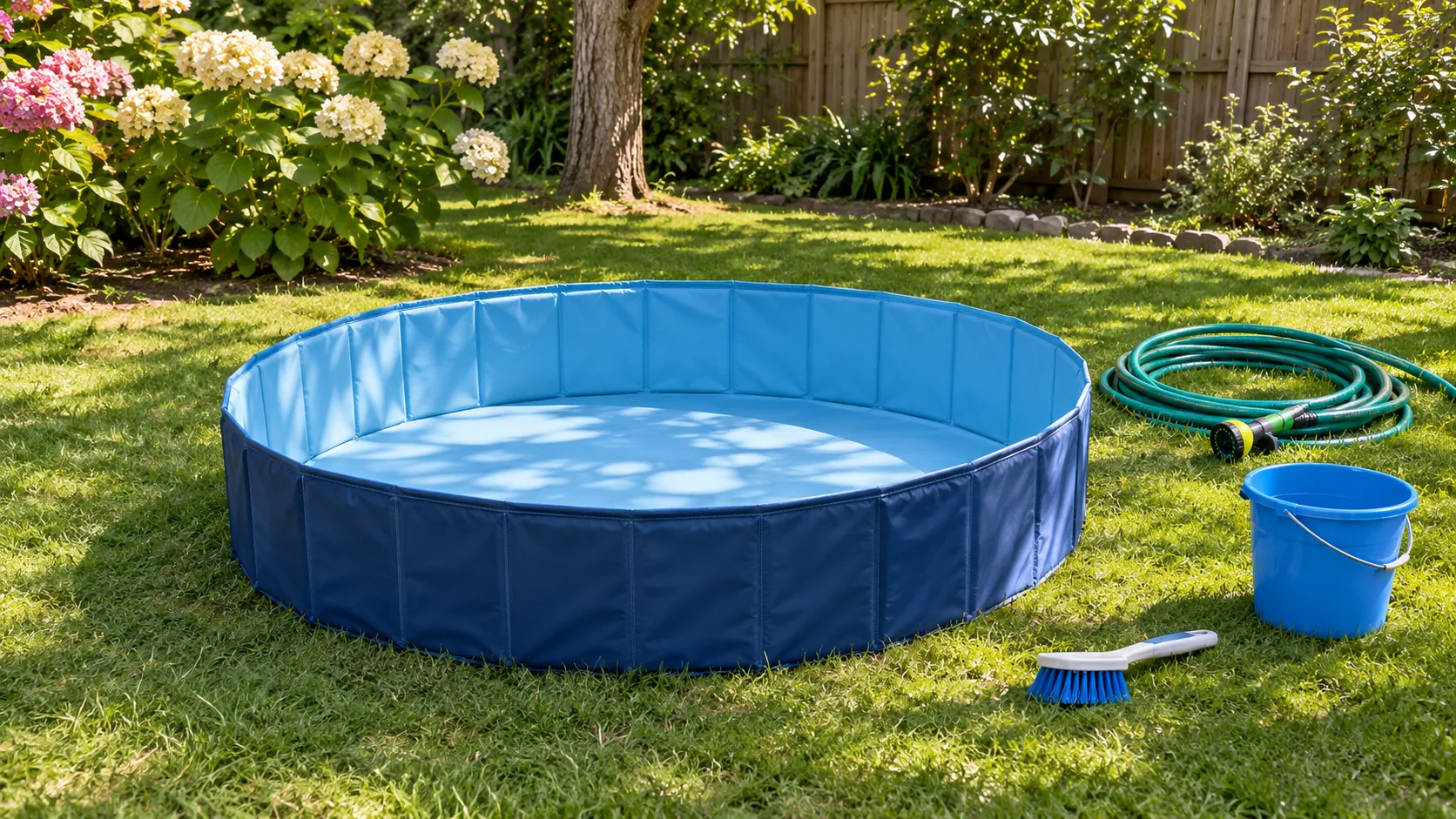
How to keep a dog pool clean comes down to three habits: empty it after every swim, scrub it once a week, and dry it fully before you fold it away. A small pool has no filter, so fresh water and a clean surface do the work that chemicals do in a backyard swimming pool. This guide gives you the daily, weekly and season-end steps, plus clear cautions on pool chemicals.
How to keep a dog pool clean: the routine at a glance
Use this schedule as a checklist. Each row is explained in the sections below.
| When | Task | What you need |
|---|---|---|
| After every swim | Drain, rinse the walls and floor, remove hair and debris, let it air dry | Garden hose, drain plug or drain hole |
| Weekly | Scrub with mild soap, rinse until no suds remain, dry in the shade or sun | Soft brush or sponge, mild dish soap |
| Every fill | Start with fresh tap water; do not top off old water | Garden hose |
| End of season | Deep clean, dry completely, fold and store indoors | Towel, dry storage spot |
The core rule is simple: standing water is what turns a clean pool into a slimy one. If the pool is empty and dry between uses, algae and odors have little to grow on.
Daily steps after every swim
Plan on a short routine when playtime ends. Do it the same day, because warm water with hair, dirt and drool in it changes fast outdoors.
- Remove the drain plug or open the drain and let all the water run out, away from your dog's play area.
- Pick out leaves, grass, fur and sand by hand or with a small net.
- Spray the walls and floor with the hose, working the dirt toward the drain.
- Wipe the floor with a clean sponge if you see a film or mud.
- Prop the pool on its edge or leave it open and let it air dry before you fold it.
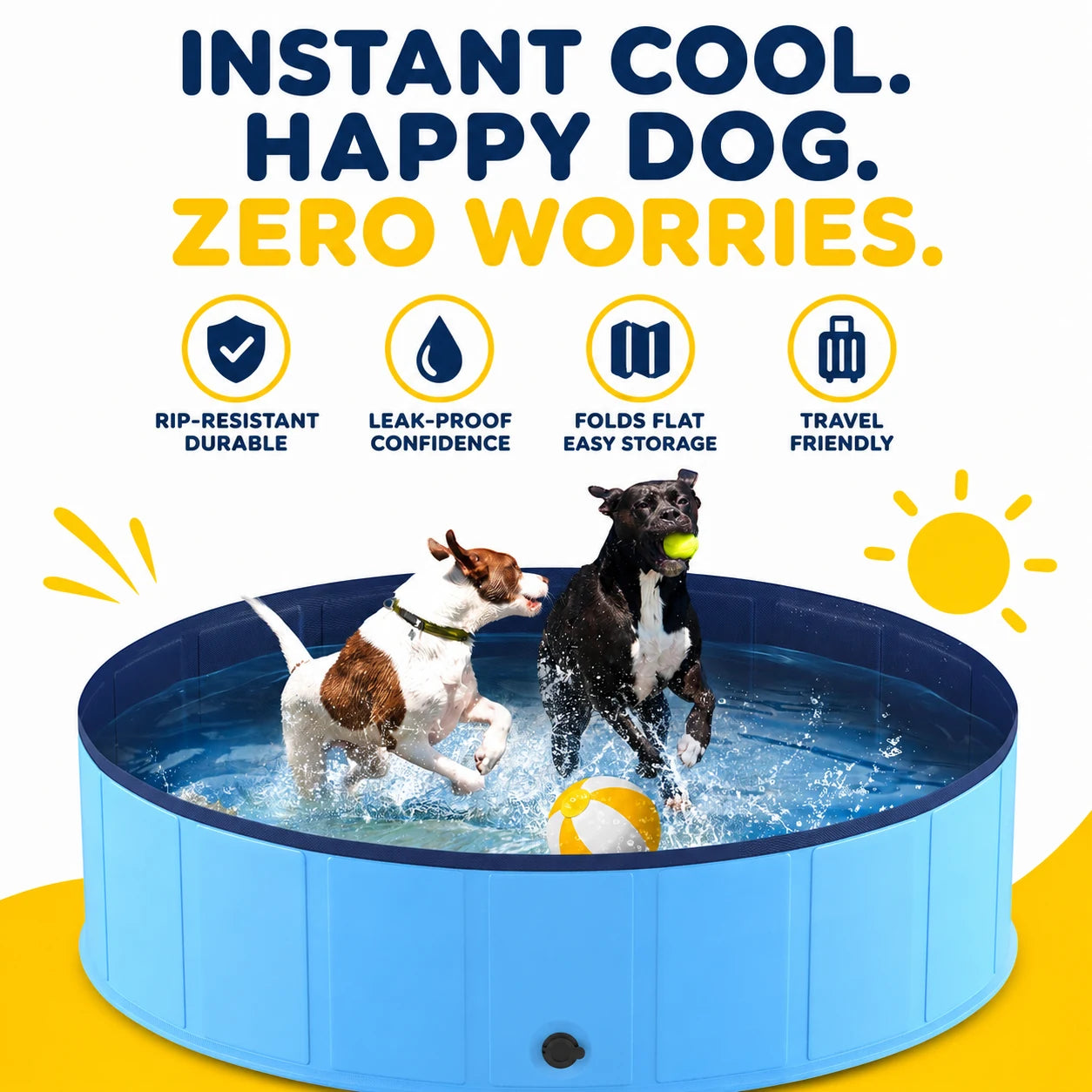
A pool with a side drain plug can be emptied without lifting it. SplashCove has a built-in side drain plug, pre-installed, and you twist it off to empty the pool, then let it air dry. Its hard side panels keep their shape as you fill it.
 In this guideSplashCove$89.99View
Weekly scrub: how to clean a dog pool step by step
Once a week, give the pool a full wash even if it looks fine. Biofilm, the thin slippery layer that forms on wet plastic, is easy to miss until it is thick.
What to do
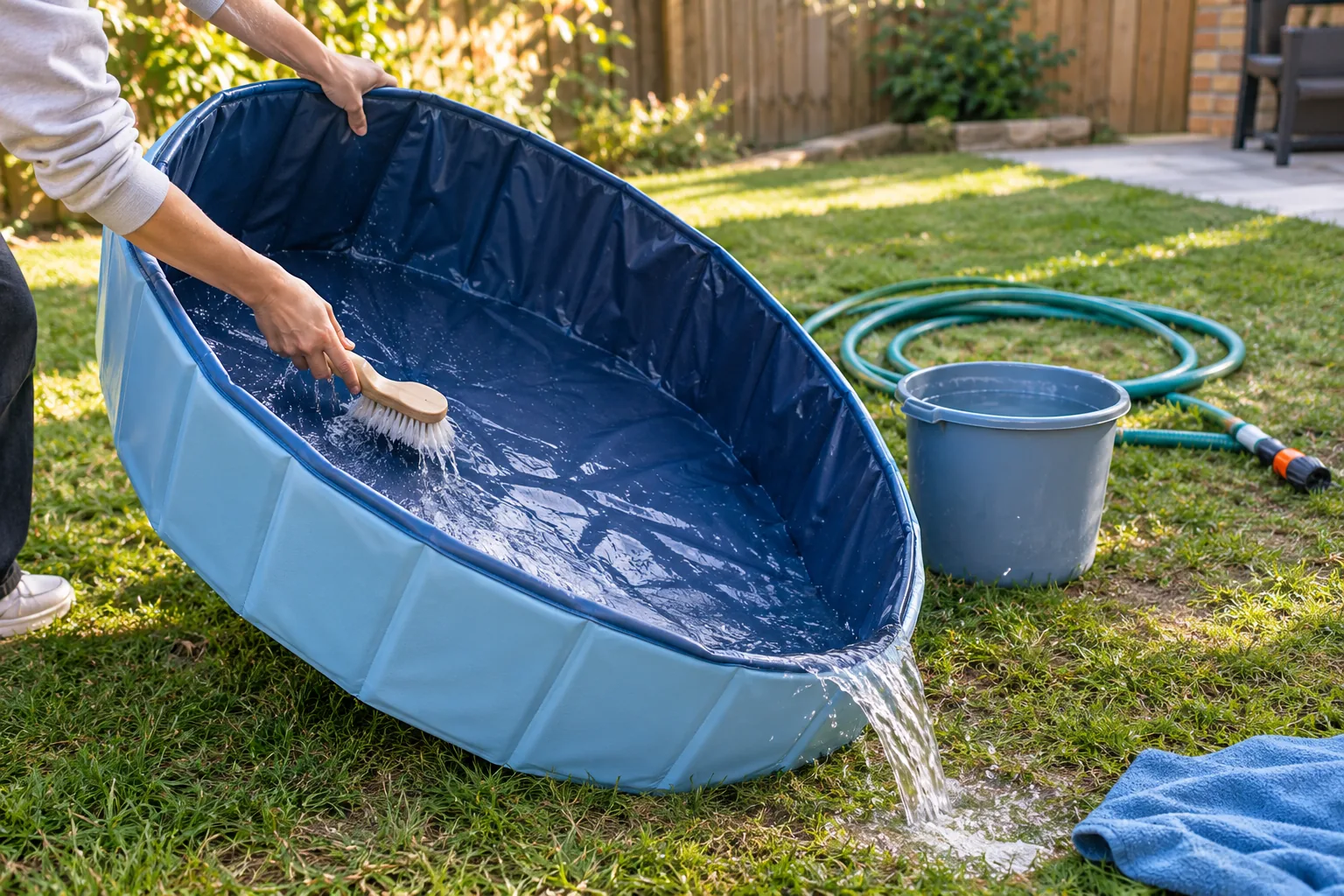
- Empty the pool and move it onto grass or a driveway where soapy water can drain away from plants and storm drains.
- Mix a few drops of mild dish soap into a bucket of water.
- Scrub the floor, the corners and the line where the water usually sits with a soft brush or sponge. Skip stiff bristles and scouring pads, which can scratch plastic.
- Rinse until no suds remain, since soap residue can stay on surfaces your dog licks or lies on.
- Dry the pool in open air before the next fill.
Hair and debris
Dog hair clumps on the surface and clings to the walls. Brushing your dog before pool time leaves less loose coat in the water, and the guide to shedding brushes for short hair explains which tools suit a short coat. Skim fur off the surface by hand while you drain, then rinse the rest down the drain with the hose.
How to keep a dog pool clean naturally
Keeping a small pool clean without chemicals relies on habits, not additives. These steps work with plain tap water.
- Fill with fresh water for each swim session and drain it afterward.
- Set the pool in partial shade, because warm, sunny standing water grows algae.
- Rinse your dog's paws and coat before entering if your dog has been digging or rolling.
- Cover or flip the pool when it is not in use so leaves, insects and rain do not collect in it.
- For a stubborn film, wipe with a diluted white vinegar solution, then rinse thoroughly. Check the manual first for materials to avoid, and do not mix vinegar with bleach or any other cleaner.
These habits also answer the algae question. To keep algae out of a dog pool, do not let water stand. Drain it, scrub the green film off with a soft brush, and refill with fresh water.
Pool chemicals and dog pools: what to leave out
Chlorine, algaecide and shock products are made for large pools with a pump and a filter, where someone measures the water. A small dog pool has none of that, and there is no way to control the dose when you drain and refill often. Do not add pool chemicals to a dog pool.
If you ever consider a disinfectant on the pool surface, follow the label, rinse the pool completely, and ask a veterinarian about your dog's situation first. Keep all pool chemicals stored away from pets, and do not combine two products.
So, do you put chlorine in a dog pool every day? No. Fresh water, draining and scrubbing replace it. If your dog also swims in a full-size backyard pool, ask a pool professional how to keep that water balanced.
Should you rinse your dog after a swim?
Yes, a rinse is a good habit, especially after a dirty or muddy session. Use clean water from the hose to rinse the coat, then towel dry. Watch for leftover soap or debris in the coat and rinse again if you see any. If your dog has a long coat, brush it out afterward; the guide on getting mats out of dog hair covers what to do when damp fur tangles.
End-of-season cleaning and storage
Storing a damp pool is the quickest route to mildew and odor. Take your time with the last wash of the year.
- Drain the pool completely and clean it with the weekly scrub method.
- Rinse twice, then wipe with a towel.
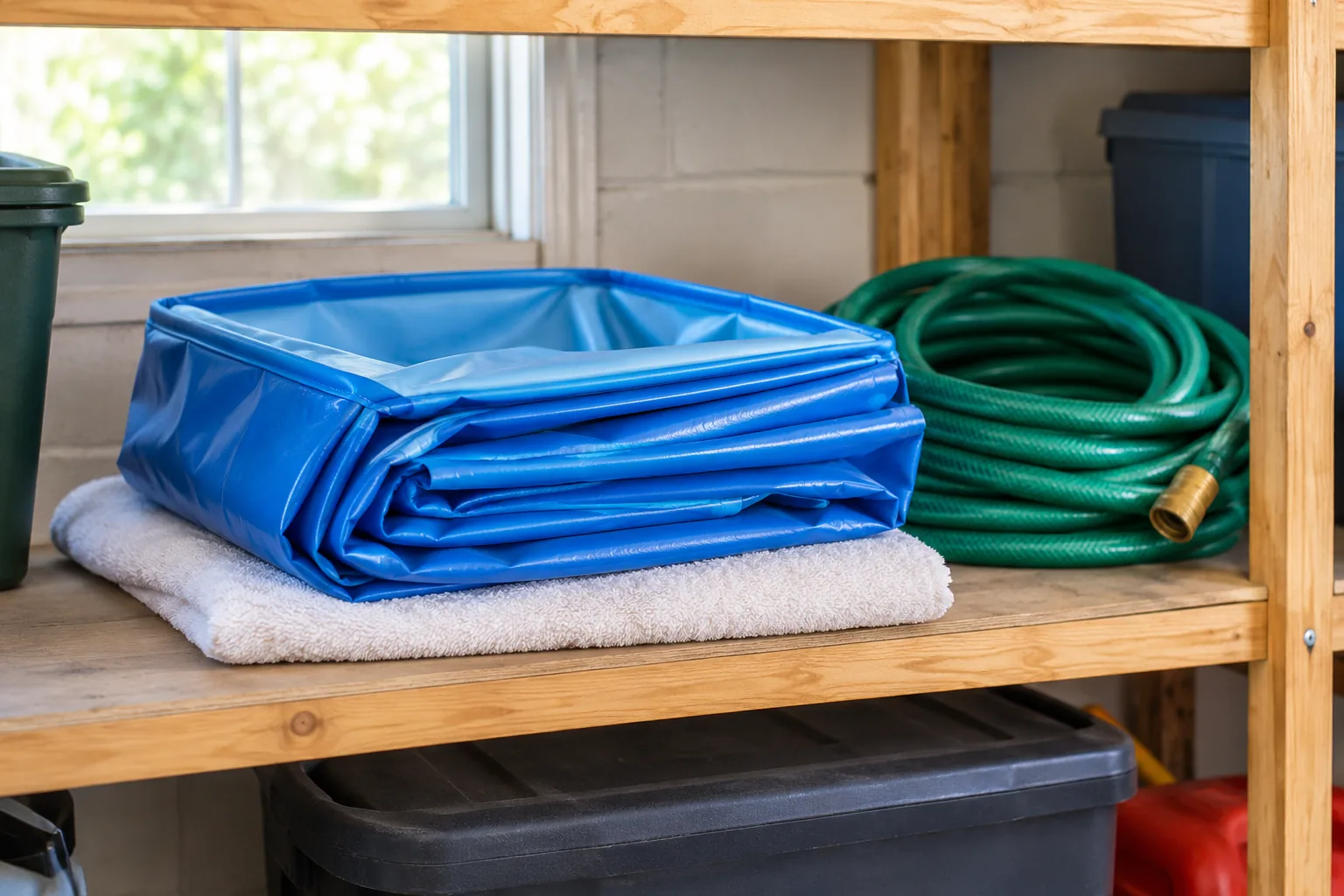
- Open the pool flat in the sun or in a garage and let it dry fully, including the folds and seams.
- Check the drain plug or hole and wipe it dry.
- Fold it as the manual shows and store it in a dry place indoors, away from sharp tools and heat sources.
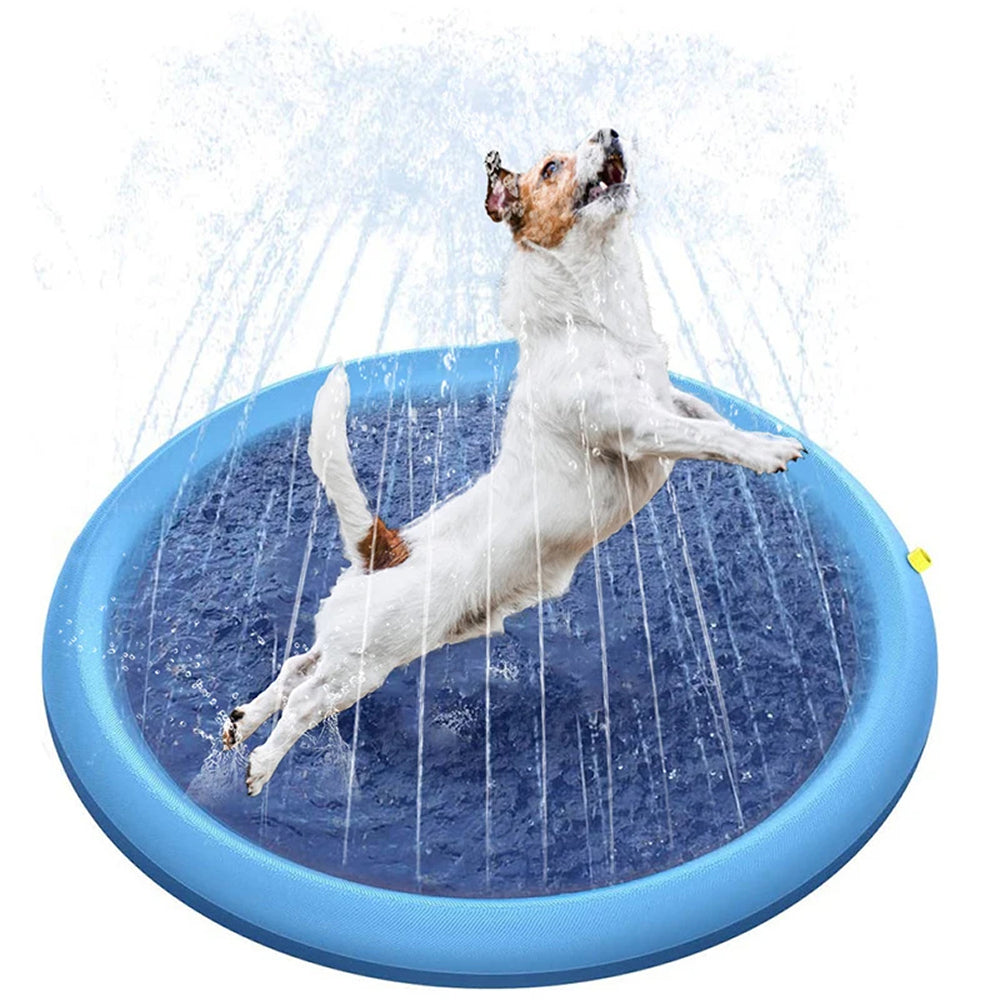
A fold-flat design makes storage straightforward. SplashMutt is a sprinkler splash pad made of thick reinforced PVC with a large drain hole, and you let the water run out, then fold it into a compact carry package. It connects to a standard garden hose with a spiral connector, so rinse the connector end too before you put it away.
 In this guideSplashMutt$69.99View
Field note
Keep a bucket, a soft brush and a bottle of mild dish soap next to the hose reel. When the cleaning tools are within reach, the post-swim rinse becomes a routine step.
Common mistakes to avoid
| Mistake | What to do instead |
|---|---|
| Topping off yesterday's water | Drain and refill with fresh water |
| Adding pool chlorine or algaecide | Leave chemicals out; scrub and drain |
| Using stiff brushes or harsh cleaners | Use a soft brush and mild soap, then rinse well |
| Folding the pool while damp | Air dry completely first |
| Leaving the pool in full sun for long stretches | Choose partial shade |
If you are choosing a pool with cleaning in mind, look for a drain you can open without lifting the pool. Our Swim Vests & Pools collection lists the options we stock.