Dog Raincoat Guide: Coverage, Fit and Materials Explained
The right dog raincoat covers neck to tail, closes with adjustable straps and leaves a leash opening. Use this checklist to choose coverage, fabric and fit.
The Millbrook Team
November 18, 2026 · 6 min read
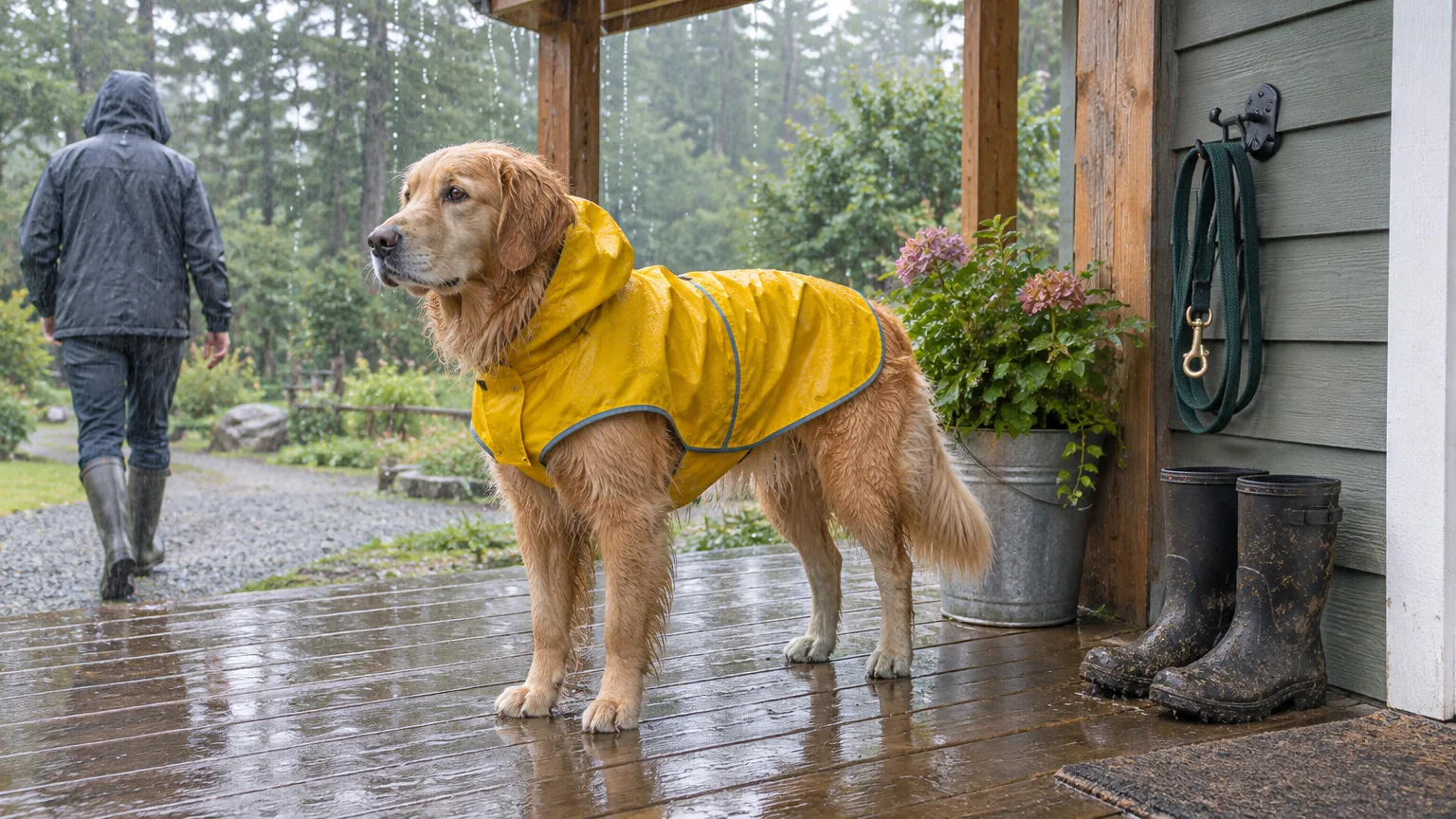
The raincoat dog owners pick should cover the body from the neck to the base of the tail, close with adjustable straps, and leave an opening for the leash clip. Choose the coverage style first, then the fabric, then check the fit against your dog's chest and back length. This guide is a decision checklist in that order, not a ranked list.
Wet fur, cold wind and mud are different problems, so one coat does not suit every dog or every walk. Work through the steps below and you will know what to look for before you buy.
Step 1: Choose the coverage style
Coverage decides how much of your dog is covered, and it also decides how much the coat can bunch or catch on the legs. Match it to your dog's coat length and the weather you walk in.
| Coverage style | What it covers | Consider it for |
|---|---|---|
| Back panel cape | Back and sides | Light showers, short outings |
| Neck-to-tail jacket | Neck, back, sides, base of tail | Regular wet walks, most body shapes |
| Jacket with belly panel | Back plus part of the underside | Puddles, splash and trail mud |
| Full-body suit with leg sleeves | Body and legs | Heavy rain, muddy trails, long coats that soak through |
Rain lands mostly on the back, shoulders and hips, while a short-haired dog also gets splashed on the belly and chest from puddles. A long-haired dog holds water in the coat along the sides and hindquarters, so look for a hem that reaches the tail base. A neck-to-tail jacket is a sensible starting point for daily walks.
Hoods
Some jackets add a hood. Choose a removable hood or an optional one, and check that it does not cover the ears or block side vision, since your dog still needs to hear and see what is around. If your dog shakes at the hood or pushes it back, a coat without one is a fair choice.
Step 2: Compare water-resistant and sealed fabric
Look at the fabric description and the seams, not just the word on the label. A water-resistant shell sheds light rain, but a coat with taped or sealed seams is a different build, and the product page should say which one you are getting.
- Check whether the shell is a smooth, tightly woven synthetic such as polyester.
- Look at the seams along the back, since stitching holes are where water can enter.
- Check for a lining or panel. A mesh panel lets air move, while a fleece lining adds a layer for cold rain.
- Look for a wipe-clean or machine-washable surface if you walk muddy trails.
For cold-weather needs beyond rain, our guide to warm winter dog coats explains fill, fit and coverage.
Step 3: Check the leash and harness opening
A coat that hides the harness ring means unclipping the coat every time you leash up. Look for a leash opening on the back, often called a traction hole or leash portal, so you can clip to the harness underneath.
Ask where the opening sits. It should line up with the harness's back ring on your dog, not behind it. Put the harness on under the coat and clip the leash to the harness ring, not to the fabric.
Step 4: Measure your dog for a raincoat
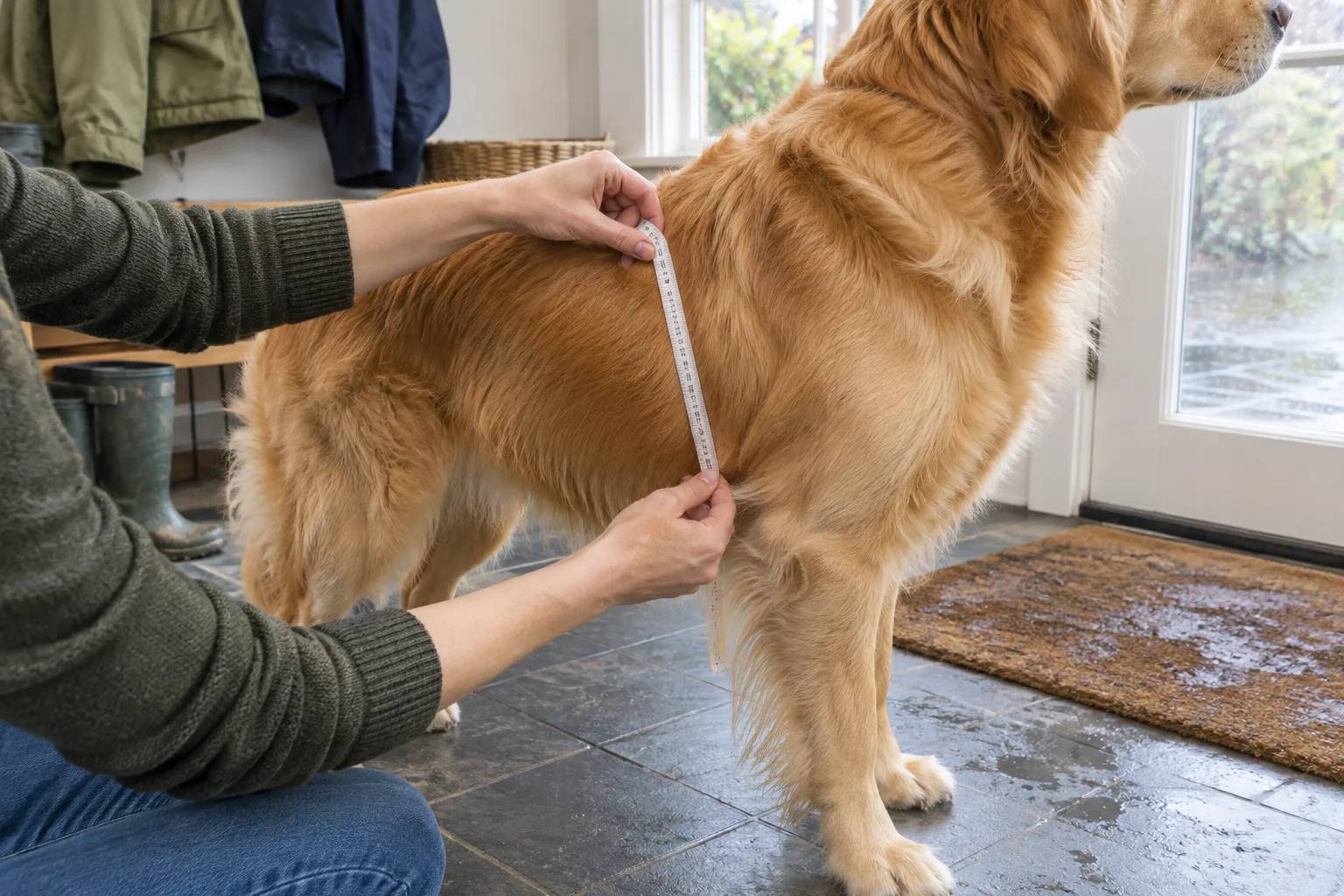
Use a soft tape measure and take two numbers, then compare them with the size chart on the product page.
- Chest girth: wrap the tape around the widest part of the rib cage, just behind the front legs.
- Back length: measure along the spine from the base of the neck (where the collar sits) to the base of the tail.
- Neck: measure where a collar would rest, if the coat closes with a neck toggle.
Hold the tape flat against the fur and measure while your dog stands square. If the chest girth falls between two sizes, check how adjustable the straps are before you choose. For a large or deep-chested dog, check that the size chart covers large chest girths before you order.
Step 5: Raincoat dog fit by body shape
Chest and back length do not tell the whole story. Body shape changes where a coat pulls, slides or gaps.
| Body shape | What to check |
|---|---|
| Deep chest, narrow waist (like a greyhound or setter) | Waist straps or buckles that cinch the rear so the coat does not flap |
| Broad chest, short back (like a bulldog) | Enough chest adjustment, and a hem that stops before the hips |
| Long back, short legs (like a dachshund) | Back length first, then a belly strap so the coat does not slide sideways |
| Large, athletic (like a German shepherd or golden retriever) | Room at the shoulders for a full stride and a hem that clears the hips |
| Small and round | A neck opening that stays in place, and light fabric |
The fit check at home
- Fasten every strap and slide two fingers under the chest and neck straps.
- A dog with a raincoat on should sit, lie down and walk a few steps without the coat pinching behind the front legs.
- Look at the hem. It should not drag, and the tail should lift freely.
- Check that the leash opening sits over the harness ring.
- Look for rubbing marks after the first wear and adjust the straps.
Let your dog wear the coat indoors for a short stretch before the first rainy walk, and offer a food reward so the coat becomes familiar.
Field note
Put the harness on first, then the coat, and clip the leash at the opening before you step outside. Adjust the straps indoors, where your dog stands still.
Step 6: Add the features that match your routes
Once coverage, fabric and fit are settled, features decide how the coat suits your route.
- Reflective trim: useful for walks in poor light, since it adds a visible outline after dark.
- Mesh or vented panel: lets air move for dogs that run or play.
- Foot or leg loops: hold the rear of the coat in place around the hind legs.
- Wipe-clean fabric: a surface you can wipe, or a coat you can put in the washing machine, suits mud trails.
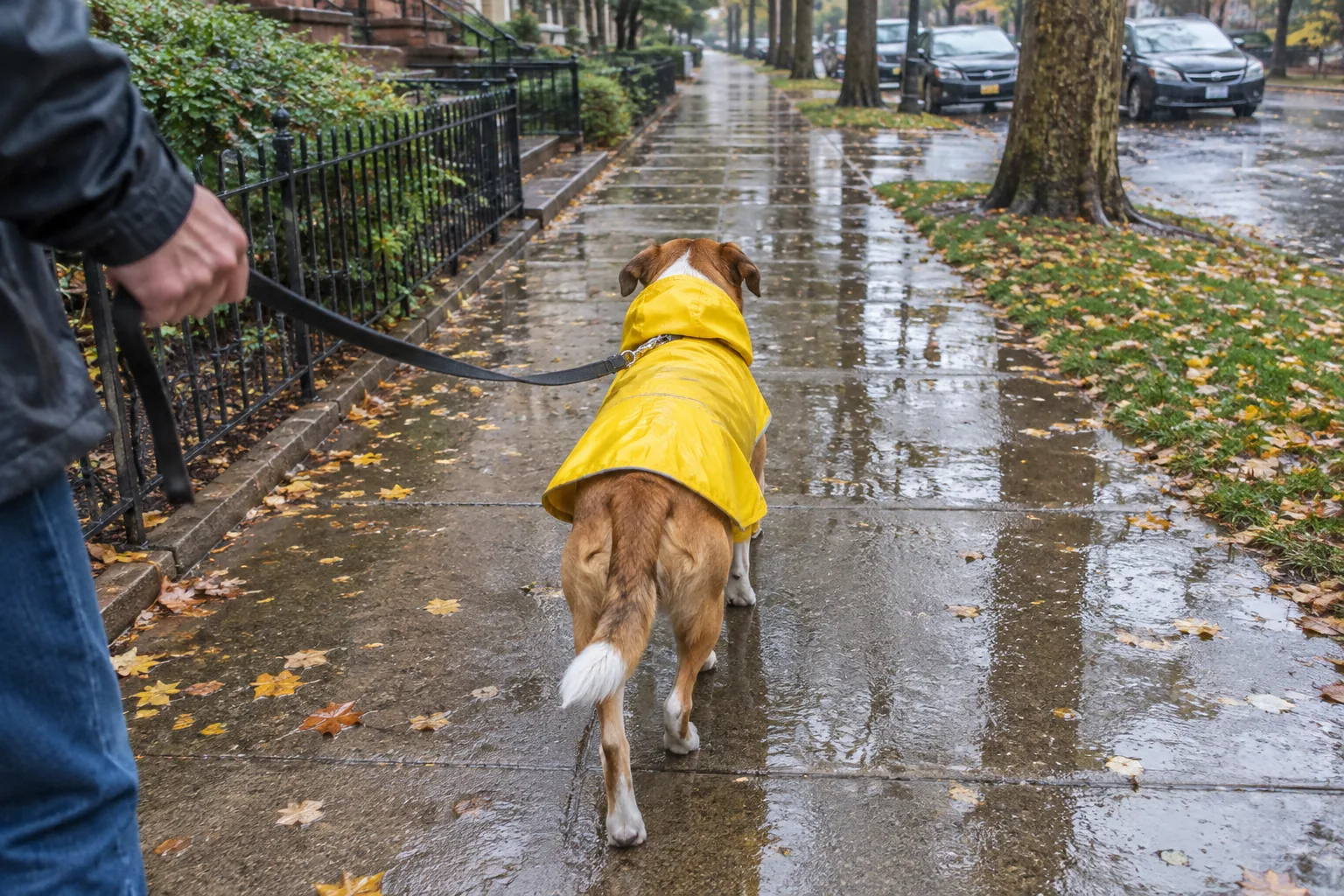
A lightweight shell packs small in a coat pocket, while a thicker shell stays put in wind. Picture your usual walk and choose what that walk needs. A bright color, such as a dog in a yellow raincoat on a gray day, stands out at a distance in rain.
A coat that follows this checklist
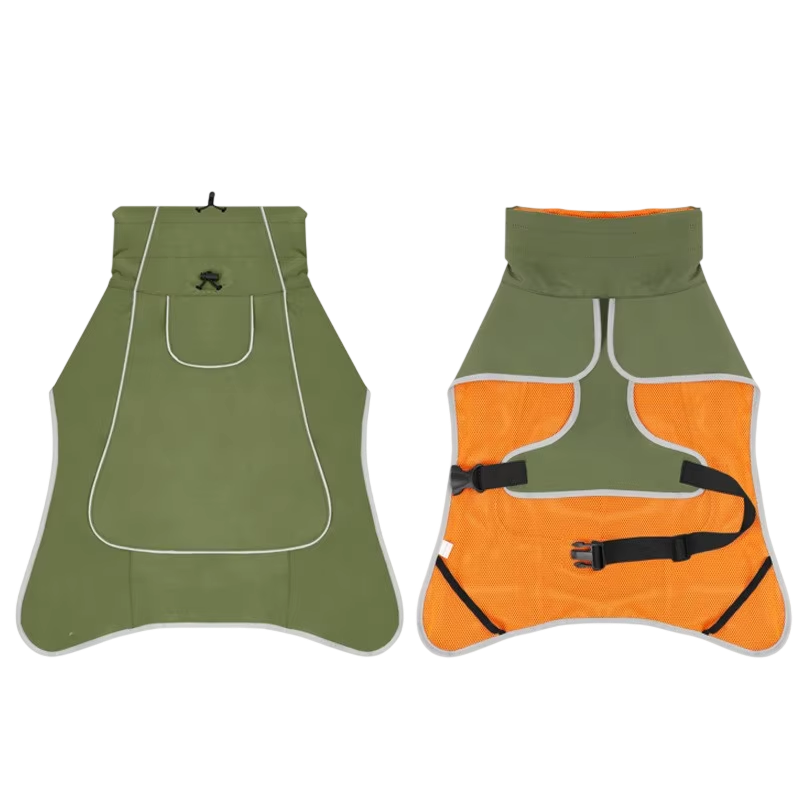
The StormHound dog raincoat is made from heavy-duty polyester with a ventilated mesh underbelly panel. The polyester shell covers your dog from neck to tail on wet walks, and the traction hole lets you leash up with the coat still on. Adjustable straps, waist buckles and foot loops set the fit.
Reflective trim runs along the edges for evening walks, and the scratch-resistant, mud-resistant fabric wipes down with a damp cloth. It can also go in the washing machine when it needs a fuller clean; follow the Fit & Care Quick-Start Guide in the box.
 In this guideStormHound$49.99View
Putting the coat on and caring for it
Slip the coat over the head, secure the neck closure, fasten the waist buckles, then adjust the straps and foot loops. Clip the leash through the opening and head out. Follow the manual that comes with your coat.
- After each wet walk, wipe off mud with a damp cloth.
- Hang the coat to air dry before storing it.
- Wash it only as the care label says, and close buckles and straps first.
- Check the trim, seams and straps each season for wear.
Common mistakes to avoid
- Buying by weight alone. Use chest girth and back length.
- Ignoring the leash opening, then clipping the leash to the collar and tugging the coat.
- Choosing a long hem on a small dog, which catches on the hind legs.
- Skipping the indoor trial wear.
- Leaving a wet coat balled up, so the lining stays damp.
For more clothing choices, browse the Dog Apparel & Accessories collection. After a wet walk, towel and brush the fur under the coat; if a thick coat has tangled, brush-out and clip-out steps for mats walk you through it.