Cat Meowing: What Each Meow Means and How to Respond
Cat meowing changes with the moment: food, greeting, attention, or night. Use the situation table, a dawn feeding schedule, and a vet checklist.
The Millbrook Team
November 5, 2026 · 7 min read
Cat meowing is mostly a message aimed at people, and the meaning depends on the situation: a short meow at the door is a greeting, a repeated meow near the bowl is a call for food, and a drawn-out low call at night is a call for attention or company. Match the sound to the moment, respond to the need behind it, and keep your response consistent. If the meowing changes suddenly, call your veterinarian instead of guessing.
This guide gives you a situation-by-situation table, a step-by-step plan for dawn food-begging, notes on louder and angrier sounds, and a clear list of reasons to book a vet visit.
Why a cat meows at you
Adult cats rarely meow at each other. Kittens meow to call their mother, and house cats keep the habit because it works on people. Your cat learns which meow gets a door opened, a bowl filled, or a lap offered.
That is why no two cats sound alike. Each develops a personal vocabulary of meows shaped by what has worked at your house. Your job is to learn your own cat's patterns: the pitch, the length, the time of day, and what your cat is doing while it calls.
Cat meowing sounds and meanings by situation
Use this table as a starting point. Watch the body as well as the voice: tail position, ears, and where your cat is standing tell you as much as the sound.
| Situation | What the meow sounds like | Likely meaning | Practical response |
|---|---|---|---|
| Food | Repeated, insistent meows near the bowl or kitchen, often with rubbing against your legs | Wants a meal or is signaling mealtime | Feed on a fixed schedule and do not reward meowing with extra food between meals |
| Greeting | Short, mid-pitch meow or a rising trill when you walk in | Hello, and a bid to be acknowledged | Say hello calmly and give a brief pat |
| Attention | Medium meows that follow you from room to room | Wants play, company, or a lap | Schedule play sessions so attention comes on a routine, not on demand |
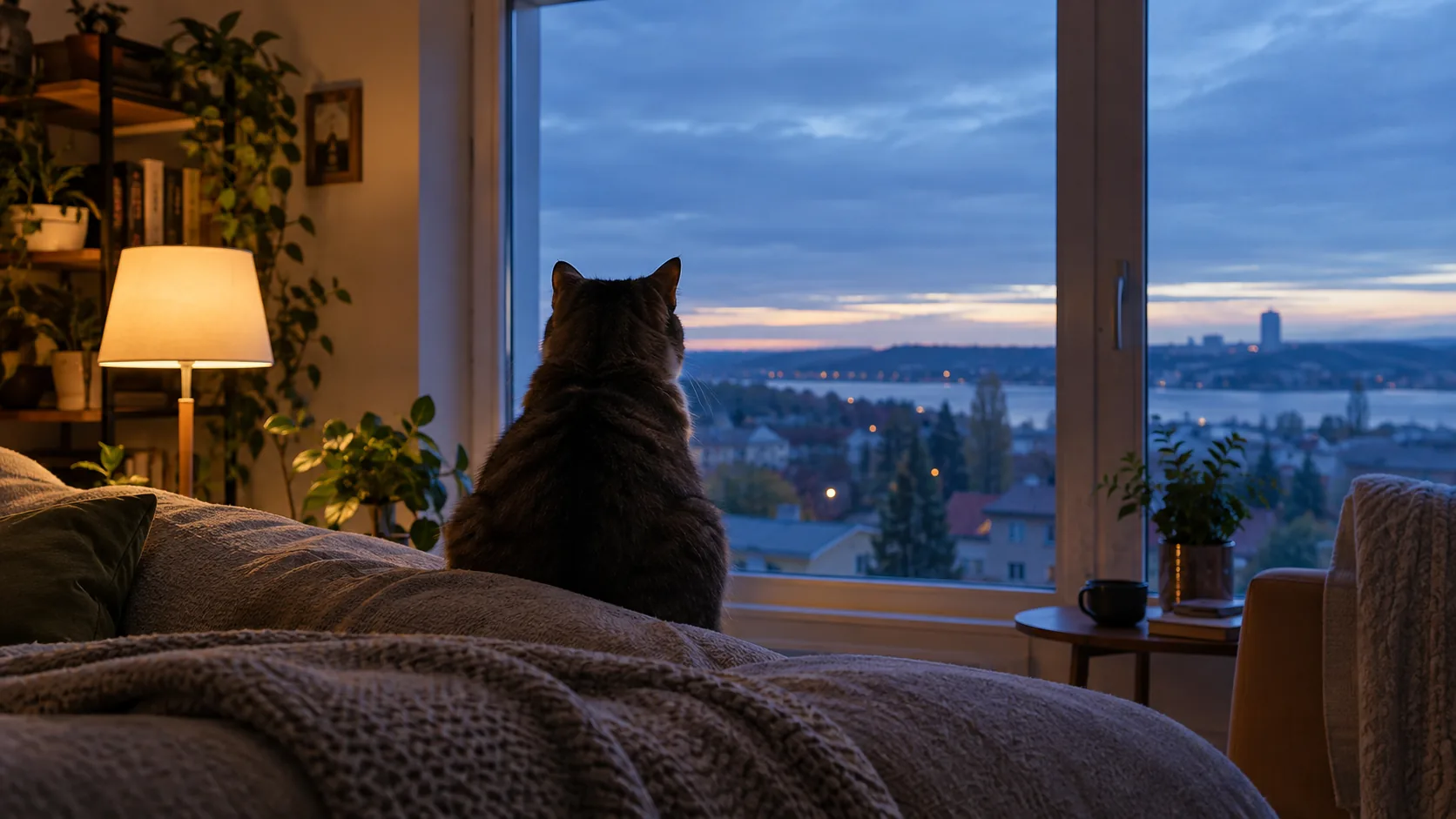
| Night | Long, low, drawn-out calls in a dark hallway | Boredom, restlessness, or looking for you | Play before bed, then feed a small meal; keep the response to calls minimal |
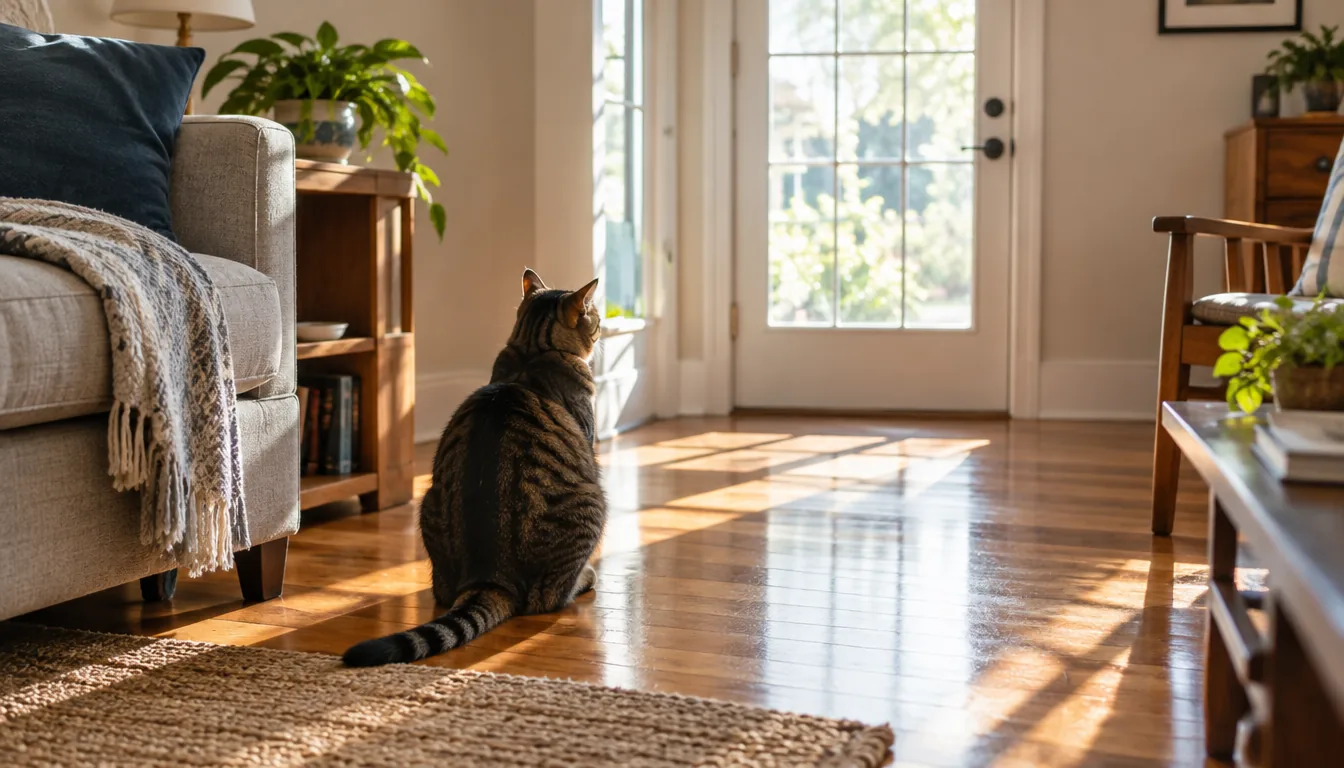
| Door or window | Persistent meows facing the door | Wants out, or has spotted something outside | Block the view if needed and offer a window perch or toy |
| Litter box | Meowing while entering or leaving the box | Something is off with the box, or your cat feels unwell | Check cleanliness and placement; call a veterinarian if it repeats |
| Water | Meowing at the sink or an empty bowl | Wants fresh or moving water | Refill the bowl and keep the water source easy to reach |
If a sound fits two rows, look at timing. A meow at 5 a.m. next to an empty bowl points to food. The same meow in the middle of the day beside a toy basket points to play.
How to stop dawn food-begging with a meal schedule
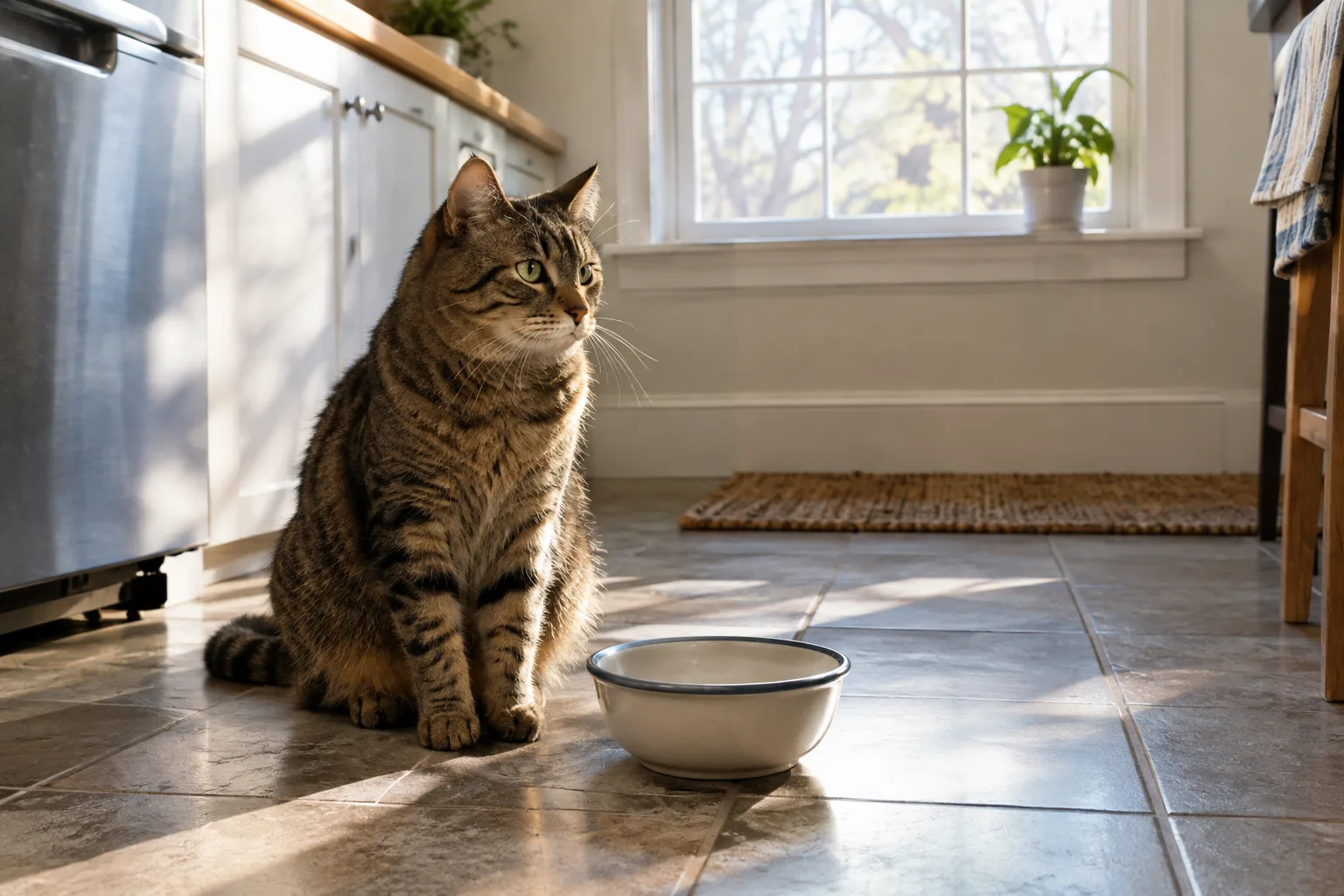
Early-morning meowing keeps going when it gets results. If you feed your cat after a long round of yowling, you teach that a longer, louder meow works. The fix is to make mealtime predictable and to break the link between the noise and the food.
- Pick set meal times that fit your household and write them down. Some households use morning, midday, evening, and a late snack.
- Move the last meal of the day to just before bed, after a play session with a wand toy.
- Give the first meal at a fixed hour, not when the meowing starts. Shift it later in small steps over several days if you want a later wake-up.
- Do not respond to meowing before the set time. Do not talk, look, or get up. Wait until your cat is quiet, then carry on with your routine.
- Keep it consistent for at least two weeks. A single day of giving in teaches your cat to try harder.
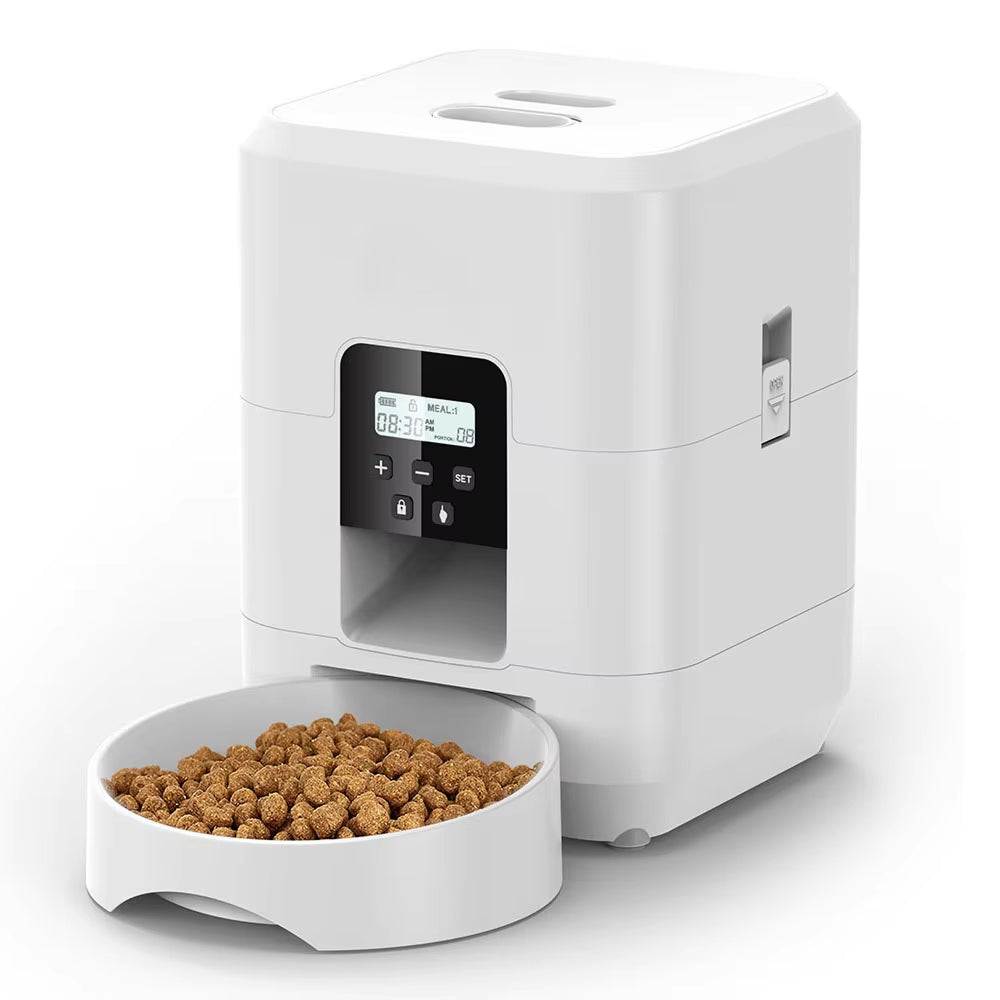
If you are asleep when breakfast is due, an automatic cat feeder can do the serving for you. NouriPaw is an automatic feeder for dry kibble. You set meal times and portion sizes on the backlit screen or in the app, and it dispenses each meal on your schedule. It programs 8 daily meals with custom portions, so you can place a small meal before dawn without getting up.
 In this guideNouriPaw$149.99View
Setup checklist for a scheduled feeder
- Fill the hopper with dry kibble, staying within its 7 lb capacity.
- Plug in the AC adapter; the built-in battery backup takes over if household power drops.
- Program meal times and portions, then confirm the first meal dispenses as expected.
- Wash the detachable parts that touch food between refills.
- Check your cat's weight and the portion sizes with your veterinarian.
Field note
Place the feeder where your cat already eats, and keep the old bowl routine for a few days while your cat learns that food now appears at set times. Do not respond to meowing near the feeder between meals.
Night and attention meowing
A cat that meows at night is often awake because it slept through the daytime. Cats are most active around dusk and dawn, so an empty evening makes for a noisy night. Evening play gives that energy somewhere to go.
A simple evening routine
- Play with a wand toy for two short sessions in the evening, letting your cat catch the toy at the end.
- Feed a meal right after play to match the hunt, catch, and eat pattern.
- Leave a sturdy toy, a window perch, or a cardboard box for solo time.
- Keep the bedroom door closed if the calling continues, and do not open it in response to meowing.
For daytime attention, give your cat a daily play routine and a few minutes of calm contact on your terms. A cat that gets predictable attention has less reason to demand it. If your cat meows at an empty water bowl or at the sink, keep fresh water within reach. AquaPurr is a faucet-connected water dispenser that connects to your cold water line with a T-valve adapter kit, and a motion sensor spout releases water when your cat comes near to drink, so there is no tank to fill.
 In this guideAquaPurr$129.99View
Angry, loud, and male cat meowing
Not every noise is a standard meow. Different sounds carry different messages, and the body language that goes with them matters.
| Sound | What it signals | What to do |
|---|---|---|
| Purr | Contentment, though some cats also purr when stressed | Read the body: relaxed posture suggests calm |
| Trill or chirp | Friendly greeting, "follow me" | Greet back and follow if your cat leads you to the bowl |
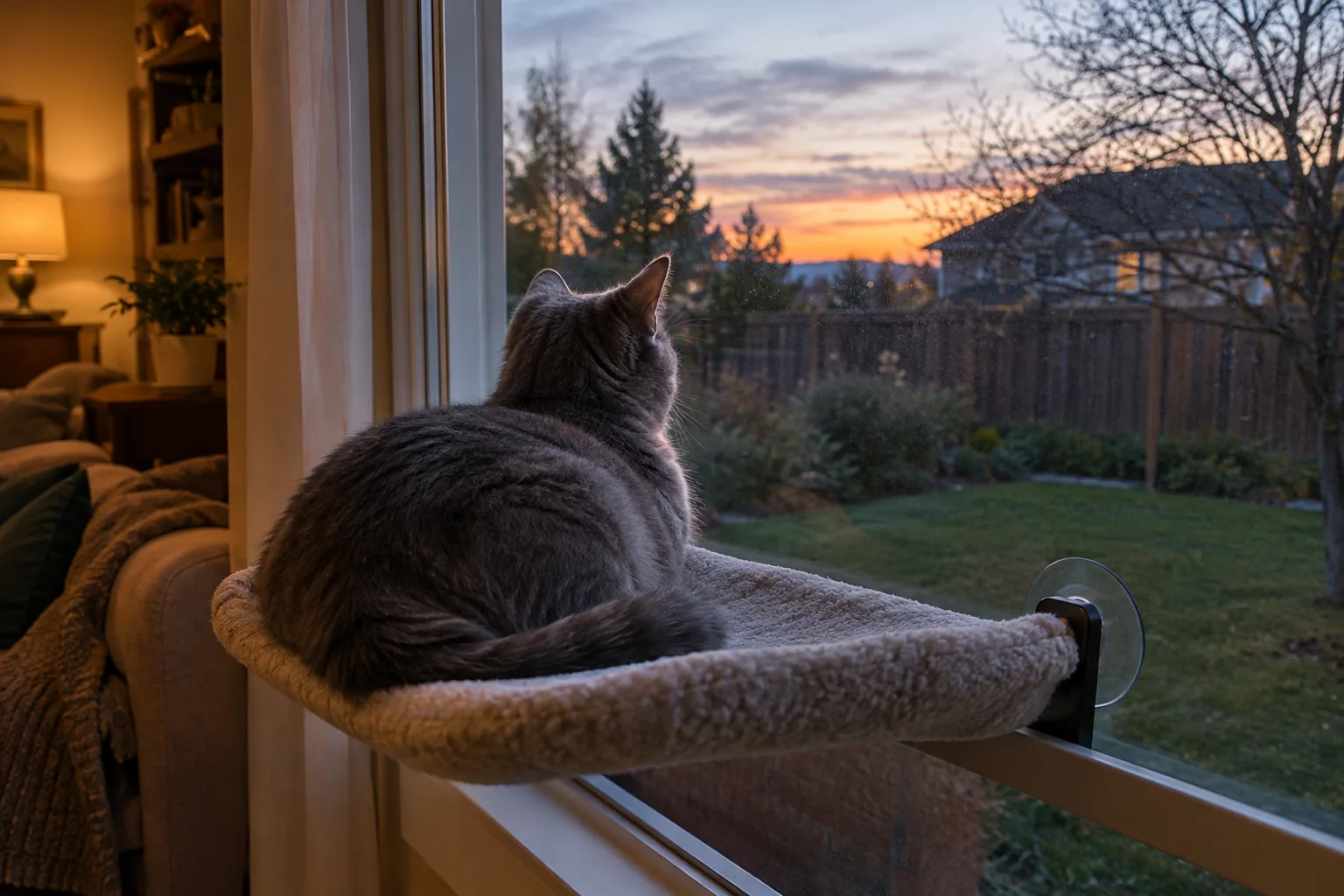
| Chatter | Excitement while watching birds or squirrels | Offer a window perch or a toy |
| Growl, hiss, or spit | Fear or anger; your cat wants space | Back away and let your cat settle in a quiet room |
| Howl or yowl | Loud, long call; can mean stress, confusion, or breeding behavior | Rule out health causes with a veterinarian |
An angry cat often makes a low, drawn-out growl-like note with flattened ears and a stiff body. Give the cat room and do not reach in to pick it up.
Male cat meowing can be louder and more insistent, especially in unneutered males that call to find a mate. Talk with your veterinarian about neutering if your male cat yowls and paces. If a meow sounds unusually loud or sudden, note the time, the place, and what happened just before.
When to call the vet instead of guessing
Behavior changes can have a health cause, and meowing is one of the signals. Call your veterinarian if you notice any of these:
- Meowing that starts suddenly in a cat that was quiet, or a sharp increase in volume
- Meowing or straining in the litter box, or going outside the box
- Drinking or urinating much more than normal
- Loss of appetite, or sudden extra hunger
- Night wandering and yowling in an older cat, which may show confusion
- Yowling along with hiding, limping, or not wanting to be touched
Write down when the meowing happens and bring a short video if you can record one. If your cat strains in the litter box without producing urine, call right away; do not wait to see if it passes.
For litter-related changes, read our daily and weekly litter routine and placement ideas for small apartments to rule out a box your cat may dislike.
Common mistakes with cat meowing
- Feeding in response to meowing, which teaches your cat to meow louder.
- Yelling or spraying water, which can add stress and may increase vocalizing.
- Changing the schedule every few days, so the cat cannot predict mealtimes.
- Assuming a loud cat is only bored when the sound is new.
- Skipping play, then expecting quiet nights.
Browse the Feeding, Hydration & Litter collection for feeding and water gear that fits a routine.