Litter Box Solutions for Small Apartments: Placement and Setup
Measure your floor, pick a ventilated spot with a clear exit, and choose between a hidden manual box and an automatic one. This guide gives you the plan.
The Millbrook Team
October 25, 2026 · 7 min read · Updated October 30, 2026
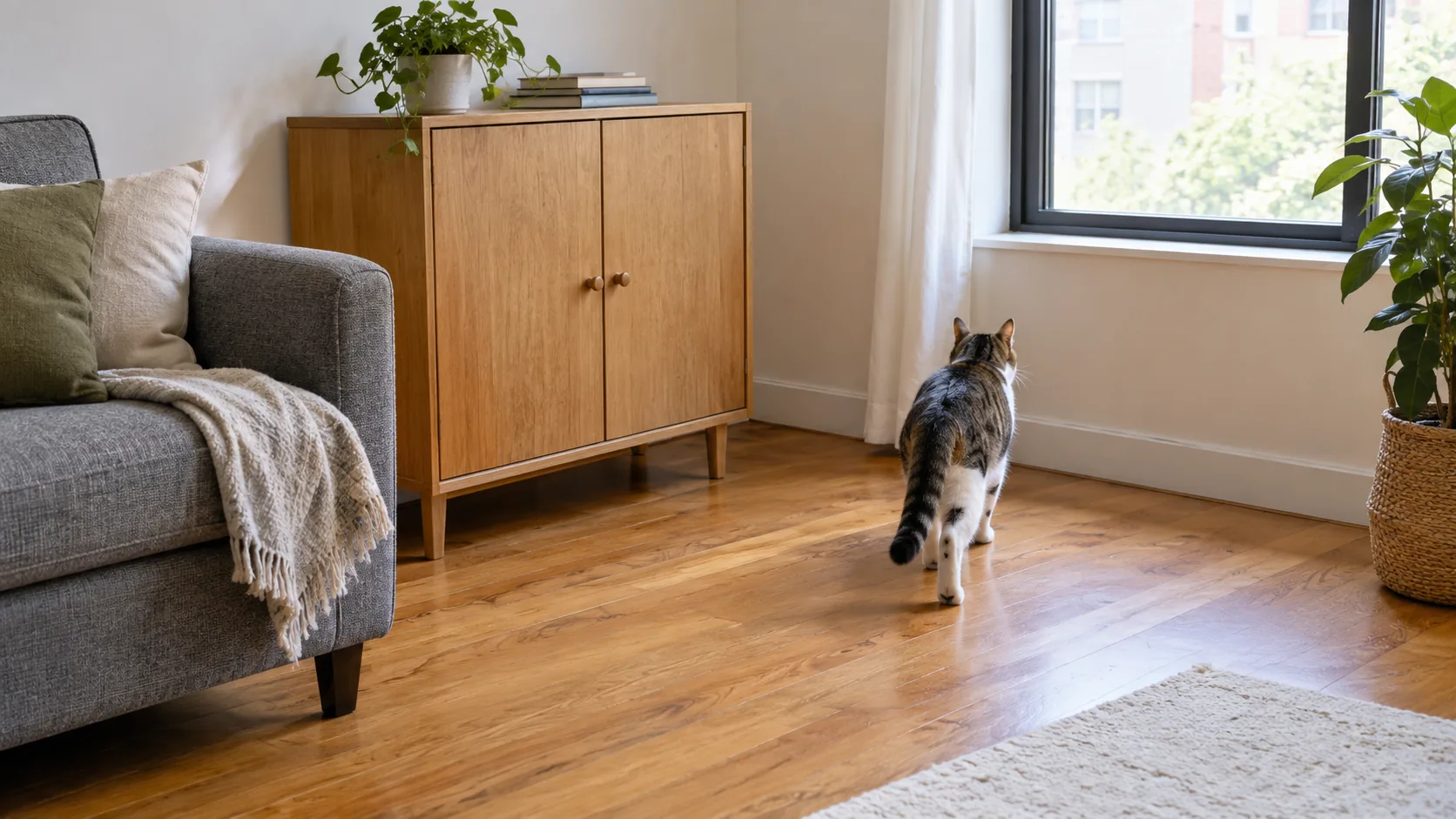
Workable litter box solutions for small apartments come down to three choices: a spot with airflow and a clear exit for your cat, a box style that fits the floor space you can spare, and a routine for scooping and cleaning. Measure your space first, pick the room that stays quiet and ventilated, then decide between a hidden manual box and an automatic one. This guide gives you a room-by-room plan, a footprint worksheet, and a decision table.
Measure first: the footprint worksheet
Before you shop, grab a tape measure and mark the floor with painter's tape. A litter box in a studio fails when it blocks a walkway or sits too close to the food bowls, so the tape test shows the truth before you buy anything.
Record each of these numbers and compare them with the box you are considering:
| What to measure | Why it matters | How to check |
|---|---|---|
| Floor area (width x depth) | The box needs room on all sides for scooping | Tape the outline on the floor |
| Clearance in front | Your cat needs open floor to step out and turn around | Leave open floor at the entrance, with no furniture edge or door in the way |
| Height under shelves or furniture | Tall hoods and lids need headroom | Measure floor to the lowest edge above |
| Distance to an outlet | An automatic box plugs in with a power adapter | Check the cord path, not just the wall |
| Door swing | A door that bumps the box blocks access | Open and close the door with the tape in place |
Check the product page of any box you consider for its dimensions and compare them with your taped outline, adding space around it for scooping. Your cat's size counts too. Pick a box with an interior your cat can turn around in, and check any weight range the maker lists.
Litter Box Solutions for Small Apartments: Room-by-Room Placement Plan
The right spot balances your cat's needs with your daily life. A paper on litter management practices and house-soiling in cats is a useful read on how box care and setup relate to a cat's bathroom habits. In a small apartment, you often have to trade one factor against another: a calm area, easy access, and distance from food and water.
Bathroom
A bathroom has a door you can prop open and often a vent fan. Set the box in the corner farthest from the shower, since steam and splashes soak litter. Use a door stop so the door cannot swing shut and trap your cat in or out.
Laundry nook or closet
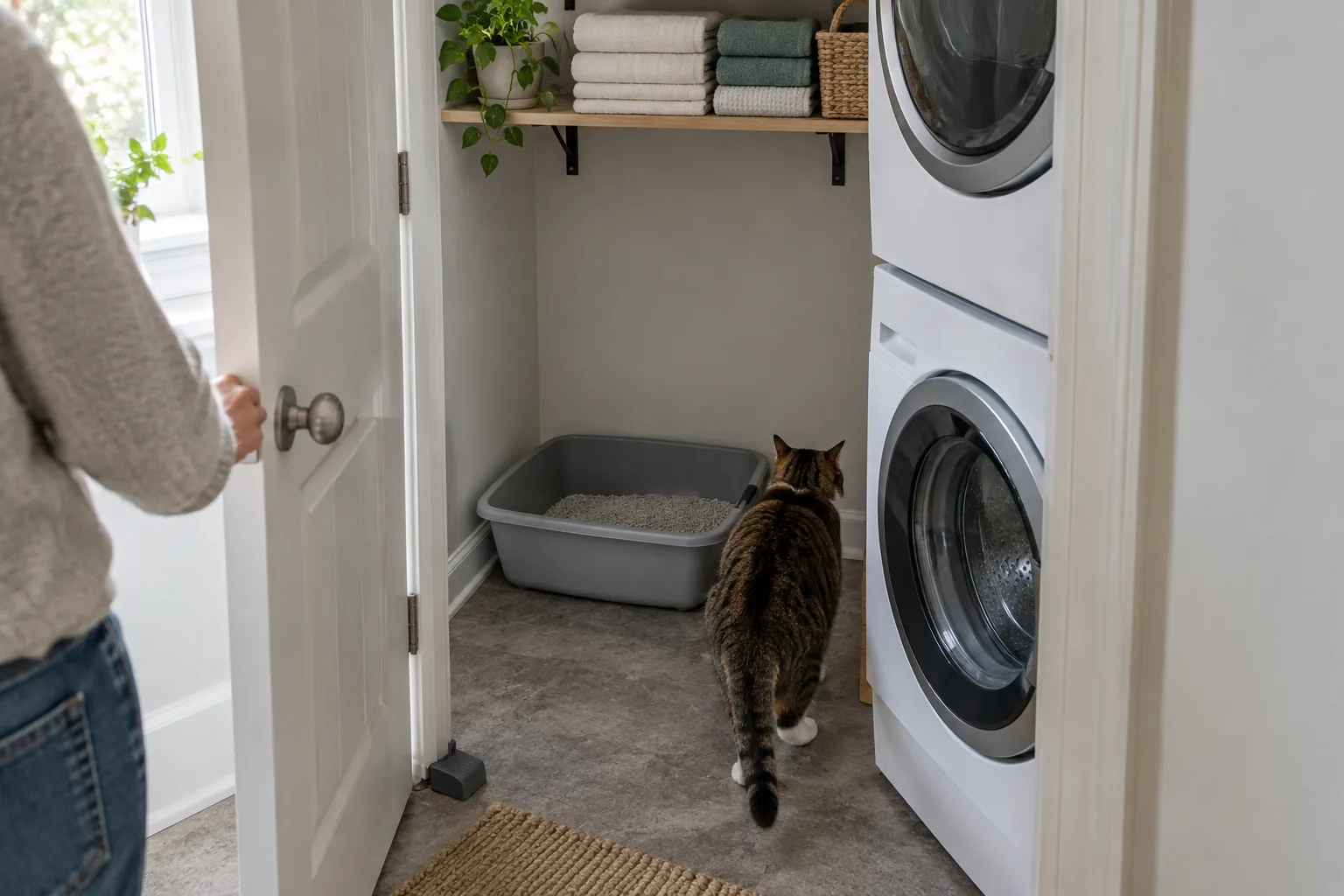
A laundry room corner or a closet with the door held open keeps the box out of sight. Check that air can move through; a fully shut closet holds smell. If the nook has washing machines, remember that vibration and sudden noise can startle some cats away from the box.
Bedroom
A bedroom works in a studio apartment when no other room is free, but the smell and scooping sounds are right next to your bed. If you go this route, choose a spot away from the pillow end and scoop before bed.
Living area
In a one-room apartment, a litter box cabinet or a piece of furniture with a cat-sized opening can hide the box. Pick a style with a ventilated back or sides, and leave a gap between the cabinet and the wall. For other ways to fold cat gear into your decor, see our luxury cat house guide, which covers materials and sizing.
Quick comparison of spots
| Spot | Good for | Watch out for |
|---|---|---|
| Bathroom corner | Door and vent fan already there | Steam, splashes, a door that swings shut |
| Laundry nook | Out of sight, hard floor | Noisy machines, little airflow |
| Hall closet, door propped open | Hidden from the living area | Stale air if the door closes |
| Bedroom | Studios with no spare room | Smell and scooping sounds near the bed |
| Living area cabinet | One-room layouts | Blocked ventilation, tight entry |
Where not to put it
- Next to the food and water bowls.
- Beside a loud appliance that can switch on without warning.
- In a tight spot where your cat can be cornered by a door or another pet.
- In a sealed cabinet with no airflow.
- On a rug or carpet that soaks up spills.
If your cat starts avoiding the box after a move, change one thing at a time and ask your veterinarian if the change in habit continues.
Controlling smell in a small space
Smell builds up when the box shares air with your sleeping and eating areas. The fixes are routine more than gadgets.
- Scoop at least once a day, and more often if you have several cats.
- Empty the waste into a lidded bin or a bag you tie before it goes out.
- Empty and wash the whole box on a regular schedule, using mild unscented soap and rinsing well.
- Open a window or run a vent fan near the box when you can.
- Keep the litter at the depth suggested on the litter package or in your box's manual.
Controlling scattered litter
Scatter is a problem in a studio because there is no spare room to hide it. A few changes help:
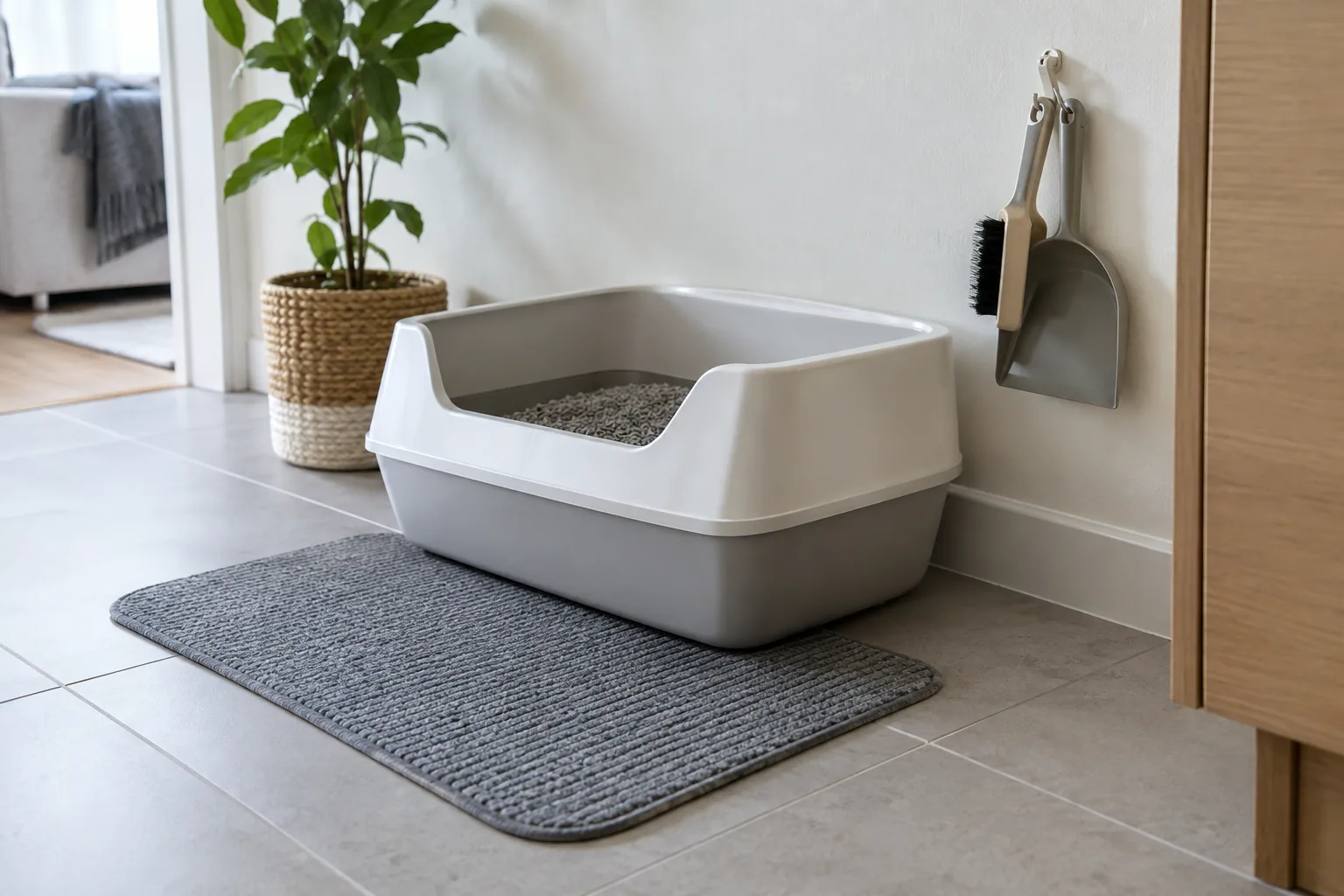
- Place a litter mat at the exit, long enough for your cat to take a few steps on it.
- Choose a box with higher sides if your cat digs hard, and a hooded or top-entry style if your cat kicks litter out.
- Keep a small hand brush and dustpan right beside the box.
- Put the box against a wall so litter has only one open side.
Automatic box or hidden manual box
A hidden manual box sits inside furniture, and you scoop it yourself. An automatic box runs a cleaning cycle for you but needs an outlet and a flat surface. This is the choice that depends most on your layout, so use this table to decide.
| Your situation | Hidden manual box | Automatic box |
|---|---|---|
| No outlet near the spot | Does not need a plug | Needs a plug, so check the cord path |
| You are away during the day | Waste waits until you scoop | A cycle moves waste into a waste bin after each visit |
| Several cats share the box | Needs frequent scooping | Check the manual for the number of cats it suits |
| You want a furniture look | Cabinet styles blend in | Freestanding unit; plan floor space around it |
| You want simple cleaning | Depends on the model | Look for panels that pull apart by hand |
What to check before choosing an automatic box
- Outlet location and cord length, so the cord does not cross the walkway.
- Footprint and height, compared with your taped outline.
- Entry opening and interior size for your cat.
- The litter type and bag type the manual lists.
- How the waste bin comes out and where you will empty it.
Unplug an automatic box before you take panels apart, and follow the manual for cleaning. If you rent, route the cord along the baseboard with removable adhesive cord clips so you do not need to drill into walls. If kids or curious pets share the apartment, look for a child lock and pinch protection on the product page.
Setup checklist and common mistakes
Work through this list on the day you place the box.
- Tape the outline and test the walkway.
- Confirm the entrance is clear and the door cannot close on it.
- Check airflow around the box and distance from food and water.
- Place the mat at the exit.
- Add the litter your cat already uses, so the box feels familiar.
- Set a scooping or emptying time that fits your day.
Common mistakes are easy to spot: tucking the box behind a door that closes, boxing it into a cabinet with no ventilation, and moving it several times in a week. Whichever of the litter box solutions for small apartments you choose, pick a spot, give your cat time, and change it only if the cat avoids it.
Field note
Move the box in small steps, a foot or two a day, if you need to shift it across the room. A sudden change of location can confuse a cat.