Warm Winter Dog Coats: How to Choose Fill, Fit and Coverage
Pick warm winter dog coats by matching insulation to your dog's coat and build, covering chest and back, and checking the fit with a tape measure before you buy.
The Millbrook Team
November 8, 2026 · 7 min read
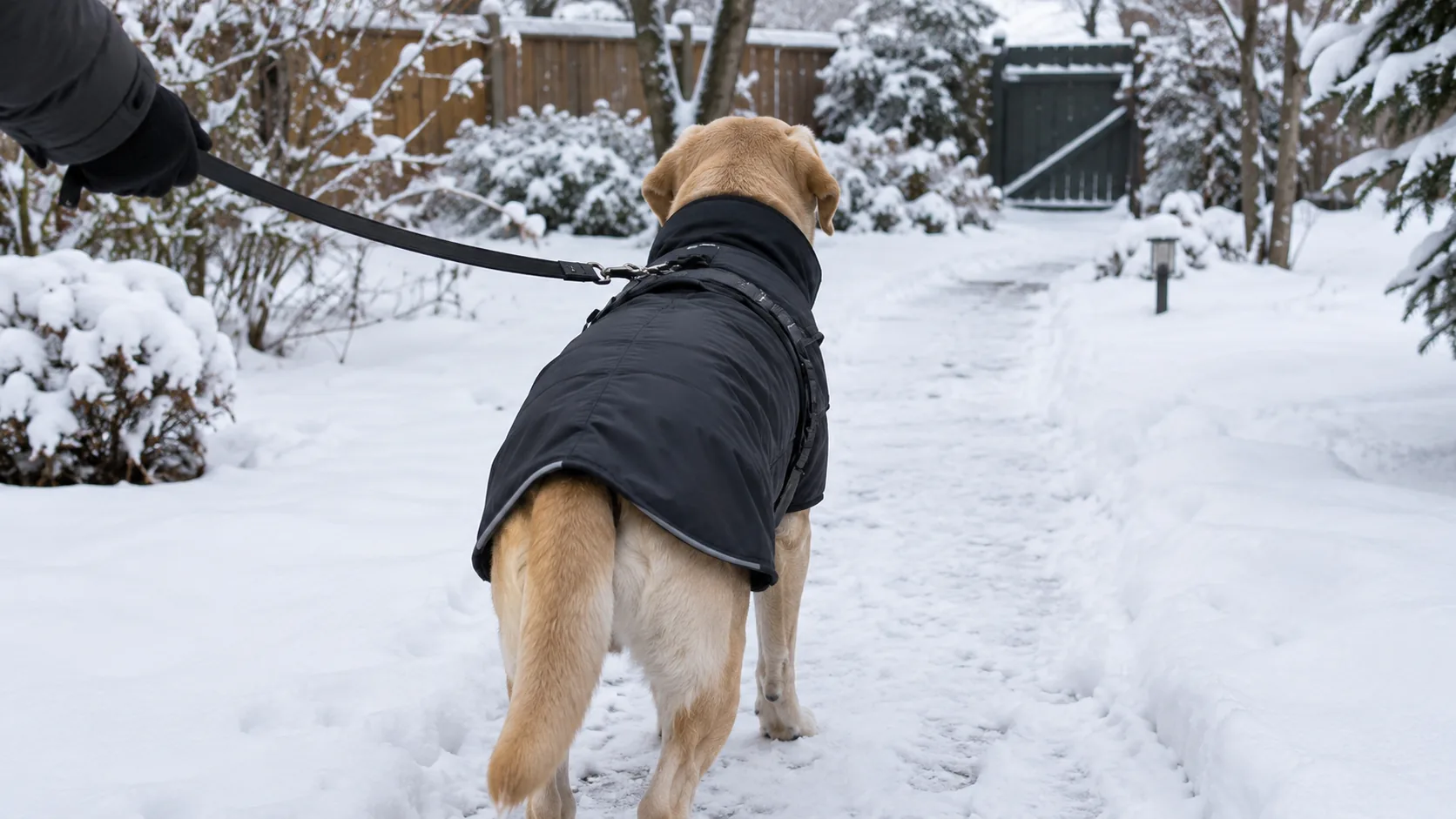
Warm winter dog coats work when three things match your dog: the insulation suits the weather, the cut suits the body, and the coverage suits the walk. Measure the neck, chest and back length first, then pick the fill and outer fabric, then run a fit test at the door. This guide gives you a checklist for each step.
Most coat listings show colors and sizes but skip the decisions behind them. Work through the sections below in order and you will know what to look for before you open a size chart.
Decide if your dog needs a coat
Not every dog needs one. A thick double-coated dog may be content on a cold walk, while a short-haired or lean dog may want a layer sooner. Age, health and activity matter too, so ask a veterinarian if you are unsure about your dog.
Use the table as a starting point, then watch your dog. Shivering, lifting paws, slowing down or turning toward home are signs the walk is too cold for what your dog is wearing.
| Dog type | What to consider | Coat direction |
|---|---|---|
| Short, thin coat (greyhound types, pit bull types) | Little natural insulation, belly close to the cold ground | Insulated coat with belly coverage |
| Small or toy breeds | Small bodies sit close to the ground | Full body coat with a snug cut |
| Large, muscular dogs (Labrador, Bulldog types) | Broad chest, so narrow cuts pinch at the shoulders | Coat cut for broad builds, adjustable fit |
| Thick double coat | Often content in the cold, can overheat when active | Light layer or none; coat only for wet, windy days |
| Senior dogs | May feel the cold sooner and move less | Insulated coat; ask a veterinarian |
| Puppies | Small and still growing | Re-measure often as they grow |
Choose fill and fabric for warm winter dog coats
The fill is the insulation inside the coat. The outer fabric is the layer that meets wind, sleet and snow. Check both, because a thick fill under a thin outer shell behaves differently from a quilted coat with a firm outer.
When you compare the warmest winter dog coats, look at how many layers there are and what each one does, not only how thick the coat looks. A coat with an outer shell, an insulating layer and a soft inner lining covers more situations than a single sheet of fabric.
| Type | What it is | Good fit for |
|---|---|---|
| Fleece | Soft, stretchy knit, often a pullover | Dry, cool days and indoor-to-outdoor layering |
| Quilted or puffer | Stitched compartments holding insulation | Cold days when your dog stands or walks slowly |
| Faux fur lined | Plush inner or collar layer | Dogs that want extra neck and chest coverage |
| Insulated with a shell | Firm outer fabric over insulation | Sleet, wet snow and wind |
| Rain jacket | Thin shell, usually little insulation | Wet weather over a fleece layer |
| Reversible | Two outer faces, one fabric on each side | Owners who want a second look; check the fill separately |
Read the product page for water resistance
Fabric descriptions vary, so read what the product page says about the outer layer. If your walks involve wet snow, choose an outer fabric described for sleet and snow, and plan to towel off your dog at the door.
Match coverage to the walk
Coverage means how much of the body the coat reaches. A short vest covers the back and chest, while a full body coat adds the belly and may include sleeves. The right amount depends on your dog's build and what you do outdoors.
- Neck: a plush or raised collar adds coverage for the throat and the base of the neck.
- Chest: broad chests need room across the front so the coat does not pull when your dog walks.
- Back: the coat should reach the base of the tail without covering it.
- Belly: low, short-haired dogs gain the most from belly panels or wraps.
- Legs: coats with legs cover more of the body but take longer to put on, so check that your dog tolerates handling.
For active dogs, choose the freedom of movement over maximum coverage. Watch your dog trot in the coat. If the stride shortens or the shoulders bunch, the cut is wrong.
Coats with a harness or leash attachment
Some coats have a built-in leash attachment, and others are worn over a harness. A built-in leash point means one less piece of gear to fit on a cold morning. If you put the coat over a separate harness, check that the leash clip stays reachable, and read how to put a harness on a dog for the step-in, overhead and vest styles. Browse the leashes, harnesses and car travel collection if you need the harness as well.
Measure your dog before you buy
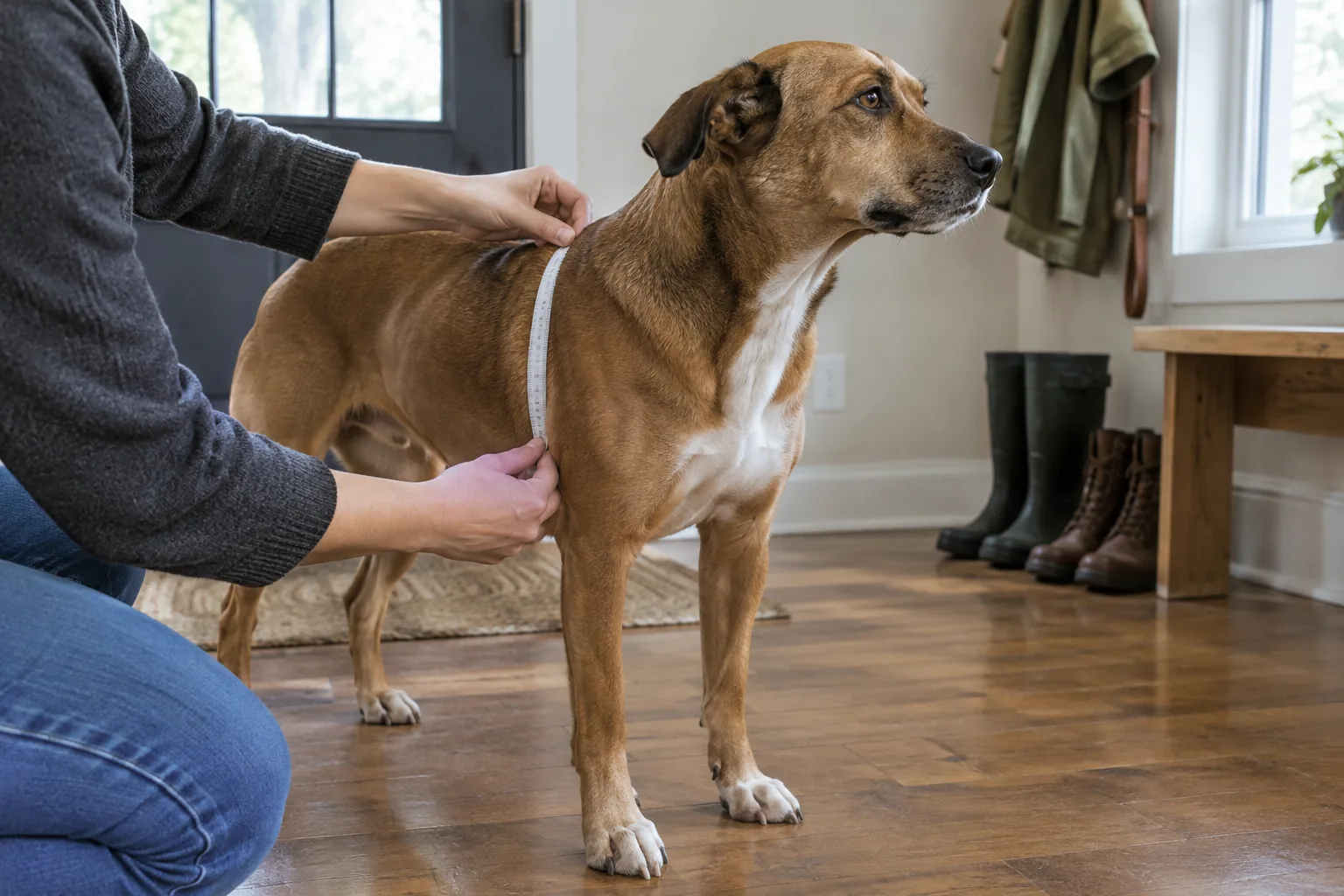
Size by weight alone often misses. Two dogs of the same weight can have very different chests. Use a soft tape measure and keep your dog standing square on all four paws.
- Neck: measure around the base of the neck, where a collar would sit, adding two fingers of room.
- Chest: wrap the tape around the widest part of the ribcage, just behind the front legs.
- Back length: measure from the base of the neck to the base of the tail along the spine.
- Write down all three numbers and compare each to the size chart on the product page.
- If the numbers fall between sizes, check what the page says about adjustable straps or drawstrings before you decide.
For a deeper walkthrough of the chest measurement, see how to measure a dog's chest for a harness, with a size check. The same technique applies to coats.
Field note
Measure while your dog is relaxed and standing, not sitting. A sitting dog's chest and back measure differently, and the coat will be cut for a standing dog.
Run a fit test at the door
A coat can match the chart and still fit badly. Put it on indoors, then run through this checklist before the first walk.
- Two fingers slide under the neck opening and chest strap.
- Nothing rubs behind the front legs when your dog walks.
- Your dog can sit, lie down and squat without the coat riding up or pulling tight.
- The back panel reaches the base of the tail but does not cover it.
- Fasteners, drawstrings and straps do not dangle where a paw could catch them.
- Your dog walks with a normal stride across the room.
Keep the first wear short and supervised. If your dog freezes, backs away or paws at the coat, take it off, check the fit again and let your dog get used to it indoors with a treat.
Coats for large, muscular dogs
Broad builds are the hardest to fit. Many coats are cut narrow across the chest and shoulders, and a bigger size will not fix a narrow cut. Look for a coat sold in extended sizes and with adjustable closures so you can set the fit on the dog in front of you.
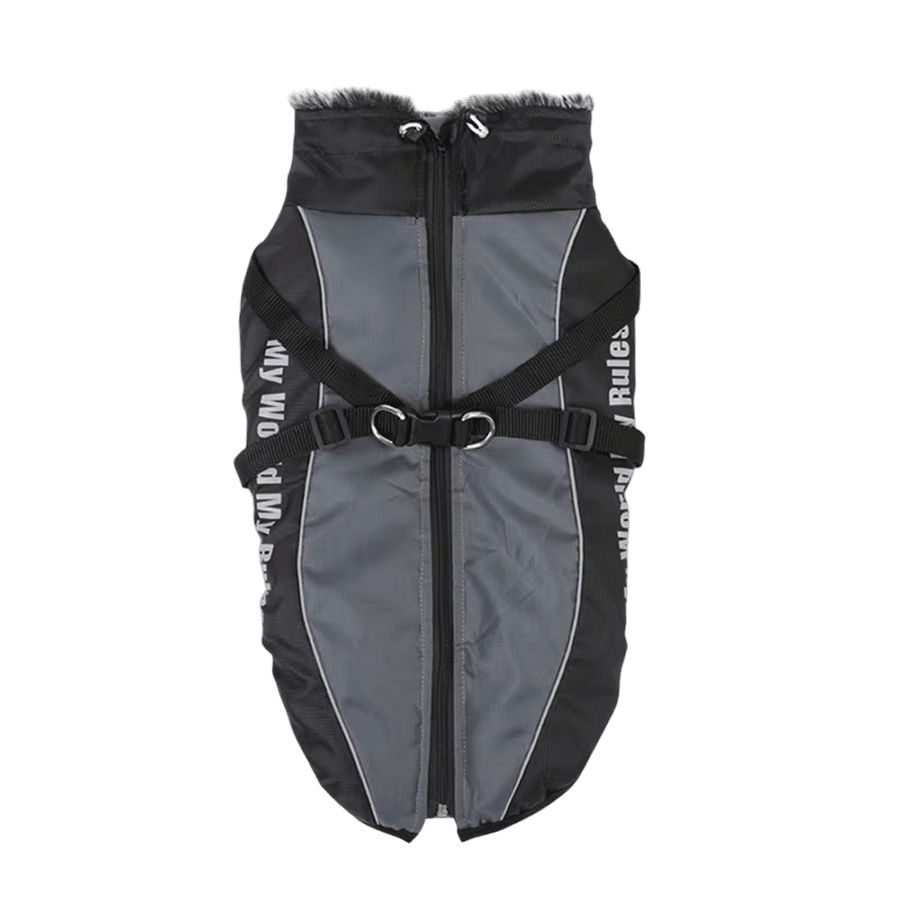
The HoundWrap is a winter coat for large, muscular dogs, sold in sizes XL to 6XL and cut for Labradors, Bulldogs and similar dogs. It has an Oxford cloth outer, dual-layer insulation and a plush collar, plus adjustable drawstrings to set the fit.
It also has a reinforced D-ring built into the back for your leash, so there is no extra strap to fit. Heat-sealed reflective strips are part of the coat for dawn and dusk walks. To use it, measure the neck, chest and back length, compare them to the size chart, slip the coat on, pull the drawstrings to adjust, and clip the leash to the D-ring.
 In this guideHoundWrap$49.99View
Match the coat to the temperature
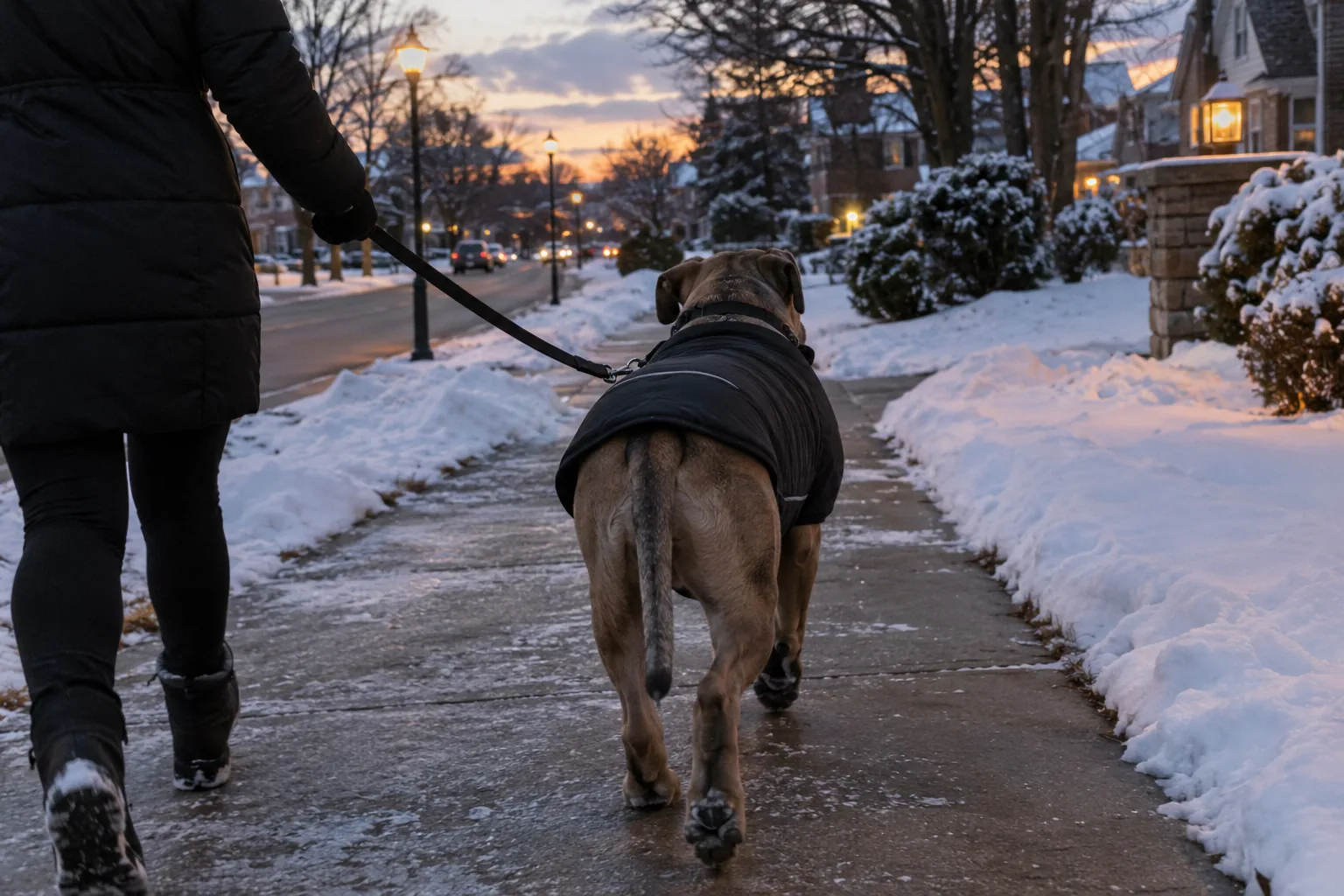
No single coat suits every day. Think in layers and adjust to the conditions on your walk rather than to a number alone.
| Conditions | Coat direction | Check |
|---|---|---|
| Cool, dry, mild wind | Fleece or light lined jacket | Full range of movement |
| Cold, dry, around freezing (32°F / 0°C) | Insulated coat with chest and back coverage | Belly coverage for short-haired dogs |
| Cold with sleet or wet snow | Insulated coat with a firm outer fabric | Dry the coat and your dog at the door |
| Deep cold and wind | The warmest dog coats for winter: layered fill, plush collar, full body coverage | Shorter walks; ask a veterinarian about limits for your dog |
| Low light | Reflective strips on the coat | Strips stay visible when the dog moves |
Small, short-haired and senior dogs may need a coat in conditions where a thick-coated dog does not. Wet fur loses its insulating value, so a damp dog needs drying even in a good coat.
Common mistakes and a care schedule
Mistakes to avoid
- Buying by weight alone instead of neck, chest and back length.
- Choosing a coat that covers the tail or restricts the hips.
- Leaving a damp coat on your dog after a wet walk.
- Putting a coat over a bulky harness without checking the fit.
- Skipping a re-measure for puppies and for dogs that have gained or lost weight.
Care schedule
- After every walk: shake off snow, towel your dog and hang the coat to dry away from a radiator.
- Weekly: check seams, stitching, drawstrings and any leash ring for wear.
- When dirty: follow the care label on the coat for washing and drying.
- End of season: wash according to the label, dry fully and store flat or hung in a dry spot.
Replace a coat when seams split, fill shifts or the fit no longer matches your dog's measurements.