How to Cut Dog Hair at Home: Clipper Guards and Order
Brush the coat dry, pick a guide comb for each zone, and clip with the lay of the hair from back to face. Includes a length chart and heat and skin checks.
The Millbrook Team
October 26, 2026 · 7 min read · Updated October 30, 2026
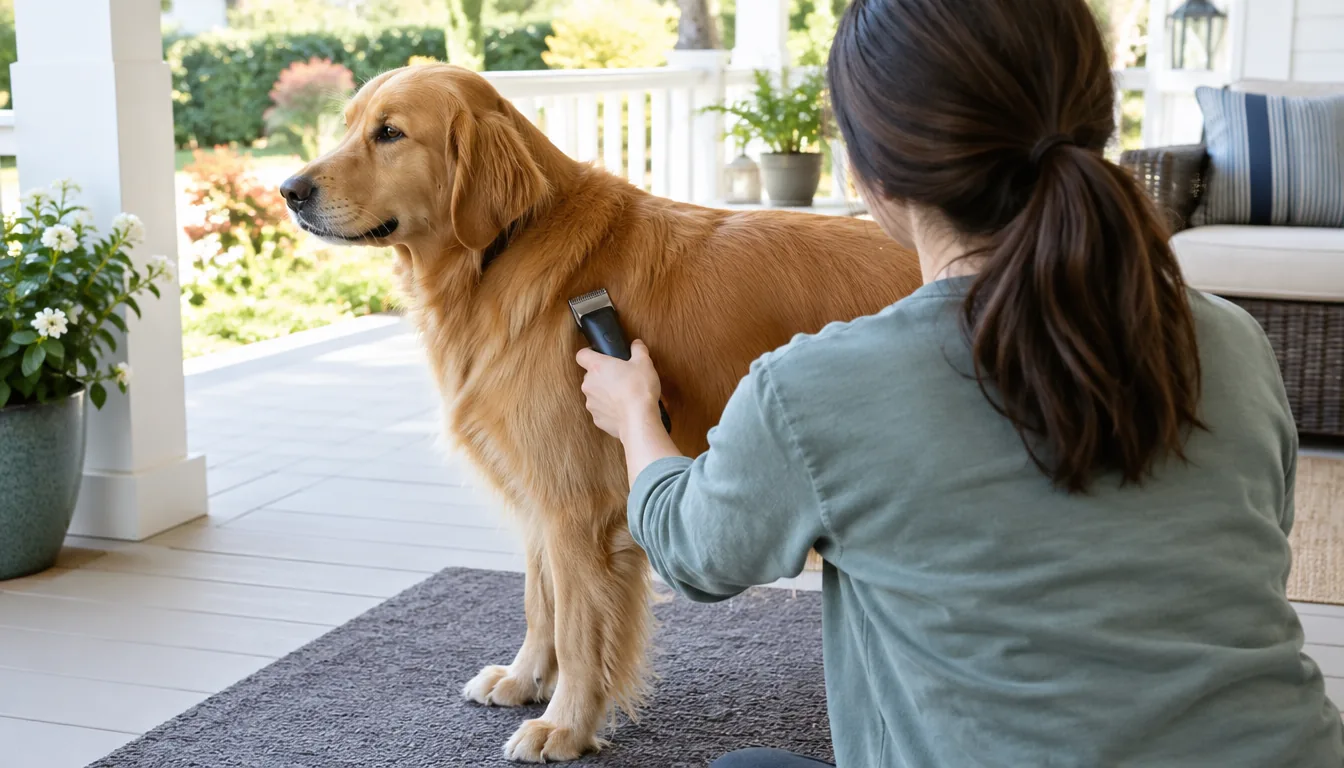
To learn how to cut dog hair at home, start with a clean, fully dry, brushed-out coat, pick a guide comb length for each body zone, and clip in the direction the hair lies. Work from the back to the sides, chest, belly and legs, and leave the face, ears, paws and tail for last. Check the blade for warmth and the skin for nicks every few passes.
This guide gives you a length chart, a zone-by-zone order and the checks that quick video demos tend to skip. If you want the wider routine around the haircut, see Dog Grooming at Home: A Step-by-Step Routine and Tool Checklist.
Prepare the coat and the workspace
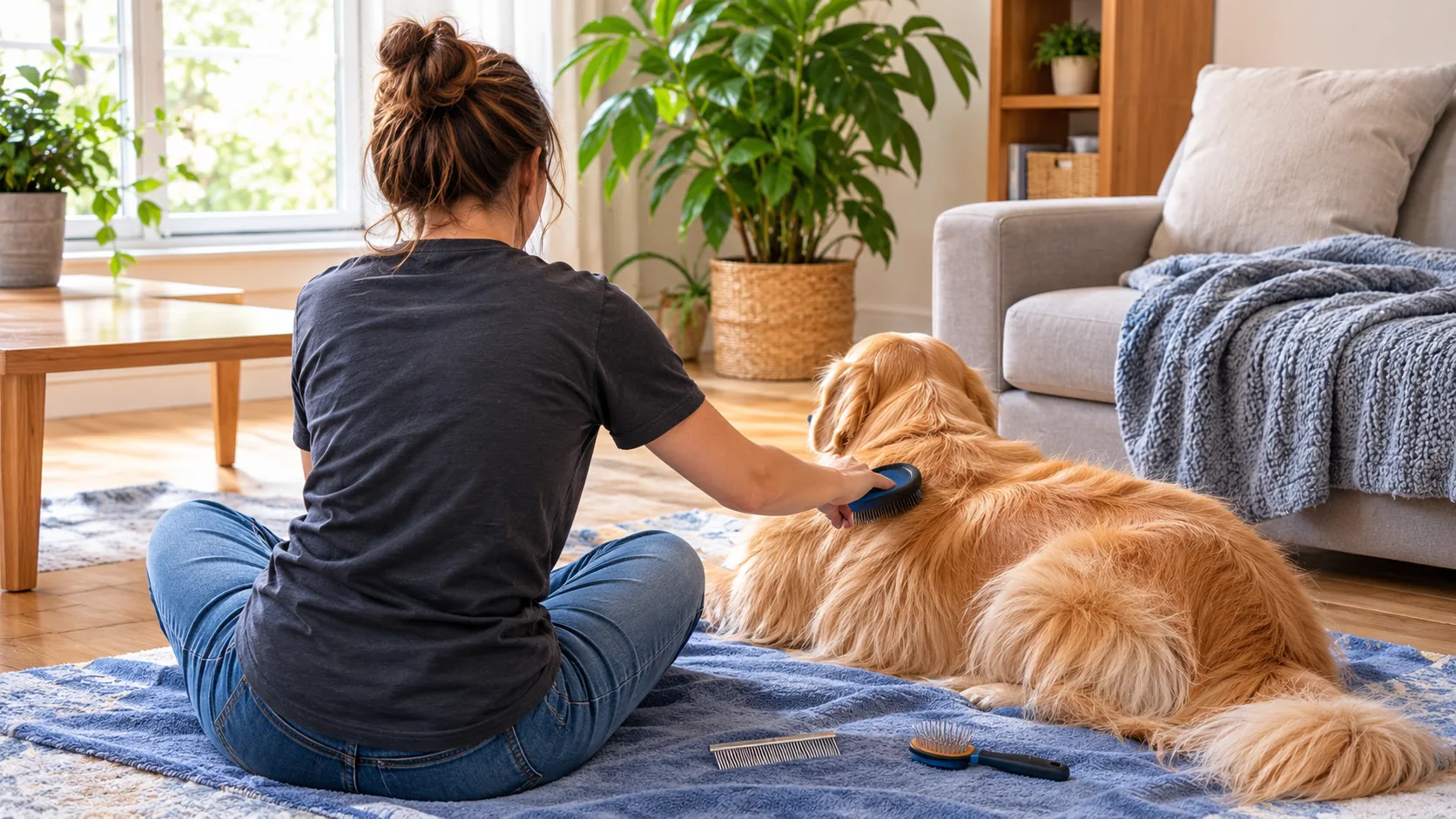
Clipping goes wrong when the coat is not ready. Brush and comb the whole dog until no mats or tangles remain. A clipper pulled through a knot drags on the skin, so cut out or work through knots before you begin. If a mat sits tight against the skin, ask a groomer or veterinarian to deal with it.
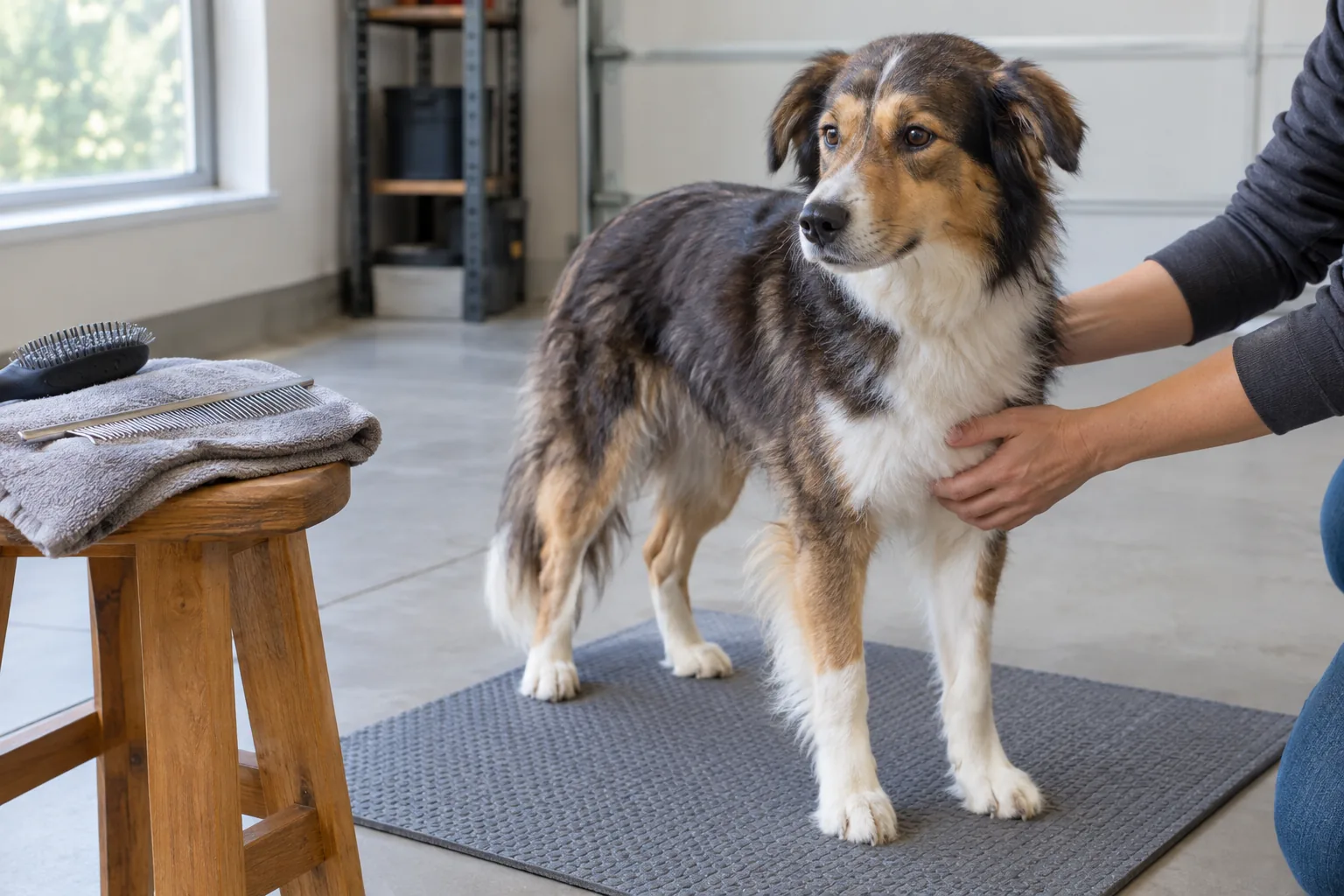
The coat should be clean and fully dry. Clean hair lets the blade glide, and damp hair bunches up. Set up on a non-slip surface at a height where you do not have to stoop, and keep a comb, a small brush and a towel within reach.
Gather these before you start
- Cordless clipper, charged, with the guide combs you plan to use
- Slip-resistant mat or towel for the dog to stand on
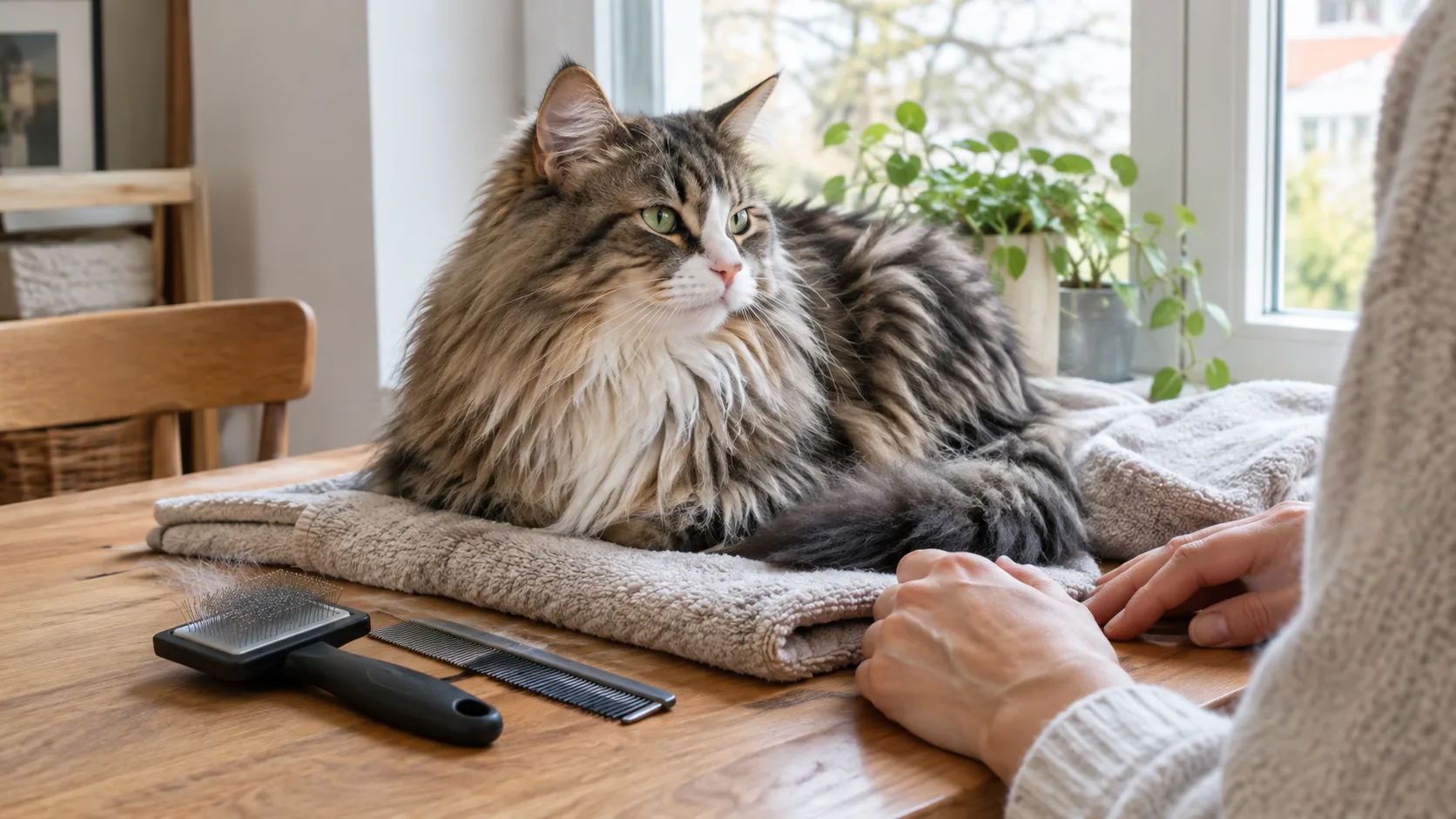
- Slicker brush and a metal comb
- Blunt-tip scissors for the face, if you use them
- Treats and a second person if your dog fidgets
Let the dog sniff the clipper while it is off, then run it near the shoulder before you touch the coat. Short, calm sessions suit a nervous dog better than one long push.
Clipper blade and guide comb length chart
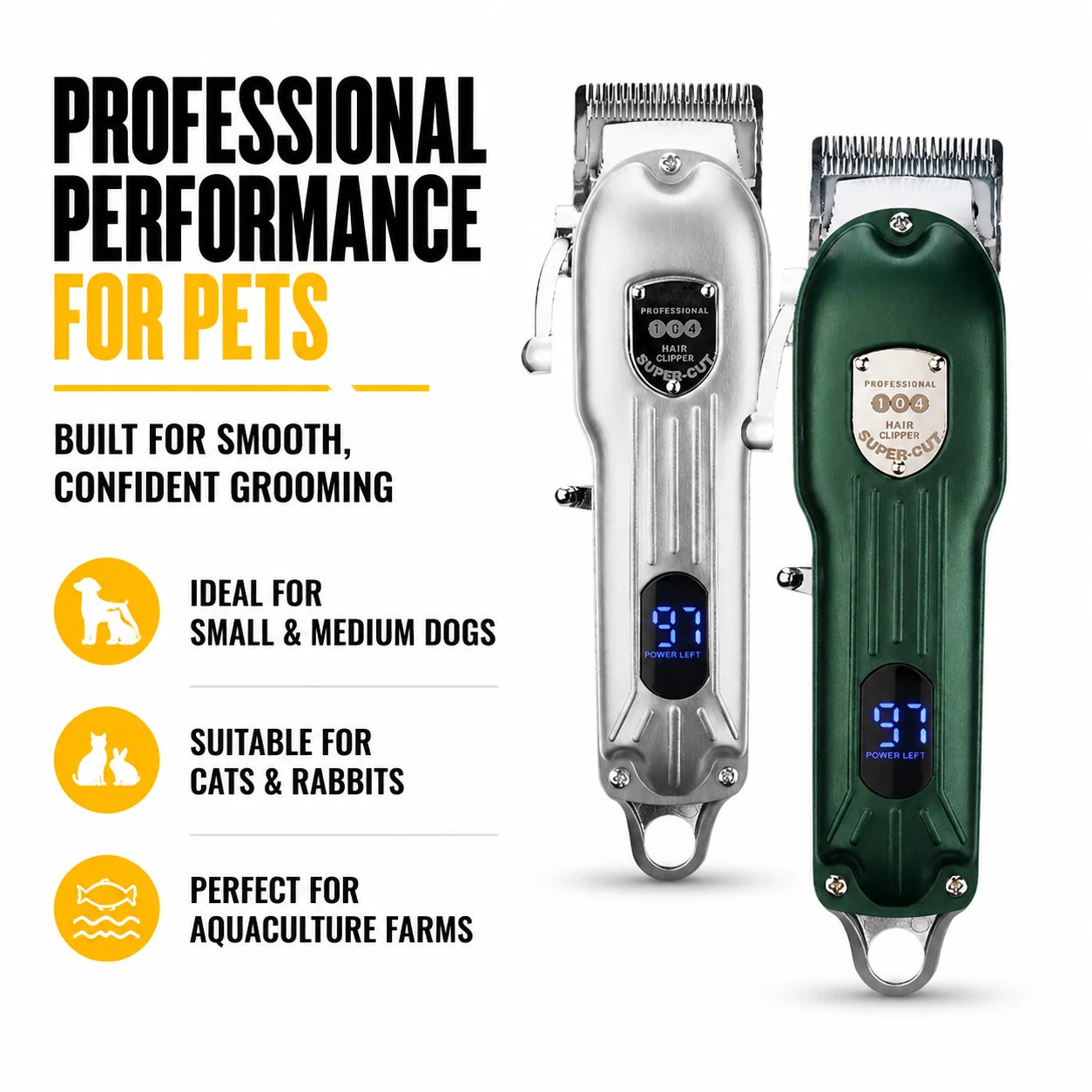
Longer guide combs leave more hair, so start long and go shorter on a second pass if you want. You cannot put hair back. The TrimVelvet pet hair clipper comes with four guide combs (3mm, 6mm, 10mm and 12mm), and it also has a lever with four blade positions. The chart below uses those comb sizes as the reference.
| Body zone | Starting guide comb | Notes |
|---|---|---|
| Back and sides | 10mm (about 3/8 inch) or 12mm (about 1/2 inch) | Long, even strokes with the lay of the hair |
| Chest and belly | 10mm (about 3/8 inch) | Hold skin flat; check folds |
| Legs | 10mm to 12mm (about 3/8 to 1/2 inch) | Lift each leg and clip in sections |
| Neck and shoulders | 10mm (about 3/8 inch) | Watch for collar-line skin folds |
| Face, ears, paws | Blade positions or 6mm (about 1/4 inch) comb, small area only | Short strokes, steady hold, stop if the dog turns |
| Sanitary area | 6mm (about 1/4 inch) or longer | Go slowly and keep skin visible |
The 3mm (about 1/8 inch) comb leaves the shortest coat. Save it for dogs and coats you already know well, and check the skin after every pass.
 In this guideTrimVelvet$99.99View
How to cut dog hair step by step, by body zone
Keep the clipper cord, if you use the charging cable, out of the way; a cordless clipper lets you move around the dog. Check the display for battery level and the oil reminder before you start. The steps below also answer how to cut a dog's hair when the dog is nervous: work in short bursts and reward calm.
1. Back and sides
Snap on your comb and power on the clipper. Starting at the base of the neck, run it toward the tail with the lay of the hair. Overlap each stroke by about half the comb width and keep the comb flat against the coat.
2. Neck, shoulders and chest
Move to the neck and shoulders, then the chest. Raise the chin gently with one hand to flatten the skin at the throat. Keep the clipper moving rather than resting it in one spot.
3. Belly and sanitary area
Have the dog stand, or lie them on their side if they are calm. Skin is thin and loose here, so flatten it with your free hand and check for skin folds before each stroke. Use a longer comb in this zone.
4. Legs
Lift one leg at a time and clip in strips from the top down. Brush the hair upward between passes so you can see any uneven patches. Leave the area between the toes for the paw step.
5. Face, ears and paws
Do the delicate areas last, once the dog has settled. The TrimVelvet blades have a curved R-shaped edge, and the slim contoured body fits in one hand, which helps when you turn it around paws, ears and the muzzle. Hold ear leather flat between your fingers and keep the clipper pointed away from the eyes. Use blunt-tip scissors for the hair around the eyes if you prefer.
6. Tail
Trim the tail last, with the lay of the hair. Some dogs react to clippers near the tail base, so go slowly and stop if your dog turns to look.
Field note
Run a hand over each finished zone before moving on. Your palm finds ridges, missed patches and warm spots that your eyes miss.
Heat and skin checks while you clip
A running blade can warm up, and warm metal against skin is a problem. Follow the clipper manual for run time and oil, and make these checks part of your routine.
| Check | When | What to do |
|---|---|---|
| Blade warmth on the back of your hand | Every few passes | Power off and let the blade rest if it feels warm |
| Oil reminder icon | Before each session | Add a drop of oil when the display shows it |
| Skin folds | Belly, neck, armpits, groin | Flatten the skin with your free hand first |
| Skin color and surface | After each zone | Look for redness, scratches or nicks and stop if you see any |
| Hair in the comb teeth | Between strokes | Brush it out so the comb does not pull |
If you spot a nick, stop clipping that area and keep it clean. Ask a veterinarian if the skin looks irritated or the dog keeps licking the spot. The same applies if your dog has bumps, lumps or sore skin: leave those areas alone.
For general grooming technique, you can also read a college web project on dog grooming techniques.
Common mistakes when cutting dog hair
- Clipping a dirty or damp coat, which makes the hair clump in the comb
- Starting with the shortest comb instead of the longest
- Pressing the clipper into the skin rather than letting the comb ride the coat
- Clipping against the lay of the hair on the first pass
- Skipping the oil reminder and running the blade dry
- Starting on the face while the dog is still wound up
- Continuing after the dog shows stress instead of taking a break
Some double-coated breeds have coats that are meant to stay long, so ask a groomer before you take a coat short. Clipping can change how the coat grows back.
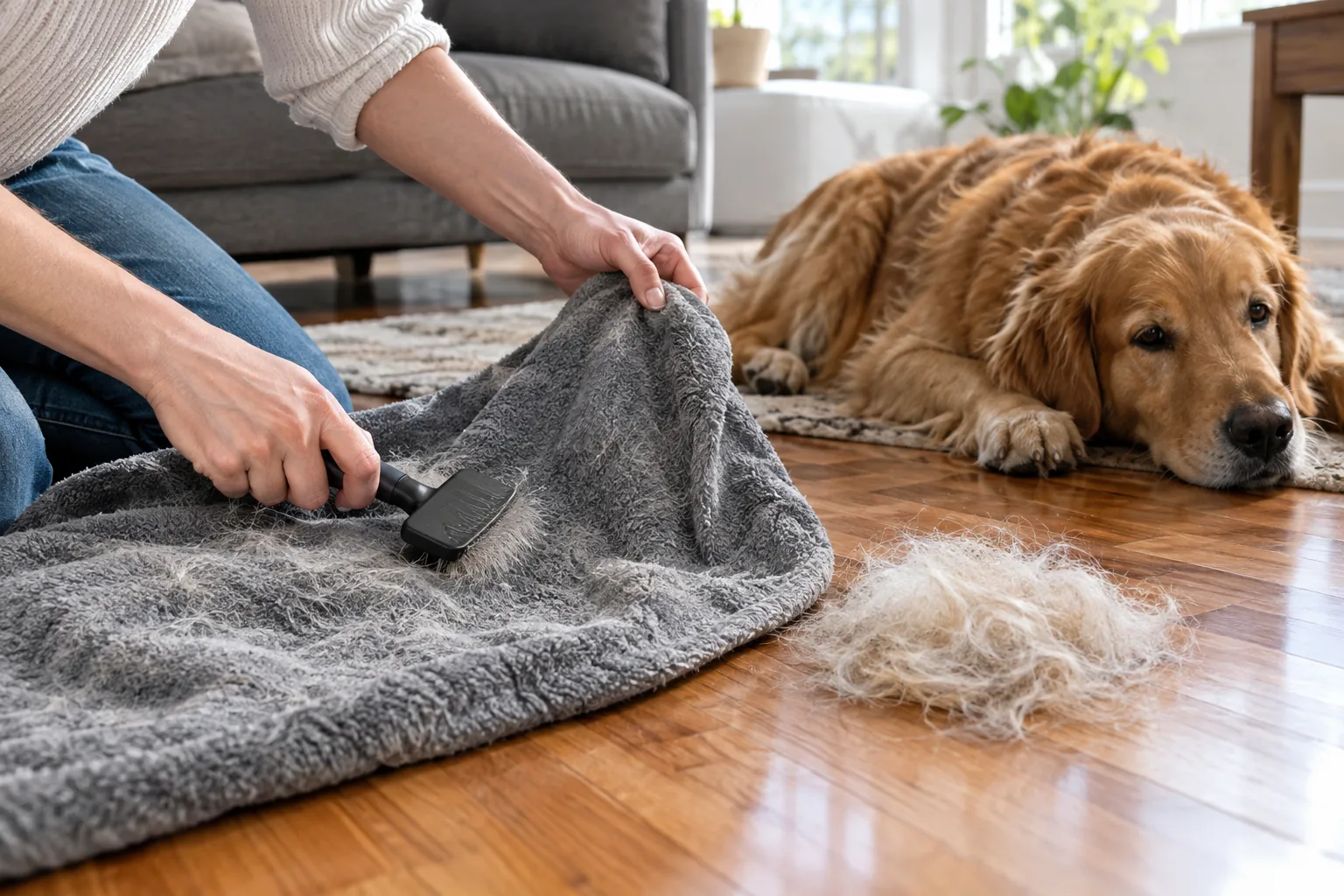
Clean the blade and the room afterward
When you finish, power the clipper off, brush hair off the blade with the cleaning brush that comes with the TrimVelvet and check the display for the oil reminder. Follow the manual for cleaning.
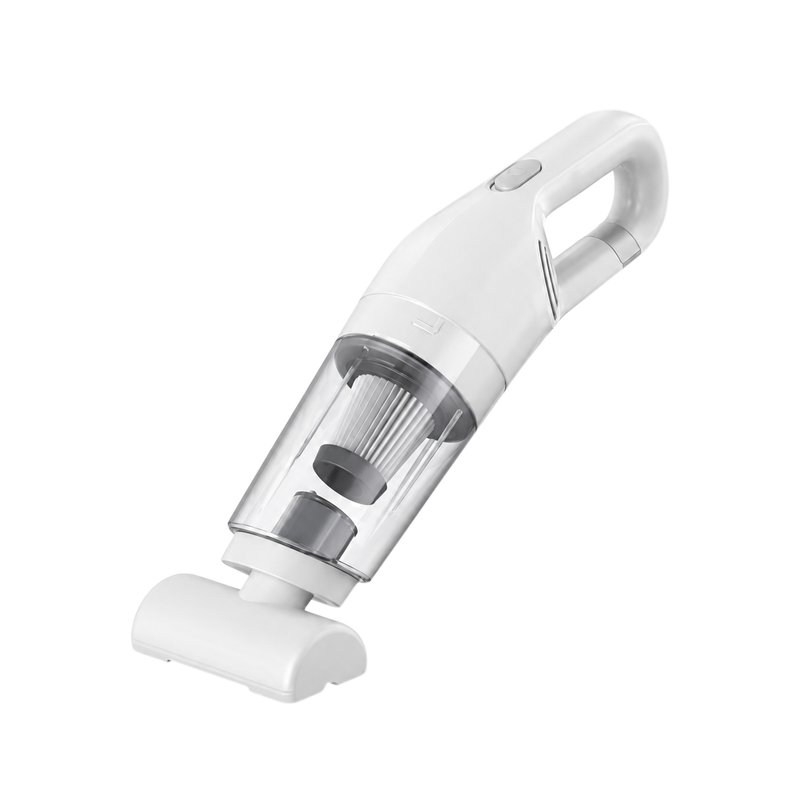
Loose clippings scatter across the floor. A grooming vacuum like the ZephyrGroom has an 8-core cyclone motor that draws loose fur into a sealed bin, and you can glide the nozzle over the coat or over furniture. The dust cup twists off, and the filter is washable and reusable; rinse it and let it dry before the next session. If your dog is new to the sound, read Pet Vacuum Grooming: How to Get Your Dog or Cat Used to It.
 In this guideZephyrGroom$89.99View
Care schedule between haircuts
- Each session: check the battery level, brush hair off the blade, look at the oil icon
- Between haircuts: brush the coat so mats do not form
- Before the next cut: bathe, dry fully and comb through
- Any time: ask a veterinarian about skin changes, and a groomer about breed-specific coat questions
For more tools and supplies, browse our Grooming & Paw Care collection.