How to Measure Dog Paw for Shoes: Trace, Measure and Size Check
Trace each paw while your dog stands, measure the widest point, and match it to the size chart. This guide also covers front vs back paws, in-between sizes and a fit check.
The Millbrook Team
November 19, 2026 · 6 min read
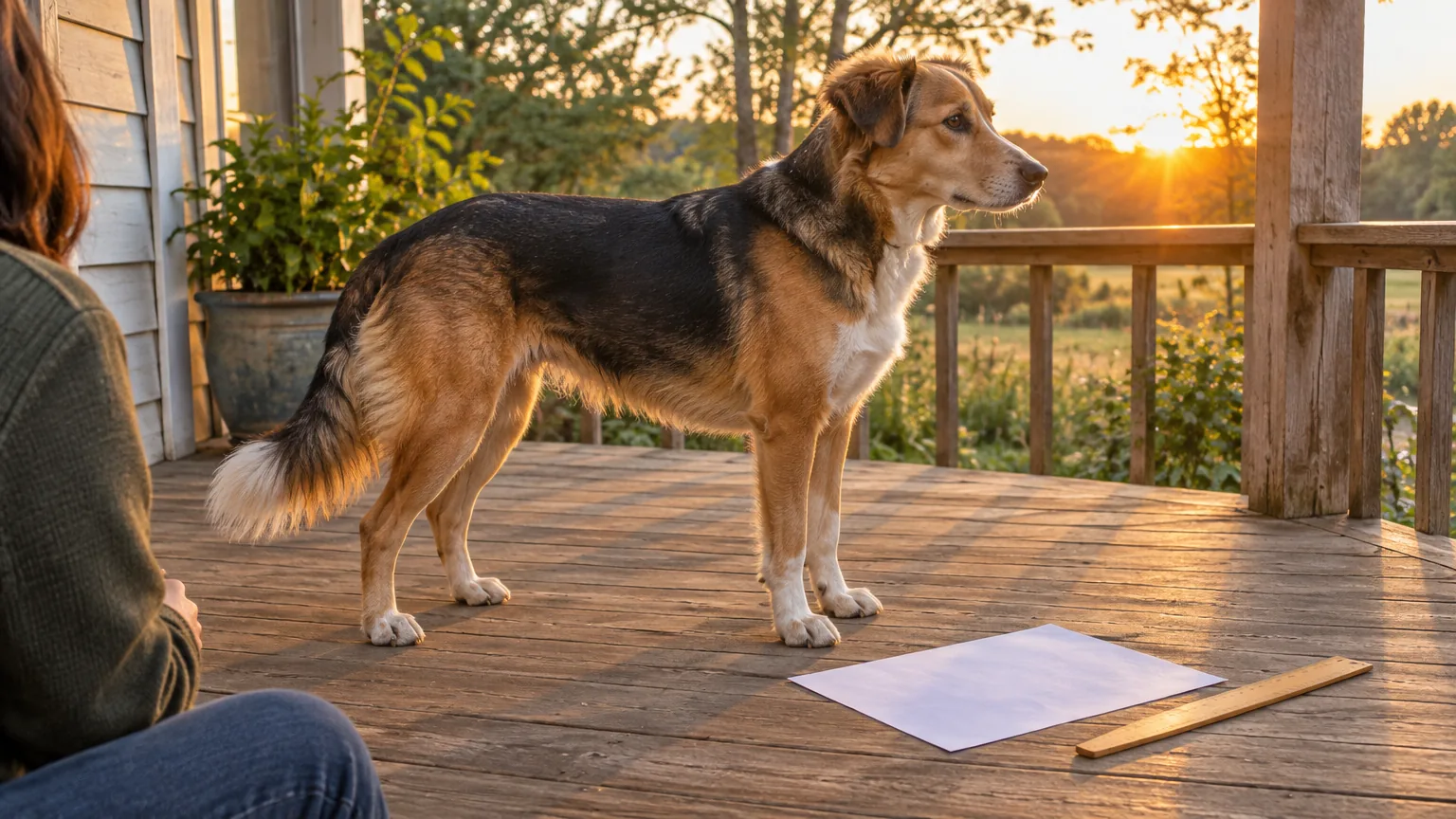
To learn how to measure dog paw for shoes, have your dog stand on a sheet of paper, trace around the paw with the full weight on it, and measure the widest point of the tracing with a ruler. Repeat for every paw you plan to cover, write the numbers down, and match the widest one to the size chart of the shoe you choose. Then check the fit on your dog before you head out.
The steps below cover the standing trace, the difference between front and back paws, what to do when a number lands between two sizes, and a fit check so the shoes stay on.
What you need before you measure
Gather a few plain items first. Measuring takes a short session, and it goes smoothly when everything is within reach.
- Two or three sheets of plain paper
- A pen or pencil with a fine tip
- A ruler with inch markings (a flexible tape works too)
- A food reward or two to keep your dog standing still
- A hard, flat floor such as tile or wood
Pick a calm moment, such as after a walk. If the nails are long, they can push the tracing out of shape and change the length. Our guide to trimming overgrown dog nails gradually walks through that step first.
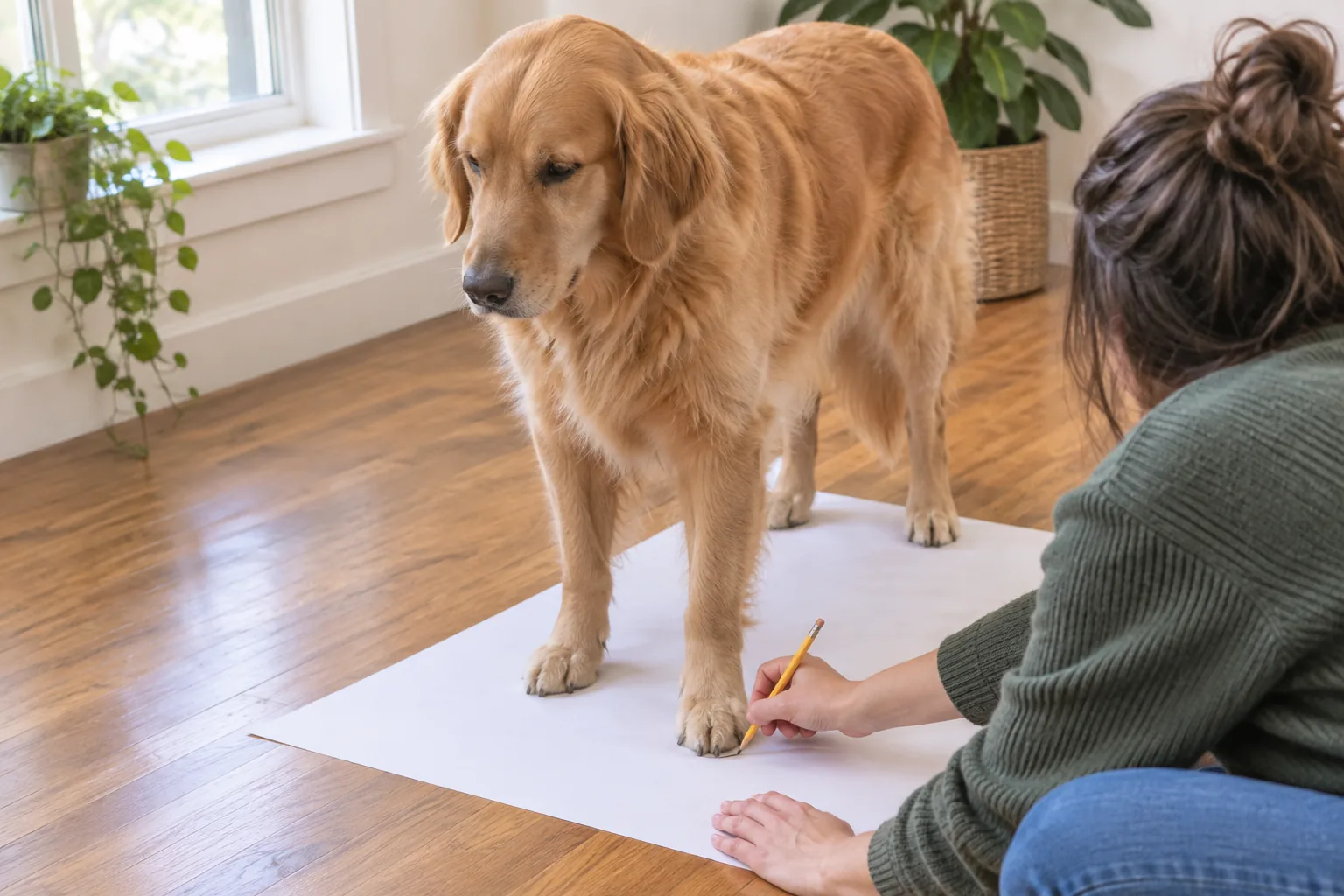
How to measure dog paw for shoes: the standing trace method
A standing trace shows the paw at its true width, because the toes spread when the dog puts its weight on them. Measuring a lifted paw gives a narrower number, so keep all four feet on the floor.
- Place a sheet of paper on the hard floor and ask your dog to stand on it with the paw in the middle.
- Check that the dog is standing square, with the weight on all four feet and the leg straight under the shoulder or hip.
- Hold the pencil upright, not slanted, and trace close around the outside of the toes and pads. Slanting the pencil under the paw makes the outline too large.
- Lift the paw away and draw two straight lines: one across the widest part of the outline, one from the back of the main pad to the tip of the longest toe, not counting the nail if it extends past the toe.
- Measure the width and the length with the ruler and write them down with the paw's position (front left, back right, and so on).
- Repeat for every paw.
Width is the number to match for TreadPup: its sizing is based on your dog's paw width while standing. Other shoes may use length or both, so read the chart on the product page before you order.
Front paws vs back paws
Front and back paws on the same dog can be different widths, so measure all four instead of assuming they match. Write each reading on its own sheet so the numbers do not get mixed up.
If the readings differ, use the widest reading to choose the size for a set. Straps help only with a small difference between paws. If the gap is large, check whether the shoe maker sells different sizes for front and back, and read the sizing guide for the exact approach.
| Situation | What to do |
|---|---|
| All four paws read the same width | Choose the size that matches that width on the chart |
| Front paws slightly wider than back | Choose by the front width, then adjust the straps on the back boots |
| Back paws slightly wider than front | Choose by the back width, then adjust the straps on the front boots |
| Readings differ by a wide gap | Check the sizing guide, or ask the shop whether mixed sizes are possible |
What to do between sizes
When your reading falls on the line between two sizes, do not guess. Re-measure once, with the dog standing on a fresh sheet, to confirm the number. Small errors can come from a slanted pencil or a paw that was not carrying weight.
If the number still sits between sizes, read the chart's wording and the sizing guide that comes with the shoes. Consider the adjustable range of the closure too: elastic straps let you set a snug fit, but they cannot fix a boot that is far too large or too narrow for the paw.
Fluffy paws add a detail. Hair between the toes and pads can change the width of the tracing, so trace the paw as it will be when the shoe goes on, and keep the hair as you normally have it.
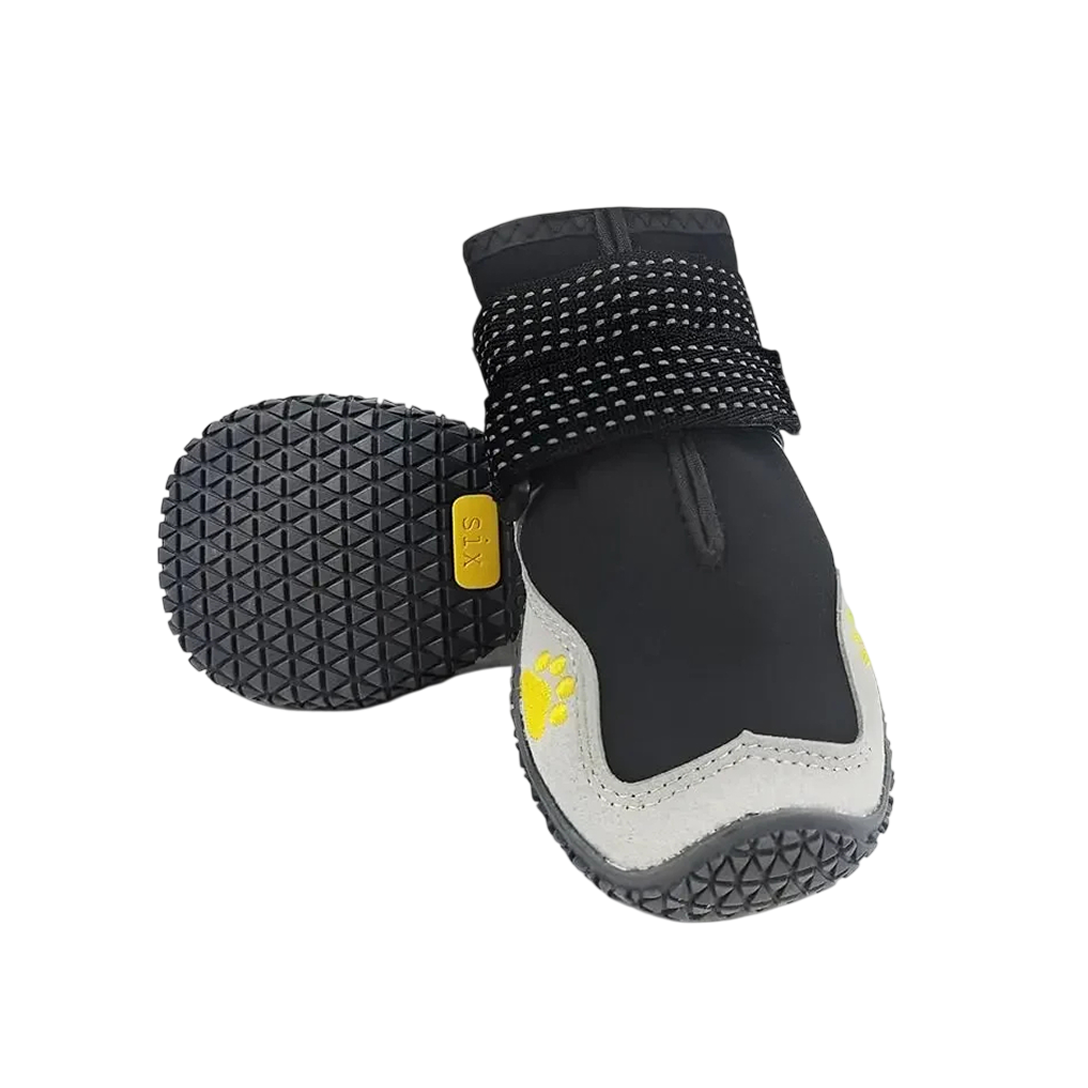 In this guideTreadPup$59.99View
Size notes for small dogs, and how many toes to expect
Weight is not a good guide to shoe size. A 7 lb dog can have a different paw width from another 7 lb dog, so measure the paw and use the chart; do not choose by weight alone.
On toes: each paw has four main toes that touch the ground. Some dogs also have a dewclaw, a fifth digit higher on the inside of the leg, usually on the front legs and sometimes on the back. The dewclaw sits above the pad, so it is not part of the tracing, but check that a boot cuff does not press on it.
Quick reference
| Step | Check |
|---|---|
| Stance | Dog stands square with weight on all four feet |
| Tracing | Pencil held upright, outline close to the toes |
| Width | Widest point of the outline, in inches |
| Paws measured | All four, each labeled |
| Chart | Match the widest reading to the maker's chart |
Fit check so the shoes stay on
Once the shoes arrive, try the fit indoors before the first outing. Slip each boot on and tighten the adjustable straps until the fit is snug. Snug means the boot holds in place without squeezing the ankle: you should be able to slide one finger under the strap.
- Stand your dog on a hard floor and check that the toes sit flat inside the boot, not curled under.
- Check the strap sits around the ankle, above the pad, and the elastic is not twisted.
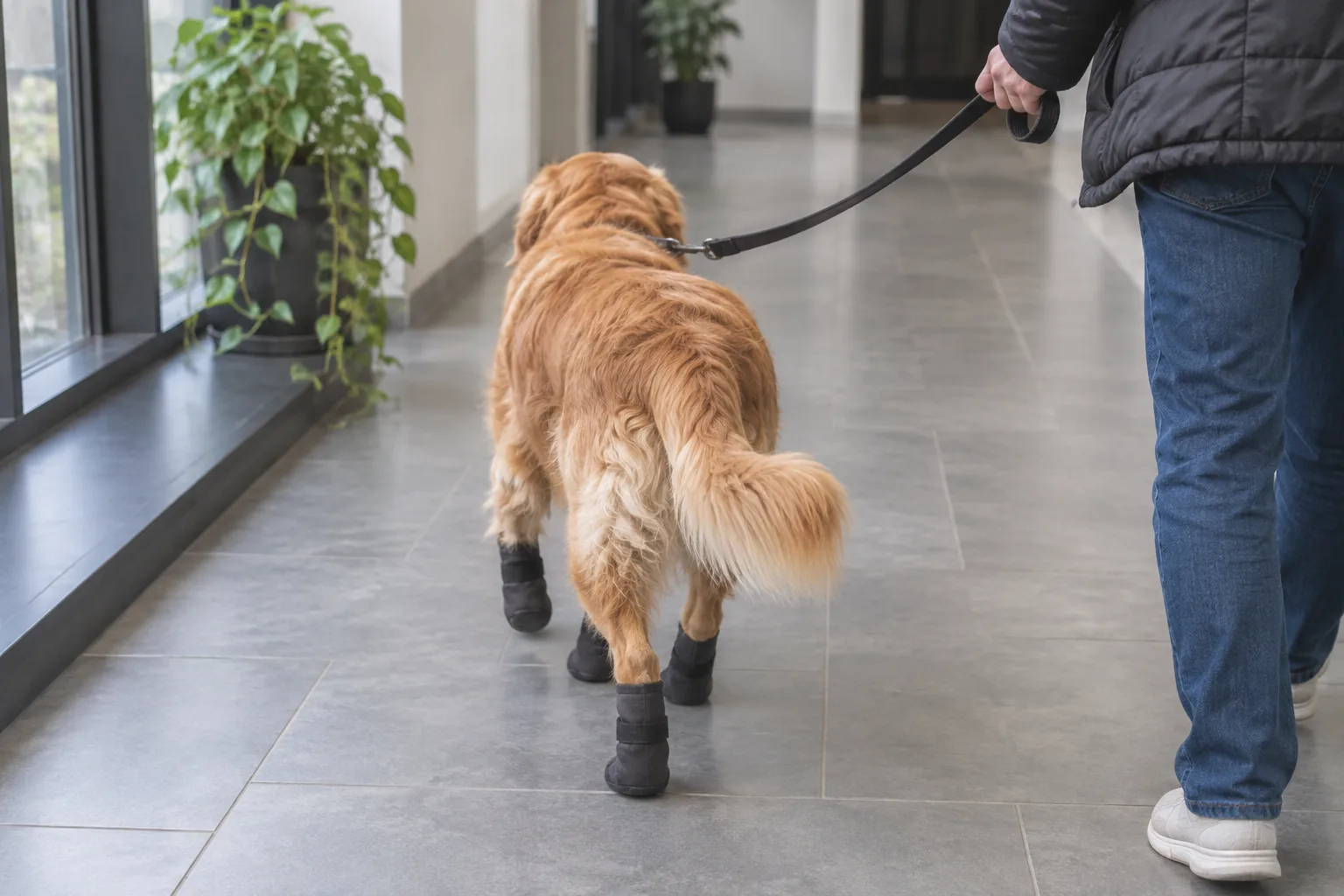
- Let your dog walk around the room for a few minutes. Watch for high-stepping, shaking a leg or stopping to chew, which are signs the fit needs another look.
- Pull gently on the back of each boot. It should stay on without sliding down the leg.
- Take the boots off and check the paw and ankle for marks where the strap pressed. If you see any, loosen the strap and try again.
If a boot slips even with the straps set, re-measure, because the width may have been read too small. Follow the manual or sizing guide for the shoes you buy, and ask your veterinarian about your dog's paws or any questions about wearing boots.
Field note
Measure in the evening after a walk and again on a second day. If both readings agree, you can use that number when you order.
Common mistakes when sizing dog shoes
- Measuring a paw held in the air instead of standing
- Tracing with a slanted pencil so the outline is too wide
- Measuring one front paw and assuming the other three match
- Choosing by weight or breed instead of the chart
- Leaving the straps loose and expecting the size to hold the boot on
For slick floors, non-slip dog shoes with a textured rubber sole add grip on tile and wood, which suits older dogs or fast starters. Mesh layers let air reach the paw on warm days, and the upper can be wiped off after wet outings. Browse more gear in Grooming & Paw Care for the paw routine around the shoes.
Once you know how to measure dog paw for shoes, keep your tracings. Write the date and the dog's name on the back of each sheet, so you can compare when you order again.