How to Teach a Dog Paw: Steps, Timing and Gentle Paw Fixes
Hold a food reward in a closed fist, mark the moment a paw lifts, then add the word once the lift repeats. This guide covers timing, fading rewards and pushy pawing.
The Millbrook Team
November 20, 2026 · 7 min read
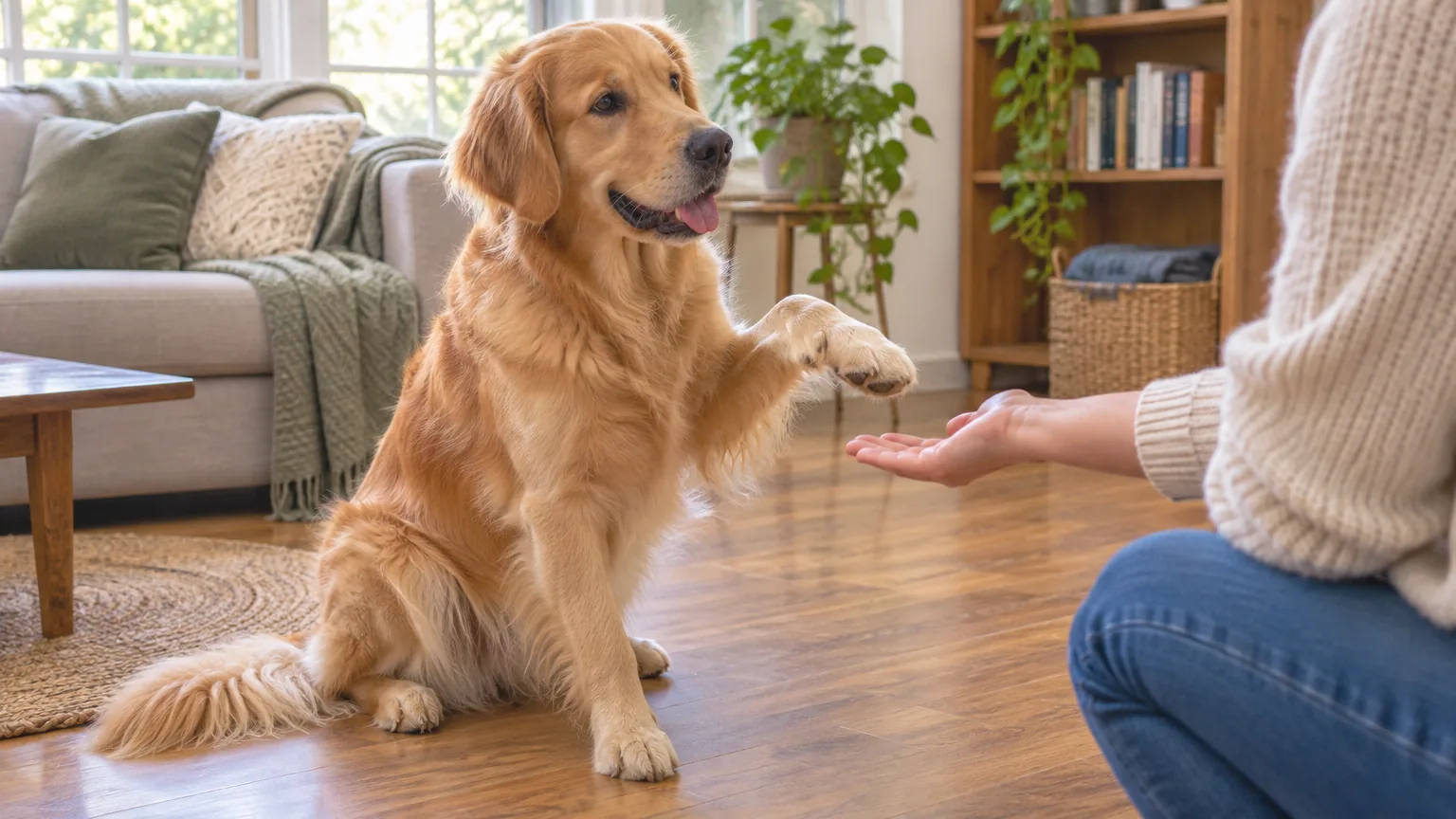
How to teach a dog paw comes down to three moves: ask for a sit, offer a closed fist with a food reward inside, and say your marker word as soon as a paw touches your hand. Reward right after the marker, repeat in short sessions, and add the word "paw" only once the lift happens on its own. The marker timing matters more than the number of repeats.
What you need before the first session
Set up a calm spot before you start. A quiet room with the TV off and no other pets nearby keeps your dog's attention on your hand.
- Small, soft food rewards that your dog can swallow right away
- A marker: a short word such as "yes" or a clicker
- A mat or rug so your dog sits on a steady surface
- A short window for each session, ending after a few successful rounds
- A sit that already works without a lure
Pick one marker word and keep it the same. If you use "yes" for paw, use "yes" for every other trick as well, so the sound always means a reward is coming.
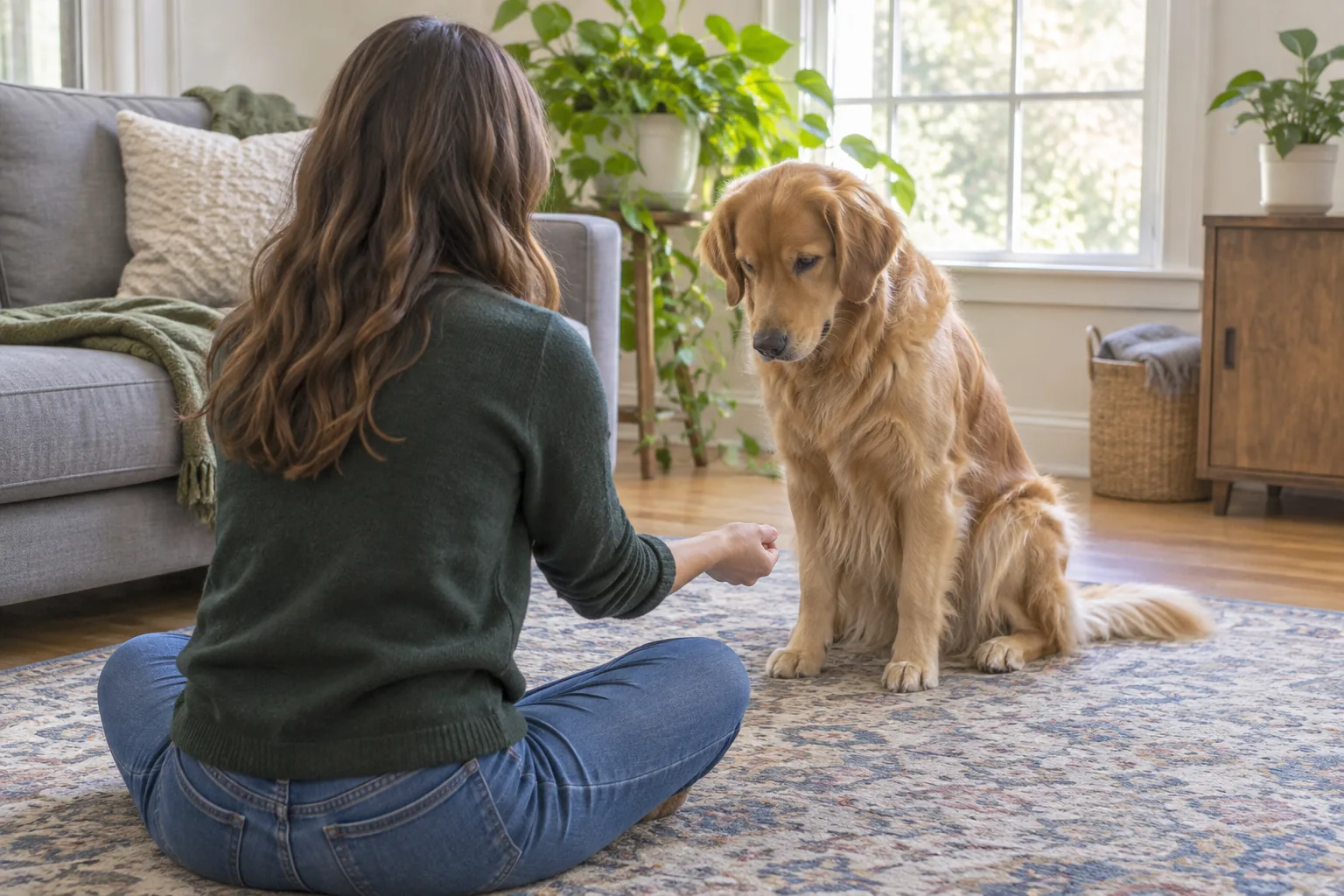
How to teach a dog paw step by step
Work through these steps in order. Move to the next one only when your dog repeats the current one several times in a row.
- Ask for a sit and reward it once so your dog is focused.
- Hide a food reward in your closed fist and hold it low, near the floor, in front of your dog's chest.
- Wait. Your dog may sniff, lick or nudge. Keep your fist still.
- As soon as a paw lifts and touches your fist, say your marker.
- Open your hand and give the food reward from the other hand or the fist.
- Repeat for several rounds, then end the session on a success.
- Next session, hold the fist a little higher and wait for a lift that clearly leaves the floor.
- Once your dog reaches for your hand without delay, switch to an empty fist, then an open palm. Keep rewarding from your other hand.
Marker timing at each stage
The marker tells your dog which exact action earned the reward. Say it while the paw is still on or moving toward your hand, not after it drops back to the floor. A clear lift is the action to mark once your dog has the idea.
| Stage | What you mark | What you do next |
|---|---|---|
| Beginning | Any paw movement toward the fist | Reward from your other hand |
| Middle | A clear paw lift that touches | Reward after a brief hold |
| Open palm | Paw placed on your palm | Reward, then let the paw rest down |
| With the word | Paw lift after you say "paw" | Reward and add a calm "good" |
If your dog mouths or digs at the fist instead of lifting a paw, mark nothing, reset the hand and try again. Mark only the paw action you want.
How to teach paw to a dog without food rewards
You can start with food and then fade the rewards so they appear on some repeats and not others. You can also use other things your dog values: a short tug, a toy, or a portion of the regular meal handed out one piece at a time.
For a dog that does not take food at all, capture the paw lift when it happens naturally and mark it with praise and a gentle scratch on the chest. Keep the same marker word so the lesson stays clear. Plan for extra repetitions when the reward is a weak one for your dog.
When to add the cue word
Add the word only after your dog lifts a paw to your hand nearly every time you present it. Say "paw" once, then show your open hand. Say it before the movement, so the word predicts the action.
Do not repeat the word several times. If your dog does not respond, quietly reset and try again with the hand signal alone. The word gets its meaning from being paired with the lift, so a single clear "paw" does the job.
Once the word works with your dog sitting, practice it in other rooms, then the yard, then with mild distraction. Expect to go back a step when the setting changes. That is part of the process.
How to stop pushy pawing
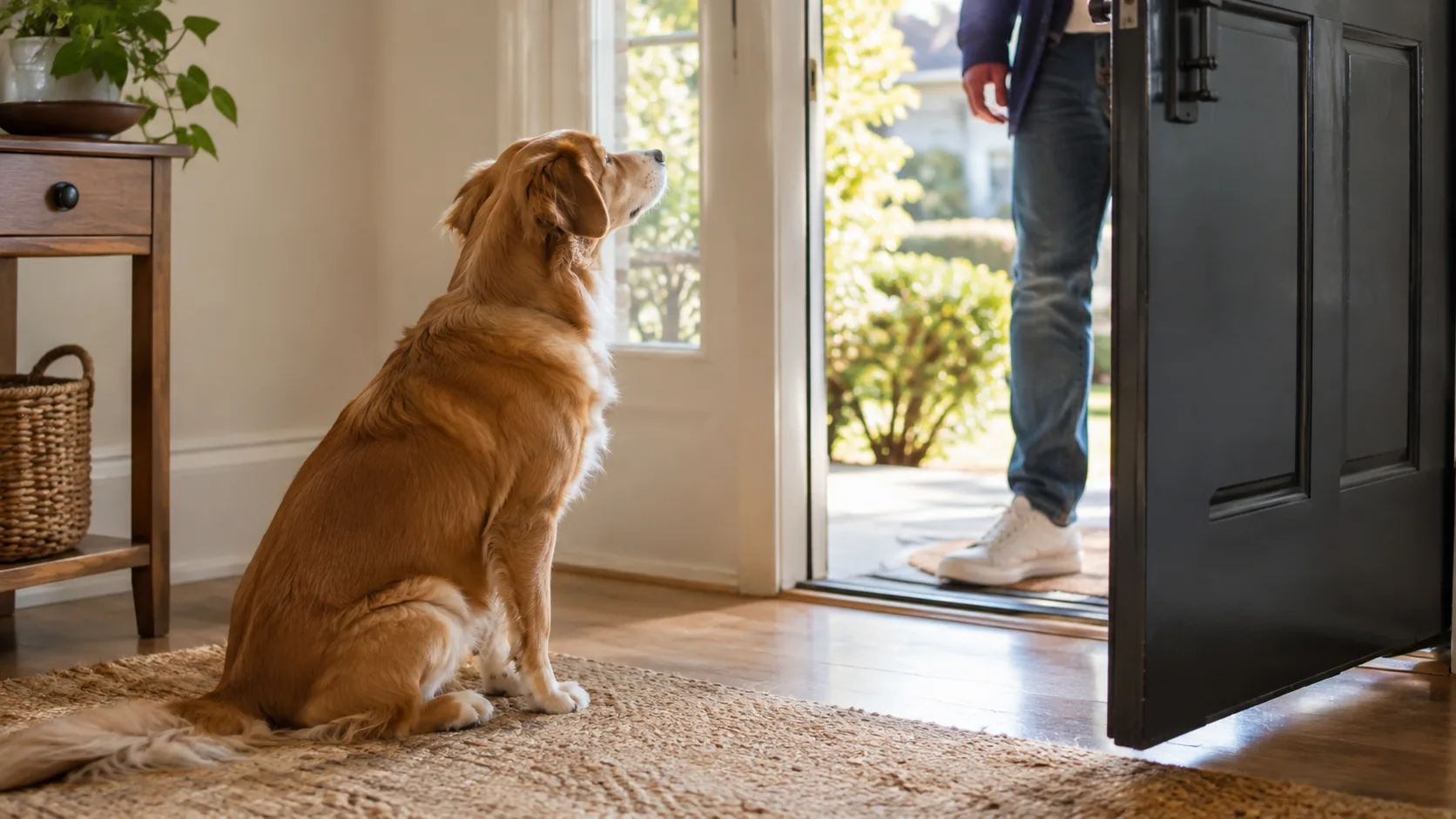
Some dogs paw at your leg or arm to ask for attention or food. The fix is to take away what the pawing earns while giving a clear alternative.
- Stay still and look away when the paw lands on you. Do not talk, push back or hand over anything.
- When all four paws are on the floor, calmly ask for a sit.
- Mark and reward the sit, not the pawing.
- Offer the paw trick on cue at other times, so your dog learns when a raised paw is welcome.
A soft, flat "uh-uh" or the word "oops" can serve as a no marker. It tells your dog that the current action did not earn a reward. Say it in an even tone, then follow with a chance to earn a reward through a sit. Body posture and tone carry meaning for dogs, so a turned shoulder and a calm voice help.
If your dog already jumps up when greeting people, the steps in How to Train a Dog Not to Jump on People, Guests Included use the same idea of rewarding four paws on the floor.
Common mistakes and fixes
| Mistake | Fix |
|---|---|
| Grabbing the paw to place it in your hand | Let your dog lift it by choice, then mark |
| Marker comes after the paw drops | Say it while the paw is touching |
| Long sessions | End after a few good rounds, while your dog is still keen |
| Repeating the word again and again | Say it once, then wait |
| Rewarding pawing at your lap | Reward only paw lifts you asked for |
| Moving on too soon | Repeat each stage until it is steady |
Adding a tone or vibration cue
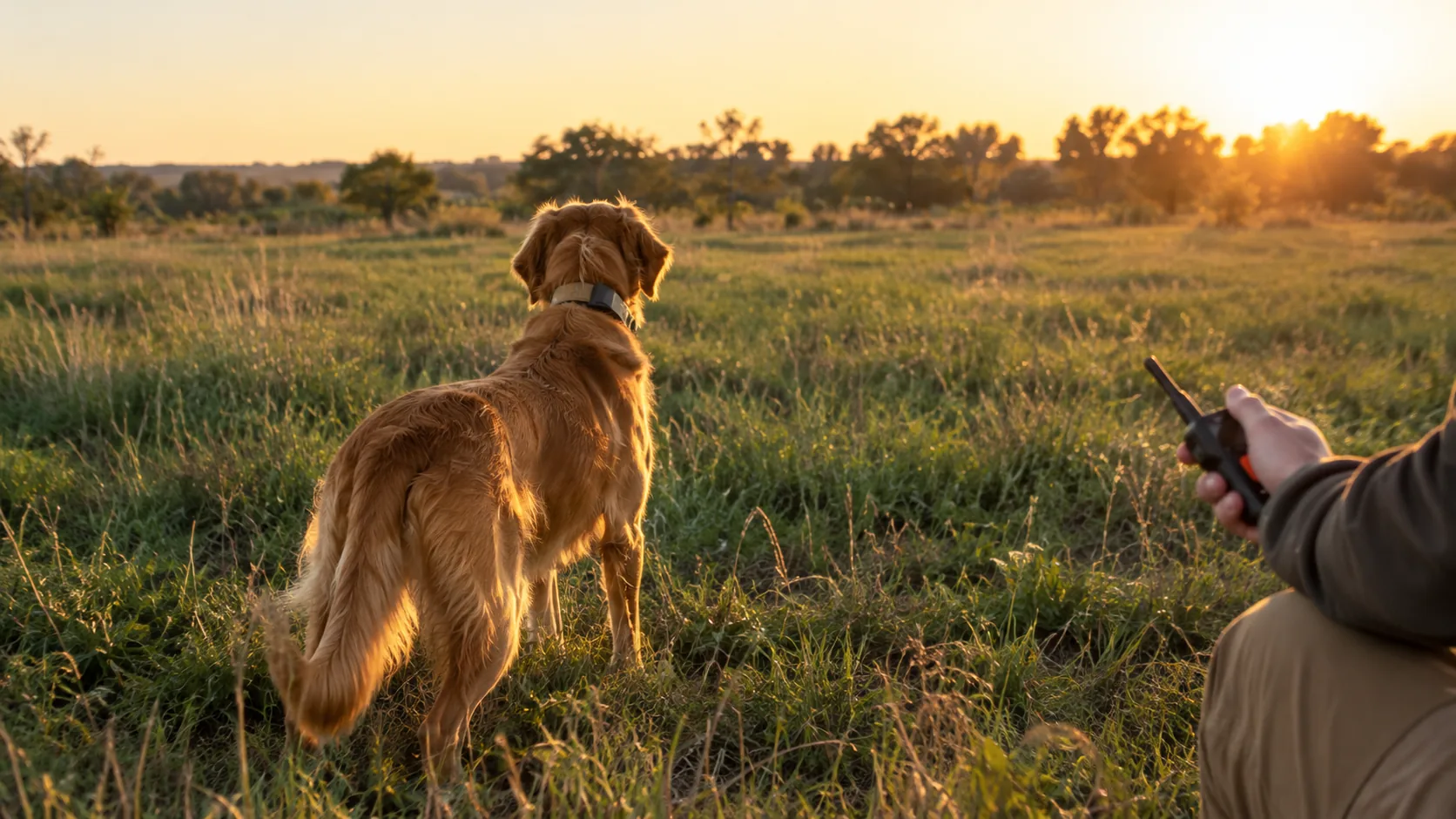
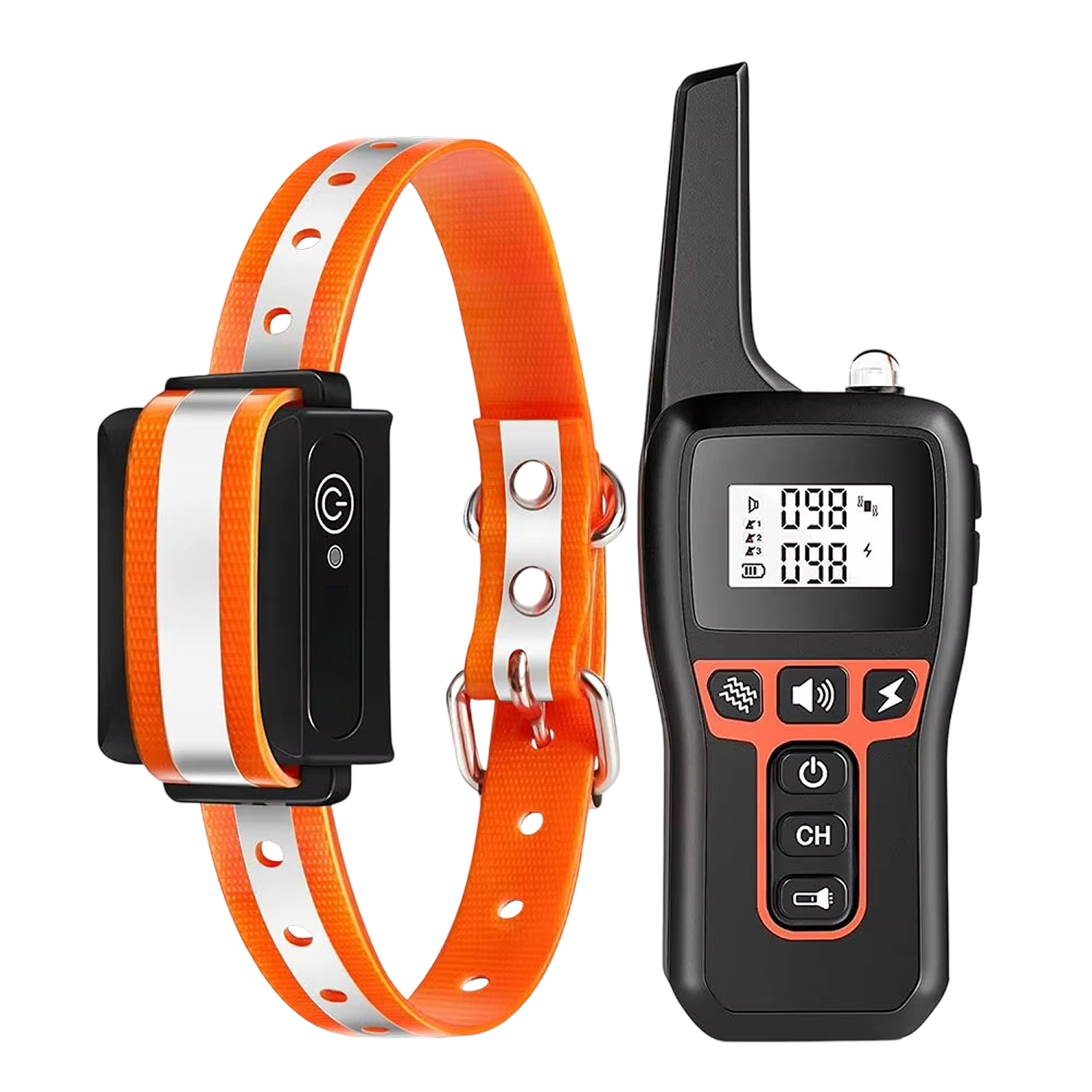
If your dog already knows paw reliably and you want a signal that carries across a yard or in low light, some handlers pair a tone or vibration cue with a command the dog already knows. PawSignal is a dog training collar with a handheld remote and a receiver that sits on the collar, and it sends tone or vibration cues across 100 levels.
Start at the lowest level and step up one at a time until you see a small head turn or ear flick. Give your command, use the cue, and stop the cue as soon as your dog responds. Follow the manual for fit and use, and ask a qualified trainer if you are unsure. The product is designed for dogs weighing 4 to 120 lbs. For the full introduction plan, see Remote Collar Dog Training: A Step-by-Step Introduction Plan.
 In this guidePawSignal$99.99View
Field note
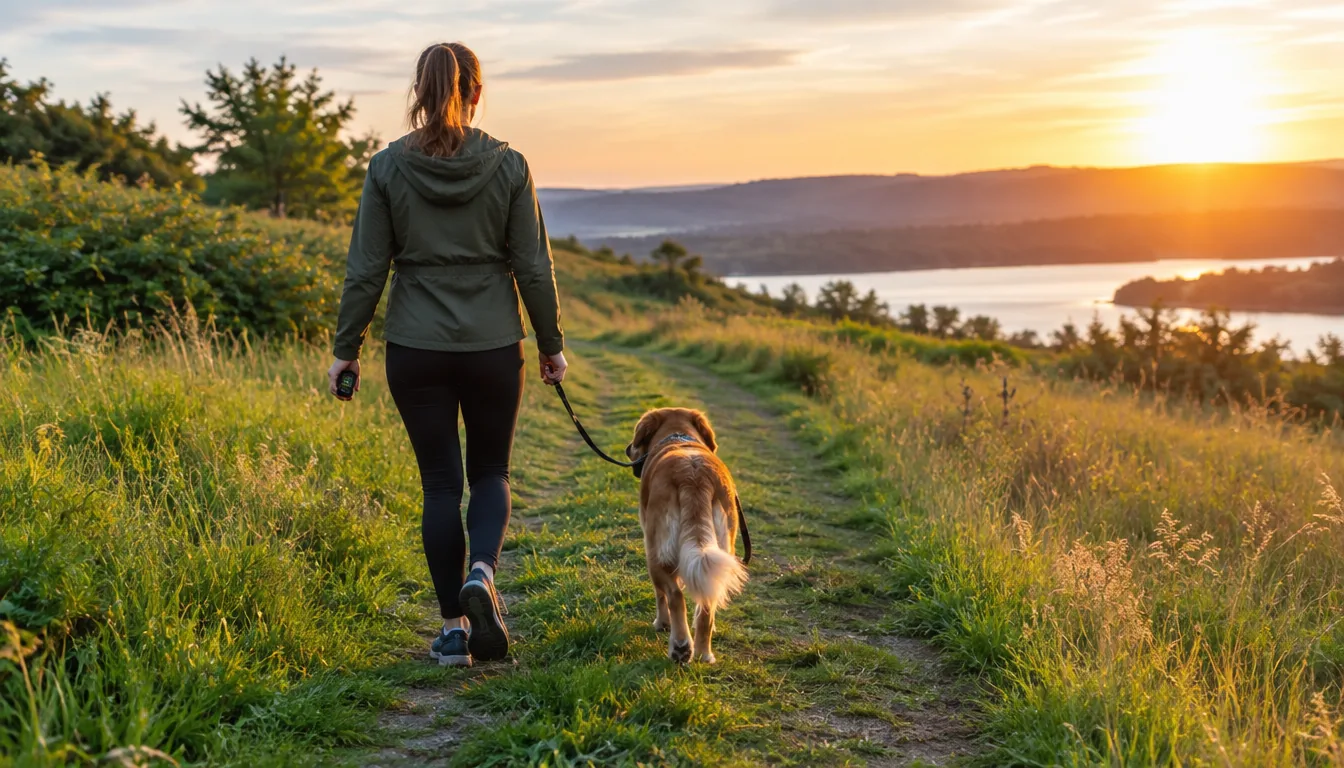
Practice paw right before a meal or a walk, when your dog is attentive, and stop while your dog is still keen. A few clean repeats are enough for one session.
Tricks to build on paw
Once the open-palm paw is steady, the same movement leads to other tricks. For a high five, hold your palm upright at chest height and mark when the paw touches it. For a shake, accept the paw in your hand and release it after a moment, then reward.
Teach the second paw the same way, using your other hand. Later you can ask for a paw on cue as a polite greeting instead of jumping. Browse the Training, Behavior & Play collection for more gear for short training sessions.
Young dogs can start paw as part of a wider routine of simple skills; Puppy Training: A Week-by-Week Plan for the First Three Months shows where tricks fit among sit, down and leash manners.
A simple practice schedule
- Day 1 to 2: closed fist, mark any paw touch.
- Day 3 to 4: wait for a clear lift, raise the fist slightly.
- Day 5 to 6: empty fist and open palm, rewards from the other hand.
- Day 7 on: add the word, then change rooms.
Use this as a flexible practice schedule. If your dog needs more repeats at one stage, stay there. Keep each session to a few rounds, end on a success, and note which stage you reached so the next session starts in the right place.