Luxury Cat House Guide: Materials, Size and Indoor vs Outdoor
A luxury cat house is judged by its materials, interior size, insulation and entrances, not its styling. Use this checklist and table to compare indoor and outdoor options.
The Millbrook Team
October 24, 2026 · 6 min read · Updated November 12, 2026
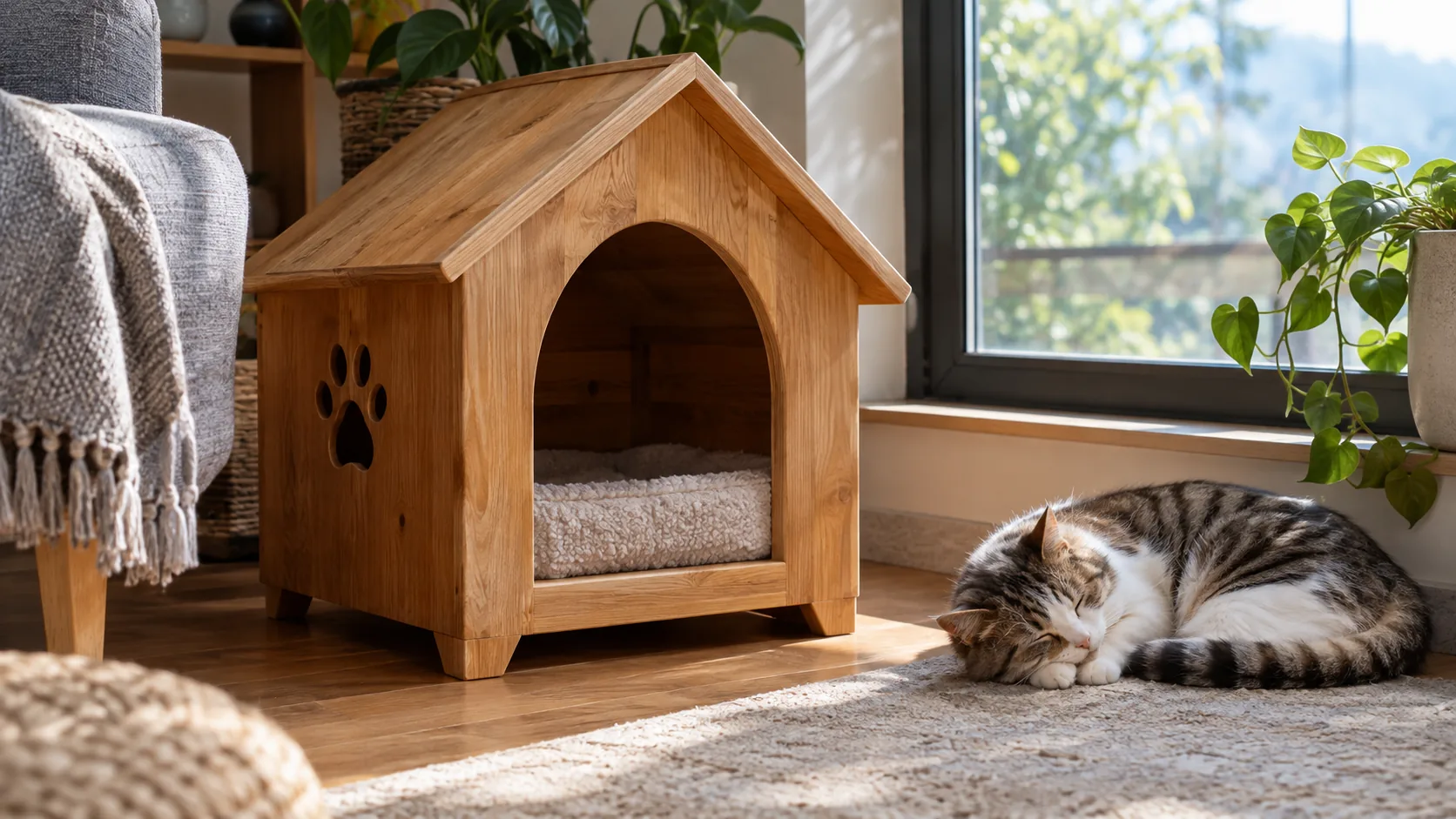
A luxury cat house is one built from solid materials, sized to your cat, and suited to where it sits: indoors for privacy, outdoors for shelter. Style is the last thing to judge. Start with the walls, the floor, the entrances and the interior space, then decide how much decoration you want on top.
This guide compares materials, size, insulation and heating, then gives you a step-by-step checklist. It also covers what to do about themed designs, from a castle cat house to a strawberry cat house.
What Makes a Luxury Cat House Well Built
Photos make every cat house look good. The difference shows up in construction, so check these points before you check the color.
- Wall and floor material, and whether the floor is lifted off the surface beneath it.
- Interior size compared with your cat, not the outer dimensions on the listing.
- At least one entrance sized for your cat, and a second exit if your cat is wary.
- A removable cushion or liner you can wash or wipe.
- For outdoor use, insulation and a base that keeps the floor off the ground.
A house with a themed shape can still meet every point. A castle cat house with turrets is fine if the doorway and interior are the right size. If the decoration takes up the space your cat needs, the design works against the house.
Indoor vs Outdoor: The First Decision
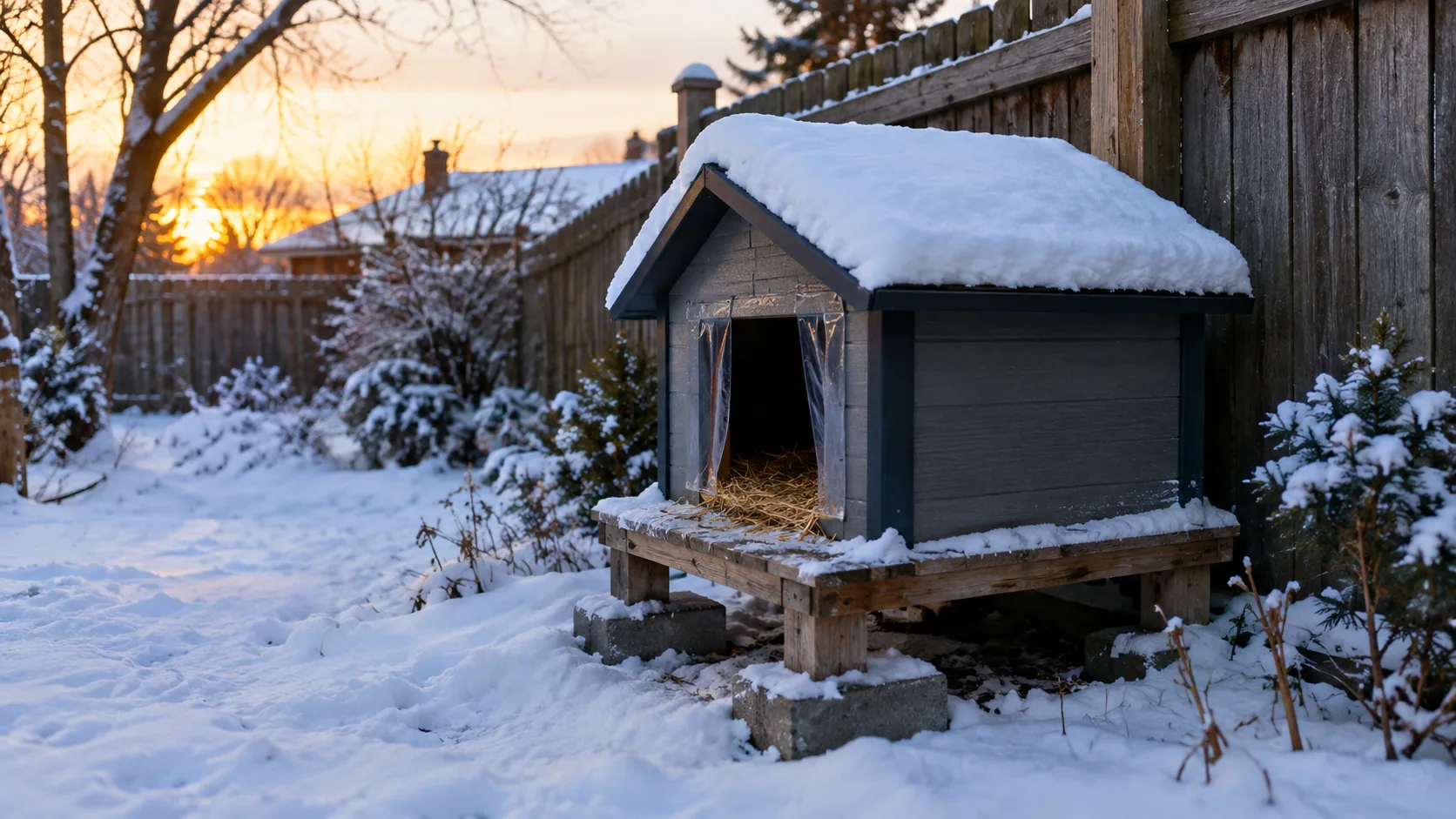
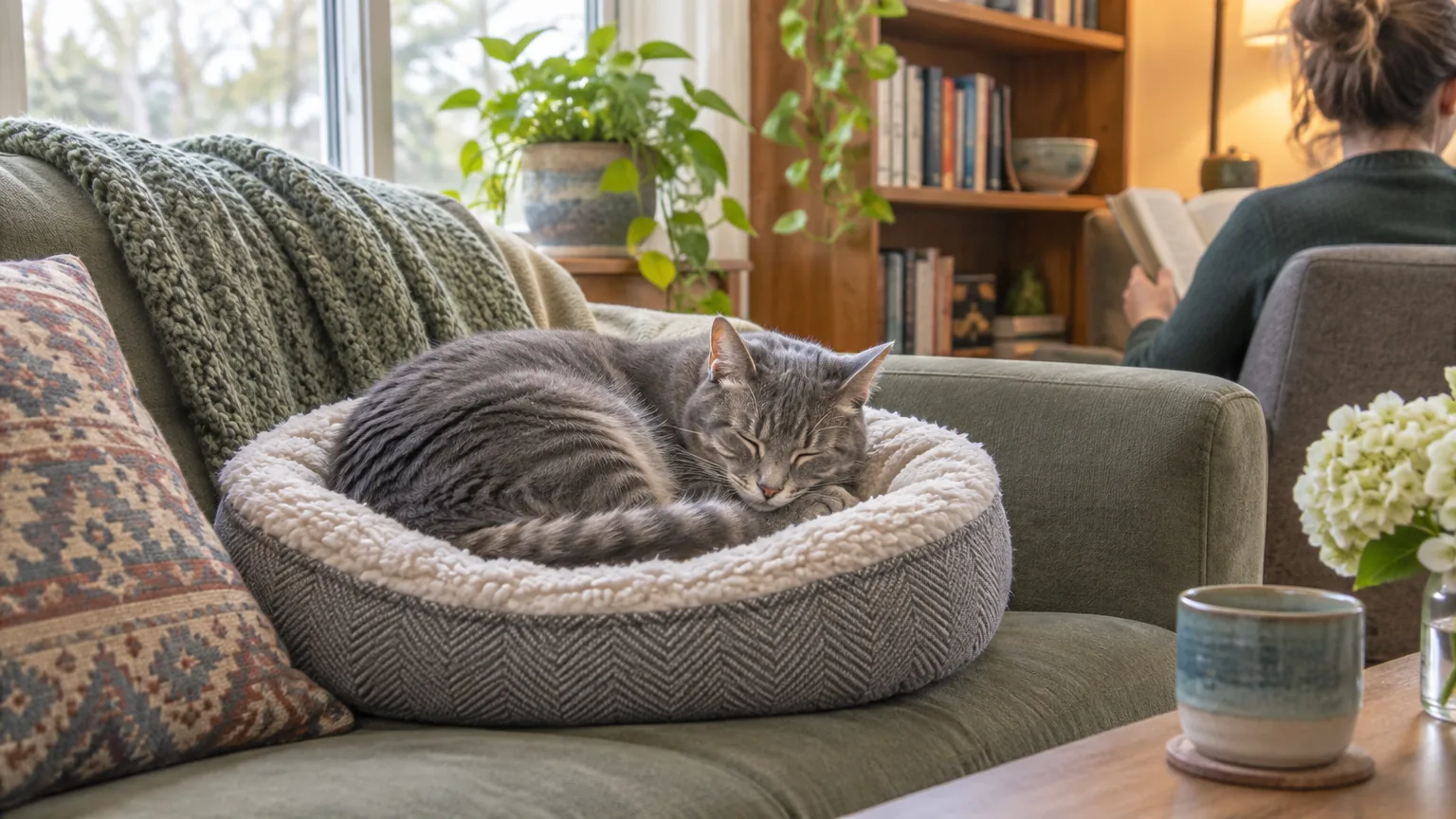
Where the house sits changes everything else. An indoor house is about privacy, a place to rest and a bit of territory in a multi-cat home. An outdoor house is about shelter from wind, damp ground and cold, so insulation and a raised floor matter more than looks.
| Factor | Indoor luxury cat house | Outdoor luxury cat house |
|---|---|---|
| Main job | Quiet rest, privacy, a hideout | Shelter from wind, damp and cold |
| Typical materials | Solid wood, plush fabric, felt, cushioned liners | Foam-lined walls, reflective layers, plastic or reinforced frames |
| Floor | Cushion or fabric base | Raised base, insulated floor |
| Entrances | One is common; two suit shy cats | Two suit feral and community cats |
| Heating | Rarely needed | Optional, needs an outlet within reach |
| Care | Vacuum, wash cover | Wipe down, replace straw, fold away at season end |
Do not move an indoor wooden or fabric house outside. Decorative materials are not built to sit on damp ground, and the product page for any outdoor house should say what it is built for.
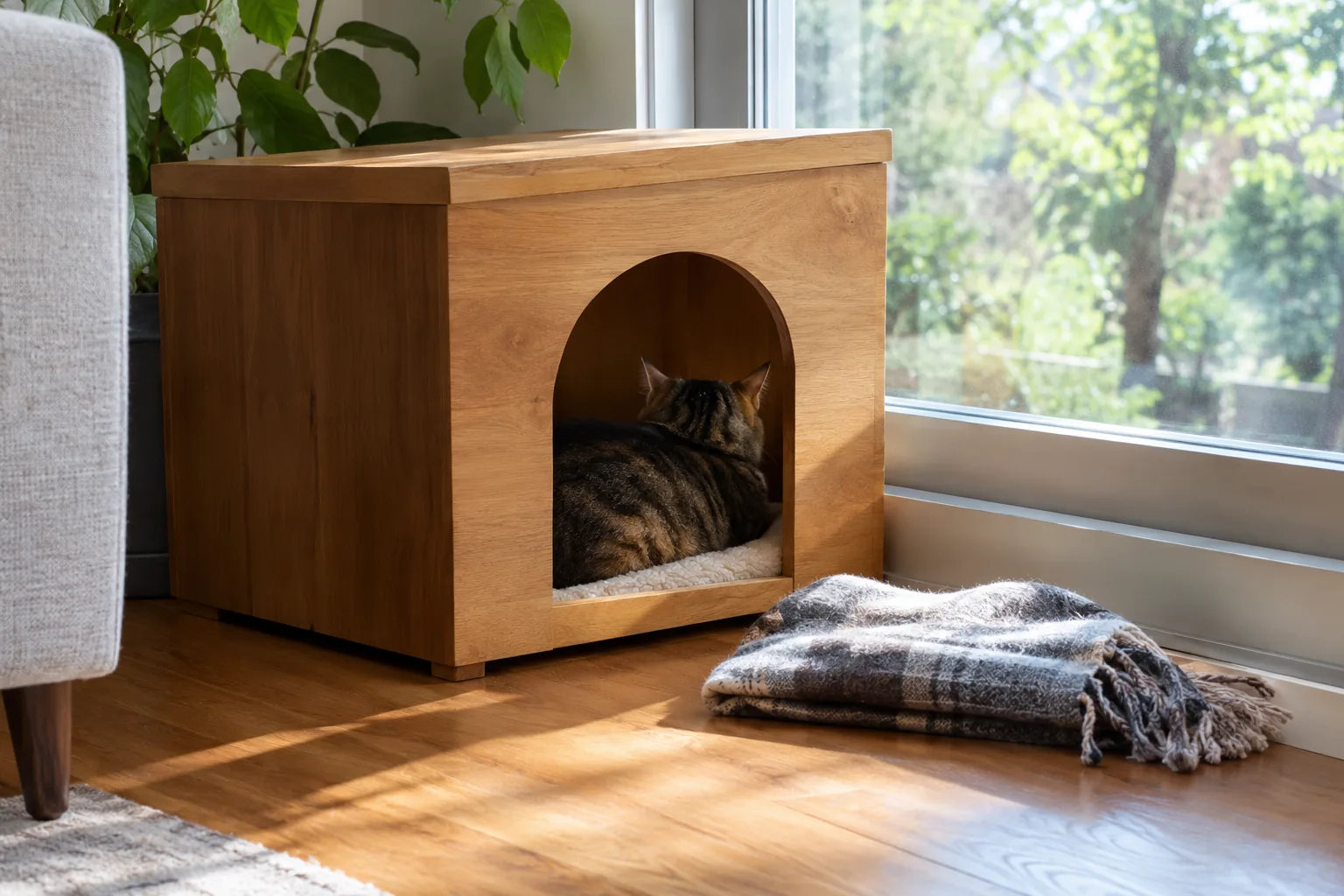
Materials Compared
Material decides how the house handles weight, moisture and cleaning. Compare what the listing states about the walls, roof, floor and lining, not just the outer finish.
| Material | Where it fits | What to check |
|---|---|---|
| Solid wood | Indoor houses and cat furniture | Smooth edges, a stable base, a finish suited to pets |
| Plush or felt fabric | Indoor hideouts and cave beds | Removable cover, firm stitching, easy to vacuum |
| Foam-lined walls | Outdoor shelters | Lining on walls, ceiling and floor |
| Reflective insulation layer | Outdoor shelters, heated houses | Coverage on all sides, a lining the cat cannot easily tear |
| Plastic or reinforced frame | Outdoor houses | Rigid corners, a base that sits on a flat surface |
Some luxury cat houses mix materials, such as a wood frame with a cushioned liner. That is fine indoors. For outdoors, ask whether each part is meant to handle damp conditions, and read the care instructions before you buy.
Size: Measure the Inside, Not the Outside
Measure your cat from nose to the base of the tail, and note its height when sitting. The interior should let the cat enter, turn around and lie down. A large cat needs a wider doorway and a deeper interior than the outer dimensions suggest, because thick walls take up space.
For multiple cats, look for more than one entrance or more than one room. Cats can resent being trapped by another cat, so a second way out matters. Some outdoor shelters are sized for one to two adult cats, and the product page should state the intended number.
Sizing for Outdoor Use
Outdoors, choose an interior sized close to the cats using it rather than a much larger one. Fill it with straw rather than blankets, which can hold moisture.
Insulation and Heating for Outdoor Cats
If cold weather is the reason you are shopping, treat insulation as the luxury feature. Look for lining on all six sides and a floor raised off the ground. For the full routine, see Insulating an Outdoor Cat House for Winter, Step by Step, which covers adding straw and sealing gaps.
Two outdoor houses in our range show the difference between passive and heated shelter. WildCove is a cube with high-density foam lining on the walls, ceiling and floor, one arched doorway, an elevated base and a removable insulated inner cushion. No tools are needed to set it up.
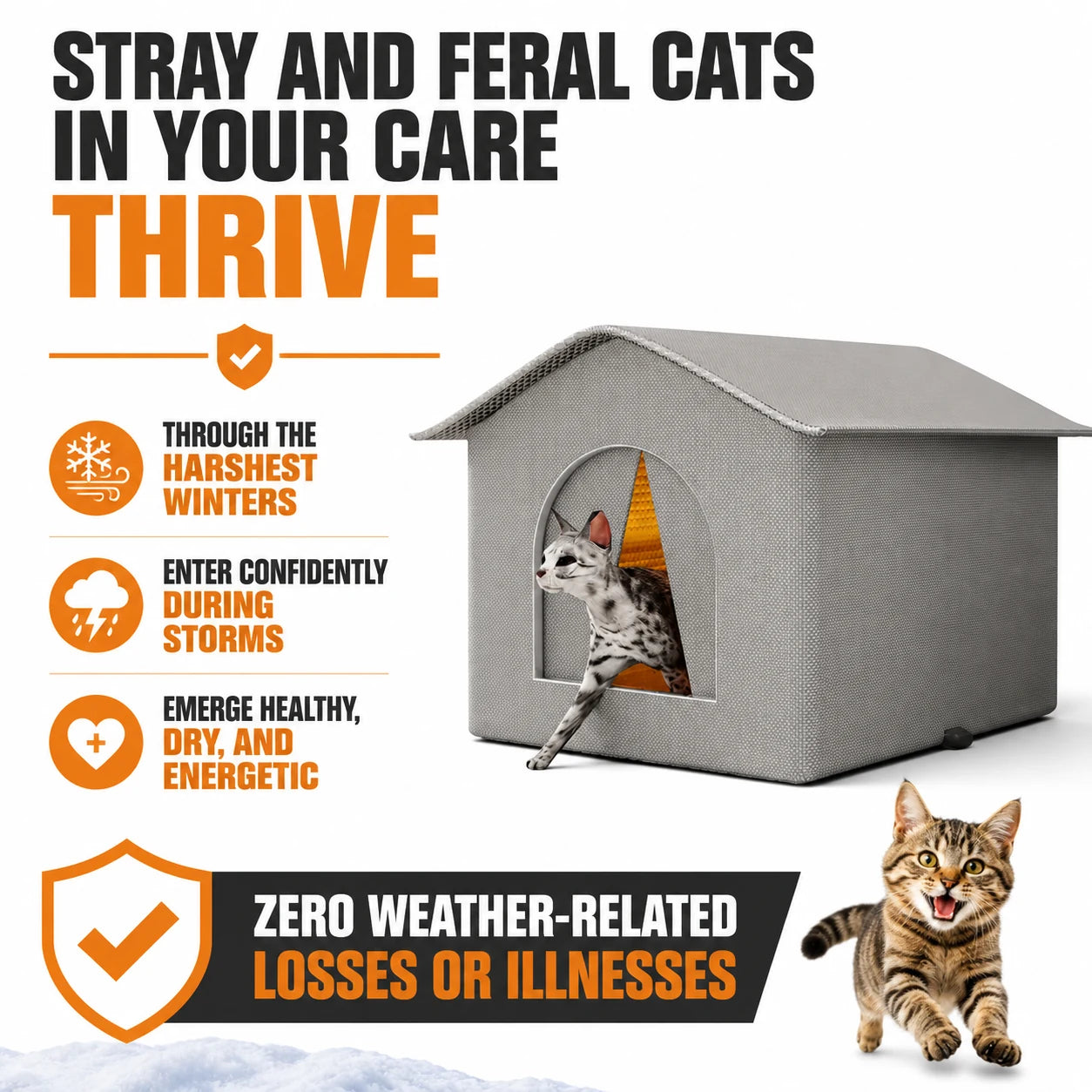 In this guideWildCove$89.99View
If you want a heat source, FelineVault is a heated cat house with six-sided foam and reflective insulation. It includes a 20W thermostat-controlled heating pad with nine heat settings and a power plug with a timing switch. It has two entry doors, a scratch-resistant lining, and a reinforced frame that arrives assembled and folds flat for storage.
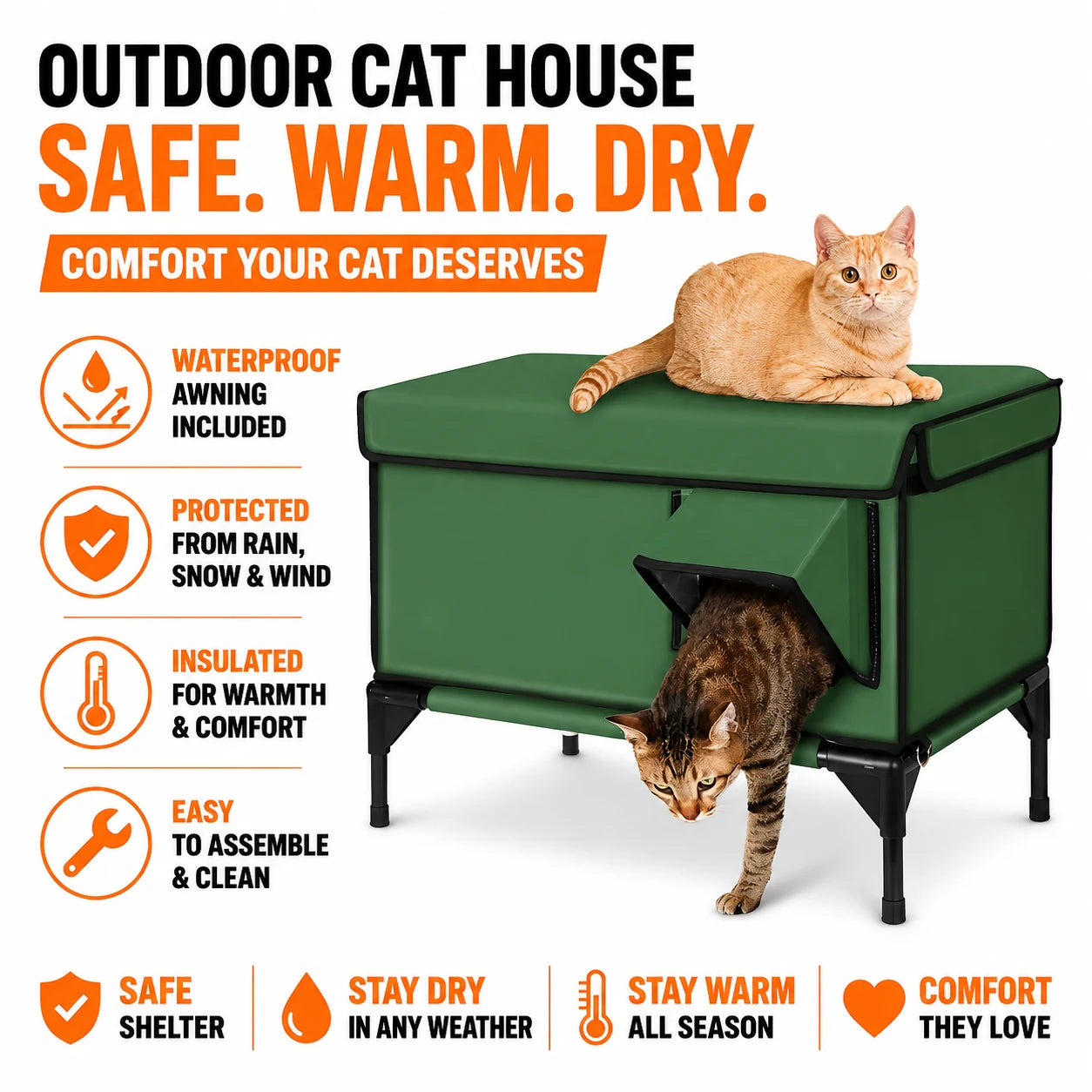 In this guideFelineVault$229.99View
Field note
Any heated house needs an outlet within reach of the cord. Follow the manual, keep the plug and cord off wet ground, and ask an electrician about outdoor outlet options before you run a cord outside.
Themed and Custom Designs
Unique cat houses, such as a strawberry cat house or a valentine cat house, make a good indoor accent. Judge them the same way: check the doorway, the interior and the cleaning method. A novelty shape with a small opening or a fixed, non-washable liner is hard to keep clean.
Custom cat houses let you choose the dimensions, which helps with large breeds or a multi-cat home. Ask the maker for the interior measurements in writing and about the finish used on any wood. If you plan a DIY build, the same checks apply to your own plans.
Luxury Cat House Decision Checklist
- Decide indoor or outdoor. This sets the materials and the budget priorities.
- Measure your cat, then compare against the interior size on the listing.
- Count the cats. Choose two entrances for shy cats, feral cats or shared houses.
- Check the floor. Outdoors, it should be raised and insulated.
- Look for removable, wipeable or washable parts.
- Decide on heat. If yes, confirm outlet access and read the manual.
- Confirm where it will sit and whether the spot is flat, sheltered and in the cat's routine.
- Only then choose the style, color or theme.
Placement and Care
Set an indoor house in a quiet corner away from foot traffic, ideally near where the cat already naps. Add a familiar blanket and leave the entrance clear. Cats need time to adopt a new spot, so do not push the cat inside.
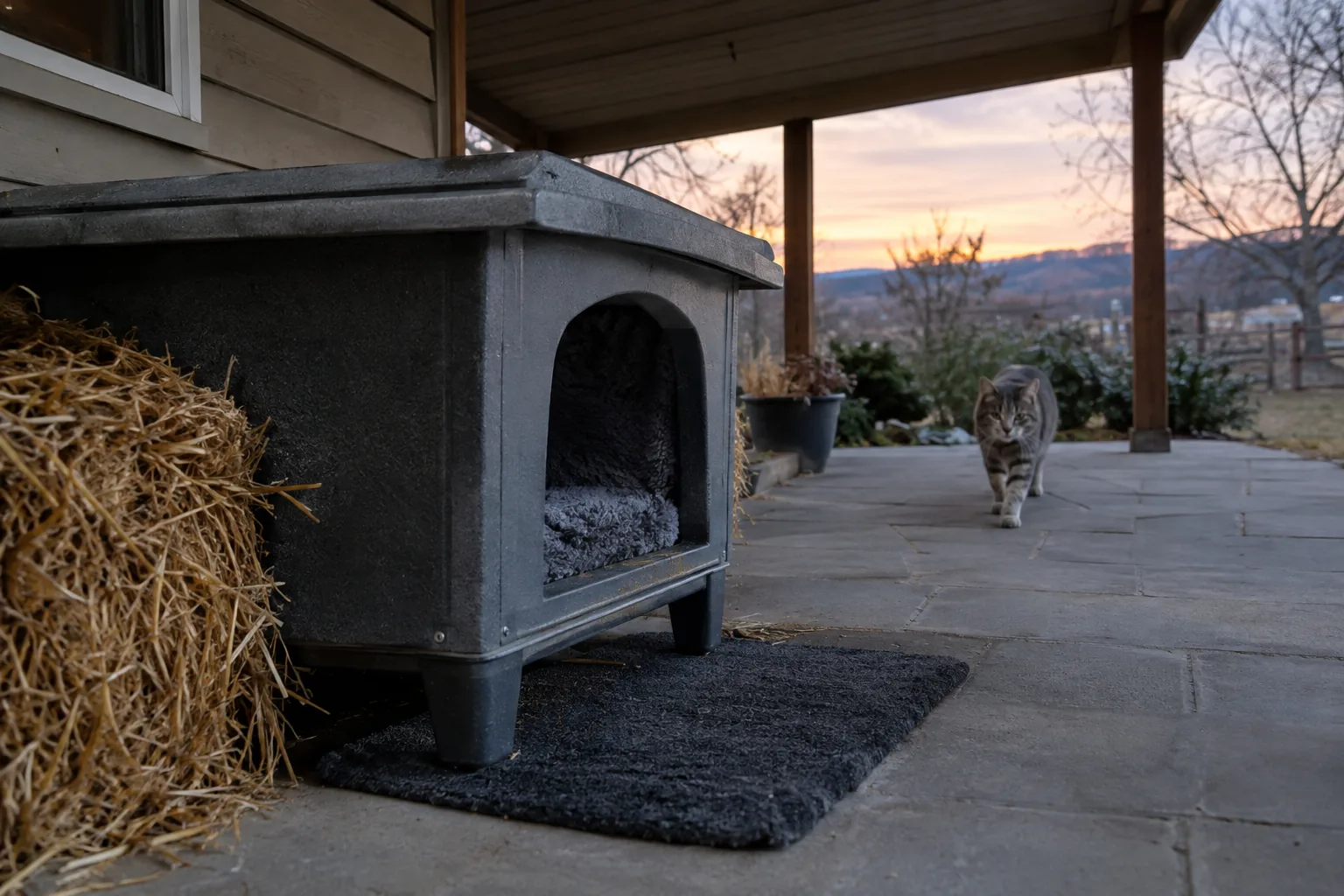
For outdoor houses, place the shelter on a flat, slightly elevated surface, near the cats' feeding spot and turned so the openings face away from prevailing wind. Fill it with dry straw and keep the openings clear. Wipe the interior when needed, and replace damp straw.
Common Mistakes
- Buying for looks and finding the doorway is too small.
- Placing an indoor wooden house outdoors.
- Using blankets as outdoor bedding, which can hold moisture.
- Blocking one entrance with a wall or fence.
- Running a heating cord without reading the manual.
You can browse more options in the Beds, Houses & Scratching Posts collection. If you want a post beside the house, Cat Scratcher Posts: Sisal vs Cardboard and How to Choose compares materials.