Dog Training for Barking: A Trigger-by-Trigger Plan
Dog training for barking starts with the trigger, not the noise. Find out whether your dog barks at the door, from boredom, to alert or to demand, then follow the matching plan.
The Millbrook Team
October 26, 2026 · 8 min read
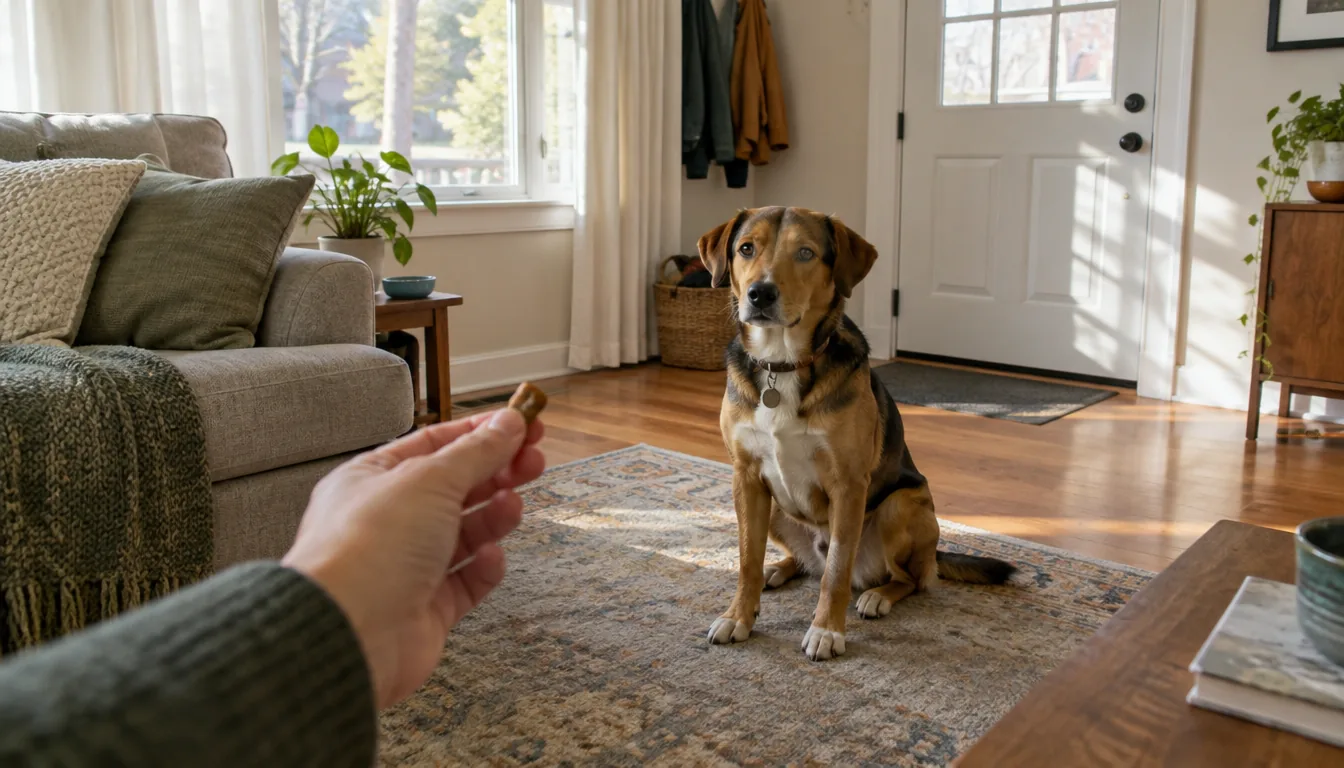
Dog training for barking works when you first name the trigger, then change what happens before and after the bark. Door barking, boredom barking, alerting and demand barking each need a different plan, and a single trick for all four misses the cause. Below you will find a simple way to identify your dog's trigger, a step-by-step plan for each one, and a clear view of when a deterrent device fits and when it does not.
Identify the barking trigger first
Spend two or three days noting when your dog barks, where, and what happened just before. Write down the time, the place, and what your dog got right after barking. That last detail matters, because a bark that gets attention, a door opening or a snack will repeat.
A veterinary college page on excessive barking in dogs also points out that the cause and the setting both shape the plan. Use the table to match what you see to a trigger.
| Trigger | What you see | Core fix |
|---|---|---|
| Door and doorbell | Barking and spinning when a bell rings or a visitor arrives | Teach a place cue and reward calm at the door |
| Boredom | Barking when left alone in the yard or a quiet house, often in the same time window each day | Add exercise and food puzzles before the quiet stretch |
| Alerting | Barking at the window, fence line, passing people or outside sounds | Limit the view, then reward quiet after one or two barks |
| Demand | Barking at you while you eat, work or hold a toy or leash | Ignore the bark, reward the pause, and ask for a simple behavior first |
Some dogs mix two triggers. Start with the one that happens most often and add the second plan after a week.
Dog training for barking: rules for every plan
Four habits apply to every plan. First, reward quiet, not just the cue. Hand over a small treat within a second or two of the dog going quiet, even if the quiet lasts only a moment.
Second, keep the steps small. Train at a distance or volume where your dog can still think, then move closer a little at a time. Third, manage the setting between sessions, so your dog does not rehearse the barking in between. Fourth, use one short quiet cue, the same word each time, and do not shout it. Shouting can sound like you are barking along.
If barking began suddenly, or comes with limping, restlessness at night or changes in appetite, ask a veterinarian to rule out a health cause before you start training.
Plan for door and doorbell barking
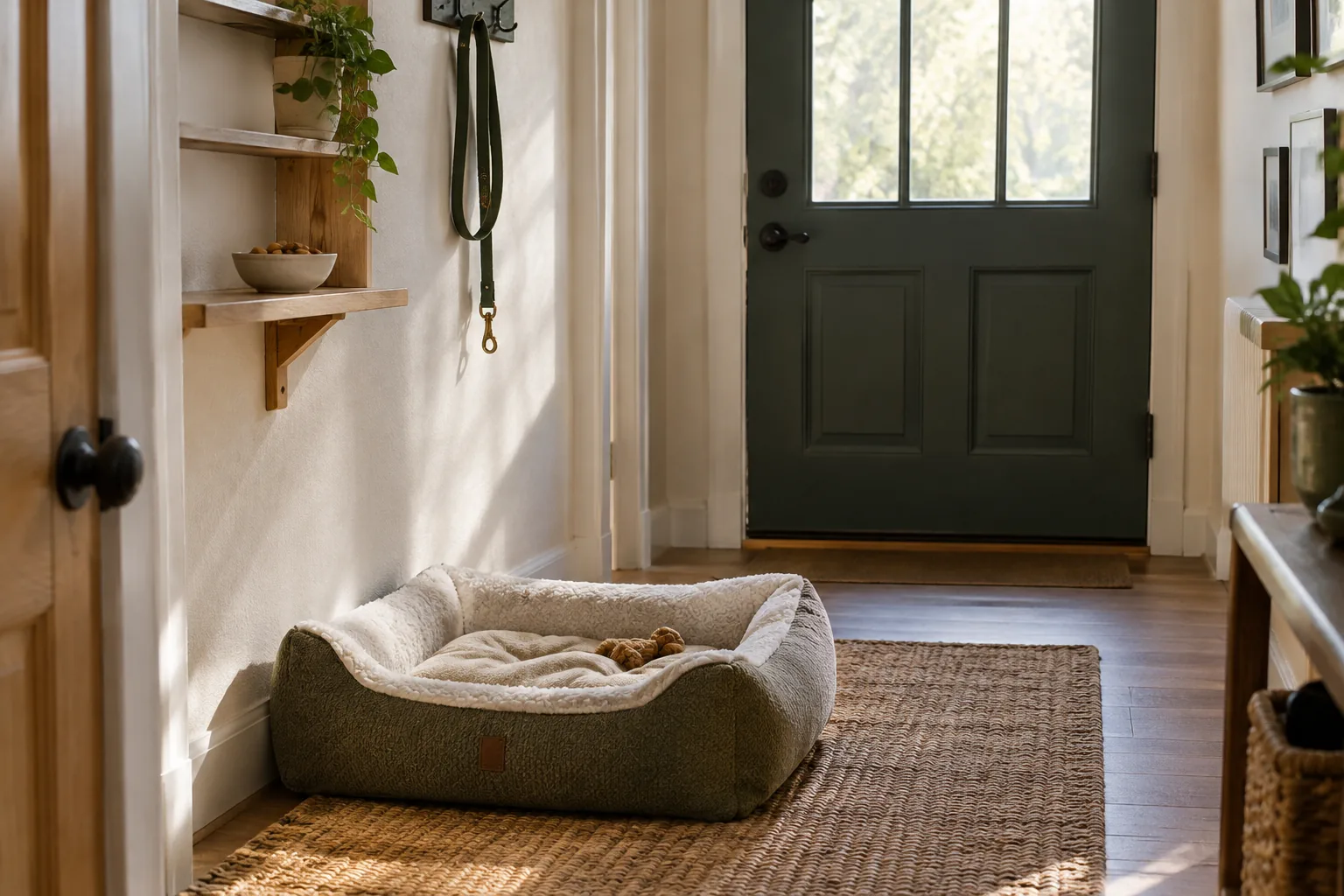
Door barking is excitement plus habit: the bell rings, the door opens, and the visitor appears, so barking seems to work. The fix is a spot your dog goes to instead of the door.
- Place a mat or bed several feet from the door and teach your dog to go there for a treat, with no bell involved yet.
- Add a cue word such as "place" and reward each time your dog settles on the mat.
- Play a recorded doorbell at low volume, cue the place, and reward quiet on the mat. Raise the volume over several days.
- Have a helper ring the real bell or knock. Reward your dog for staying on the mat while you open the door.
- Add the greeting last. Let guests in only while your dog stays on the mat.
Keep each session to a few repeats. If your dog breaks the stay and barks, reset with a quieter bell or a longer distance rather than repeating the same step.
Plan for boredom barking
A dog that barks in the yard or the house with nothing to do needs an outlet, not a correction. Build in a walk, sniffing time or a play session before the part of the day when barking starts. Then give your dog a job to do during the quiet stretch.
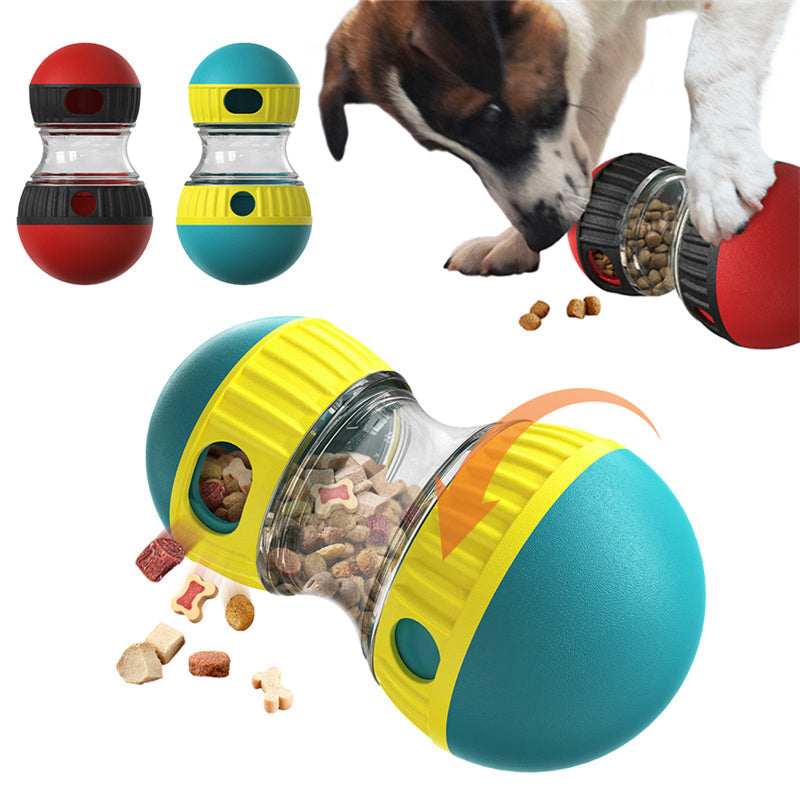
Food puzzles fit here. KibbleQuest is a dog treat ball you fill with dry kibble or small treats through a transparent center chamber that twists open. Your dog nudges and rolls it across the floor, and food drops out through adjustable holes. Open the holes wider while your dog is learning, then close them down as your dog gets used to the puzzle.
It is a food puzzle, not a chew toy, so watch your dog during the first sessions. The nylon body has rubber bumpers for rolling on hardwood and tile, and the chamber twists open so you can wash it by hand with warm soapy water and let every part dry fully before the next fill.
 In this guideKibbleQuest$59.99View
Boredom checklist
- Exercise and sniffing time before you leave or get busy.
- A food puzzle ready at the start of the quiet window.
- A rotation of toys, so the same ones are not out all week.
- A short training game, such as "find it" with treats scattered on the floor.
Plan for alerting and territorial barking
Alerting is a dog telling you that something is outside. A bark or two is normal, and the goal is to teach your dog to pause after you have acknowledged it. A university veterinary article on territorial barking describes the same pattern of cutting off the view and rewarding calm behavior.
- Reduce the trigger. Close curtains, add window film or block the fence line view while you train.
- When the first bark comes, walk over, say "thank you" in a calm voice and look at what your dog saw.
- Ask for a simple behavior such as a sit or a move to the mat.
- Reward the quiet right away, then reward it again after a few seconds of calm.
- Practice with a helper walking past at a distance, and shorten the distance a little each day.
If the barking comes with growling, lunging or stiff posture toward people or animals, that is a different problem. Skip do-it-yourself fixes and ask a qualified dog trainer or a veterinary behaviorist to assess it in person. Aggressive dog training should be handled with that kind of hands-on help, not with a device.
Plan for demand barking
Demand barking is a request: food, attention, a toy, a door opened. Whatever the dog gets after the bark teaches the dog to bark again, so the plan is to change what pays off.
- Pick a moment when your dog is barking at you, and turn away without speaking or eye contact.
- Wait for even a brief pause. Say "yes" and reward at once.
- Lengthen the pause a little at a time before you reward.
- Teach a polite request, such as sitting or touching your hand, and respond to that every time.
Expect barking to get louder for a few days when it stops working. That is a normal bump in the plan. If you give in during that stretch, your dog learns that louder barking works, so decide ahead of time that you will wait it out.
When a deterrent device fits, and when it does not
A bark deterrent can be one tool in a plan, mostly for interrupting a bark so you can reward the quiet that follows. It does not teach your dog what to do instead, and it does not address the reason behind the bark. Use it alongside the plans above, not in place of them.
| Situation | Device fit |
|---|---|
| Alerting or door barking where you are present and can reward quiet | Can fit as an interrupter during short sessions |
| Barking at a fixed spot such as a fence or a door | A unit you can mount near that spot can fit while you are present to trigger it and reward quiet |
| Boredom barking while you are away | Does not fit; add exercise and puzzles |
| Barking tied to fear, separation distress or a health change | Does not fit; ask a veterinarian or a trainer |
| Growling, lunging or snapping | Does not fit; get in-person help |
Handheld ultrasonic options
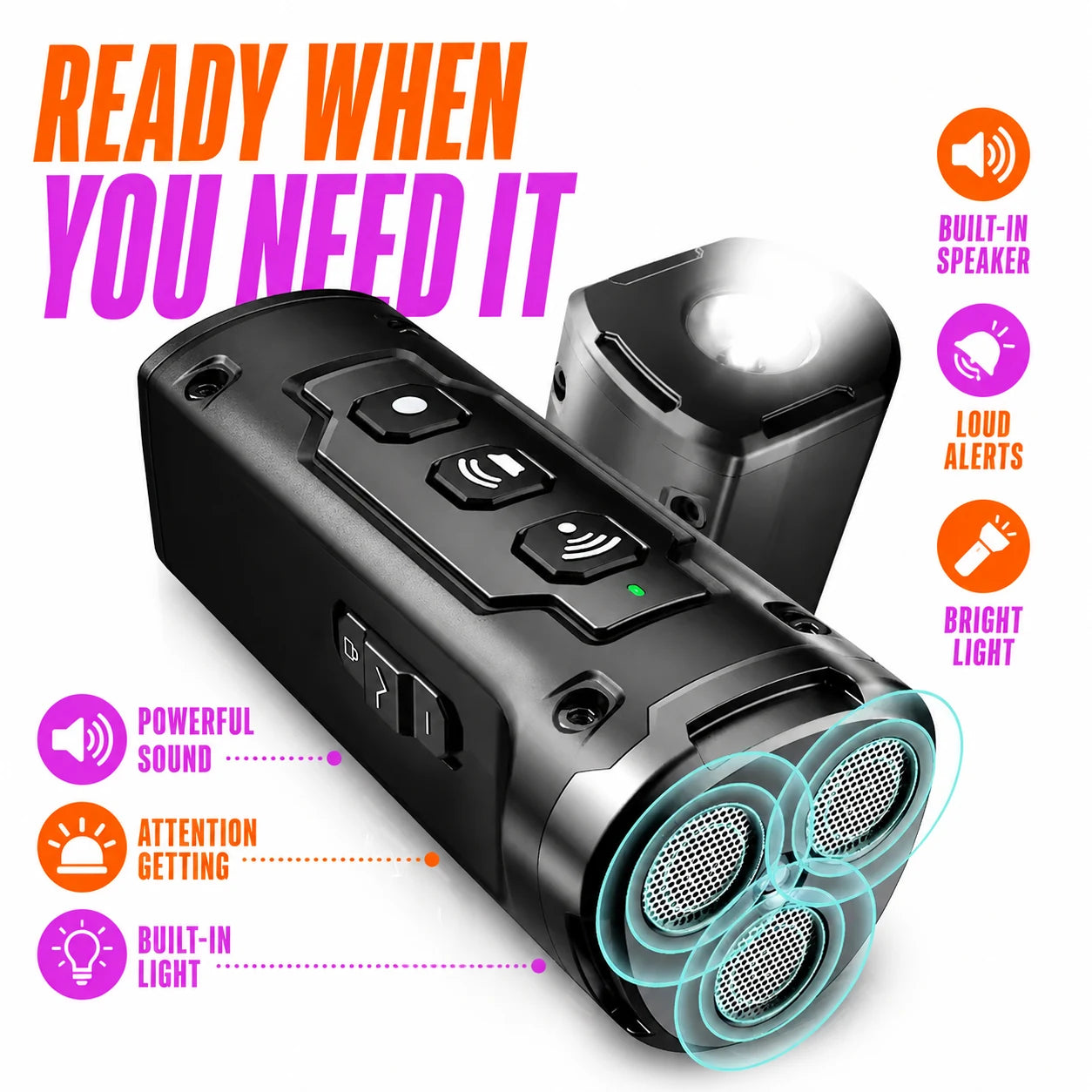
BarkWave Pro is a handheld ultrasonic device with four sound modes and a deterrent light. You aim it toward your dog and press the mode button when the unwanted barking starts, choosing a sonic cue, a deterrent tone or the flash signal depending on how your dog responds. It has a wrist strap for walks, charges over the included USB cable, and comes with a protective carrying case and a quick-start manual.
 In this guideBarkWave Pro$119.99View
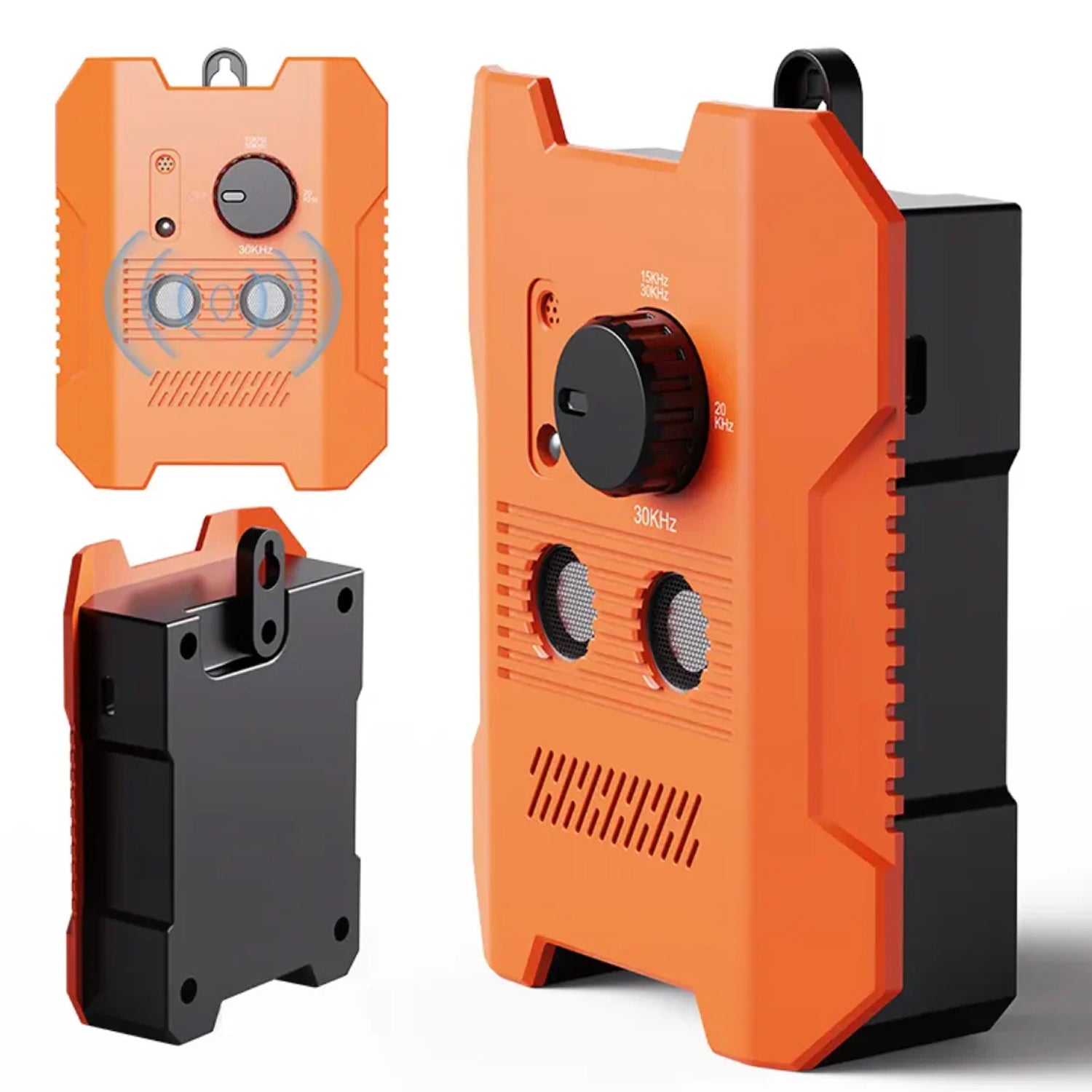
SonicHush is a handheld ultrasonic anti-barking device with a three-position dial: 15 KHz, 20 KHz and a sweep setting that cycles through frequencies from 15 KHz to 30 KHz. It uses ultrasonic sound only, with no physical contact. A USB-C port handles charging, and the mounting bracket lets you fix it to a fence post or wall, or set it by a door where barking tends to start. You point it toward your dog when barking starts, and you can pair each use with a spoken "quiet" command.
 In this guideSonicHush$79.99View
Field note
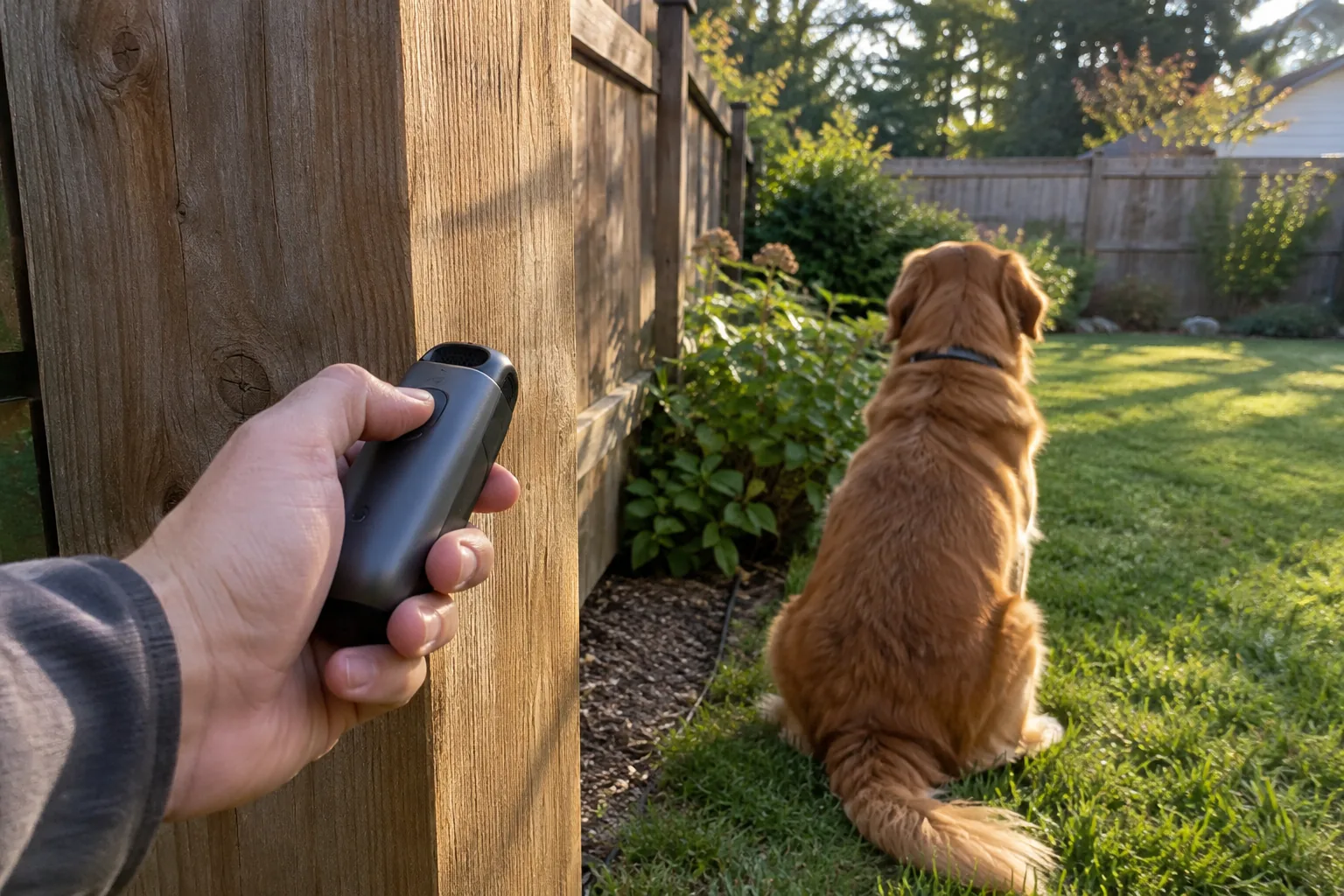
Keep sessions short and use the same routine each time: signal, pause, then reward the first moment of quiet. Read the manual for your device before the first session, and end the session if your dog seems stressed.
What about collars?
If you are weighing dog training with collar tools for barking, note that a bark deterrent device is not a collar. A remote collar is a separate piece of equipment with its own learning curve and its own cautions. If you are considering one, read our step-by-step introduction plan for remote collar dog training first, and talk with a trainer who uses reward-based methods before you decide. Check your local rules and the manual too.
For barking, the trigger plans above come first. Collar dog training does not replace them, and it does not address boredom, fear or demand.
Common mistakes and a weekly check
- Rewarding the bark by opening the door, handing over food or talking to the dog.
- Training only after the dog is already worked up.
- Changing the cue word or the routine from one day to the next.
- Skipping exercise and expecting a device to fill the gap.
- Raising the difficulty too soon, such as a louder bell or a closer visitor.
Once a week, look back at your notes. Count the barking episodes, check which trigger shows up most, and move one step up only when your dog handles the current step several times in a row. For more ideas on toys, puzzles and behavior tools, browse the Training, Behavior & Play collection. If you are also working on house habits, the day-by-day potty training plan uses the same reward-and-repeat routine.