How to Keep a Dog Out of the Litter Box: Setups and Training
Pair a barrier only the cat can pass, such as a gate gap, top entry or enclosed box, with a simple "leave it" cue. Setups below are ordered by cost and room size.
The Millbrook Team
October 30, 2026 · 7 min read
The short answer on how to keep dog out of litter box reach: combine a physical barrier that only the cat can pass with a simple training cue for the dog. Start with the lowest-cost option that fits your room, such as a gate with a cat gap or a door held ajar, and add an enclosed or top-entry box if the dog still gets through. This guide orders the setups by cost and room size and pairs each with one training step.
If you cannot supervise the box every hour of the day, the barrier does the daily work and the training makes it hold.
Why dogs go for the litter box
Yes, some dogs do get into litter boxes. Clumping litter and waste have a strong smell, and a box at nose height is easy to investigate, so a curious dog may sniff, dig or snack. Puppies and young dogs explore with their mouths, which makes the box a repeat stop.
Scratching through litter also scatters it across the floor. If your dog eats litter or waste, call your veterinarian for advice instead of waiting to see what happens.
Blocking access is the main step, because scolding does not teach the rule. A dog that is told off at the box learns that you are unhappy, not that the box is off limits, so pair every barrier with a clear cue and a reward.
How to keep dog out of litter box: pick a setup by room size and cost
Use this table to choose where to start. Cost levels are relative to each other, from a gate you may already own to an automatic box.
| Setup | Fits this room | Cost level | Training step |
|---|---|---|---|
| Baby gate with a cat-sized gap | Spare room, laundry room, hallway | Low | Teach "leave it" at the gate |
| Door latch or stop that holds the door ajar | Bathroom, closet, small apartment | Low | Reward the dog for staying outside the doorway |
| Raised shelf or platform for the box | Any room with a sturdy surface | Low to medium | Teach a "stay" away from the shelf |
| Top-entry box | Small rooms with little floor space | Medium | Redirect the dog to a chew or mat |
| Enclosed box or litter box furniture | Living room, bedroom, hallway | Medium to higher | Reward calm behavior near the cabinet |
| Enclosed automatic box | Room with a flat spot and an outlet | Higher | Teach the dog to ignore the box while it runs its cycle |
Small dogs can fit through gaps and entries that block a large dog, so measure your dog before you buy anything. Large cats need a bigger opening and interior, so measure them too.
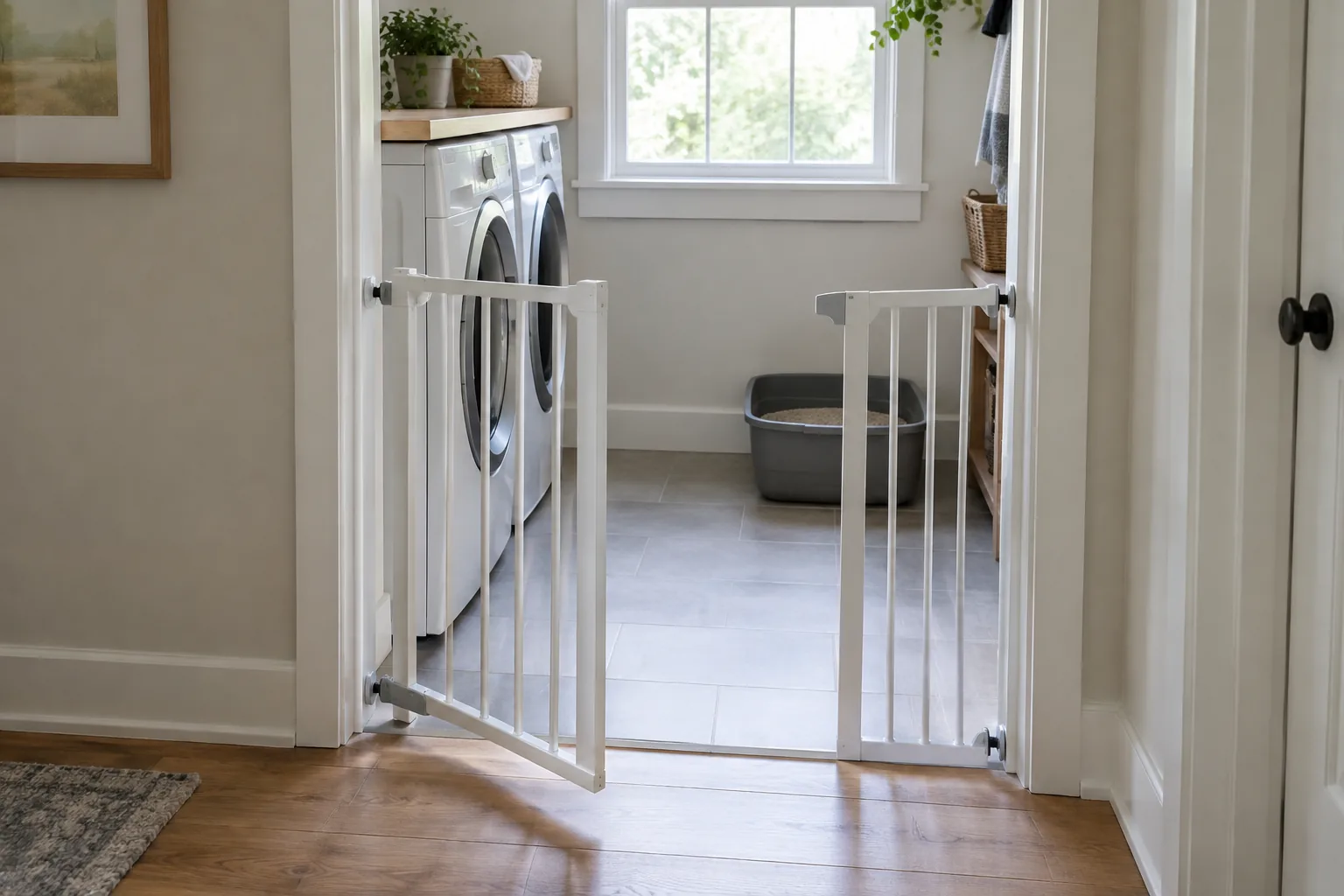
Low-cost fixes: gates, doors and shelves
Baby gate with a cat gap
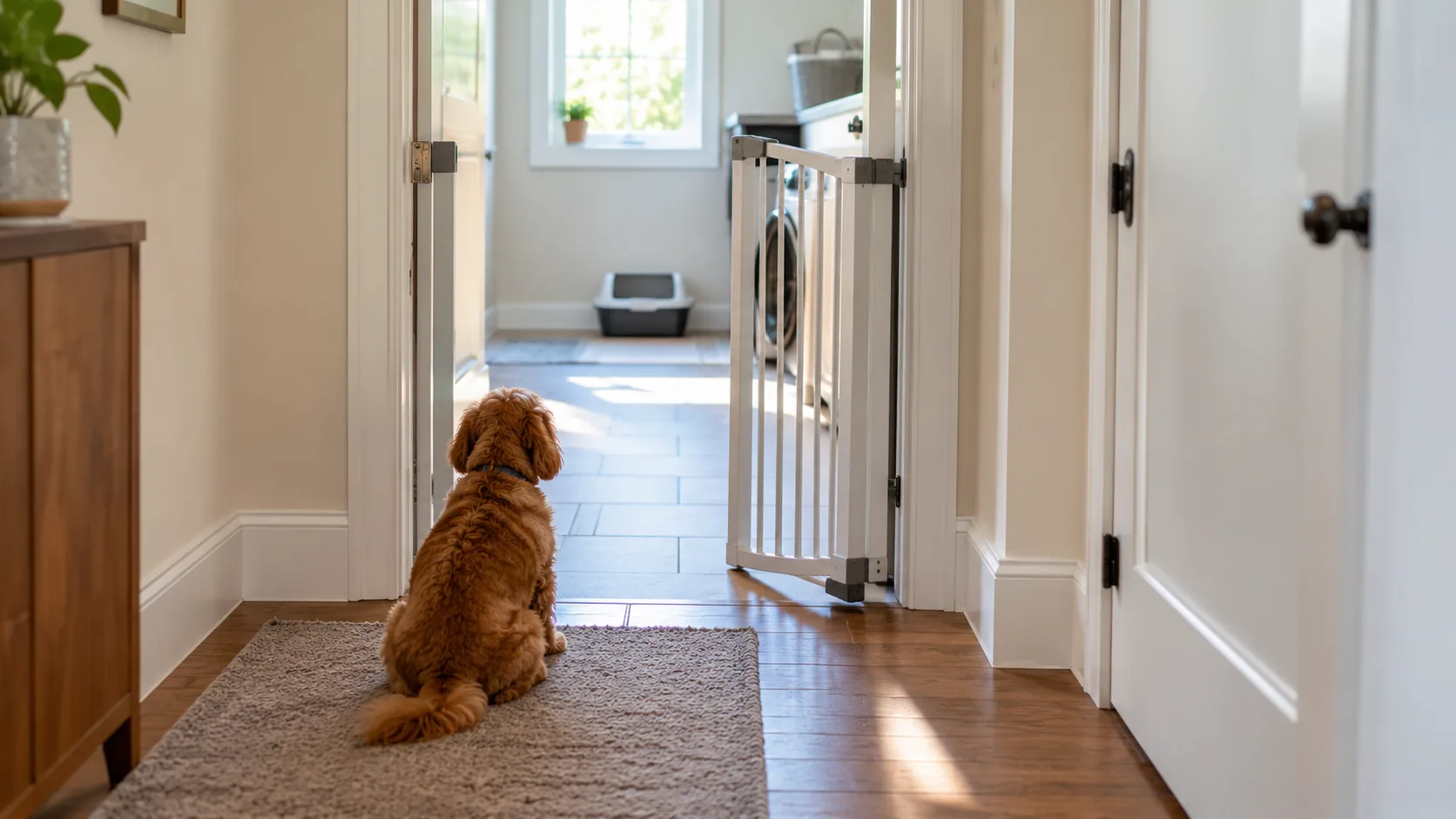
Mount a baby gate across the doorway of the room that holds the box. Leave a gap at the bottom or choose a gate with a small cat door, sized so your dog cannot pass. Check that the cat can clear it without squeezing, because a cat that avoids the box creates a bigger problem.
For training, stand on the dog's side of the gate and say "leave it" when the dog looks toward the box. Reward the moment the dog turns away. Repeat a few times a day and keep practicing until the dog turns away on its own.
Door latch or door stop
A latch that holds the door open a few inches gives the cat room and blocks a larger dog. This suits a bathroom or closet in a small apartment. For more placement ideas, read litter box solutions for small apartments.
Teach your dog to wait in the hallway. Toss a food reward a few steps away from the door, then say the cue "place" so the dog learns where to go instead.
Raised shelf or platform
A sturdy shelf, counter-height bench or cat tree platform puts the box above a dog's reach. Confirm the surface holds the box when full and that your cat can jump up and down without trouble. Older cats or kittens may not manage the height, so use a ramp or pick another setup.
Field note
After you change the setup, watch your cat use it once. If the cat hesitates at the gate, gap or height, adjust it that day so the cat keeps using the box.
Entry height and enclosed boxes
When you cannot gate off a room, change the box itself. A top-entry box has an opening on the lid, so a dog has to reach down from above and cannot walk in. Top entries suit cats that can jump and dogs that are not tall enough to reach in. Large cats need a wide opening and a deep interior, so check the dimensions on the product page.
A litter box cabinet, sold as litter box furniture, hides the box inside a piece that looks like a side table or bench. Look for a side entry sized to your cat and a dog that cannot fit its head through. Dog-resistant claims vary by model, so read the measurements and not the label.
Training here is simple: place a chew or a mat several feet from the cabinet, and reward the dog every time it goes there instead of sniffing the box.
Automatic litter boxes in a dog household
An automatic litter box does not block a dog on its own, because the design and opening decide that. Models differ in entry size, in how far the waste bin sits from the opening and in how the moving parts are shielded, so compare measurements before you choose one.
Use this checklist when you set one up:
- Place it on a flat surface near an outlet, and follow the manual for power and assembly.
- Fill it with the litter your cat already uses, so the only change is the box.
- Put it behind a gate or a closed door if your dog is curious about moving parts.
- Unplug the box before cleaning, and keep the dog away while you handle the panels and the waste bin.
- Let the cat use it a few times before you rely on it, and watch how the dog reacts to the cycle.
Training step: reward the dog for staying on a mat while the box runs, then for walking past it without stopping. If the dog stays fixated on the box, keep the barrier in place.
Training steps that make any setup hold
Pair the barrier with a dog that knows what to do instead. Here are the steps to keep your dog out of the litter box zone with any setup above:
- Teach "leave it" with a food reward in a closed hand, rewarding the dog when it backs off.
- Practice at the barrier with the box in view, rewarding every look away.
- Teach a "place" cue to a mat or bed in another room.
- Add short absences, then longer ones, and reward the dog on return if it stayed put.
- Scoop the box daily, because a clean box gives a sniffing dog less to investigate.
Keep sessions to a few minutes. For general obedience, puppy training week by week covers cues and short sessions.
Sprays, DIY ideas and common mistakes
A pet deterrent spray can work as a reminder around the outside of a barrier. Read the label, spray the surroundings and not the litter or the box itself, and ask your veterinarian before using any scent product in a home with cats. A spray does not replace a barrier.
For a DIY take on dog access to the box, a plastic storage bin with a cat-sized hole cut in the side makes a covered box. Sand the cut edges so they are smooth, and make sure the cat can turn around inside.
Check this list of common mistakes:
- Gate gaps that are too narrow for a larger cat.
- A box placed in a dead end where the cat feels trapped.
- Scolding the dog after the fact instead of rewarding the right choice.
- Skipping daily scooping, which keeps the smell strong.
- Moving the box without letting the cat know where it went.
For lingering odor around the box area, see how to get dog smell out of the house.