What Is an E Collar? Static, Vibration and Tone Modes Explained
An e collar is a remote-controlled training collar that sends a tone, vibration or static cue to a receiver on your dog's neck. This guide compares the modes, levels, fit rules and common mistakes.
The Millbrook Team
October 29, 2026 · 7 min read

What is an e collar? It is a dog training collar with a handheld remote and a receiver worn on the neck. When you press a button, the receiver sends a cue: a tone, a vibration, or, on some models, a low-level static stimulation. The cue is meant to get your dog's attention so you can communicate a command you have already taught.
The name is short for electronic collar. It is different from the cone-shaped collar a veterinarian may supply after a procedure, which is covered near the end of this guide. Below you will find a plain comparison of the modes, how levels work, fit rules and the mistakes to avoid.
What is an e collar and how does it work?
An e collar has two parts. The handheld remote is what you hold, and the receiver collar sits on your dog's neck. The two pair with each other, so a button press on the remote triggers the cue on the receiver.
Some trainers describe the tool as a communication device, not a leash replacement. The dog first learns a command through ordinary training, such as sit or come. The cue is then paired with that known command, so the dog can respond from a distance or in a distracting place.
What does a collar do on its own? A regular flat collar holds ID tags and a leash clip. An e collar adds a remote cue on top of that, which is why the fit and the settings matter more than they do on a plain collar.
Static, vibration and tone modes compared
An e collar can offer one or more of three modes. The table sets them side by side so you can see what each one is and how it is typically used.
| Mode | What the receiver does | Typical use | Things to check |
|---|---|---|---|
| Tone | Plays a beep or sound from the receiver | Marking a moment, getting attention, pairing with a known command | Dogs differ in how they react to sound; the tone means nothing until you teach it |
| Vibration | Buzzes the receiver against the collar contact area | A tap-style cue for a dog that already knows the command, or for a dog that does not respond to sound | Start at the lowest level and step up one at a time |
| Static | Delivers a low electrical stimulation through two contact points | Used by some trainers for off-leash work, under guidance | Follow the manual, keep contact points snug, and ask a trainer or veterinarian if unsure |
Static stimulation is the most debated mode. Some trainers use it, while others prefer methods built on positive reinforcement and avoid it entirely. A tone or vibration mode gives you a way to use the remote without electrical stimulation at all.
What the levels mean
Levels are the steps of intensity the remote can send. Models with many levels let you make small changes. Begin at the lowest level, raise it one step at a time, and watch for a small response such as a head turn or an ear flick. That is the level your dog notices, and there is no reason to go higher.
Turn the level back to the base setting at the end of each session, so the next session starts low again.

What an e collar is used for
An e collar can serve a few distinct jobs. Knowing which one you have helps you decide whether the tool fits at all.
- Recall and off-leash work in open areas, where a long line is not practical.
- Reinforcing known commands at a distance, such as sit, down or stay.
- Interrupting an unwanted behavior such as chasing, once the dog understands the alternative.
- Bark control, where a collar responds to barking, which is a separate type of device from a remote trainer.
- Containment systems, where a receiver reacts at a set boundary.
An e collar does not teach a dog what you want. It adds a signal to training that already exists. If your dog has not learned the command, start there. The puppy training plan covers the basics, and the barking plan helps you find the trigger before you reach for any collar.
A tone-and-vibration option to consider
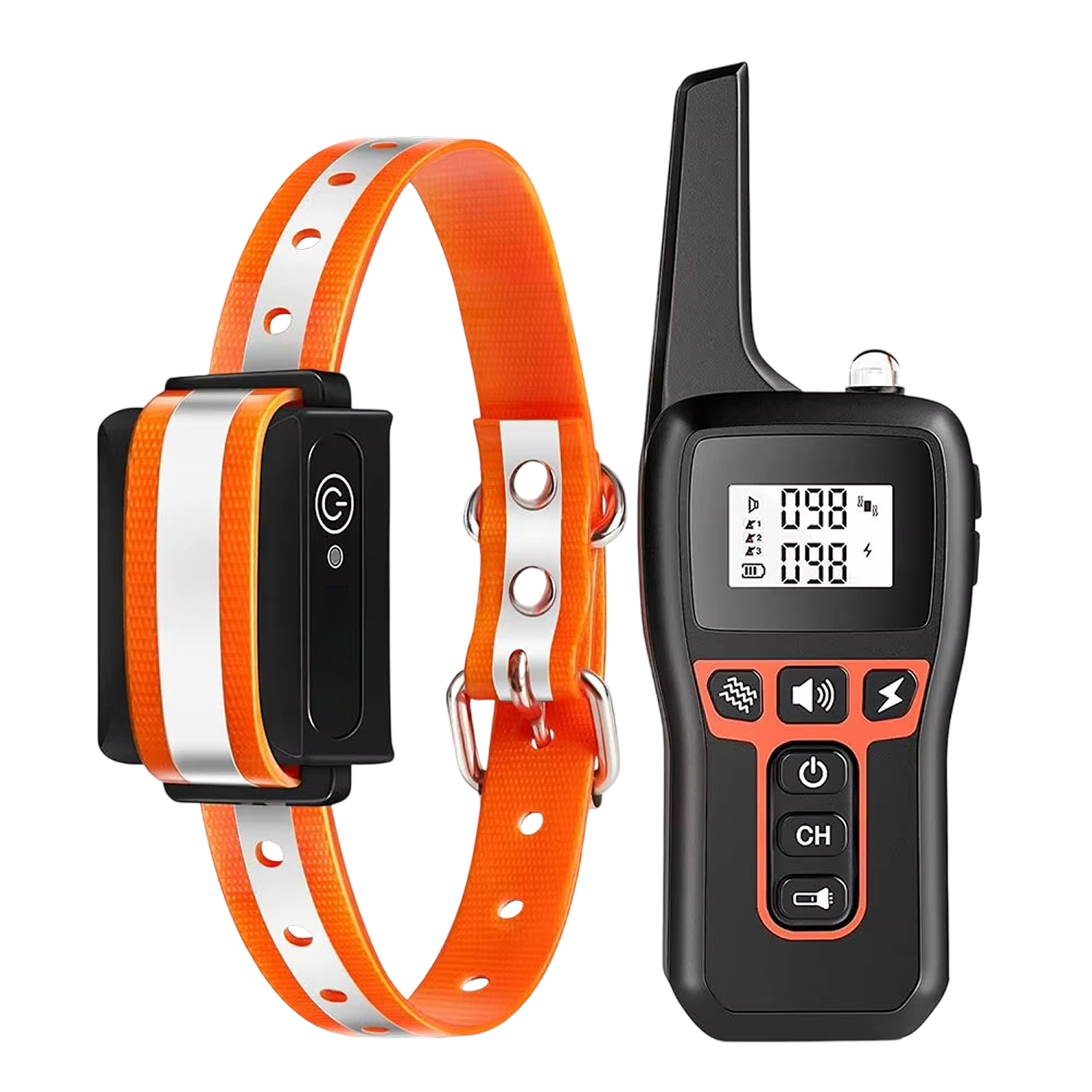
If you want the remote cue without static stimulation, a tone and vibration collar is the narrower choice. PawSignal is a dog training collar with a handheld remote and a receiver that sits on the collar. It sends tone or vibration cues across 100 levels, so you can pair a cue with a command your dog already knows. It has no static mode.
One handset works with a setup of three dogs. The receiver collar uses soft TPU with silicone-cushioned contact points, and an adjustable belt lets you size it for dogs weighing 4 to 120 lbs. An integrated LED flashlight and a reflective strip are part of the kit for evening walks and low-light sessions.
The box holds the smart receiver collar, remote control, adjustable reflective belt, replacement accessories, USB charging cable and user manual. Keep the charging port cover closed firmly during outdoor sessions, especially near water, mud or rain.
 In this guidePawSignal$99.99View
Fit and safety rules for any e collar
Fit decides whether the receiver works as intended. These rules apply to every model, so check them against the manual for yours.
- Switch off the receiver before you adjust the strap.
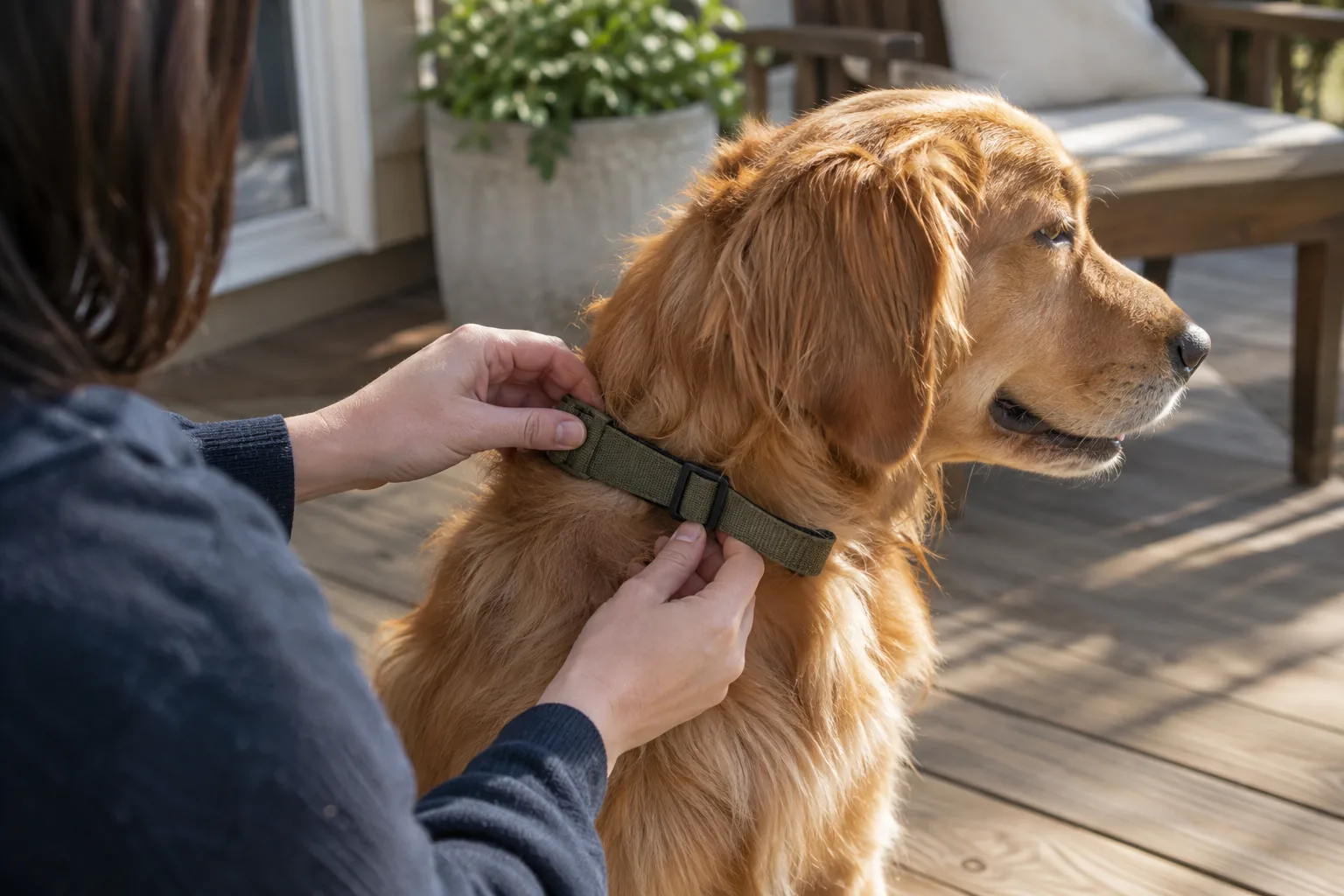
- Place the receiver on the side or underside of the neck, with the contact points touching the skin through the coat.
- Snug the strap so the receiver does not rotate, yet you can still slide a finger or two under it. The manual lists the exact fit.
- Check the skin under the contact points after each session.
- Move the receiver to a different spot on the neck from time to time, and take the collar off when training is over.
- Keep the collar charged and the contact points clean, as the manual describes.
Vibration and tone modes avoid electrical stimulation, but dogs differ. Some dogs are startled by a buzz or a sound. If your dog is nervous, has a skin condition or has a history of reacting strongly to new equipment, ask a veterinarian or a qualified trainer before you start.
Field note
Before you put the receiver on your dog, set the remote to the lowest level, and check that the manual's pairing steps are done with the collar off the dog.
How to introduce the collar step by step
Go slowly. The goal of the first sessions is for the dog to connect the cue with a command, not to cover distance.
Before the first cue
Let your dog wear the collar for short periods with the remote off, so it becomes ordinary. Pair the remote with the receiver as the manual describes, and keep the first sessions on a leash in a quiet place.
Finding the level
Start at the lowest level and press the button once. If there is no reaction, go up one step. Stop when you see a small head turn or ear flick. Then give your command, use the cue, and stop the cue as soon as your dog responds. Keep sessions short, and end on a response you can reward with praise or a treat.
Adding distance
Only after the dog responds reliably on leash should you try a long line, then an enclosed area. For a fuller plan, read the step-by-step remote collar introduction. If you are comparing a training collar with a tracking unit, the combo unit versus two collars guide sets out the differences.
Common e collar training mistakes
- Starting before the dog knows the command, so the cue has nothing to attach to.
- Beginning above the lowest level instead of stepping up one at a time.
- Leaving the cue on after the dog has responded.
- Leaving the collar on for long stretches, or leaving the receiver in one spot on the neck.
- Using the remote when you are frustrated, rather than in planned, short sessions.
- Skipping rewards. Some trainers combine the cue with praise and treats.
- Going it alone with a dog that shows fear or aggression. A qualified trainer can watch your timing and your dog's body language.
How long training takes depends on the dog, the command and how consistent you are, so no one can give a fixed timeline. Short, regular sessions are a more useful plan than a deadline.
The other e collar: the cone
If you mean an e collar after a procedure, you are looking at the cone-shaped Elizabethan collar. It is a wide plastic or soft cone that keeps a dog from reaching a wound or stitches. It has no remote and no stimulation. Follow your veterinarian's instructions on fit, how long to use it and when to remove it.
Browse more gear for teaching and behavior in the Training, Behavior & Play collection.