Screen Doors With Pet Door Built In vs Add-On Pet Door Panels
Built-in pet screen doors arrive ready to hang, while add-on pet doors fit a door or wall you already own. This guide compares fit, security and install steps.
The Millbrook Team
November 8, 2026 · 6 min read
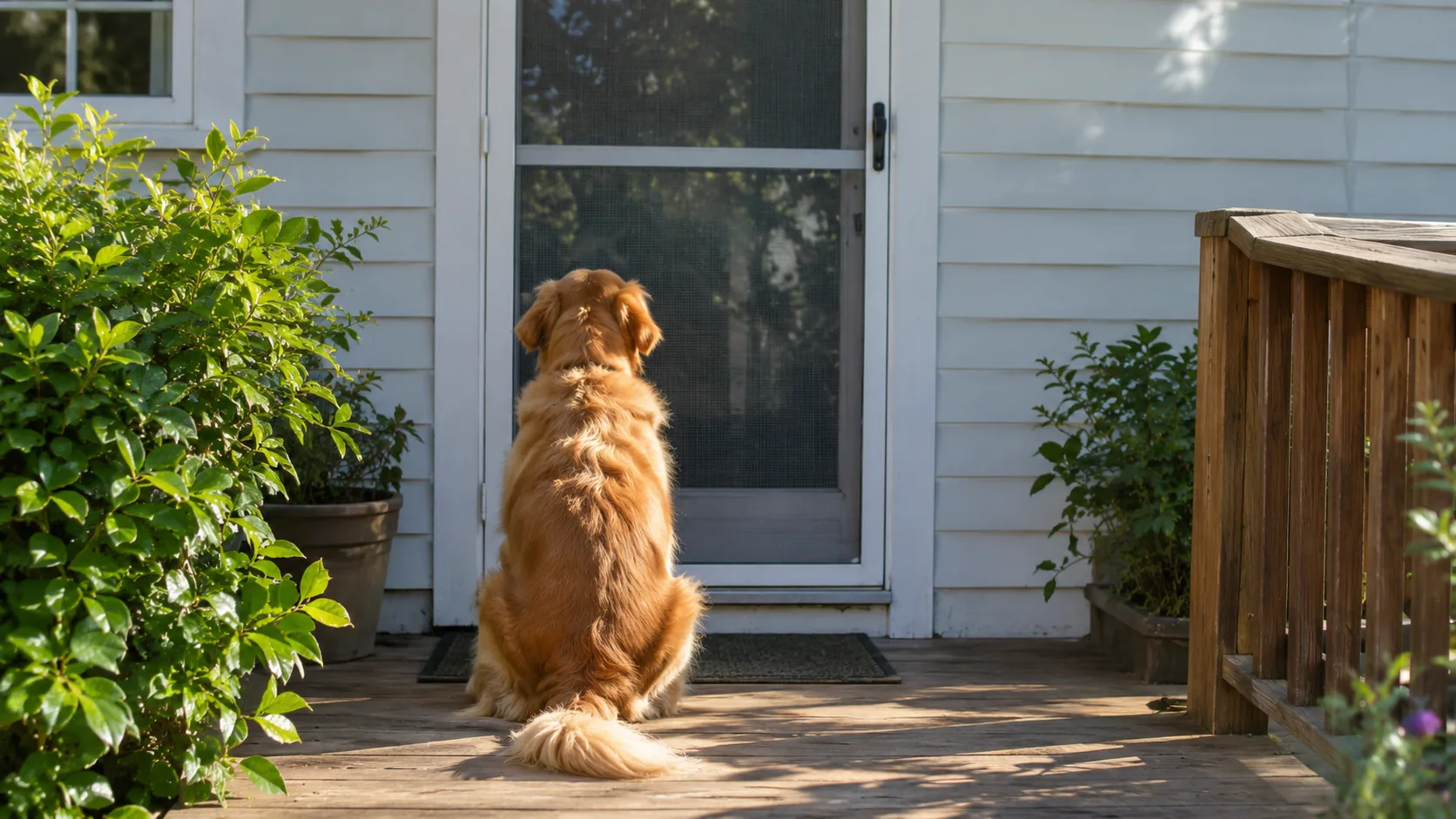
Screen doors with pet door built in are sold as storm doors with a pet panel, hinged screen doors with a flap, and sliding screen doors with a pet insert. A built-in model arrives ready to hang, while an add-on means cutting or fitting a pet door into a door or wall you already own. Pick built-in if you need a new door anyway, and add-on if your current door or wall is fine.
This guide compares the two routes side by side, then walks through sizing, install steps and upkeep so you can decide before you shop.
Screen doors with pet door built in: the types you will find
Most listings fall into three groups. Knowing which one matches your doorway narrows the search quickly.
Hinged storm and screen doors
These hang on a standard entry frame. Some have a pet panel in the lower section of the screen or glass, and some are split-view designs where the lower half holds the flap. Frames come in aluminum, metal and wood, so check the finish against your house trim.
Sliding screen doors for patios
A sliding patio screen with a pet door replaces or sits beside the screen track of a sliding glass door. The pet opening sits in the lower part of the panel, and the panel rolls in the existing track. Measure the track and panel height before ordering, because slider sizes vary.
Pet screen inserts
Some screen doors use a mesh pet section or a security panel in the lower third, with a flap set into it. These are the models to look at if you want pet access without changing the frame style.
To find them, look at home improvement stores, door manufacturers and specialty screen door sellers. Search with your door type (hinged, sliding, storm) and your frame material, since the same words return very different products.
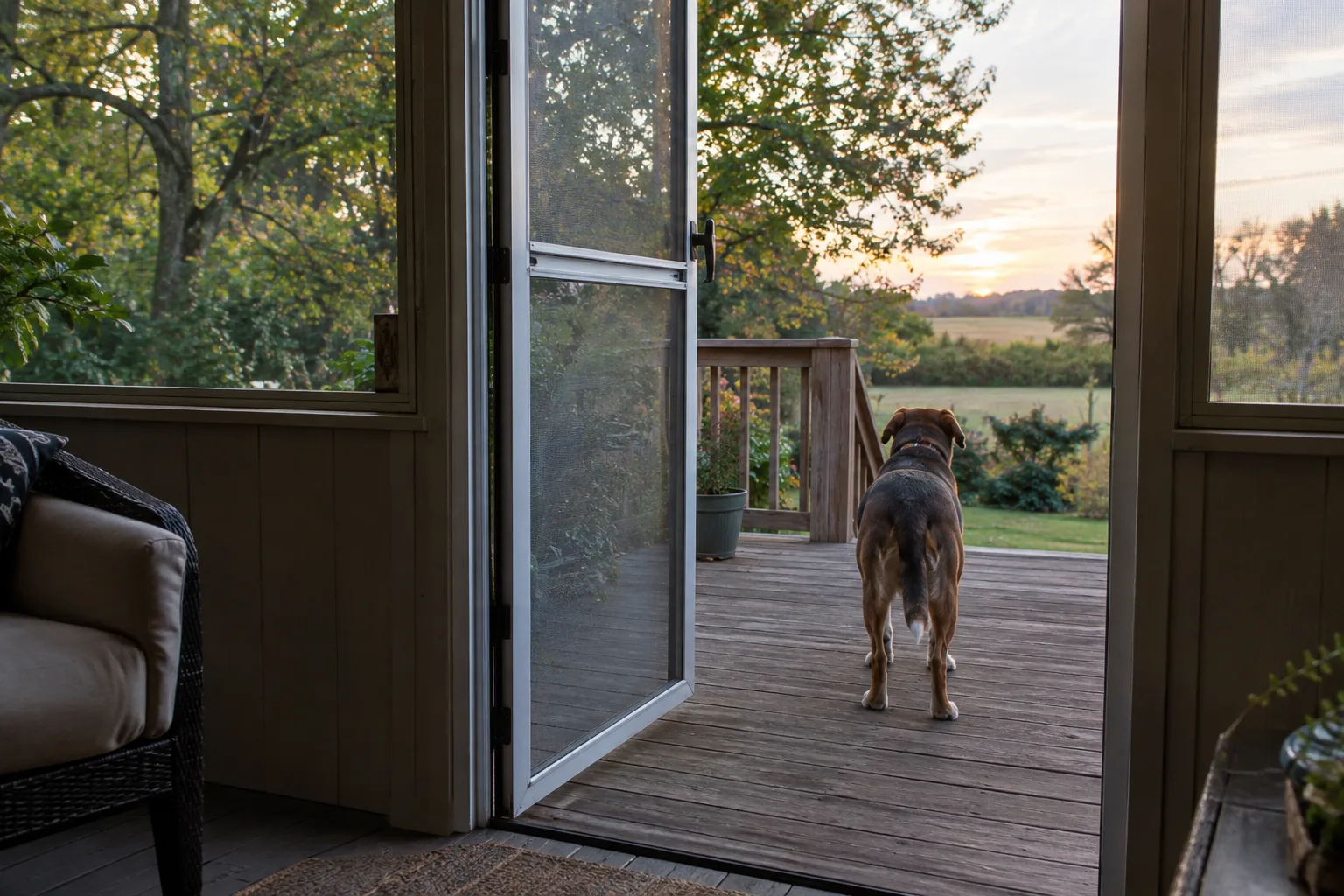
Built-in vs add-on: side-by-side comparison
The table covers the four points that decide most purchases: fit, durability, security and install steps.
| Point | Screen door with built-in pet door | Add-on pet door in a door or wall |
|---|---|---|
| Fit | Sized for a standard door opening; the pet opening is fixed by the maker | You choose the location and match the flap to your pet |
| Durability | Frame and flap are built as one unit; check frame material and hinge hardware | Depends on the door you cut into and how well the cut is finished |
| Security | Look for a lock or closing panel for the pet opening | Varies by product; check whether the flap can be covered when you are away |
| Install steps | Remove the old door, hang the new one, adjust hinges and closer | Mark, cut, fit the frame, secure it, test the flap |
| Tools | Basic hand tools, plus a helper to hold the door | Cutting tool for your material, plus basic hand tools |
| Reversibility | Replace the whole door to change it | Cut opening stays, even if you remove the flap |
In short, built-in suits a worn-out door or a new build, while an add-on suits a door you like and want to keep.
Can you put a pet door in a screen door?
Yes, in many cases. How you do it depends on the door material, and the manual of your pet door lists the cutout size and the tools it calls for. Unplug any power tool before changing blades and wear eye protection.
- Measure your pet: height at the shoulder and width at the widest point of the chest.
- Pick a spot in the lower part of the door, clear of the lock, crossbars and hinges.
- Mark the cutout using the template or measurements from the pet door manual.
- Cut mesh with sharp scissors or a utility knife, or cut a wood or aluminum panel with the tool the manual lists.
- Fit the frame, secure it with the supplied fasteners, and smooth any cut edges.
- Open and close the door several times to confirm the flap swings freely and the door still latches.
Thin mesh alone will not hold a flap frame. Use a rigid panel or frame section for the mounting, and ask a door installer if you are unsure about cutting into a metal frame.
A different add-on route: mount the pet door in a wall or fence
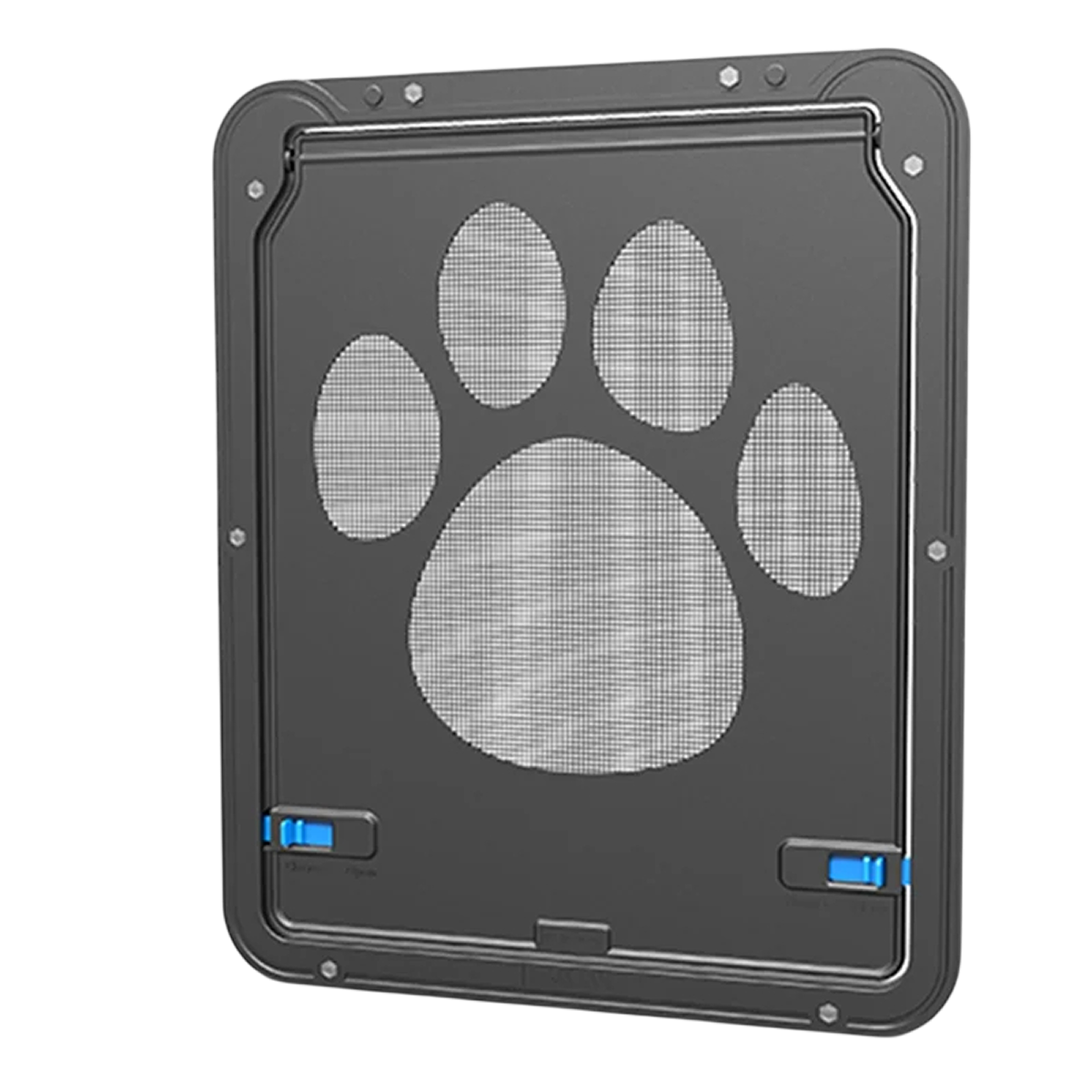
If you would rather leave the screen door untouched, a pet door can go in a nearby wall, fence or partition. Hatchwell is a pet door for dogs and cats with a swinging flap and a built-in insect screen. The plastic housing frames the opening around the flap, and the frame fixes in place with basic household tools.
The shared passage opening works for both dogs and cats, so a mixed household uses one doorway. The box holds one pet door with the built-in screen and one user manual.
 In this guideHatchwell$69.99View
How to choose: a five-step decision
- Check the condition of your current door. If the frame is bent, the hinges sag or the screen is torn, a built-in replacement makes sense.
- Identify the door type: hinged, storm or sliding. Sliding patio doors need a panel matched to the track.
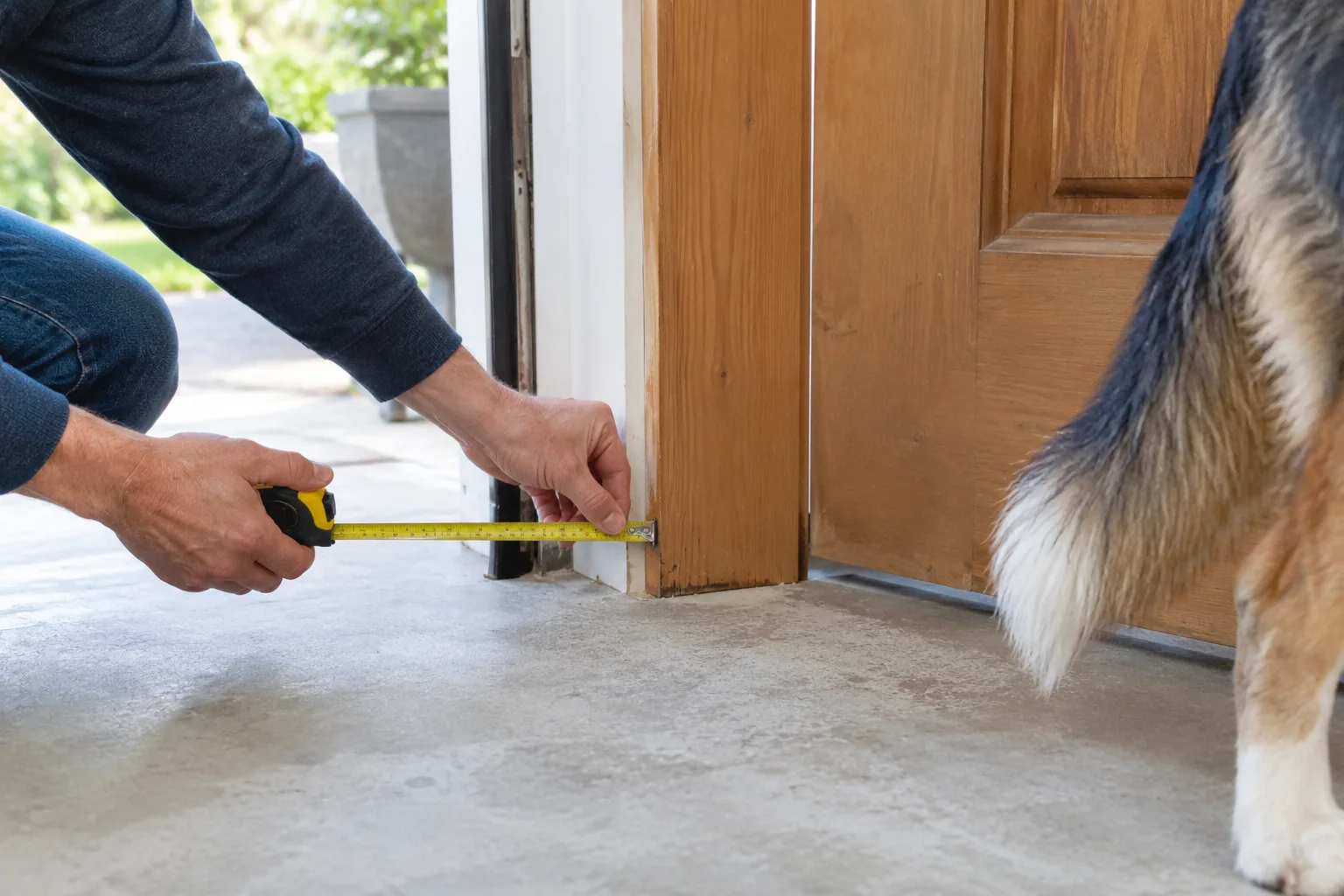
- Measure your pet. The opening should clear shoulder height and chest width with room to step through; the chest measuring guide shows how to take the width correctly.
- Decide on frame material. Aluminum, metal and wood each need different upkeep and suit different house styles.
- Plan for closing the opening. Look for a lock, a cover or a closing panel for nights and travel.
If the tool list in the manual is longer than your toolbox, hiring an installer for a hinged door is a reasonable call.
Field note
Hold a cardboard rectangle the size of the opening against the door and ask your dog to walk through it. If they duck or squeeze, go up a size before you buy.
Storm doors that include a pet door: what to look for
When comparing storm doors with a pet door, check these points on each product page:
- Opening size listed in inches, with the door size it fits.
- Frame material and finish.
- Whether the flap and panel can be locked or covered.
- Swing direction and whether it can be reversed.
- What the package includes, such as hardware and instructions.
Read the install instructions on the listing before ordering. They show how many people the job takes and which tools you need.
Common mistakes and a simple care schedule
Mistakes to avoid
- Ordering by door size alone and skipping the pet opening size.
- Cutting mesh without a rigid frame around the opening.
- Placing the flap where the door swings into furniture or a step.
- Leaving the opening uncovered when you travel.
Care schedule
| When | Task |
|---|---|
| Weekly | Wipe the flap and frame; brush paw dirt off the lower screen |
| Monthly | Check screws, hinges and the latch; look for snags in the mesh |
| Each season | Clean tracks on sliding doors and check weatherstripping for gaps |
Muddy paws and shed fur collect around the lower panel, so keep a towel by the door. For wipes, mats and other upkeep gear, browse the Home Comfort & Cleanup collection. If the door leads to a yard you are still training your dog for, the potty training plan covers the routine.